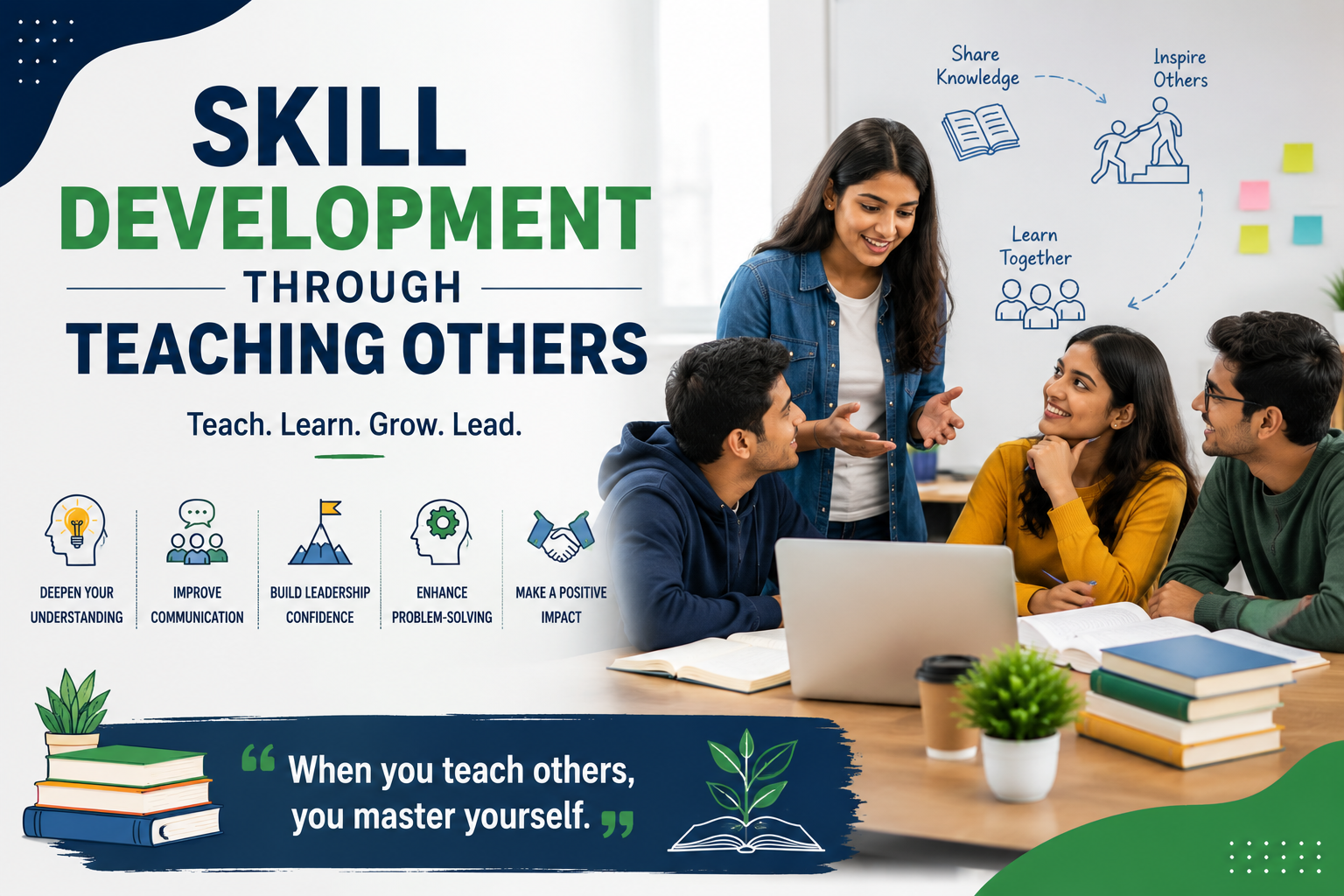
Teaching is often associated with teachers, trainers, and professionals. But students can also become teachers in their own learning journey. Explaining a concept to a classmate, helping a junior understand a difficult topic, leading a study group, or demonstrating a skill during a project can create valuable opportunities for personal and professional growth.
Skill development through teaching others works because teaching requires more than knowing an answer. Students have to understand a subject well enough to explain it clearly, respond to questions, adapt their explanation, and sometimes find another way to make the idea understandable.
For students, graduates, and freshers, these experiences can build communication, leadership, confidence, problem-solving, and teamwork skills. They can also provide genuine examples to discuss on a CV or during an interview.
What Does Skill Development Through Teaching Others Mean?
Skill development through teaching others means using the process of explaining, demonstrating, guiding, or mentoring someone else as a way to strengthen your own abilities.
Teaching does not necessarily mean standing in front of a classroom. It can happen in simple situations.
For example, a student who understands Excel may help classmates learn formulas. A computer science student might explain a programming concept to a friend. A senior student may guide a junior through a college project. Another student might organise a study group and explain difficult chapters to the participants.
In each situation, the person teaching is also practising important skills.
The process can be as simple as:
Learn → Understand → Explain → Answer Questions → Receive Feedback → Improve
This makes teaching others a practical form of active learning and skill development.
Why Is Teaching Others Important for Students?
Students often focus on acquiring knowledge, but knowing something and being able to communicate it are different abilities.
Teaching encourages students to turn their knowledge into something another person can understand.
It Strengthens Understanding
When students explain a topic, they have to organise their thoughts logically. They may discover that they understand one part of a subject well but need to revisit another part.
For example, a student might be able to solve a mathematics problem but struggle to explain why a particular method works. Preparing to teach it can encourage deeper understanding.
It Improves Communication
Good teaching requires clear communication.
Students learn to:
- Use simple and appropriate language
- Organise information logically
- Give relevant examples
- Listen to questions
- Adjust explanations when someone is confused
- Speak with greater clarity and confidence
These abilities are useful far beyond academics. They can support students during presentations, interviews, internships, meetings, and professional discussions.
It Builds Confidence
Explaining something successfully to another person can provide a meaningful confidence boost.
With regular practice, students may become more comfortable expressing opinions, presenting information, and speaking in front of others.
That confidence can be particularly valuable for freshers entering interviews or their first professional environment.
Key Skills Students Can Develop by Teaching Others
Teaching can become a practical way to develop several transferable skills.
1. Communication Skills
A student may know a topic extremely well but still need to learn how to explain it to someone with less knowledge.
Teaching provides repeated opportunities to practise this.
For example, instead of using technical terminology while explaining a programming concept to a beginner, the student may learn to use a simple example first and introduce technical terms gradually.
This ability to adjust communication according to the audience is highly useful in professional settings.
2. Leadership Skills
Teaching naturally involves taking responsibility for another person’s learning.
Students can demonstrate leadership by organising sessions, preparing learning materials, assigning activities, answering questions, and encouraging others to participate.
Leadership does not always require a formal title. Helping a team understand a difficult task or guiding a junior student can also demonstrate initiative.
3. Critical Thinking
Students often have to find different ways to explain the same concept.
If one explanation does not work, they need to think of another example, analogy, diagram, demonstration, or approach.
This develops flexible thinking and problem-solving.
4. Patience and Active Listening
Not everyone learns at the same speed.
Teaching encourages students to listen carefully and understand where another person is struggling rather than simply repeating the same explanation.
This can strengthen patience, empathy, and active listening—qualities that are useful when working with colleagues and clients.
5. Presentation Skills
Students who regularly explain topics to others get opportunities to practise structuring information and speaking clearly.
Over time, this can make presentations feel less intimidating.
Practical Ways Students Can Teach Others
Students do not need formal teaching experience to start developing these skills.
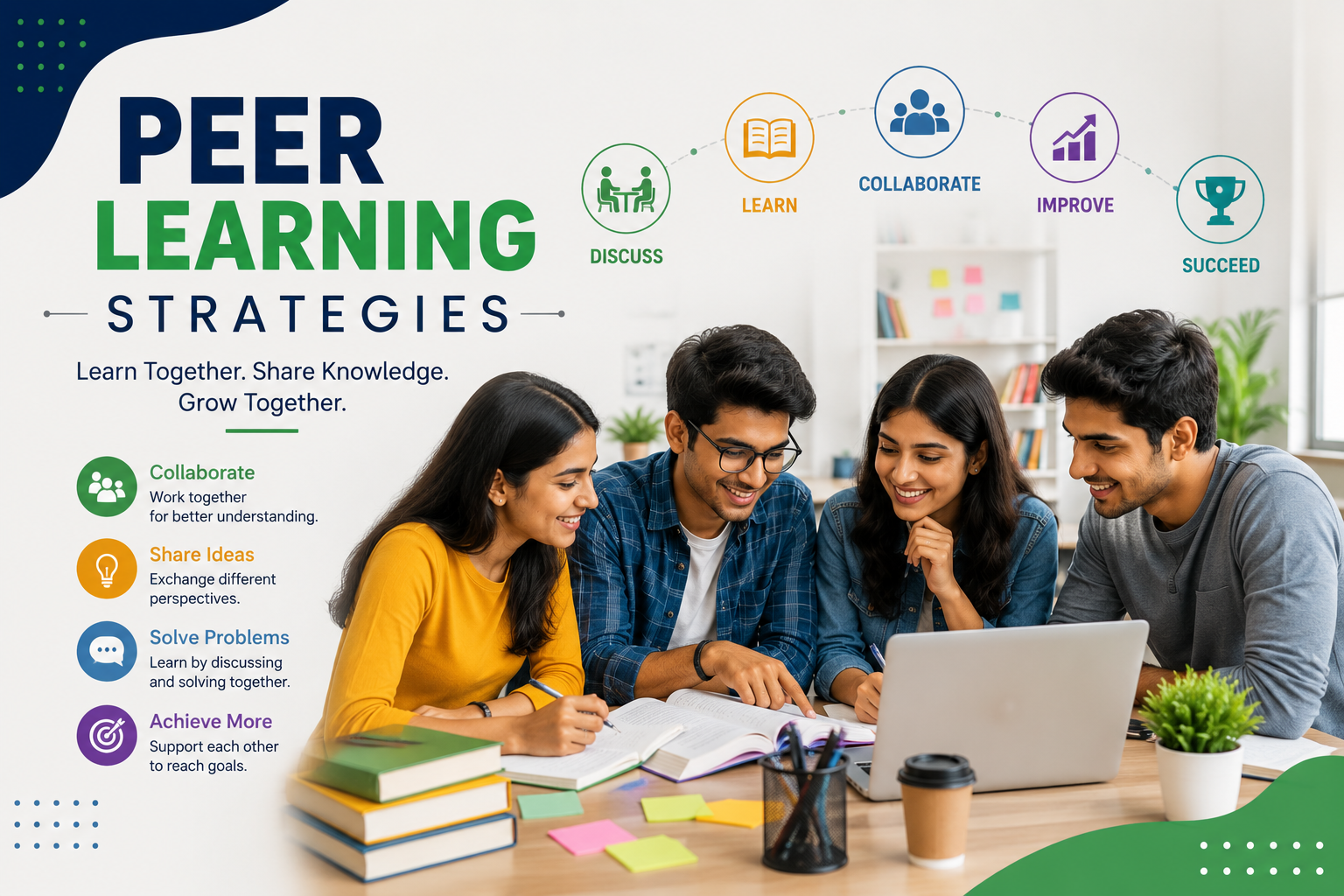
Start a Peer Study Session
Choose a subject or topic and invite a few classmates to join.
Each person can take responsibility for explaining one section. After each explanation, the group can ask questions and discuss examples.
This approach allows everyone to practise both learning and teaching.
Explain a Difficult Concept to a Friend
The next time a classmate asks for help, do not immediately give them the answer.
Instead, explain how you arrived at the answer.
For example, if someone asks for help with a coding problem, walk them through the logic and encourage them to write the solution themselves.
This develops your ability to guide rather than simply provide answers.
Mentor a Junior Student
Students in later years can help juniors understand subjects, college projects, software tools, presentations, or academic routines.
Even informal mentoring can develop leadership and communication skills.
Create Short Learning Content
Students can turn something they have learned into a short presentation, tutorial, infographic, or educational post.
For example, a student learning digital marketing could create a simple guide explaining keyword research to classmates.
This combines subject knowledge with communication and content-creation skills.
Conduct Mock Interview Practice
Teaching can also support career preparation.
Students can take turns explaining interview concepts or conducting mock interviews for one another.
One person can ask questions, another can answer, and the rest can provide feedback.
This helps participants practise communication while also giving the person conducting the interview experience in listening, evaluating, and providing constructive feedback.
How to Become Better at Teaching Others
Teaching is a skill that improves with practice. Students can make their sessions more effective by following a few simple principles.
Know Your Topic
Before teaching someone else, make sure you understand the subject yourself.
Review important concepts, identify possible questions, and prepare examples before starting.
Keep the Explanation Simple
Complex language does not automatically make an explanation better.
Start with the basic idea and gradually introduce more advanced details.
A useful test is:
“Could I explain this to someone who has never studied it before?”
If the answer is no, simplify the explanation.
Use Practical Examples
Examples can turn abstract concepts into something easier to understand.
For instance, when explaining budgeting, a student could use a simple monthly student budget rather than discussing financial theory alone.
Encourage Questions
Teaching should be a two-way interaction.
Ask questions such as:
- “Which part is unclear?”
- “How would you solve this?”
- “Can you explain it in your own words?”
- “What do you think happens next?”
These questions encourage active participation.
Ask for Feedback
After teaching, ask the learner what was helpful and what could have been clearer.
This feedback can help students improve their communication and presentation style.
Common Challenges Students May Face
Teaching others can be rewarding, but it also comes with challenges.
“I Don’t Know Enough to Teach”
Students sometimes believe they must be experts before they can help someone else.
That is not necessarily true.
You should teach only what you understand confidently, but you do not need to know everything. If someone asks a question you cannot answer, it is perfectly acceptable to say, “I’m not sure. Let’s check it together.”
This also demonstrates intellectual honesty.
Difficulty Explaining Something Clearly
Understanding a concept does not automatically mean you can explain it well.
If someone is confused, try changing your approach. Use a practical example, draw a diagram, break the process into smaller steps, or explain the idea using simpler language.
Fear of Making Mistakes
Students may worry that others will judge them if they make an error while explaining something.
Mistakes can become learning opportunities. Verify information, accept corrections, and improve your explanation.
Lack of Time
Students already have classes, assignments, examinations, and other responsibilities.
Teaching does not need to involve long sessions. Even a 20-minute explanation to a classmate can provide useful practice.
How Teaching Others Can Strengthen Your CV
Teaching experiences can provide strong evidence of transferable skills, particularly when students have limited formal work experience.
Instead of simply writing:
“Good leadership and communication skills.”
Students can describe what they actually did.
For example:
“Led weekly peer-learning sessions for a group of five students, explaining challenging course concepts and facilitating problem-solving discussions.”
Or:
“Mentored junior students on academic projects, helping them understand project requirements and improve presentation skills.”
These examples demonstrate communication, leadership, initiative, and teamwork through specific activities.
Teaching-related experiences can potentially be included under Leadership Experience, Projects, Volunteering, Extracurricular Activities, or Achievements, depending on the activity.
How to Discuss Teaching Experience in an Interview
Interviewers may ask questions such as:
- “Tell me about a time you helped someone.”
- “Describe a leadership experience.”
- “How do you explain complex information?”
- “Tell me about a time you had to communicate with someone who did not understand your point.”
Teaching experiences can provide useful examples for answering such questions.
A strong response should explain the situation, what you did, the challenge you faced, and the outcome.
For instance, rather than saying, “I helped my classmate with programming,” explain what the classmate struggled with, how you changed your explanation, and what happened afterward.
This turns a simple academic activity into evidence of practical skills.
Turning Teaching Into a Long-Term Learning Habit
Students can make teaching part of their regular development routine.
Whenever you learn an important concept, try one of these activities:
- Explain it to a classmate.
- Write a short summary in your own words.
- Create a practical example.
- Ask someone to challenge your explanation with questions.
- Teach the concept again after a few days without looking at your notes.
This approach can help students identify gaps in their knowledge while continuously practising communication.
Conclusion
Teaching others is not only a way to help someone learn. It is also an opportunity to learn more deeply and develop valuable professional skills.
When students explain concepts, mentor classmates, lead study groups, or create learning resources, they practise communication, leadership, critical thinking, patience, listening, and presentation skills.
These experiences can become particularly valuable during the transition from education to employment. A student may not yet have years of professional experience, but meaningful examples of helping others, leading discussions, or sharing knowledge can demonstrate genuine workplace potential.
So the next time a classmate asks for help, look at it as more than a favour. Explain, guide, listen, and learn. By teaching someone else, you may be developing skills that will help you become a better learner, stronger communicator, and more confident professional.