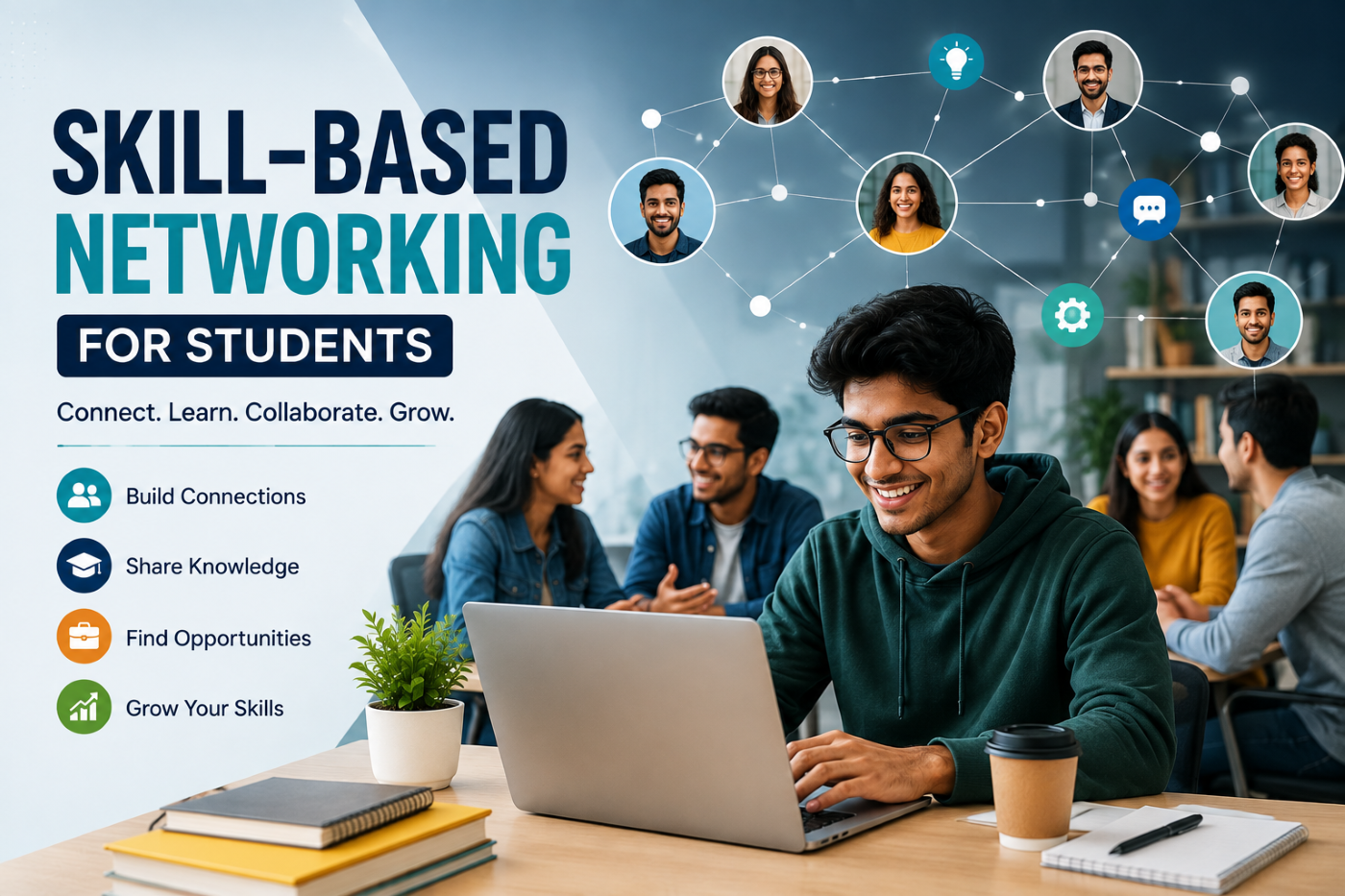
In today’s competitive job market, having strong academic qualifications is important, but it is often not enough to secure internships or job opportunities. Employers increasingly value candidates who demonstrate practical skills, continuous learning, and the ability to build professional relationships. This is where skill-based networking becomes valuable. Unlike traditional networking, which focuses primarily on meeting as many people as possible, skill-based networking is about connecting with individuals who share similar professional interests, learning from experts, collaborating on projects, and growing through meaningful interactions.
For students, skill-based networking offers an opportunity to develop both technical and interpersonal abilities while building relationships that can support long-term career growth. Whether you are interested in software development, digital marketing, graphic design, finance, healthcare, engineering, or entrepreneurship, networking around your skills can open doors to mentorship, collaboration, internships, and career opportunities.
At CVDragon, we believe that networking is not about collecting contacts—it is about creating genuine professional relationships built on shared interests, mutual learning, and continuous improvement. Students who begin networking early often gain valuable industry insights and develop the confidence needed to succeed in their chosen careers.
What Is Skill-Based Networking?
Skill-based networking is the practice of connecting with people based on shared professional interests, learning goals, or technical expertise rather than simply exchanging contact information.
Instead of asking, “Who can help me get a job?” students should ask:
- Who can help me learn?
- Who shares my professional interests?
- Who inspires me?
- Who can I collaborate with?
- Who can I learn from while also contributing my own ideas?
This mindset creates stronger and more authentic professional relationships.
Why Networking Matters for Students
Many students believe networking becomes important only after graduation. In reality, building professional relationships during college can provide numerous advantages.
Skill-based networking can help students:
- Learn from industry professionals.
- Discover internship opportunities.
- Gain practical career advice.
- Find project collaborators.
- Participate in competitions and hackathons.
- Improve communication skills.
- Build confidence.
- Stay updated with industry trends.
The earlier students begin networking, the more time they have to develop meaningful professional connections.
Focus on Learning Before Opportunities
One of the biggest mistakes students make is approaching networking only when they need a job or internship.
Instead, networking should begin with learning.
Students should participate in discussions, attend webinars, ask thoughtful questions, contribute ideas, and share useful resources. By consistently engaging with others, they naturally become part of a professional community.
When relationships are built on learning and mutual respect, career opportunities often follow naturally.
Build Skills Before Building Connections
Strong networking becomes easier when students have skills to discuss and demonstrate.
Students should continuously develop knowledge in areas such as:
- Programming.
- Data Analytics.
- Graphic Design.
- Content Writing.
- Digital Marketing.
- Artificial Intelligence.
- Financial Analysis.
- Public Speaking.
- Project Management.
- Communication.
The more students learn, the more confidently they can participate in professional conversations.
Networking becomes much more meaningful when students can contribute rather than simply observe.
Participate in Professional Communities
Professional communities provide excellent opportunities for skill-based networking.
Students can participate in:
- Online discussion forums.
- Student communities.
- Professional networking platforms.
- Open-source communities.
- Technology groups.
- Design communities.
- Entrepreneurship forums.
- Industry webinars.
- Virtual conferences.
- College clubs.
Active participation helps students build visibility while learning from experienced professionals.
Attend Webinars and Workshops
Many organizations regularly conduct free webinars and virtual workshops.
Students should use these events to:
- Learn from experts.
- Understand industry trends.
- Ask relevant questions.
- Connect with speakers.
- Meet other learners.
After attending an event, students can continue learning by reviewing notes, applying new ideas, and engaging with the community.
The value of a webinar often comes from what students do after the session ends.
Collaborate on Real Projects
Networking becomes stronger when students work together.
Collaborative projects allow students to:
- Solve practical problems.
- Learn teamwork.
- Develop communication skills.
- Share responsibilities.
- Build professional relationships.
Examples include:
- Hackathons.
- Open-source software.
- Research projects.
- Design competitions.
- Business case competitions.
- Community initiatives.
These experiences also strengthen resumes and portfolios.
Learn from Mentors
Mentors can provide valuable guidance throughout a student’s learning journey.
A mentor may help students:
- Set career goals.
- Identify important skills.
- Prepare for interviews.
- Understand workplace expectations.
- Build confidence.
- Avoid common career mistakes.
Students should approach mentorship respectfully and appreciate that mentors volunteer their time and experience.
Even following experienced professionals through their articles, talks, or educational content can provide valuable learning.
Share Your Knowledge
Networking is a two-way process.
Students often think they have nothing valuable to contribute, but sharing learning experiences can help others while reinforcing their own understanding.
Students can:
- Explain concepts.
- Write blogs.
- Create tutorials.
- Share project experiences.
- Recommend learning resources.
- Answer beginner questions.
Teaching others demonstrates initiative and strengthens professional credibility.
Build an Online Professional Presence
Today’s networking extends beyond face-to-face conversations.
Students can build a professional presence by:
- Maintaining an updated professional profile.
- Sharing project work.
- Publishing articles.
- Participating in discussions.
- Showcasing certifications.
- Displaying portfolio projects.
A positive online presence helps professionals understand a student’s interests and areas of expertise.
Consistency is more important than frequent posting.
Develop Strong Communication Skills
Good networking depends on effective communication.
Students should practice:
- Active listening.
- Asking thoughtful questions.
- Introducing themselves clearly.
- Expressing ideas confidently.
- Giving constructive feedback.
- Respecting different viewpoints.
Professional communication leaves a positive impression and encourages long-term relationships.
Focus on Quality, Not Quantity
Networking is not about collecting hundreds of contacts.
A small network of meaningful professional relationships is often more valuable than a large number of inactive connections.
Students should focus on:
- Regular interaction.
- Genuine conversations.
- Mutual learning.
- Professional respect.
- Long-term relationships.
Quality connections create stronger opportunities for collaboration and career growth.
Learn Through Networking Events
Career fairs, technology conferences, startup events, seminars, and student competitions provide opportunities to interact with professionals.
Before attending an event, students should:
- Learn about the speakers.
- Prepare thoughtful questions.
- Understand the event topic.
- Bring a resume if appropriate.
- Practice introducing themselves.
After the event, they can continue the conversation by connecting professionally and thanking people for their insights.
Build a Portfolio That Supports Networking
A portfolio gives students something meaningful to discuss.
Depending on their field, students can showcase:
- Software projects.
- Graphic designs.
- Writing samples.
- Marketing campaigns.
- Research papers.
- Business case studies.
- Videos.
- Data analysis projects.
A portfolio demonstrates practical ability and makes networking conversations more productive.
Practice Professional Etiquette
Good networking also requires professionalism.
Students should:
- Be respectful.
- Arrive on time for meetings.
- Respond politely.
- Avoid excessive self-promotion.
- Appreciate feedback.
- Keep promises.
- Respect people’s time.
Professional etiquette helps build trust and long-lasting relationships.
Continue Learning from Every Connection
Every professional conversation offers an opportunity to learn something new.
Students should ask themselves:
- What did I learn today?
- Which skills should I improve?
- What career advice did I receive?
- What should I research next?
This mindset transforms networking into continuous education.
Avoid Common Networking Mistakes
Students should avoid:
- Asking for jobs immediately.
- Sending generic messages.
- Ignoring follow-up conversations.
- Being inactive after connecting.
- Focusing only on senior professionals.
- Treating networking as a one-time activity.
Successful networking develops gradually through consistent engagement.
How Skill-Based Networking Strengthens Your Resume
Networking itself is not usually listed as a resume skill, but the outcomes certainly are.
Through networking, students may gain:
- Internship experience.
- Collaborative projects.
- Leadership opportunities.
- Professional certifications.
- Volunteer work.
- Industry recommendations.
- Practical achievements.
These experiences strengthen resumes and demonstrate initiative to employers.
At CVDragon, we encourage students to document meaningful projects, certifications, competitions, and collaborative work gained through professional networking. These accomplishments show employers that students actively invest in their personal and professional development.
Make Networking a Long-Term Habit
Networking should not end after finding an internship or first job.
As careers progress, professional relationships continue to support learning, collaboration, career transitions, and leadership opportunities.
Students who develop networking habits early often find it easier to adapt to changing industries, discover new opportunities, and continue learning throughout their careers.
Building relationships based on shared skills and genuine curiosity creates a professional network that grows alongside personal development.
Conclusion
Skill-based networking is one of the most valuable investments students can make in their future careers. By focusing on learning, collaboration, knowledge sharing, and professional relationships, students can build networks that support both personal growth and career success.
At CVDragon, we believe networking is most effective when it begins with curiosity rather than opportunity. Students who continuously develop their skills, contribute to professional communities, collaborate on meaningful projects, and communicate with authenticity naturally create lasting professional connections.
Remember, successful networking is not measured by the number of people you know—it is measured by the quality of the relationships you build and the value you create for others. By combining continuous learning with meaningful connections, students can strengthen their resumes, expand their career opportunities, and prepare themselves for long-term professional success.
Leave a Reply