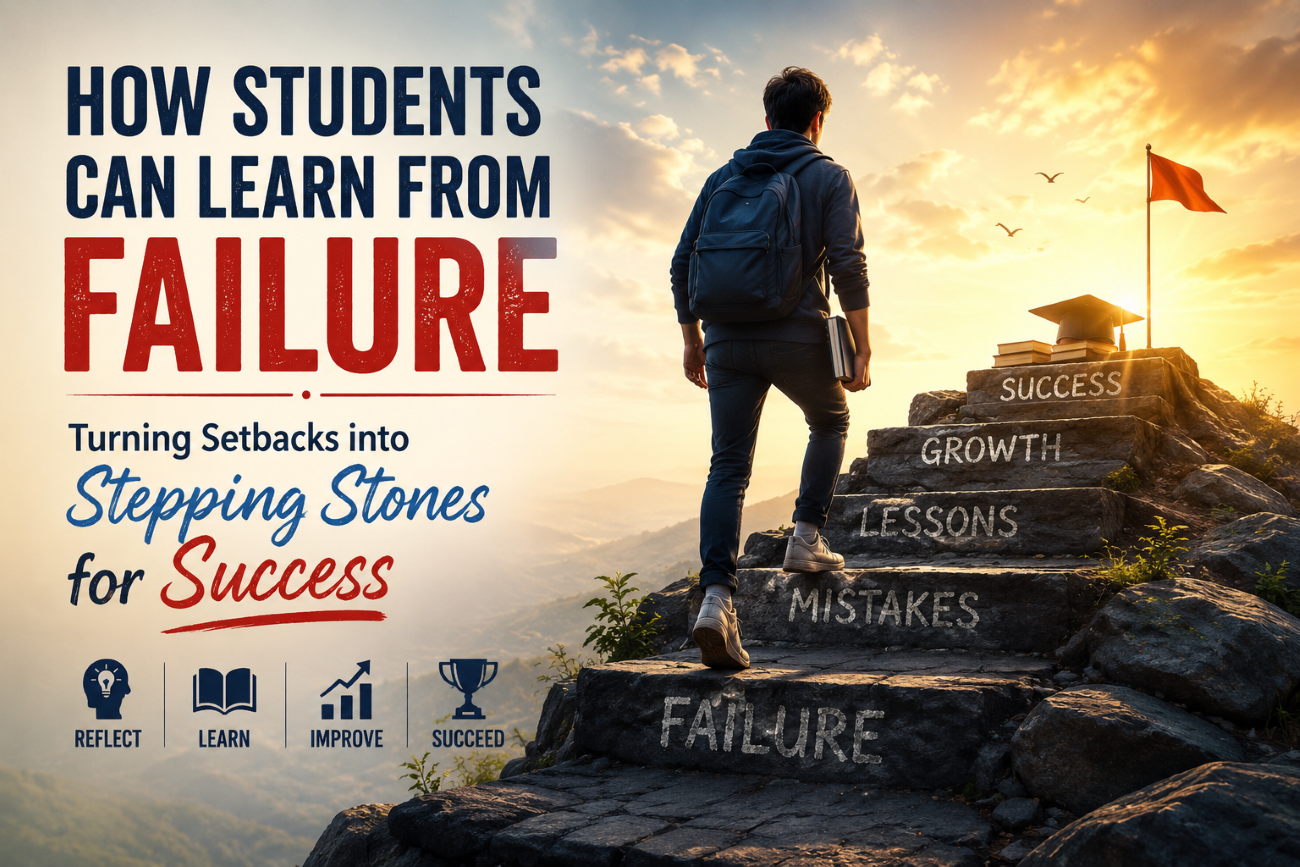
Failure is something every student experiences at some point in their academic or personal journey. It could be a poor exam result, an unsuccessful interview, a rejected internship application, a failed project, or even not achieving a personal goal. While failure often feels discouraging, it is also one of the most valuable learning experiences a student can have. The difference between successful individuals and others is rarely that they never fail—it is that they learn, adapt, and continue moving forward.
In today’s fast-changing world, employers value resilience, adaptability, and problem-solving just as much as technical knowledge. Students who develop the ability to learn from setbacks are better prepared to handle challenges in college, the workplace, and life. Instead of viewing failure as the end of the journey, it should be seen as feedback that helps improve future performance.
At CVDragon, we believe that every setback contains an opportunity to grow. By reflecting on mistakes, developing new skills, and maintaining a positive learning mindset, students can transform failures into valuable lessons that strengthen both their careers and personal development.
Understanding What Failure Really Means
Many students associate failure with a lack of intelligence or ability. In reality, failure simply means that a particular attempt did not produce the desired outcome. It does not define a person’s potential or future success.
Every achievement is built on a series of experiments, adjustments, and improvements. Scientists refine their research, entrepreneurs improve their businesses, athletes learn from defeats, and professionals grow through experience. Students should approach learning in the same way.
Instead of asking, “Why did I fail?” ask, “What can I learn from this experience?”
This simple shift in perspective encourages growth rather than self-doubt.
Accept Your Emotions Before Moving Forward
Failure can bring disappointment, frustration, or embarrassment. These feelings are natural and should not be ignored.
Rather than pretending everything is fine, students should acknowledge their emotions, give themselves time to process the experience, and then focus on constructive next steps.
Accepting disappointment does not mean giving up. It means recognizing the situation honestly so that learning can begin.
Identify the Real Cause
One failed attempt rarely tells the full story. Students should carefully analyze what contributed to the outcome.
Consider questions such as:
- Did I prepare effectively?
- Was my study method suitable?
- Did I manage my time well?
- Did I ask for help when needed?
- Were my goals realistic?
- Did I practice enough?
Honest self-reflection helps identify areas for improvement instead of placing blame on luck or circumstances alone.
Treat Failure as Feedback
Every unsuccessful attempt provides information that can improve future performance.
For example:
- A poor exam score may reveal weak understanding of certain topics.
- A rejected internship application may indicate the need for a stronger resume.
- An unsuccessful interview may highlight communication skills that need improvement.
- A failed project may show the importance of planning and teamwork.
Rather than viewing failure as proof of inability, students should treat it as valuable feedback for growth.
Develop a Growth Mindset
A growth mindset is the belief that abilities can improve through learning, effort, and practice.
Students with this mindset are more likely to:
- Try again after setbacks.
- Seek feedback.
- Learn new strategies.
- Develop confidence over time.
- Embrace challenges.
Instead of saying, “I’m not good at mathematics,” try saying, “I haven’t mastered mathematics yet.”
Small changes in language can encourage perseverance and continuous improvement.
Learn to Ask for Feedback
Constructive feedback is one of the fastest ways to improve.
Students can seek advice from:
- Teachers.
- Professors.
- Mentors.
- Classmates.
- Internship supervisors.
- Career counselors.
When asking for feedback, focus on improvement rather than validation.
Questions like “What could I improve?” or “Which skill should I strengthen?” often produce more useful answers than simply asking whether performance was good or bad.
Build Better Study Habits
Sometimes failure is not caused by a lack of ability but by ineffective learning strategies.
Students can improve by:
- Creating a study schedule.
- Using active recall techniques.
- Practicing regularly.
- Reviewing mistakes.
- Taking organized notes.
- Studying consistently instead of cramming.
Improving daily habits often has a greater impact than studying longer hours.
Strengthen Time Management
Poor time management is a common reason students struggle academically.
Students should:
- Prioritize important tasks.
- Break large assignments into smaller steps.
- Set realistic deadlines.
- Avoid procrastination.
- Use calendars or planners.
Managing time effectively reduces stress and creates more opportunities for steady progress.
Build Resilience
Resilience is the ability to recover from setbacks and continue moving forward.
Students can strengthen resilience by:
- Maintaining healthy routines.
- Celebrating small improvements.
- Staying connected with supportive people.
- Learning from criticism.
- Focusing on long-term goals.
Resilience develops through experience. Every challenge overcome increases confidence in handling future difficulties.
Compare Yourself Less
One of the biggest obstacles to learning from failure is comparing yourself to others.
Every student has different strengths, opportunities, and learning speeds.
Instead of asking:
“Why is someone else doing better?”
Ask:
“What can I improve compared to my previous performance?”
Personal progress is a far more meaningful measure of success than constant comparison.
Learn Through Small Experiments
Students do not need to wait for major opportunities to improve.
They can experiment by:
- Trying new learning methods.
- Building personal projects.
- Participating in competitions.
- Applying for internships.
- Learning new skills.
- Volunteering.
Even if some attempts do not succeed, each experience provides valuable lessons.
Build Confidence Through Action
Confidence grows through preparation and practice, not by avoiding challenges.
Students who repeatedly step outside their comfort zones gradually become more comfortable with uncertainty.
For example:
- Give presentations.
- Join student clubs.
- Participate in debates.
- Enter competitions.
- Lead group projects.
Each experience builds confidence regardless of the immediate outcome.
Keep a Learning Journal
Recording lessons after setbacks helps students recognize progress over time.
A simple journal can include:
- What happened?
- What worked well?
- What could improve?
- What will I do differently next time?
Reviewing past experiences often shows that many failures become valuable learning moments in the future.
Learn from Successful People
Almost every successful professional has experienced setbacks.
Entrepreneurs have launched unsuccessful businesses.
Scientists have conducted failed experiments.
Athletes have lost important competitions.
Authors have faced rejected manuscripts.
These stories remind students that failure is often part of the path to achievement rather than evidence that success is impossible.
Instead of focusing only on success stories, study the lessons behind them.
Turn Failure into Skill Development
Every setback highlights an opportunity to improve specific skills.
For example:
- Rejected interview → Improve interview skills.
- Low grades → Improve study techniques.
- Team conflict → Improve communication.
- Missed deadlines → Improve time management.
- Project difficulties → Improve planning and collaboration.
By focusing on skill development, students convert temporary setbacks into long-term advantages.
Maintain a Positive Support System
Surrounding yourself with encouraging people can make setbacks easier to manage.
Support may come from:
- Family.
- Friends.
- Teachers.
- Mentors.
- Student communities.
Positive support provides encouragement while also offering practical advice and different perspectives.
Students should also remember to support others when they experience challenges.
Apply the Lessons Immediately
Reflection is important, but action creates improvement.
After identifying lessons, students should apply them as soon as possible.
Examples include:
- Revising study techniques.
- Updating a resume.
- Practicing interview questions.
- Learning a new software tool.
- Improving communication skills.
The sooner lessons are applied, the more valuable the experience becomes.
Failure and Career Development
Learning from failure is essential for long-term career success.
Professionals regularly face:
- Project setbacks.
- Client feedback.
- Changing technologies.
- Business challenges.
- New responsibilities.
Students who learn resilience early become more adaptable employees and future leaders.
Employers often appreciate candidates who demonstrate perseverance, problem-solving, and continuous learning.
How CVDragon Supports Student Growth
At CVDragon, we believe that every learning experience contributes to career development. Whether a student is improving a resume after internship rejections, developing new technical skills, building a stronger portfolio, or preparing for interviews, every improvement reflects resilience and determination.
A strong resume tells the story of achievements, but those achievements are often built upon lessons learned from earlier challenges. By continuously learning, adapting, and developing new skills, students become better prepared for future opportunities.
Conclusion
Failure is not the opposite of success—it is often part of the journey toward it. Every setback offers an opportunity to gain new knowledge, improve skills, strengthen resilience, and develop greater confidence. Students who embrace failure as a learning experience are more likely to grow academically, professionally, and personally.
At CVDragon, we encourage students to see challenges as opportunities for growth rather than barriers to success. Instead of fearing mistakes, use them as stepping stones to build stronger study habits, improve practical skills, refine career goals, and become more adaptable learners.
Remember, success is rarely achieved in a single attempt. It is built through continuous learning, thoughtful reflection, and the courage to try again. Every lesson learned from failure today can become the foundation for tomorrow’s achievements, helping students build not only successful careers but also the confidence and resilience needed to thrive in an ever-changing world.
Leave a Reply