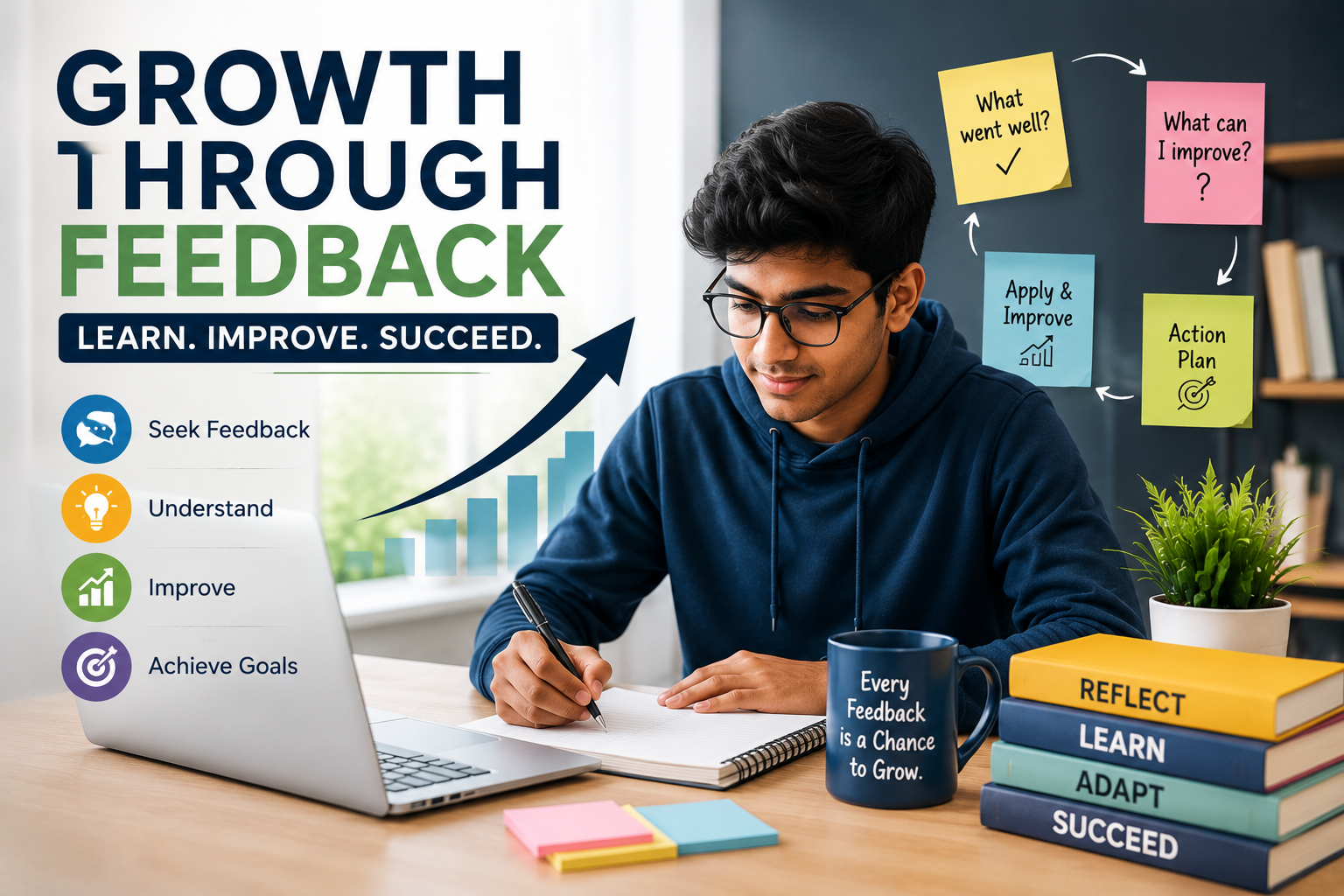
Feedback is one of the most valuable tools students can use to improve themselves. Whether it comes from a teacher, mentor, classmate, internship supervisor, interviewer, or even from self-evaluation, feedback helps students understand what they are doing well and where they can improve. While positive feedback can build confidence, constructive criticism can reveal weaknesses that may otherwise remain unnoticed.
For students preparing for higher education, internships, and future careers, learning how to accept and use feedback is an essential skill. Academic knowledge may help students understand a subject, but feedback helps them refine how they apply that knowledge. It encourages continuous learning, better decision-making, stronger communication, and personal growth.
At CVDragon, we believe that growth does not happen simply by repeating the same actions. Real improvement comes from learning what works, identifying what does not, and making thoughtful changes. When students develop the ability to receive feedback positively and turn it into action, they become more adaptable, confident, and career-ready.
What Is Feedback?
Feedback is information provided about a person’s performance, behavior, work, or approach. Its purpose is to help someone understand their strengths and identify areas that can be improved.
For students, feedback can come in many forms. A professor may comment on an assignment, a classmate may suggest improvements to a presentation, or an internship supervisor may explain how a task could have been handled more effectively.
Feedback can be:
- Positive feedback that recognizes strengths.
- Constructive feedback that identifies areas for improvement.
- Corrective feedback that explains what needs to change.
- Peer feedback from classmates or colleagues.
- Self-feedback based on personal reflection.
Regardless of its form, useful feedback provides information that students can use to improve future performance.
Why Feedback Is Important for Student Growth
Students often judge their own performance based on how they feel about their work. However, personal judgment can sometimes be incomplete or biased. Feedback from others provides a different perspective.
For example, a student may believe that a presentation was successful because the information was accurate. A teacher may recognize the quality of the content but point out that the presentation lacked structure or clear communication.
This additional perspective helps students understand that improvement involves more than simply completing a task. It involves understanding how the task could be performed more effectively.
Feedback Helps Identify Strengths
Feedback is not only about finding mistakes. It can also help students understand what they are already doing well.
A teacher might recognize a student’s ability to explain complex concepts. A project mentor may appreciate their problem-solving skills. A teammate may notice that they communicate clearly during group work.
Recognizing strengths helps students understand where they have natural abilities and which skills they should continue developing.
These strengths can later become important components of a student’s resume, portfolio, and career profile.
Constructive Criticism Is an Opportunity to Learn
Many students feel uncomfortable when someone criticizes their work. They may interpret criticism as a personal judgment rather than useful information.
Constructive criticism, however, is not an attack. When delivered appropriately, it identifies a problem and provides an opportunity to improve.
For example, instead of thinking:
“My presentation was terrible.”
A student can think:
“My presentation had useful information, but I need to improve my delivery and organization.”
This shift changes criticism from something discouraging into something actionable.
Develop a Growth Mindset
Students who believe their abilities can improve are more likely to use feedback effectively.
A growth mindset encourages students to see skills as something that can be developed through practice, learning, and persistence.
Instead of saying:
“I am bad at public speaking.”
A student can say:
“Public speaking is a skill I need to practice.”
This approach makes feedback easier to accept because students understand that weaknesses are not permanent limitations.
Learn How to Receive Feedback
Receiving feedback professionally is a skill in itself.
When someone provides feedback, students should:
- Listen without interrupting.
- Avoid becoming defensive.
- Ask questions for clarification.
- Focus on the information provided.
- Thank the person for their input.
- Consider how the feedback can be applied.
Students do not have to agree with every piece of feedback. However, they should understand it before deciding whether it is useful.
Ask for Specific Feedback
Instead of simply asking, “How did I do?”, students should ask specific questions.
For example:
- What could I improve in my presentation?
- Was my explanation easy to understand?
- Which part of my project needs more work?
- What skills should I develop before applying for internships?
- How could I improve my communication?
Specific questions usually produce more useful answers than general requests for opinions.
Use Feedback to Improve Academic Performance
Feedback can significantly improve academic learning.
After receiving comments on an assignment or examination, students should review:
- What mistakes did I make?
- Which concepts did I misunderstand?
- Was my answer sufficiently detailed?
- Did I follow the required structure?
- How can I avoid repeating the same mistake?
Instead of simply checking the grade and moving on, students should study the feedback carefully.
A lower grade can become valuable when it helps identify exactly what needs improvement.
Use Feedback to Improve Projects
Projects provide excellent opportunities for feedback because they involve practical application.
Students can ask teachers, mentors, teammates, or industry professionals to review their work.
Feedback may reveal:
- Design problems.
- Technical errors.
- Communication issues.
- Poor planning.
- Missing information.
- Usability problems.
Students should then make revisions based on the most relevant suggestions.
This process mirrors professional workplaces, where projects frequently go through reviews and revisions before completion.
Learn from Peer Feedback
Classmates can provide valuable perspectives because they often experience the same academic challenges.
Peer feedback can help students improve:
- Presentations.
- Essays.
- Group projects.
- Designs.
- Research work.
- Public speaking.
Students should also learn how to provide useful feedback to others.
Good peer feedback should be specific, respectful, and focused on improvement rather than personal criticism.
Use Feedback During Internships
Internships provide students with an opportunity to experience professional environments, and feedback from supervisors can be extremely valuable.
A supervisor may comment on:
- Time management.
- Communication.
- Technical skills.
- Workplace behavior.
- Teamwork.
- Problem-solving.
- Professional responsibility.
Students should treat internship feedback as an opportunity to understand workplace expectations.
Keeping a record of important feedback can also help students identify recurring areas that need improvement.
Apply Feedback Instead of Simply Collecting It
One of the biggest mistakes students make is receiving feedback without taking action.
Feedback becomes valuable only when it leads to change.
For example, if a student repeatedly receives feedback that their presentations are too detailed, they can practice simplifying information. If interviewers repeatedly mention weak communication, the student can practice answering questions aloud and seek additional feedback.
The goal should be:
Receive → Understand → Apply → Review → Improve
This creates a continuous improvement cycle.
Track Your Progress
Students can maintain a simple feedback journal to track their development.
After completing an important task, record:
- What went well?
- What feedback did I receive?
- What should I improve?
- What action will I take?
- Has my performance improved?
Over time, this creates a record of personal development.
It can also help students recognize improvements that might otherwise go unnoticed.
Learn to Separate Feedback from Personal Identity
Students should remember that feedback about their work is not necessarily feedback about their worth as a person.
A teacher saying that an assignment needs improvement does not mean the student is incapable. An interviewer rejecting a candidate does not mean the candidate has no potential.
Separating personal identity from performance makes it easier to learn from criticism without losing confidence.
Evaluate the Quality of Feedback
Not all feedback is equally useful.
Students should consider:
- Who is providing the feedback?
- Do they understand the subject?
- Is the feedback specific?
- Is it based on evidence?
- Does it identify a practical improvement?
- Is the same issue mentioned by multiple people?
Feedback from experienced and knowledgeable people can be particularly valuable, but students should still think critically about all advice they receive.
Use Feedback to Improve Career Skills
Feedback becomes especially important when students begin preparing for professional opportunities.
Students can seek feedback on:
- Resumes.
- Cover letters.
- LinkedIn profiles.
- Portfolio projects.
- Mock interviews.
- Communication skills.
- Professional presentations.
For example, if a student repeatedly receives feedback that their resume focuses too heavily on responsibilities instead of achievements, they can revise their resume to highlight measurable results and practical accomplishments.
Turn Feedback into Career Development Goals
Feedback can help students identify specific skills they should develop.
Suppose a student receives feedback that they need stronger presentation skills. Instead of keeping that observation in mind without taking action, they can create a development goal.
For example:
Goal: Improve public speaking.
Action: Give one presentation every month.
Practice: Record presentations and review them.
Feedback: Ask a teacher or peer for specific suggestions.
Review: Compare performance after several presentations.
This turns general feedback into a measurable development plan.
Build a Positive Relationship with Feedback
Students should gradually develop the habit of actively seeking feedback rather than waiting for someone to provide it.
Asking for feedback shows:
- Self-awareness.
- Initiative.
- Willingness to learn.
- Professional maturity.
- Commitment to improvement.
These qualities are valuable in academic environments and workplaces alike.
A student who regularly asks, “What could I do better?” demonstrates a mindset focused on continuous growth.
How Feedback Strengthens a Student’s Resume
Feedback itself does not need to appear on a resume, but the improvements resulting from feedback can become valuable achievements.
For example, a student may:
- Improve a project after mentor feedback.
- Develop a stronger portfolio.
- Win a competition after refining their work.
- Improve interview performance.
- Take on a leadership role after developing communication skills.
These outcomes demonstrate adaptability and a commitment to learning.
At CVDragon, students can use these experiences to build stronger resumes that showcase not only what they have accomplished but also how they have developed their skills over time.
Common Mistakes Students Make with Feedback
Students should avoid several common mistakes when receiving feedback.
Taking Everything Personally
Not every criticism is a judgment of your abilities. Focus on the specific behavior or work being discussed.
Becoming Defensive
Arguing immediately can prevent you from understanding the feedback.
Ignoring Repeated Feedback
If multiple people identify the same weakness, it is worth taking seriously.
Making No Changes
Feedback has little value if it does not lead to action.
Seeking Only Positive Feedback
Positive feedback feels encouraging, but constructive criticism often provides the information needed for meaningful improvement.
Conclusion
Growth through feedback is an essential part of becoming a better student and a stronger professional. Feedback helps students recognize their strengths, identify weaknesses, improve their skills, and develop greater self-awareness. More importantly, it teaches them that improvement is an ongoing process rather than a one-time achievement.
At CVDragon, we believe students should not be afraid of feedback. Instead, they should actively seek it, understand it, and use it to guide their development. A mistake, correction, or suggestion can become a valuable lesson when approached with the right mindset.
The most successful learners are not necessarily those who get everything right the first time. They are the ones who listen, adapt, practice, and try again. By turning feedback into action, students can continuously improve their academic performance, strengthen their professional skills, build better portfolios, and become more confident candidates for future opportunities.
Ultimately, feedback is not simply an evaluation of where you are today. It is a roadmap showing you where you can grow tomorrow.