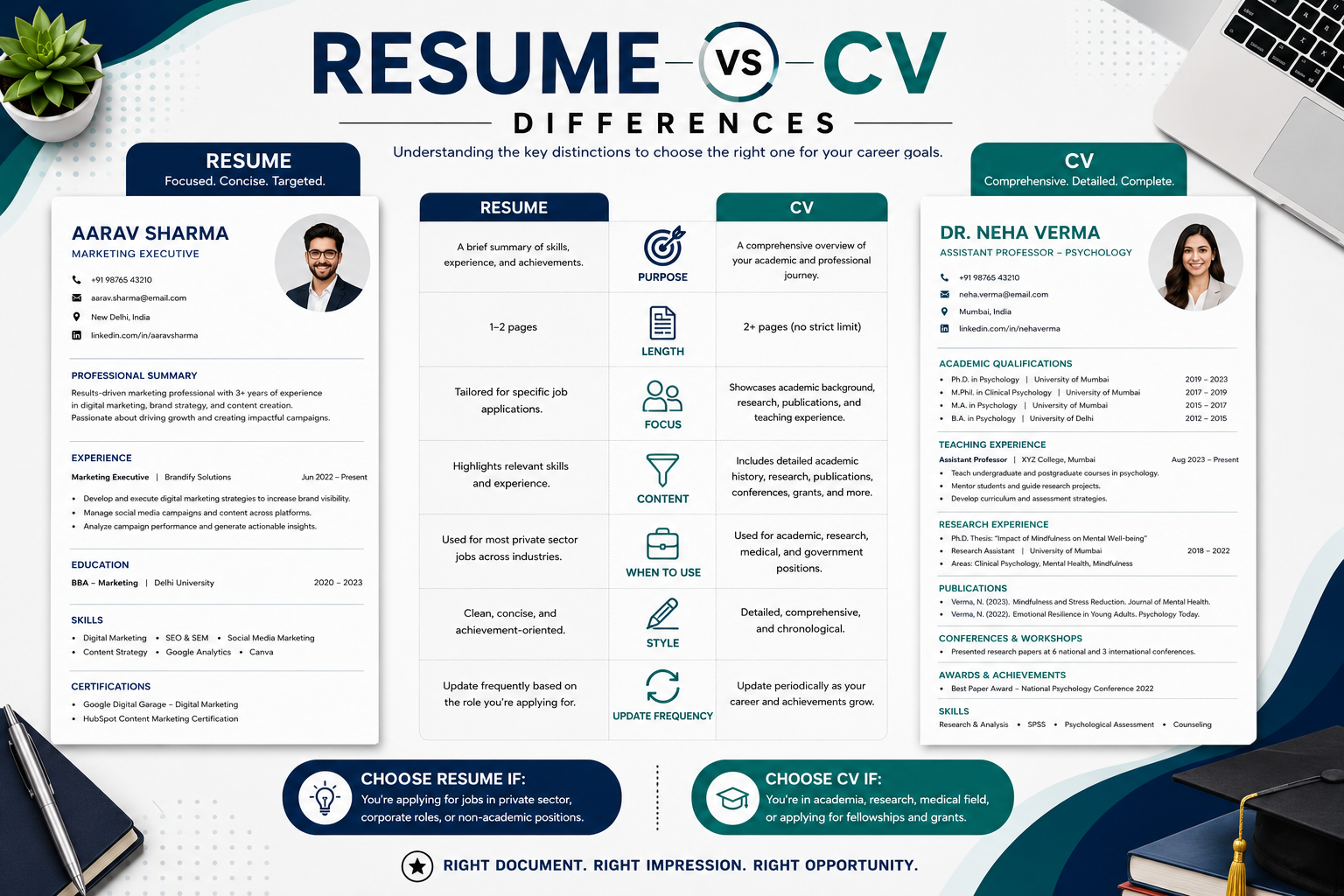
When applying for jobs, many candidates use the terms resume and CV interchangeably. However, these two documents are not always the same. Understanding the difference between a resume and a CV is essential for job seekers, students, and professionals who want to make the right first impression.
At CvDragon, we often notice that many applicants submit the wrong document, which can reduce their chances of getting shortlisted. This guide will help you clearly understand the key differences between a resume and a CV, when to use each one, and how to choose the right format for your career goals.
What Is a Resume?
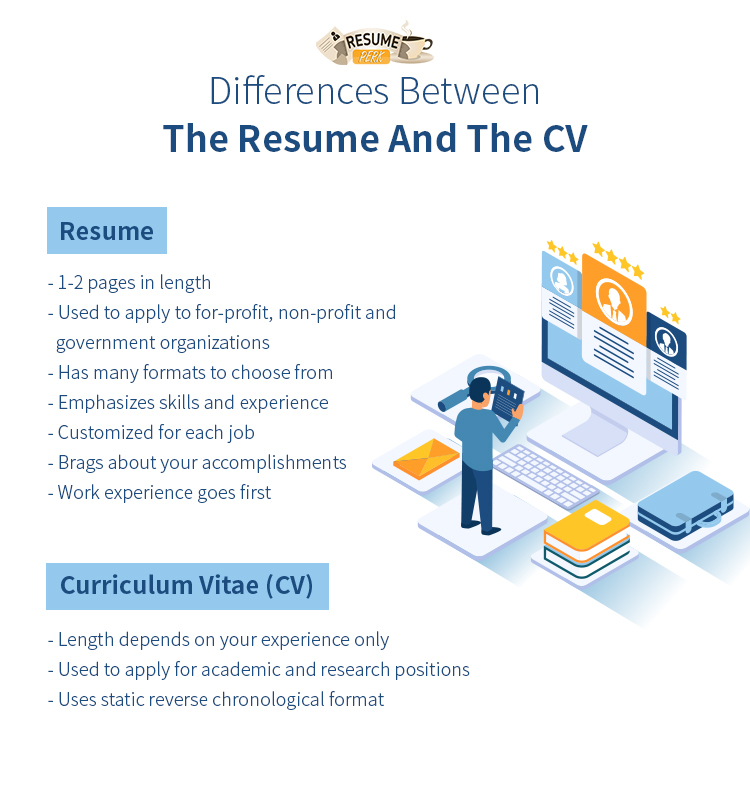
A resume is a short and focused professional document that highlights your skills, work experience, education, and achievements relevant to a specific job role.
The word “resume” comes from a French term meaning summary.
A resume is usually 1 to 2 pages long and is customized for each job application. Its main purpose is to quickly show recruiters why you are the right fit for the role.
For example, if you are applying for a marketing executive position, your resume should mainly highlight marketing skills, campaigns, internships, and measurable achievements.
What Is a CV?
A CV (Curriculum Vitae) is a much more detailed document.
The Latin phrase curriculum vitae means course of life.
Unlike a resume, a CV provides a comprehensive overview of your academic and professional journey. It includes:
- Full educational background
- Work history
- Research projects
- Publications
- Certifications
- Awards
- Conferences
- Teaching experience
- Skills
A CV is generally longer than a resume and may run from 2 pages to 10+ pages, depending on your experience level and field.
Key Differences Between Resume and CV
Let’s understand the major differences in a simple way.
1. Length
This is the biggest difference.
Resume:
Usually 1–2 pages
CV:
Can be 2 pages to multiple pages
A resume is concise and role-specific, while a CV is detailed and comprehensive.
2. Purpose
A resume is used mainly for corporate jobs, private sector roles, internships, and professional positions.
A CV is commonly used for:
- Academic jobs
- Research positions
- PhD applications
- Teaching roles
- Medical professions
- International job applications
3. Customization
A resume should be tailored for every job.
For example, if you apply for HR and sales roles, your resume should be modified according to the job description.
A CV usually remains more static because it records your complete career history.
4. Content Focus
Resume focuses on:
- Skills
- Work achievements
- Relevant experience
- Job-specific keywords
CV focuses on:
- Complete academic profile
- Research work
- Publications
- Detailed career progression
When Should You Use a Resume?
Use a resume when applying for:
- Corporate jobs
- Startup roles
- Business positions
- IT and software jobs
- Sales and marketing roles
- Freshers’ job applications
- Private company jobs
For most jobs in India and corporate sectors, recruiters usually expect a resume-style CV, which means a short 1–2 page professional profile.
When Should You Use a CV?
Use a CV for:
- University applications
- Teaching jobs
- Lecturer positions
- Research assistant roles
- PhD admissions
- Medical careers
- Scientific fields
If you are applying for academic or research-based roles, a detailed CV is the better option.
Regional Differences Matter
An important point many job seekers miss is that the meaning of CV changes by country.
In countries like the UK, Europe, and India, the term “CV” is often used for what is essentially a resume.
In the US and Canada, a CV usually means a long academic document, while a resume is used for most jobs.
This is why understanding the employer’s location is important.
Which One Is Better?
Neither is better universally.
The right choice depends on the job.
- For job roles in companies → Resume
- For academic roles → CV
The mistake happens when applicants send a 5-page CV for a private company job where the recruiter expects a one-page resume.
Final Thoughts
Understanding the difference between a resume and CV can improve your job application success significantly.
A resume sells your suitability for a specific role, while a CV presents your complete professional and academic journey.
At CvDragon, we recommend always reading the job description carefully before submitting your document.
Choosing the right format can be the difference between getting shortlisted and getting ignored.
Your first impression begins with the right document. Make it count.
Leave a Reply