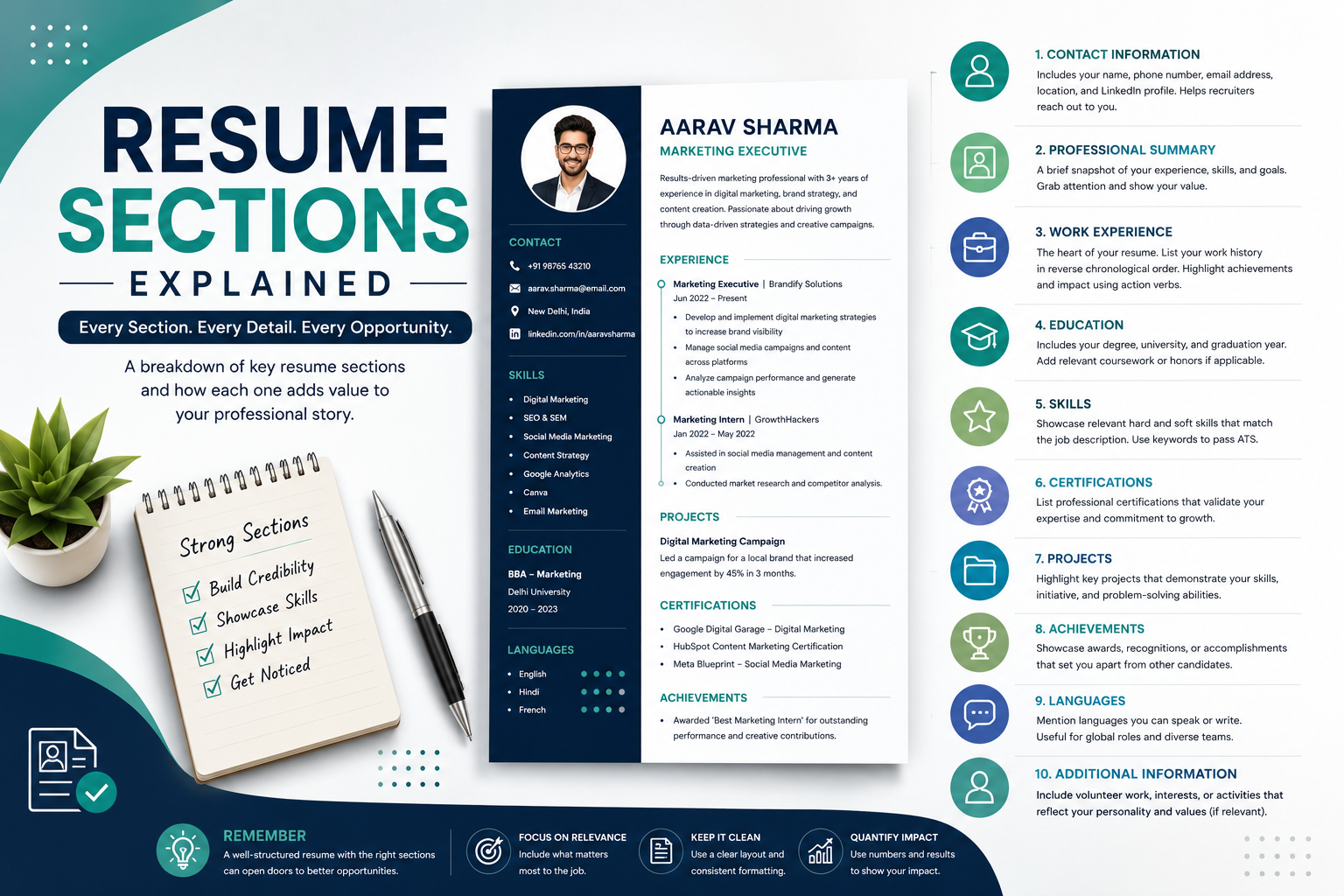
A resume is one of the most important documents in a job search. It is often the first thing a recruiter sees, and in just a few seconds, it must communicate your qualifications, experience, and potential. That is why understanding the key sections of a resume is essential for every job seeker.
At CvDragon, we believe that a well-structured resume increases your chances of getting shortlisted and makes a strong first impression. In this article, we will explain each resume section in detail so you can build a professional, ATS-friendly, and recruiter-ready document.
1. Contact Information
The contact information section appears at the top of the resume and should be simple, clear, and professional.
This section should include:
- Full name
- Mobile number
- Professional email address
- LinkedIn profile link
- City and state (optional)
- Portfolio or website link (if relevant)
Example:
Rahul Sharma
Kolkata, West Bengal
+91 9876543210
rahulsharma@email.com
linkedin.com/in/rahulsharma
Avoid adding unnecessary personal details such as marital status, religion, or full residential address unless specifically required.
2. Resume Summary or Career Objective
This section gives recruiters a quick overview of who you are professionally.
For Freshers: Career Objective
A career objective focuses on your goals and how you can contribute to the organization.
Example:
“Motivated BBA graduate with strong communication and analytical skills seeking an entry-level role in marketing to contribute to business growth.”
For Experienced Professionals: Resume Summary
A summary highlights your experience, achievements, and expertise.
Example:
“Results-driven marketing professional with 4+ years of experience in digital campaigns, brand strategy, and lead generation.”
Keep this section between 2–4 lines.
3. Skills Section
The skills section is one of the most important resume sections, especially for ATS screening.
Include both:
Technical Skills
- MS Excel
- Digital Marketing
- SEO
- Data Analysis
- Project Management
Soft Skills
- Communication
- Leadership
- Teamwork
- Time management
- Problem-solving
Use keywords that match the job description to improve your chances of getting shortlisted.
4. Work Experience
This is usually the most important section for experienced candidates.
List your experience in reverse chronological order, with the most recent role first.
Each entry should include:
- Job title
- Company name
- Employment dates
- Key responsibilities
- Achievements
Example:
Marketing Executive
ABC Pvt. Ltd. | Jan 2023 – Present
- Managed digital marketing campaigns
- Increased lead conversion by 22%
- Conducted competitor analysis
- Improved website traffic through SEO strategies
Focus more on achievements and measurable results rather than just duties.
5. Internship Experience
For students and freshers, internship experience often plays the role of work experience.
Include:
- Position title
- Organization name
- Duration
- Key learnings and outcomes
This section helps recruiters assess practical exposure and workplace readiness.
6. Education Section
The education section is essential for all candidates, especially recent graduates.
Include:
- Degree name
- College / University
- Passing year
- Percentage / CGPA
Example:
Bachelor of Business Administration (BBA)
XYZ University, Kolkata
2021 – 2024
CGPA: 8.3
Freshers may also include Class 12 and Class 10 details.
Experienced professionals can keep this section brief.
7. Certifications
Certifications strengthen your profile and show continuous learning.
Examples:
- Google Digital Marketing Certification
- Advanced Excel
- Corporate Law Certification
- HR Analytics
This section is highly useful if you are switching careers or adding new skills.
8. Projects Section
Projects are especially important for students, freshers, and technical roles.
Mention:
- Project title
- Objective
- Tools used
- Outcome
Example:
Consumer Buying Behavior Analysis Project
- Conducted survey research with 200 participants
- Used Excel for data interpretation
- Presented actionable consumer insights
Projects demonstrate practical knowledge and problem-solving ability.
9. Achievements and Awards
This section helps your resume stand out.
Include:
- Academic awards
- Scholarships
- Employee recognition
- Competition wins
- Leadership awards
Example:
- Best Intern Award, 2024
- College Debate Winner
- Merit Scholarship Recipient
Achievements build credibility and showcase excellence.
10. Additional Information
This is an optional section but can add value.
It may include:
- Languages known
- Volunteer work
- Hobbies and interests
- Extracurricular activities
Example:
Languages: English, Hindi, Bengali
Interests: Public speaking, content writing
Keep this section relevant and concise.
11. References (Optional)
References are usually not required unless specifically requested.
Instead of listing names and phone numbers, you may write:
References available upon request
This keeps your resume clean and professional.
Final Thoughts
Every section of your resume has a specific purpose. Together, these sections create a complete professional profile that helps recruiters understand your strengths quickly.
At CvDragon, we recommend keeping your resume sections clear, organized, and tailored to the role you are applying for.
A well-structured resume is not just a document—it is your professional introduction.
When each section is thoughtfully written, your chances of landing interviews improve significantly.
Leave a Reply