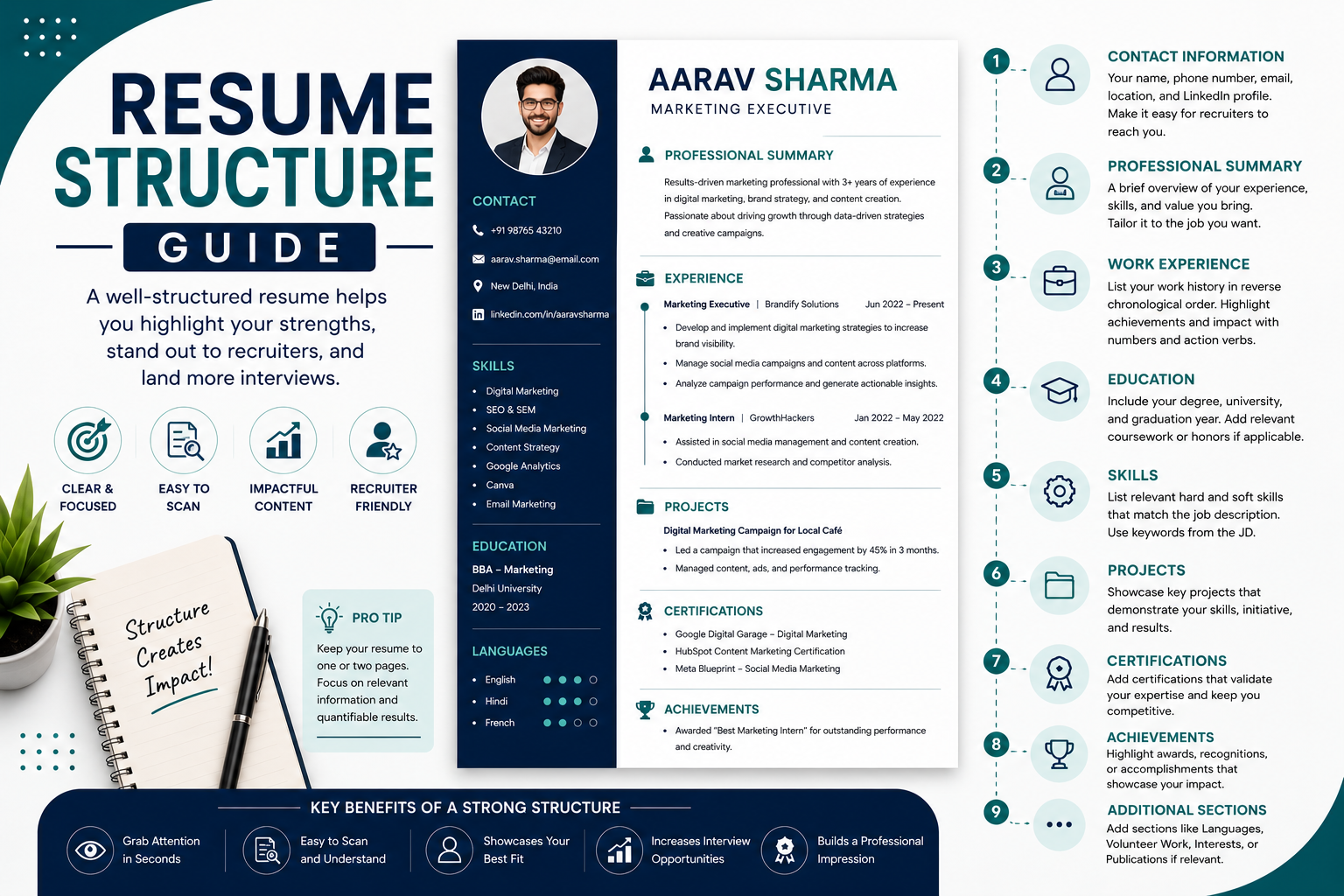
A resume is often the first impression you make on a recruiter, and in today’s competitive job market, that first impression matters more than ever. A well-structured resume not only presents your qualifications clearly but also improves your chances of getting shortlisted for interviews. Whether you are a fresher, a student, or an experienced professional, understanding the right resume structure is essential.
At CvDragon, we believe that a professionally organized resume can open doors to the right opportunities. This guide will help you understand the ideal resume format, key sections, and best practices to create a powerful, SEO-friendly, and ATS-optimized resume.
Why Resume Structure Matters
Recruiters usually spend only 6 to 10 seconds scanning a resume before deciding whether to continue reading. That means your resume must be easy to read, well-organized, and focused on relevant information.
A proper structure helps employers quickly identify:
- Who you are
- What skills you bring
- Your experience level
- Your academic background
- Your achievements
A messy or poorly arranged resume can lead to rejection even if you are qualified.
Ideal Resume Structure
A professional resume should follow a clear and logical flow. Here is the ideal structure.
1. Header / Contact Information
The top section of your resume should include your basic contact details.
This section must contain:
- Full name
- Mobile number
- Professional email address
- LinkedIn profile link
- City and state (optional)
- Portfolio or website link (if relevant)
Example:
Rahul Sharma
Kolkata, West Bengal
+91 9876543210
rahulsharma@email.com
linkedin.com/in/rahulsharma
Make sure your email address looks professional.
Avoid informal emails like coolboy123@email.com.
2. Professional Summary / Career Objective
This is a short paragraph placed below the header.
For freshers, use a career objective.
For experienced candidates, use a professional summary.
Keep it between 2–4 lines.
Example for fresher:
“Motivated BBA graduate with strong communication and analytical skills seeking an entry-level marketing role to contribute to business growth and brand development.”
This section should immediately communicate your career direction.
3. Skills Section
The skills section is one of the most important parts of the resume, especially for ATS (Applicant Tracking System) screening.
Split this into:
Technical Skills
- MS Excel
- PowerPoint
- Digital Marketing
- SEO
- Data Analysis
Soft Skills
- Communication
- Leadership
- Problem-solving
- Teamwork
- Time management
Use keywords that match the job description.
This improves your chances of getting shortlisted.
4. Work Experience / Internship Experience
This section should come right after skills for experienced professionals.
For freshers, internships and projects can be added here.
Use reverse chronological order.
Include:
- Job title
- Company name
- Employment dates
- Key responsibilities
- Achievements
Example:
Marketing Intern
ABC Pvt. Ltd. | Jan 2025 – Mar 2025
- Assisted in social media campaign planning
- Improved engagement rate by 18%
- Conducted competitor market research
- Created weekly performance reports
Always use bullet points for readability.
5. Education Section
This section is essential for students and freshers.
Mention:
- Degree name
- College / University name
- Passing year
- Percentage / CGPA
Example:
Bachelor of Business Administration (BBA)
XYZ University, Kolkata
2021 – 2024
CGPA: 8.2
Add your Class 12 and Class 10 only if you are a fresher.
6. Certifications
Certifications strengthen your resume and show skill development.
Examples:
- Google Digital Marketing Certification
- Excel for Business
- HR Management Course
- Corporate Law Certification
This section is especially useful for students with limited work experience.
7. Projects
Projects help recruiters understand practical knowledge.
Mention:
- Project title
- Tools used
- Outcome
Example:
Market Research Project on Consumer Buying Behavior
- Conducted survey analysis of 200 participants
- Used Excel for data interpretation
- Presented findings on customer preferences
Projects are highly recommended for students and recent graduates.
8. Achievements and Awards
This section helps your resume stand out.
Examples:
- College topper
- Debate competition winner
- Best intern award
- Scholarship recipient
Achievements show credibility and performance.
9. Additional Information
Optional but useful sections include:
- Languages known
- Hobbies and interests
- Volunteer work
- Extracurricular activities
Example:
Languages: English, Hindi, Bengali
Interests: Public speaking, content writing
Keep this section brief and relevant.
Best Resume Formatting Tips
A strong structure also depends on clean formatting.
Follow these rules:
- Use professional fonts like Arial, Calibri, or Times New Roman
- Font size: 10–12 for text
- Use bold headings
- Maintain equal spacing
- Keep margins balanced
- Use bullet points instead of paragraphs
Your resume should ideally be:
- 1 page for freshers
- 1–2 pages for experienced professionals
Common Mistakes to Avoid
Avoid these resume structure mistakes:
- Too much text in paragraphs
- Unclear section headings
- Irrelevant personal details
- Grammar mistakes
- Inconsistent formatting
- Too many colors or graphics
Simple and professional always works best.
Final Thoughts
A strong resume structure is the foundation of a successful job application. It helps recruiters quickly understand your profile and improves your chances of getting noticed.
At CvDragon, we always recommend keeping your resume clear, concise, and job-focused. A well-organized resume is not just a document—it is your personal brand in front of employers.
Build it carefully, structure it smartly, and let it represent your professional journey with confidence.
Leave a Reply