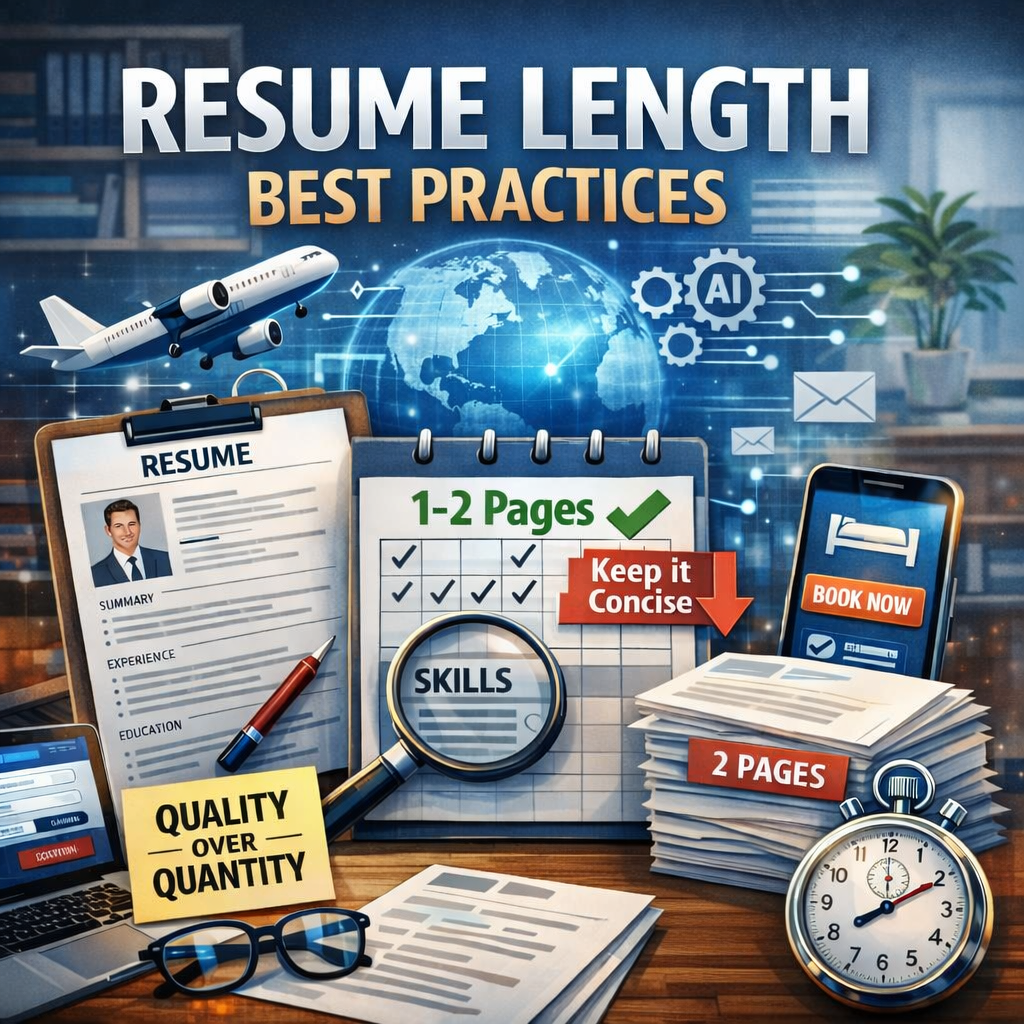
When it comes to job applications, one of the most common questions job seekers ask is: How long should a resume be? The answer is simple yet important—your resume should be as long as necessary, but as short as possible. In today’s competitive hiring landscape, recruiters spend only a few seconds scanning each application, so the length of your resume can directly impact whether it gets read or ignored.
At CvDragon, we help candidates create professional resumes that are not only well-structured but also optimized for readability and ATS (Applicant Tracking System) screening. In this guide, we will explain the best practices for resume length, based on experience level, job type, and industry expectations.
Why Resume Length Matters
A resume is not your life story. It is a targeted marketing document designed to show why you are the right fit for a particular role.
Recruiters often review hundreds of applications for a single position. If your resume is too long, they may miss the most important details. If it is too short, it may fail to demonstrate your qualifications.
The ideal resume length balances clarity, relevance, and impact.
Ideal Resume Length by Experience Level
The best resume length often depends on how much professional experience you have.
1. Freshers and Students: 1 Page
If you are a student, recent graduate, or someone with less than 2 years of experience, a one-page resume is the best practice.
At this stage, employers mainly look for:
- Education
- Skills
- Internships
- Projects
- Certifications
- Extracurricular achievements
A concise one-page resume helps recruiters quickly understand your potential without overwhelming them.
For most fresher roles, one page is more than enough.
2. Mid-Level Professionals: 1 to 2 Pages
For candidates with 2 to 8 years of work experience, a 1–2 page resume is considered ideal.
This length gives enough space to highlight:
- Relevant work experience
- Key achievements
- Technical skills
- Certifications
- Promotions
- Leadership roles
If your achievements are highly relevant and measurable, using two pages is completely acceptable.
However, never stretch content unnecessarily just to fill space.
3. Senior Professionals: 2 Pages
For professionals with 8+ years of experience, a two-page resume is the standard best practice.
At this level, employers expect more detailed information such as:
- Strategic responsibilities
- Team leadership
- Major business achievements
- Revenue growth contributions
- Project management experience
Two pages allow you to showcase depth without sacrificing readability.
In most industries, going beyond two pages is not recommended unless specifically required.
When a 3-Page Resume Is Acceptable
A three-page resume may be acceptable only in specific cases, such as:
- Academic roles
- Research positions
- Government applications
- Senior executive roles
- Technical specialists with extensive projects
For most corporate jobs, however, anything beyond two pages can reduce readability.
If your content exceeds two pages, review whether every detail is relevant.
Quality Over Quantity
Resume length should never be based on page count alone.
The focus should always be on relevant value-driven content.
For example, instead of listing every task you performed, highlight achievements like:
- Increased sales by 25%
- Managed a team of 10 members
- Reduced costs by 15%
This approach adds more impact in fewer words.
A shorter resume with strong achievements is better than a long one filled with generic responsibilities.
Keep Only Relevant Experience
One of the best ways to maintain the ideal resume length is by removing irrelevant details.
Avoid including:
- Very old work experience unrelated to the role
- School achievements if you are an experienced professional
- Unnecessary personal details
- Hobbies that do not add value
Focus only on information that supports the job you are applying for.
Use Bullet Points Instead of Long Paragraphs
Long paragraphs make resumes difficult to scan.
Instead, use short bullet points.
For example:
- Managed client communications
- Improved customer satisfaction by 20%
- Led weekly performance reviews
Bullet points improve readability and help recruiters absorb information faster.
ATS-Friendly Resume Length Tips
Applicant Tracking Systems scan resumes for keywords and structure.
To keep your resume ATS-friendly:
- Use clear headings
- Avoid tables and graphics
- Use standard fonts
- Keep formatting simple
- Use job-specific keywords
A well-formatted 1–2 page resume performs much better in ATS systems than a visually cluttered long document.
Avoid Common Resume Length Mistakes
Many candidates make these mistakes:
Adding Too Much Information
Do not include every job duty from every role.
Focus on achievements and relevance.
Repeating Similar Points
Avoid repetition across multiple roles.
Making It Too Short
A half-page resume can look incomplete unless you are a fresher with limited experience.
Forcing It to One Page
Sometimes candidates remove important achievements just to keep it one page.
If you have relevant experience, a second page is perfectly acceptable.
Industry-Specific Expectations
Different industries may have slightly different expectations.
Corporate / Private Sector:
1–2 pages
Academic / Research:
2–3 pages or more
Creative Fields:
1–2 pages with portfolio link
Government / Public Sector:
As per official guidelines
Understanding the industry standard helps you create a more effective application.
Final Thoughts
The best resume length is not about fitting into a fixed number of pages—it is about presenting your most relevant qualifications in the clearest possible way.
For most job seekers:
- Freshers: 1 page
- Mid-level: 1–2 pages
- Experienced: 2 pages
At CvDragon, we always recommend focusing on relevance, achievements, and readability over page count.
A concise, impactful resume creates a stronger impression than a lengthy one filled with unnecessary details.
Remember, your resume should make recruiters want to call you—not make them search for the important points.
Leave a Reply