Blog

  • Time Blocking Techniques for Students: A Smart Strategy to Improve Focus, Productivity, and Academic Success

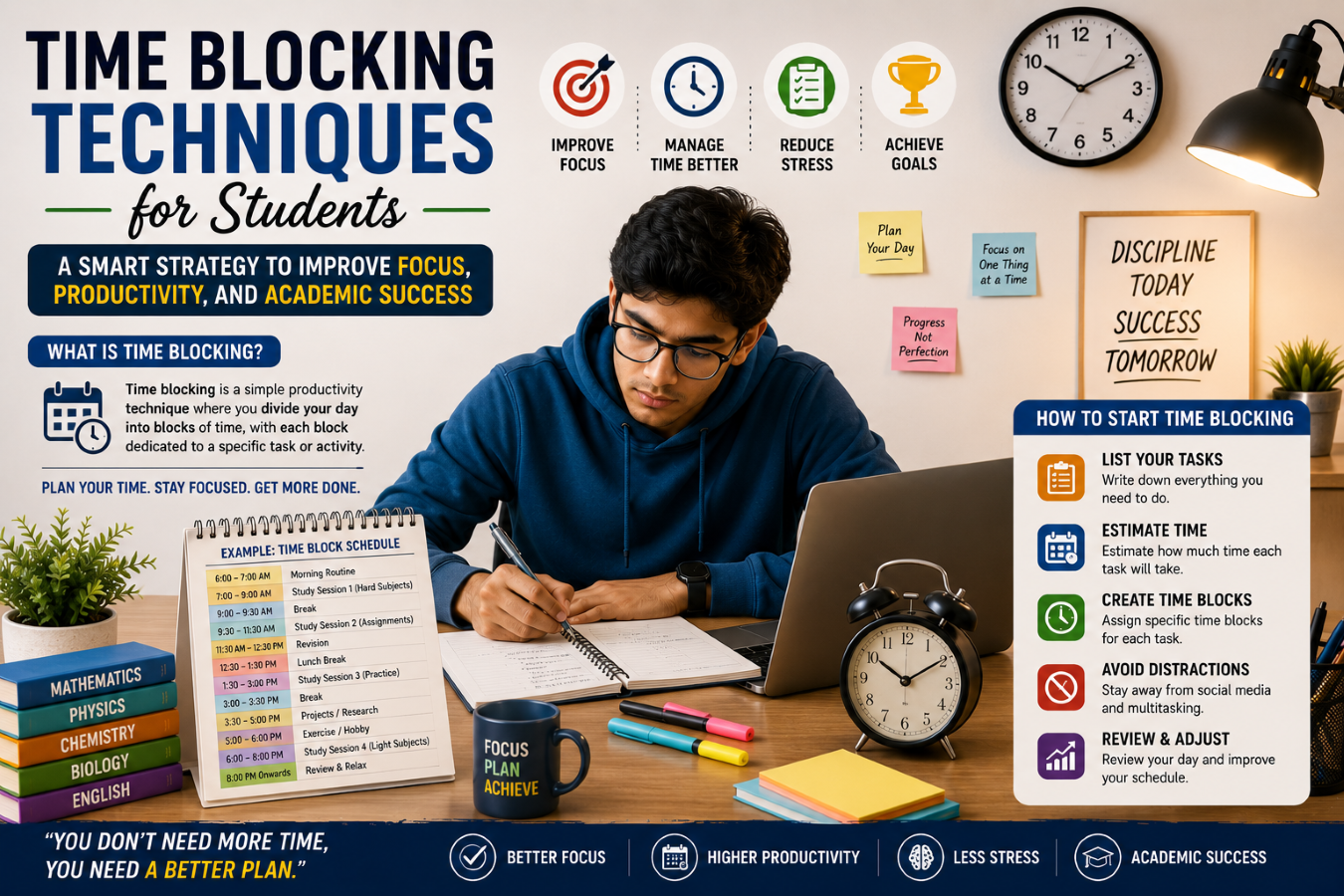
    Time Blocking Techniques for Students: A Smart Strategy to Improve Focus, Productivity, and Academic Success

    Managing time effectively is one of the biggest challenges students face today. Between attending classes, completing assignments, preparing for exams, participating in extracurricular activities, and maintaining a personal life, it can be difficult to stay organized and productive. Many students struggle with procrastination, distractions, and feeling overwhelmed by their responsibilities. One of the most effective ways to overcome these challenges is through time blocking.

    At CVDragon, we believe that successful students are not necessarily those who study the longest but those who manage their time wisely. Time blocking is a practical productivity technique that helps students organize their day into dedicated periods for specific tasks. By assigning a fixed time for studying, projects, breaks, and personal activities, students can improve focus, reduce stress, and achieve better academic and career outcomes.

    What Is Time Blocking?

    Time blocking is a time management method where students divide their day into blocks of time, with each block dedicated to a specific task or activity. Instead of working from a long to-do list, students schedule exactly when they will complete each task.

    For example, rather than planning to “study mathematics sometime today,” a student might block 4:00 PM to 5:30 PM exclusively for mathematics revision. This structured approach reduces decision fatigue and makes it easier to stay focused.

    Unlike multitasking, which often decreases productivity, time blocking encourages students to concentrate on one task at a time, leading to better learning and improved efficiency.

    Why Time Blocking Is Important for Students

    Many students underestimate how much time they lose switching between tasks or getting distracted by social media, notifications, or unplanned activities. Time blocking creates a clear structure that minimizes distractions and helps students stay committed to their priorities.

    Some of the key benefits include:

    • Improved concentration.
    • Better time management.
    • Reduced procrastination.
    • Increased productivity.
    • Lower stress levels.
    • Balanced academic and personal life.
    • Greater consistency in learning.

    By planning each day intentionally, students gain greater control over their schedules and make steady progress toward their goals.

    Start by Identifying Your Priorities

    Before creating a time-blocking schedule, students should identify their most important responsibilities. These may include:

    • Attending classes.
    • Completing assignments.
    • Preparing for examinations.
    • Learning new skills.
    • Working on projects.
    • Participating in internships.
    • Exercise and self-care.
    • Family responsibilities.
    • Leisure and relaxation.

    Understanding priorities ensures that important activities receive dedicated attention instead of being postponed.

    Plan Your Day in Advance

    One of the most effective time-blocking habits is planning the next day’s schedule the evening before. This simple routine helps students begin each day with clarity and purpose.

    When planning, students should:

    • List important tasks.
    • Estimate how much time each task requires.
    • Allocate dedicated time blocks.
    • Include buffer time for unexpected interruptions.
    • Schedule regular breaks.

    Planning ahead reduces uncertainty and makes it easier to begin work immediately.

    Group Similar Tasks Together

    Task switching can significantly reduce productivity. Instead of alternating between unrelated activities, students should group similar tasks into the same time block.

    Examples include:

    • Reading multiple chapters during one study session.
    • Completing all assignment research together.
    • Responding to emails during a single block.
    • Watching educational videos consecutively.
    • Practicing programming exercises in one session.

    Grouping similar activities improves efficiency by allowing the brain to remain focused on one type of work.

    Schedule Your Most Important Tasks First

    Students are usually most productive during certain hours of the day. Some concentrate better in the morning, while others perform best during the evening.

    Identify your peak productivity period and reserve it for high-priority tasks such as:

    • Studying difficult subjects.
    • Writing reports.
    • Solving mathematical problems.
    • Preparing presentations.
    • Learning technical skills.

    Less demanding activities, such as organizing notes or checking emails, can be completed during lower-energy periods.

    Use Dedicated Study Blocks

    Rather than studying for several hours without structure, divide study time into focused sessions.

    For example:

    • 8:00 AM – 9:00 AM: Mathematics
    • 9:15 AM – 10:15 AM: Science
    • 10:30 AM – 11:30 AM: Assignment Writing
    • 4:00 PM – 5:00 PM: Skill Development Course

    Dedicated study blocks help maintain concentration and make learning more organized.

    Include Breaks to Maintain Productivity

    Continuous studying can reduce concentration and increase mental fatigue. Short breaks help refresh the mind and improve learning efficiency.

    Students should:

    • Take a 5–10 minute break after every 45–60 minutes of focused study.
    • Stretch or walk during breaks.
    • Stay hydrated.
    • Avoid spending the entire break on social media.

    Well-planned breaks improve long-term focus and prevent burnout.

    Minimize Digital Distractions

    Technology is one of the biggest obstacles to effective time management. Notifications, messaging apps, and entertainment platforms can quickly interrupt concentration.

    To protect study blocks:

    • Silence unnecessary notifications.
    • Keep your phone away while studying.
    • Use website blockers if needed.
    • Close unrelated browser tabs.
    • Inform family members of your study schedule.

    Creating distraction-free time blocks allows students to complete work more efficiently.

    Leave Buffer Time Between Activities

    Unexpected interruptions are inevitable. Classes may run longer, assignments may require additional research, or personal responsibilities may arise.

    Including short buffer periods between major tasks provides flexibility and prevents the entire schedule from falling behind.

    For example:

    • 2:00 PM – 3:00 PM: Assignment Work
    • 3:00 PM – 3:20 PM: Buffer Time
    • 3:20 PM – 4:20 PM: Online Course

    Buffer time helps students adapt without feeling overwhelmed.

    Make Time for Skill Development

    Academic success is important, but career readiness also requires practical skills. Students should reserve dedicated blocks each week for learning industry-relevant competencies.

    Examples include:

    • Programming.
    • Digital marketing.
    • Graphic design.
    • Public speaking.
    • Data analytics.
    • Financial modeling.
    • Artificial intelligence tools.

    Consistent skill development enhances employability and supports long-term career growth.

    Balance Study with Personal Well-Being

    Effective time blocking is not about filling every minute with work. Students should also schedule time for activities that support physical and mental health.

    Important personal blocks include:

    • Exercise.
    • Family time.
    • Reading for enjoyment.
    • Hobbies.
    • Meditation.
    • Sleep.

    Maintaining balance improves productivity and reduces stress over time.

    Review and Adjust Your Schedule

    No schedule is perfect from the beginning. Students should regularly evaluate how well their time blocks are working.

    Ask yourself:

    • Did I complete my planned tasks?
    • Which activities took longer than expected?
    • What distractions affected my schedule?
    • Which time blocks were most productive?
    • How can I improve tomorrow’s plan?

    Regular reflection helps students create more realistic and effective schedules.

    Common Mistakes Students Should Avoid

    While time blocking is highly effective, certain mistakes can reduce its benefits.

    Common errors include:

    • Creating unrealistic schedules.
    • Overloading the day with too many tasks.
    • Ignoring breaks.
    • Not allowing buffer time.
    • Constantly changing the schedule.
    • Multitasking during study blocks.
    • Failing to review progress.

    A flexible and realistic schedule is far more sustainable than an overly ambitious one.

    Digital Tools That Support Time Blocking

    Several digital tools can help students organize their schedules more effectively.

    Popular options include:

    • Digital calendars.
    • Task management applications.
    • Productivity planners.
    • Reminder apps.
    • Study timer applications.
    • Project management platforms.

    Using these tools consistently can simplify planning and improve accountability.

    Time Blocking and Career Success

    Learning effective time management during student life provides long-term benefits in the workplace. Professionals who can prioritize tasks, meet deadlines, manage multiple responsibilities, and remain focused are highly valued across industries.

    Time blocking helps students develop transferable skills such as:

    • Planning.
    • Organization.
    • Self-discipline.
    • Accountability.
    • Productivity.
    • Stress management.

    These habits contribute not only to academic achievement but also to long-term professional success.

    Conclusion

    Time blocking is one of the most effective techniques students can use to improve productivity, maintain focus, and achieve academic excellence. By organizing the day into dedicated blocks for studying, assignments, skill development, breaks, and personal activities, students gain greater control over their schedules while reducing procrastination and stress. Rather than working reactively, time blocking encourages intentional and consistent progress toward both academic and career goals.

    At CVDragon, we encourage students to adopt time blocking as part of their daily routine. When combined with clear goals, disciplined study habits, and continuous skill development, this simple yet powerful technique can transform the way students learn and prepare for future opportunities. Mastering time today is an investment in tomorrow’s academic achievements, career growth, and lifelong success.
  • How Students Can Build Learning Discipline: A Practical Guide to Achieving Academic and Career Success

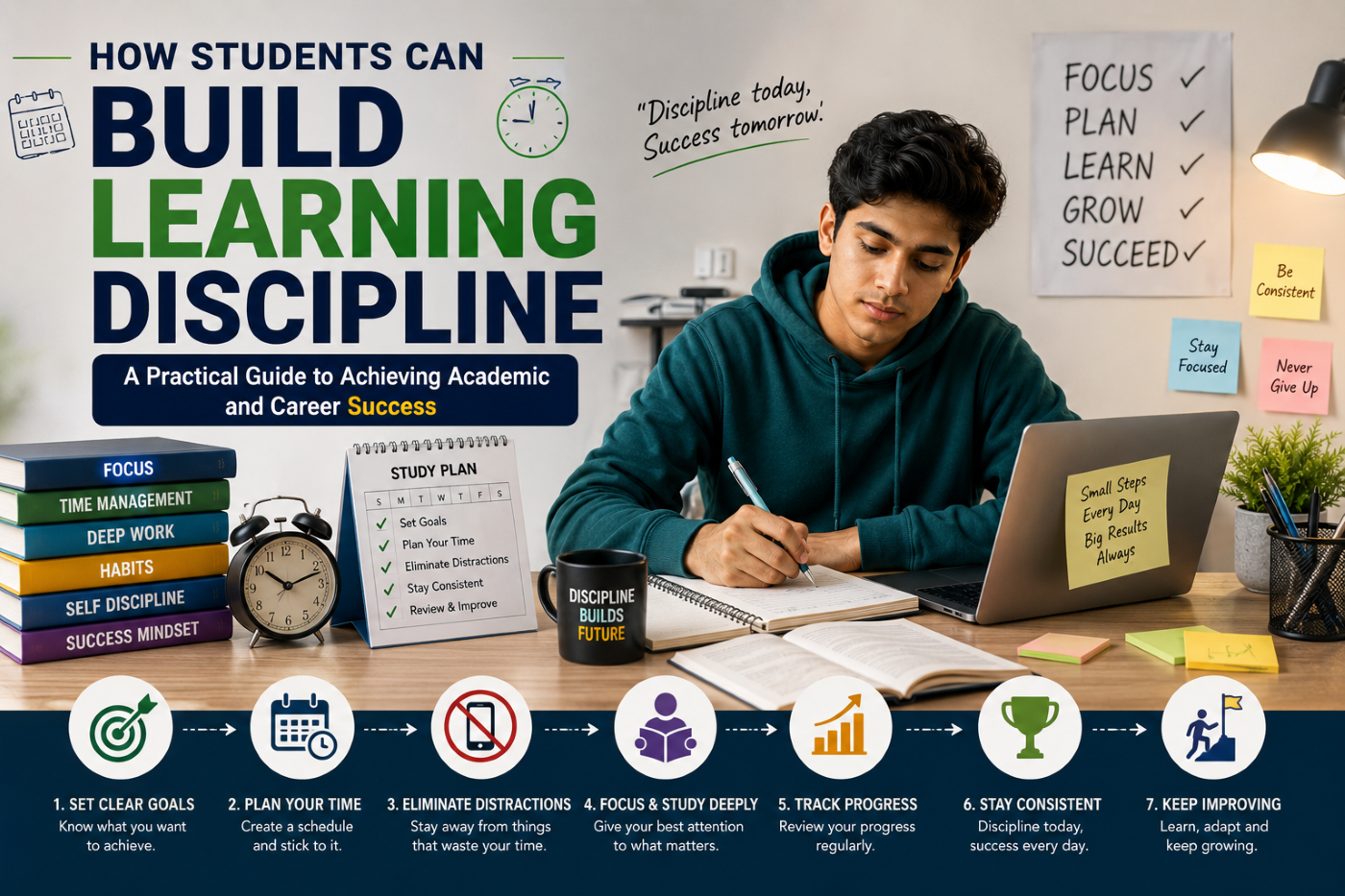
    How Students Can Build Learning Discipline: A Practical Guide to Achieving Academic and Career Success

    Success in education and professional life is rarely the result of talent alone. More often, it comes from consistency, commitment, and the ability to stay focused on long-term goals. This is where learning discipline plays a vital role. Learning discipline is the habit of studying regularly, managing time effectively, maintaining focus, and continuously improving knowledge and skills, even when motivation fluctuates. In today’s fast-paced world filled with distractions, developing learning discipline has become one of the most valuable qualities a student can possess.

    At CVDragon, we believe that disciplined learning is the foundation of lifelong success. Students who cultivate strong learning habits not only achieve better academic results but also develop the resilience, adaptability, and work ethic needed to excel in their careers. Learning discipline is not about studying for long hours; it is about creating sustainable habits that encourage continuous growth and productivity.

    What Is Learning Discipline?

    Learning discipline refers to the ability to follow a consistent study routine, stay committed to educational goals, and prioritize learning despite distractions or challenges. It involves self-control, effective planning, and the willingness to continue learning even when tasks become difficult.

    Unlike motivation, which can change from day to day, discipline provides consistency. A motivated student may study when they feel inspired, but a disciplined student studies because it is part of their routine and commitment to personal growth.

    Developing learning discipline helps students become more independent, responsible, and confident in their ability to achieve long-term goals.

    Why Learning Discipline Matters

    In today’s competitive academic and professional environment, knowledge alone is not enough. Students must continuously update their skills, adapt to changing technologies, and remain committed to lifelong learning.

    Learning discipline offers several important benefits:

    • Improves academic performance.
    • Strengthens time management.
    • Builds consistency and accountability.
    • Enhances focus and concentration.
    • Reduces procrastination.
    • Develops problem-solving abilities.
    • Supports long-term career growth.

    Students who practice disciplined learning are better prepared for examinations, internships, professional certifications, and workplace challenges.

    Set Clear Learning Goals

    The first step toward building discipline is defining clear and achievable learning objectives. Without specific goals, students often lose focus and struggle to measure their progress.

    Effective learning goals should be:

    • Specific.
    • Measurable.
    • Achievable.
    • Relevant.
    • Time-bound.

    For example, instead of saying, “I want to improve my programming skills,” a better goal would be, “I will complete one Python module and build a small project within four weeks.”

    Clear goals provide direction and make it easier to stay committed.

    Create a Consistent Study Routine

    Consistency is the foundation of discipline. Establishing a regular study schedule helps train the brain to associate certain times of the day with focused learning.

    Students should:

    • Choose fixed study hours.
    • Allocate time for different subjects or skills.
    • Include short breaks to maintain concentration.
    • Balance academics with extracurricular activities and rest.

    A predictable routine reduces decision fatigue and makes studying a natural part of daily life.

    Prioritize Tasks Effectively

    Not all learning activities have the same level of importance. Students should identify high-priority tasks and complete them before less important ones.

    Creating a daily or weekly task list helps organize responsibilities and prevents last-minute stress.

    Prioritization can include:

    • Assignment deadlines.
    • Examination preparation.
    • Skill development courses.
    • Project work.
    • Revision sessions.

    Focusing on important tasks first improves productivity and ensures steady progress.

    Eliminate Distractions

    Digital distractions are among the biggest obstacles to disciplined learning. Social media notifications, entertainment platforms, and constant smartphone usage can significantly reduce concentration.

    To create a distraction-free learning environment:

    • Keep your study area organized.
    • Silence unnecessary notifications.
    • Limit social media during study sessions.
    • Use website blockers if needed.
    • Study in a quiet, comfortable space.

    Minimizing distractions allows students to concentrate more effectively and complete tasks in less time.

    Develop Active Learning Habits

    Simply reading textbooks is not always the most effective way to learn. Active learning encourages deeper understanding and improves long-term retention.

    Students can practice active learning by:

    • Taking notes.
    • Summarizing concepts in their own words.
    • Solving practical problems.
    • Teaching others.
    • Participating in discussions.
    • Applying knowledge through projects.

    These methods help transform information into practical understanding.

    Practice Time Management

    Time management is closely linked to learning discipline. Students who manage their time effectively can balance academics, personal interests, and skill development without feeling overwhelmed.

    Useful time management strategies include:

    • Breaking large tasks into smaller goals.
    • Setting realistic deadlines.
    • Using planners or digital calendars.
    • Scheduling regular revision sessions.
    • Reviewing daily progress.

    Efficient time management reduces stress while increasing productivity.

    Build Learning Through Small Daily Habits

    Discipline develops gradually through consistent daily actions rather than dramatic changes.

    Simple habits include:

    • Reading for 30 minutes each day.
    • Practicing coding problems regularly.
    • Learning five new vocabulary words daily.
    • Watching one educational video each evening.
    • Reviewing class notes before sleeping.

    Small habits accumulate over time, leading to significant long-term improvement.

    Learn from Mistakes and Feedback

    Every student encounters setbacks during their learning journey. Instead of viewing mistakes as failures, disciplined learners treat them as opportunities for improvement.

    Constructive feedback from teachers, mentors, or peers helps students identify weaknesses and refine their learning strategies.

    Developing a growth mindset encourages continuous improvement and builds resilience when facing academic challenges.

    Maintain Physical and Mental Well-Being

    Learning discipline is easier to sustain when students take care of their health. A healthy body and mind support concentration, memory, and overall productivity.

    Students should prioritize:

    • Adequate sleep.
    • Nutritious meals.
    • Regular exercise.
    • Hydration.
    • Stress management.
    • Mindfulness or relaxation techniques.

    Maintaining balance prevents burnout and supports long-term learning success.

    Use Technology Wisely

    Technology can either distract or empower students, depending on how it is used.

    Educational technologies can support disciplined learning through:

    • Online courses.
    • Digital flashcards.
    • Productivity apps.
    • Note-taking software.
    • Educational podcasts.
    • Learning management systems.

    Students should intentionally use technology as a learning tool rather than allowing it to become a source of distraction.

    Stay Curious and Keep Learning

    Curiosity fuels lifelong learning. Students should explore topics beyond their academic curriculum, read widely, attend webinars, and engage with industry trends.

    Continuous learning helps students remain adaptable and competitive in a rapidly changing world.

    Developing curiosity also makes learning more enjoyable, reducing the feeling that studying is merely an obligation.

    Track Your Progress

    Monitoring progress helps students stay motivated and recognize improvements over time.

    Students can track:

    • Hours spent studying.
    • Courses completed.
    • Books read.
    • Skills acquired.
    • Projects finished.
    • Academic performance.

    Celebrating small achievements builds confidence and reinforces disciplined habits.

    Build Accountability

    Accountability increases commitment to learning goals. Students can stay accountable by:

    • Joining study groups.
    • Sharing goals with friends or mentors.
    • Participating in peer learning sessions.
    • Reporting progress regularly.
    • Working with career mentors.

    Having someone to encourage and monitor progress often improves consistency and motivation.

    Common Challenges to Learning Discipline

    Many students struggle with discipline due to common obstacles such as:

    • Procrastination.
    • Lack of clear goals.
    • Poor time management.
    • Fear of failure.
    • Digital distractions.
    • Inconsistent routines.
    • Low self-confidence.

    Recognizing these challenges is the first step toward overcoming them. Small, consistent improvements are far more effective than attempting drastic changes overnight.

    Learning Discipline and Career Success

    Employers value professionals who are self-motivated, dependable, and committed to continuous improvement. Learning discipline developed during student life translates directly into workplace success.

    Disciplined learners are more likely to:

    • Adapt to new technologies.
    • Complete professional certifications.
    • Meet deadlines consistently.
    • Develop leadership qualities.
    • Pursue lifelong learning.
    • Advance in their careers.

    These qualities contribute to long-term employability and professional growth in an ever-changing job market.

    Conclusion

    Learning discipline is one of the most valuable habits students can develop for academic excellence and lifelong career success. It is built through consistent routines, clear goals, effective time management, active learning, and the determination to improve every day. While motivation may come and go, discipline provides the steady foundation needed to achieve meaningful results.

    At CVDragon, we encourage students to view learning as a continuous journey rather than a short-term requirement. By developing disciplined study habits, embracing curiosity, and committing to personal growth, students can unlock their full potential and prepare themselves for the challenges and opportunities of the future. The habits built today will not only shape academic achievements but also lay the groundwork for a successful and fulfilling career.

  • Skill-Based Education vs Traditional Education: Which Prepares Students Better for the Future?

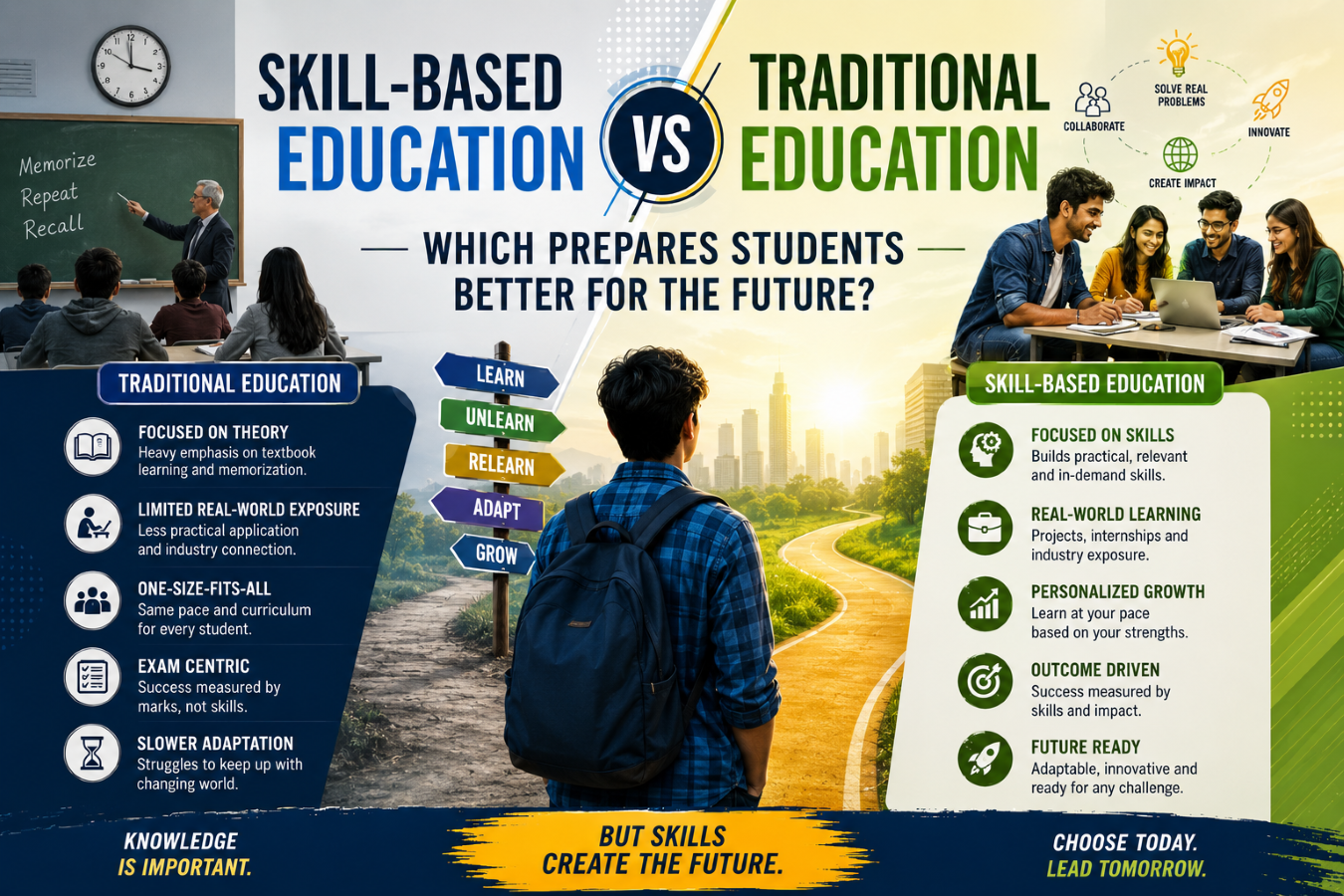
    Skill-Based Education vs Traditional Education: Which Prepares Students Better for the Future?

    Education has always been the foundation of personal and professional growth. For decades, traditional education has been the dominant model, focusing on academic knowledge, examinations, and theoretical understanding. However, the modern job market is changing rapidly. Employers are increasingly looking for candidates who can apply knowledge, solve real-world problems, communicate effectively, and adapt to new technologies. This shift has sparked a growing debate between skill-based education and traditional education.

    At CVDragon, we believe that understanding the differences between these two approaches is essential for students, parents, and educators. Both models offer valuable benefits, but their impact on career readiness and future opportunities can differ significantly.

    What Is Traditional Education?

    Traditional education is the conventional system followed by most schools and universities. It primarily focuses on structured curricula, classroom lectures, textbooks, examinations, and academic grades. Students learn subjects such as mathematics, science, history, literature, and commerce through theoretical instruction.

    The main objective of traditional education is to build foundational knowledge and intellectual understanding. It helps students develop discipline, academic reasoning, and subject-specific expertise. For many professions such as medicine, law, and research, strong theoretical education remains extremely important.

    What Is Skill-Based Education?

    Skill-based education focuses on developing practical abilities that can be directly applied in real-world situations. Instead of emphasizing memorization and examinations alone, it encourages hands-on learning, projects, internships, problem-solving, communication, digital literacy, and industry-relevant training.

    Examples of skill-based learning include coding, digital marketing, graphic design, data analytics, financial modeling, public speaking, project management, and entrepreneurship. The goal is to prepare students for employment, freelancing, business opportunities, and evolving workplace demands.

    The Key Difference

    Traditional Education

    Skill-Based Education

    Theory-focused

    Practice-focused

    Exam-oriented

    Project-oriented

    Fixed curriculum

    Industry-driven curriculum

    Grades are emphasized

    Competencies are emphasized

    Teacher-centered learning

    Learner-centered learning

    Long-term academic foundation

    Immediate employability

    Why Traditional Education Still Matters

    Despite criticism, traditional education continues to play a vital role in society. It provides students with a broad understanding of subjects, develops analytical thinking, and creates a foundation for advanced learning.

    Traditional education also helps students:

    • Understand fundamental concepts deeply.

    • Develop academic discipline.

    • Prepare for professional degrees.

    • Build research and theoretical knowledge.

    • Gain recognized qualifications.

    For careers such as medicine, engineering, law, academia, and scientific research, rigorous theoretical education remains essential.

    The Growing Importance of Skill-Based Education

    The modern economy is evolving faster than ever. New technologies, automation, artificial intelligence, and digital transformation are changing the nature of work. Many employers now prioritize practical skills and real-world experience alongside academic qualifications.

    Skill-based education offers several advantages:

    • Faster adaptation to industry needs.

    • Greater employability.

    • Hands-on experience.

    • Portfolio development.

    • Entrepreneurial opportunities.

    • Better workplace readiness.

    Students who learn practical skills early often find it easier to secure internships, freelance projects, and entry-level jobs.

    The Employability Factor

    One of the biggest concerns among graduates is employability. Many students complete degrees but struggle to meet employer expectations because they lack practical experience.

    Skill-based education helps bridge this gap by allowing students to apply what they learn. Employers frequently value candidates who can demonstrate real projects, internships, certifications, and problem-solving abilities.

    For example, a student with a marketing degree and hands-on experience in SEO, social media campaigns, and analytics may have a stronger job profile than someone with theoretical knowledge alone.

    The Role of Technology

    Technology has accelerated the demand for skill-based learning. Online platforms, virtual internships, digital tools, and remote work opportunities have made practical learning more accessible than ever.

    Students can now learn coding, data analysis, graphic design, video editing, digital marketing, and many other skills from anywhere in the world. This accessibility has made skill development an important part of career planning.

    Challenges of Traditional Education

    Traditional education faces several challenges in today’s fast-changing environment:

    • Curricula may become outdated.

    • Limited practical exposure.

    • Heavy focus on examinations.

    • Less emphasis on soft skills.

    • Slower adaptation to industry trends.

    As industries evolve rapidly, educational institutions often struggle to update programs quickly enough to match market needs.

    Challenges of Skill-Based Education

    Skill-based education is not without limitations. Focusing only on practical skills can sometimes result in a weaker theoretical foundation.

    Potential challenges include:

    • Limited conceptual depth.

    • Skills becoming outdated quickly.

    • Over-specialization at an early stage.

    • Lack of broader academic exposure.

    • Variations in training quality.

    Without strong foundational knowledge, students may find it harder to adapt to complex or advanced professional roles later in their careers.

    Why the Best Approach Is a Combination of Both

    Rather than viewing skill-based education and traditional education as opposites, many experts believe the most effective model combines both approaches.

    A balanced education should provide:

    • Strong theoretical foundations.

    • Practical industry skills.

    • Communication abilities.

    • Critical thinking.

    • Digital literacy.

    • Problem-solving experience.

    • Internship opportunities.

    • Project-based learning.

    For example, an engineering student benefits from learning core engineering principles through traditional education while also gaining hands-on experience through projects, internships, and technical certifications.

    How Students Can Prepare for the Future

    To succeed in the modern job market, students should actively combine academic learning with skill development.

    Practical steps include:

    • Taking online certification courses.

    • Building portfolio projects.

    • Participating in internships.

    • Joining competitions and hackathons.

    • Improving communication skills.

    • Learning digital tools.

    • Networking with professionals.

    • Staying updated with industry trends.

    This combination creates a stronger professional profile and improves long-term career prospects.

    The Future of Education

    Educational systems worldwide are increasingly moving toward hybrid models that integrate academic knowledge with practical skill development. Universities are introducing internships, industry collaborations, project-based assessments, and entrepreneurship programs to improve career readiness.

    Employers are also recognizing that the ideal candidate is not someone who only scores well in exams, but someone who can learn continuously, adapt quickly, and contribute effectively in real-world situations.

    Conclusion

    The debate between skill-based education vs traditional education is not about choosing one and rejecting the other. Both approaches offer unique strengths. Traditional education builds foundational knowledge, intellectual depth, and academic discipline, while skill-based education develops practical abilities, workplace readiness, and employability.

    At CVDragon, we believe the future belongs to students who combine the best of both worlds. A strong academic foundation supported by practical skills, real-world projects, internships, and continuous learning creates a powerful advantage in today’s competitive job market. Students who embrace both knowledge and skills will be better prepared to adapt, innovate, and succeed in the careers of tomorrow.

  • How Students Can Build Portfolio Projects

    In today’s competitive job market, employers are looking beyond academic degrees and resumes. They want evidence that candidates can apply their knowledge to solve real-world problems. This is why portfolio projects have become an essential part of career preparation for students. A well-crafted portfolio demonstrates practical skills, creativity, problem-solving abilities, and a willingness to learn—qualities that employers highly value across industries.

    At CVDragon, we believe that building portfolio projects early in your academic journey is one of the smartest investments you can make for your career. Whether you’re pursuing engineering, business, marketing, design, data science, finance, or any other field, a strong portfolio can differentiate you from other candidates and significantly improve your chances of securing internships, freelance work, and full-time employment.

    What Are Portfolio Projects?

    Portfolio projects are practical assignments, personal initiatives, research work, or professional samples that demonstrate your knowledge and abilities. Unlike academic grades, portfolio projects provide tangible proof of what you can accomplish.

    A portfolio can include:

    • Personal projects.
    • Academic assignments.
    • Internship work.
    • Freelance projects.
    • Case studies.
    • Research papers.
    • Business plans.
    • Design samples.
    • Coding applications.
    • Marketing campaigns.
    • Data analysis reports.

    Instead of simply stating that you possess certain skills, portfolio projects allow employers to see those skills in action.

    Why Portfolio Projects Matter

    Recruiters often receive hundreds of applications for a single position. Many candidates have similar educational backgrounds, making it difficult to identify standout applicants.

    A strong portfolio helps students:

    • Demonstrate practical knowledge.
    • Showcase problem-solving abilities.
    • Build professional credibility.
    • Highlight creativity and innovation.
    • Improve interview discussions.
    • Increase internship opportunities.
    • Strengthen resumes and online profiles.

    Portfolio projects provide concrete evidence that students are ready to contribute in professional environments from day one.

    Start with Your Career Goals

    Before creating a portfolio, students should identify the type of career they want to pursue. Different industries require different types of projects.

    For example:

    • Software development students can build mobile apps, websites, or automation tools.
    • Marketing students can create SEO strategies, social media campaigns, and branding projects.
    • Graphic design students can showcase logos, posters, illustrations, and UI/UX designs.
    • Business students can prepare market research reports, financial analyses, and business strategies.
    • Data analytics students can present dashboards, predictive models, and data visualization projects.

    Choosing projects that align with career goals makes the portfolio more relevant and attractive to recruiters.

    Solve Real-World Problems

    The most impressive portfolio projects solve practical problems rather than simply completing classroom exercises.

    Ask yourself questions like:

    • Can I improve an existing process?
    • Can I build a useful tool?
    • Can I analyze real-world data?
    • Can I create a solution for a local business?
    • Can I automate a repetitive task?

    Projects based on genuine challenges demonstrate initiative, creativity, and critical thinking—qualities employers appreciate.

    Use Academic Projects as a Foundation

    Many students underestimate the value of their coursework. Class assignments, research papers, presentations, and capstone projects can often be refined into professional portfolio pieces.

    Instead of submitting a project and forgetting about it:

    • Improve the design.
    • Add more research.
    • Include measurable outcomes.
    • Document your process.
    • Present your findings professionally.

    Enhancing academic work allows students to maximize the value of their educational experiences.

    Build Personal Projects

    Personal projects demonstrate passion and self-motivation because they are created voluntarily rather than as academic requirements.

    Examples include:

    • Designing a personal website.
    • Creating a mobile application.
    • Writing a blog series.
    • Developing a business plan.
    • Building an investment analysis model.
    • Creating educational videos.
    • Designing a product prototype.

    Personal initiatives show employers that students enjoy learning beyond the classroom.

    Participate in Internships and Freelance Work

    Internships provide excellent opportunities to create meaningful portfolio content.

    Students can include:

    • Marketing campaigns they contributed to.
    • Software features they developed.
    • Research reports they prepared.
    • Process improvements they suggested.
    • Customer engagement strategies.
    • Business analyses.

    Freelance projects can also demonstrate professional experience and client interaction skills, even before graduation.

    Join Competitions and Hackathons

    Competitions encourage students to solve practical problems under real-world constraints. These experiences often produce impressive portfolio projects while developing teamwork, communication, and time management skills.

    Students can participate in:

    • Business case competitions.
    • Coding challenges.
    • Design contests.
    • Startup competitions.
    • Innovation programs.
    • Data analytics hackathons.

    Awards are valuable, but even participation demonstrates initiative and practical experience.

    Document Your Process

    Employers are interested not only in the final outcome but also in how you approached the problem.

    For every project, explain:

    • The objective.
    • The challenge.
    • Your role.
    • The tools and technologies used.
    • The process you followed.
    • The results achieved.
    • Lessons learned.

    Clear documentation highlights your analytical thinking, project management skills, and ability to communicate effectively.

    Showcase Measurable Results

    Whenever possible, include measurable outcomes to demonstrate the impact of your work.

    Examples include:

    • Increased website traffic by 30%.
    • Reduced processing time by 20%.
    • Improved customer engagement.
    • Designed a prototype with enhanced usability.
    • Developed an application used by multiple users.
    • Conducted research involving hundreds of survey responses.

    Quantifiable achievements make portfolio projects more compelling and credible.

    Build an Online Portfolio

    A digital portfolio allows recruiters to view your work easily from anywhere.

    A professional online portfolio may include:

    • Personal introduction.
    • Resume.
    • Project summaries.
    • Images and screenshots.
    • Reports and presentations.
    • Videos or demonstrations.
    • Certifications.
    • Contact information.

    Students can also link their portfolio to professional networking platforms and job applications, making it easier for employers to evaluate their capabilities.

    Keep Improving Your Portfolio

    A portfolio is not a one-time assignment—it should evolve throughout your academic and professional journey.

    Regularly update it by:

    • Adding new projects.
    • Removing outdated work.
    • Improving project descriptions.
    • Including recent certifications.
    • Highlighting new achievements.
    • Showcasing advanced skills.

    A current portfolio reflects continuous learning and professional growth.

    Common Mistakes Students Should Avoid

    Many students reduce the effectiveness of their portfolios by making avoidable mistakes.

    Common errors include:

    • Including too many unrelated projects.
    • Focusing only on classroom assignments.
    • Providing little explanation of the work.
    • Ignoring project quality in favor of quantity.
    • Failing to update the portfolio regularly.
    • Omitting measurable results.
    • Using poor design or inconsistent formatting.

    A concise, well-organized portfolio often makes a stronger impression than one filled with numerous incomplete or low-quality projects.

    The Role of Portfolio Projects in Job Interviews

    Portfolio projects can significantly strengthen interview performance. They provide concrete examples that help students answer behavioral and technical questions with confidence.

    Instead of speaking in general terms, candidates can discuss:

    • Challenges they encountered.
    • Decisions they made.
    • Skills they applied.
    • Results they achieved.
    • Lessons they learned.

    These real-life examples demonstrate competence, confidence, and practical experience, making interview responses more persuasive and memorable.

    Future-Proofing Your Career Through Portfolio Development

    As industries continue to evolve, employers increasingly value candidates who demonstrate continuous learning and practical application of knowledge. Portfolio projects show that a student is proactive, adaptable, and committed to personal growth.

    By regularly creating new projects, learning emerging technologies, and solving real-world problems, students remain competitive in a rapidly changing job market. A strong portfolio not only helps secure the first job but also supports career advancement, freelancing opportunities, higher education applications, and professional networking.

    Conclusion

    Building portfolio projects is one of the most effective ways for students to showcase their skills, gain practical experience, and stand out in today’s competitive employment landscape. A thoughtfully curated portfolio demonstrates initiative, technical expertise, creativity, and problem-solving abilities that employers seek in modern professionals. Whether developed through academic assignments, personal initiatives, internships, competitions, or freelance work, every meaningful project contributes to a stronger professional profile.

    At CVDragon, we encourage students to start building their portfolios as early as possible. Every project completed is an opportunity to learn, improve, and demonstrate real-world capabilities. By consistently creating high-quality work, documenting achievements, and presenting projects professionally, students can build a portfolio that opens doors to internships, job opportunities, and long-term career success. In an increasingly skills-driven world, your portfolio can become one of your greatest career assets.

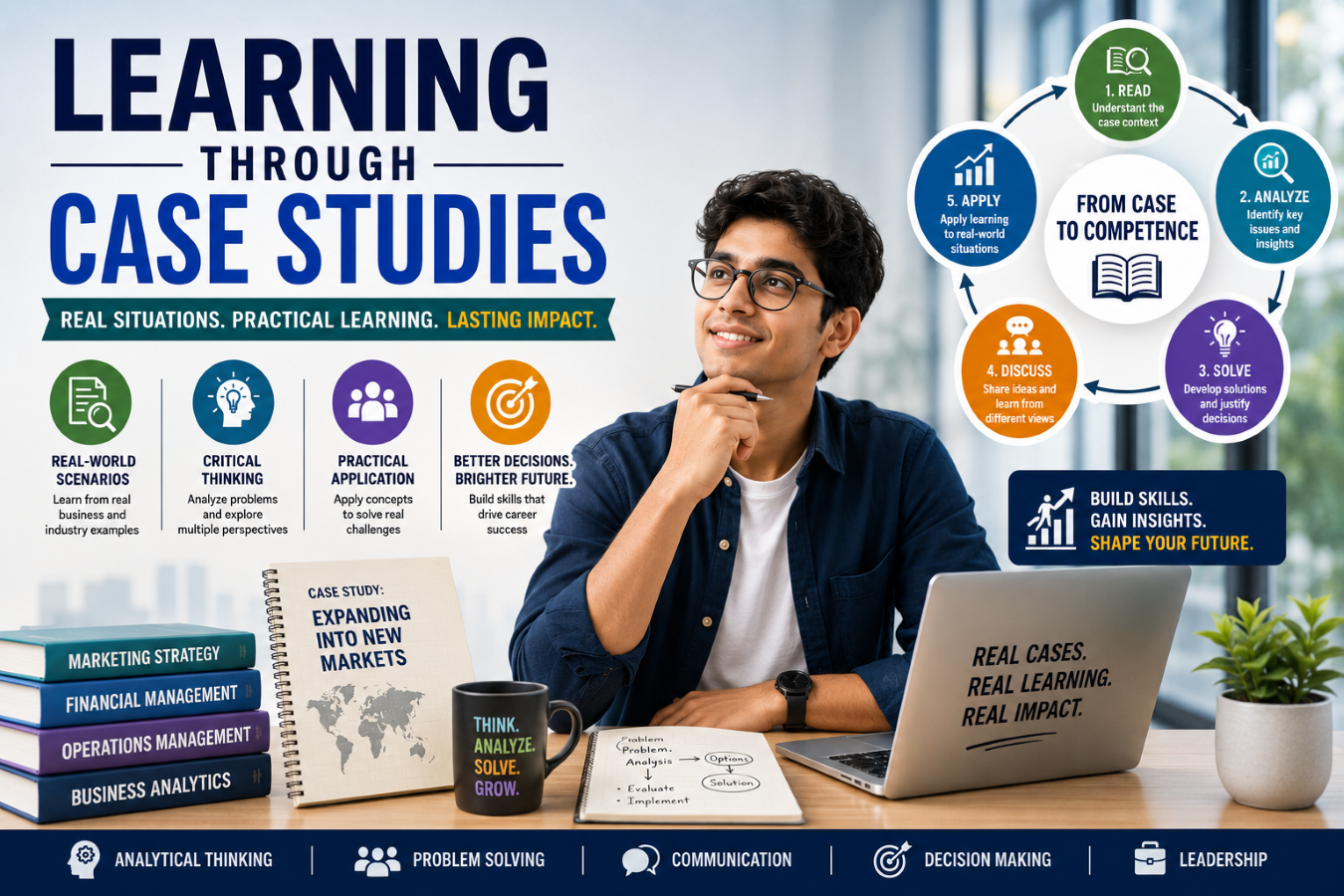
  • Learning Through Case Studies: Transforming Knowledge into Real-World Skills

    Learning Through Case Studies: Transforming Knowledge into Real-World Skills

    In today’s fast-changing educational and professional landscape, students need more than theoretical knowledge to succeed. Employers increasingly seek individuals who can analyze situations, solve problems, make informed decisions, and apply concepts to real-world challenges. One of the most effective ways to develop these abilities is through case study-based learning. By examining real or simulated scenarios, students gain practical insights that bridge the gap between classroom education and workplace expectations.

    At CVDragon, we believe that learning should go beyond textbooks and lectures. Case studies provide students with opportunities to think critically, explore multiple perspectives, and understand how theories are applied in real-life situations. Whether in business, technology, healthcare, marketing, engineering, or other fields, case study learning equips students with valuable skills that enhance academic performance and career readiness.

    What Is Case Study-Based Learning?

    A case study is a detailed examination of a specific situation, challenge, organization, event, or problem. It presents real-world circumstances that require analysis, evaluation, and decision-making. Students are encouraged to assess the information provided, identify key issues, propose solutions, and justify their recommendations.

    Unlike traditional learning methods that focus primarily on memorization, case studies emphasize active participation and critical thinking. Students become problem-solvers rather than passive learners, making the educational experience more engaging and impactful.

    For example, a marketing student may analyze a company’s failed advertising campaign to identify mistakes and recommend improvements. Similarly, an engineering student might examine a structural failure to understand technical and design challenges.

    Why Case Studies Are Important for Students

    Case studies provide a realistic learning environment where students can apply theoretical concepts to practical situations. This approach helps learners understand how ideas work outside academic settings and prepares them for professional challenges.

    Some key benefits include:

    • Enhanced critical thinking abilities.
    • Improved problem-solving skills.
    • Better decision-making capabilities.
    • Stronger analytical reasoning.
    • Increased industry awareness.
    • Greater confidence in applying knowledge.
    • Improved communication and presentation skills.

    By engaging with real-world situations, students develop competencies that employers highly value.

    Bridging the Gap Between Theory and Practice

    One of the biggest challenges students face is translating academic knowledge into workplace performance. While textbooks provide foundational concepts, they often cannot capture the complexity of real-life business and professional situations.

    Case studies bridge this gap by presenting practical challenges that require students to apply their learning. Instead of simply understanding a concept, students learn how to use it effectively in realistic scenarios.

    For example, a finance student may understand investment theories in class but gain a deeper understanding by analyzing actual company financial statements and making investment recommendations based on real market conditions.

    This practical application reinforces learning and improves retention.

    Developing Critical Thinking Skills

    Critical thinking is one of the most sought-after skills in the modern workplace. Employers value professionals who can evaluate information objectively, identify patterns, assess risks, and make informed decisions.

    Case studies naturally encourage critical thinking because they often present complex situations with no single correct answer. Students must examine evidence, consider multiple viewpoints, and justify their conclusions.

    Through repeated exposure to case studies, students learn how to:

    • Analyze complex situations.
    • Question assumptions.
    • Evaluate alternatives.
    • Interpret data effectively.
    • Develop logical arguments.

    These abilities contribute significantly to academic and professional success.

    Improving Problem-Solving Abilities

    Every profession involves solving challenges. Whether addressing customer concerns, improving business processes, managing projects, or developing new products, problem-solving is a core workplace competency.

    Case studies expose students to realistic problems and encourage them to explore practical solutions. By evaluating different approaches, learners gain experience in making decisions under uncertain conditions.

    This process helps students develop a structured approach to problem-solving that can be applied across various industries and career paths.

    Enhancing Decision-Making Skills

    Decision-making is a critical aspect of leadership and professional performance. Many case studies require students to choose between competing alternatives and justify their recommendations.

    This experience helps students understand:

    • The consequences of decisions.
    • Risk assessment techniques.
    • Strategic thinking methods.
    • Resource allocation considerations.
    • Ethical implications of actions.

    Over time, students become more confident and effective decision-makers, which can significantly benefit their future careers.

    Building Industry Awareness

    Case studies often focus on actual organizations, industries, and market situations. This exposure helps students gain deeper insights into industry practices, trends, and challenges.

    For example, business students may analyze the growth strategies of successful companies, while information technology students might examine cybersecurity incidents and their implications.

    Such experiences allow students to:

    • Understand industry dynamics.
    • Learn from real business successes and failures.
    • Stay informed about market trends.
    • Develop practical industry knowledge.

    This awareness can be highly valuable during internships, job interviews, and professional discussions.

    Strengthening Communication Skills

    Case study learning often involves discussions, presentations, reports, and group activities. As students analyze and present their findings, they develop essential communication skills.

    These activities help improve:

    • Public speaking abilities.
    • Professional writing skills.
    • Persuasive communication.
    • Active listening.
    • Group collaboration.

    Employers consistently rank communication among the most important workplace skills, making this benefit particularly valuable.

    Encouraging Collaborative Learning

    Many case studies are conducted in teams, allowing students to work together to solve problems and develop recommendations.

    Collaborative case study learning promotes:

    • Teamwork.
    • Leadership development.
    • Conflict resolution.
    • Knowledge sharing.
    • Diverse perspectives.

    Working with peers mirrors professional environments where employees must collaborate across departments and functions to achieve organizational goals.

    Learning from Real-World Successes and Failures

    One of the unique advantages of case studies is the opportunity to learn from actual successes and failures without experiencing the risks firsthand.

    Students can analyze:

    • Successful product launches.
    • Business expansions.
    • Marketing campaigns.
    • Crisis management strategies.
    • Technological innovations.
    • Organizational failures.

    Understanding why certain decisions succeeded or failed provides valuable lessons that can inform future professional actions.

    Case Studies Across Different Fields

    Case study-based learning is widely used across academic disciplines.

    Business and Management

    Students examine organizational challenges, leadership decisions, marketing strategies, financial performance, and operational issues.

    Information Technology

    Learners analyze cybersecurity incidents, software implementation projects, digital transformation initiatives, and technology innovations.

    Healthcare

    Case studies help students understand patient care, medical ethics, healthcare management, and treatment planning.

    Engineering

    Engineering students evaluate design challenges, project failures, safety issues, and technical solutions.

    Education

    Future educators study classroom management, instructional methods, and student development scenarios.

    This versatility makes case studies a valuable learning tool across industries.

    How Students Can Make the Most of Case Studies

    To maximize learning outcomes, students should approach case studies strategically.

    Effective practices include:

    • Reading the case thoroughly.
    • Identifying key problems and objectives.
    • Conducting additional research.
    • Considering multiple perspectives.
    • Supporting conclusions with evidence.
    • Participating actively in discussions.
    • Reflecting on lessons learned.

    A thoughtful and analytical approach enhances both learning and skill development.

    Integrating Case Studies with Career Preparation

    Case studies not only improve academic understanding but also strengthen career readiness.

    Employers often use case-based interviews to evaluate candidates’ analytical thinking, communication abilities, and problem-solving skills. Students who regularly engage with case studies are often better prepared for these assessments.

    Furthermore, discussing case study experiences during interviews demonstrates practical thinking and industry awareness, helping candidates stand out from competitors.

    The Future of Learning Through Case Studies

    As education continues to evolve, experiential learning methods are becoming increasingly important. Employers expect graduates to be workplace-ready, and educational institutions are responding by incorporating more practical learning opportunities.

    Digital platforms, interactive simulations, and virtual case studies are expanding access to real-world learning experiences. These innovations make case study-based education more engaging, accessible, and relevant than ever before.

    Students who embrace this learning method will be better equipped to navigate complex professional environments and adapt to future workplace demands.

    Conclusion

    Learning through case studies is one of the most effective ways for students to develop practical knowledge, critical thinking, and workplace-ready skills. By analyzing real-world situations, evaluating alternatives, and proposing solutions, students gain valuable experience that extends beyond traditional classroom learning. Case studies bridge the gap between theory and practice, helping learners build confidence, improve decision-making abilities, and develop a deeper understanding of their chosen industries.

    At CVDragon, we encourage students to actively engage with case study-based learning as part of their career development journey. Whether preparing for internships, job interviews, or future leadership roles, the insights and skills gained through case studies can provide a strong foundation for long-term professional success. In an increasingly competitive and dynamic job market, the ability to think critically and apply knowledge effectively can make all the difference.

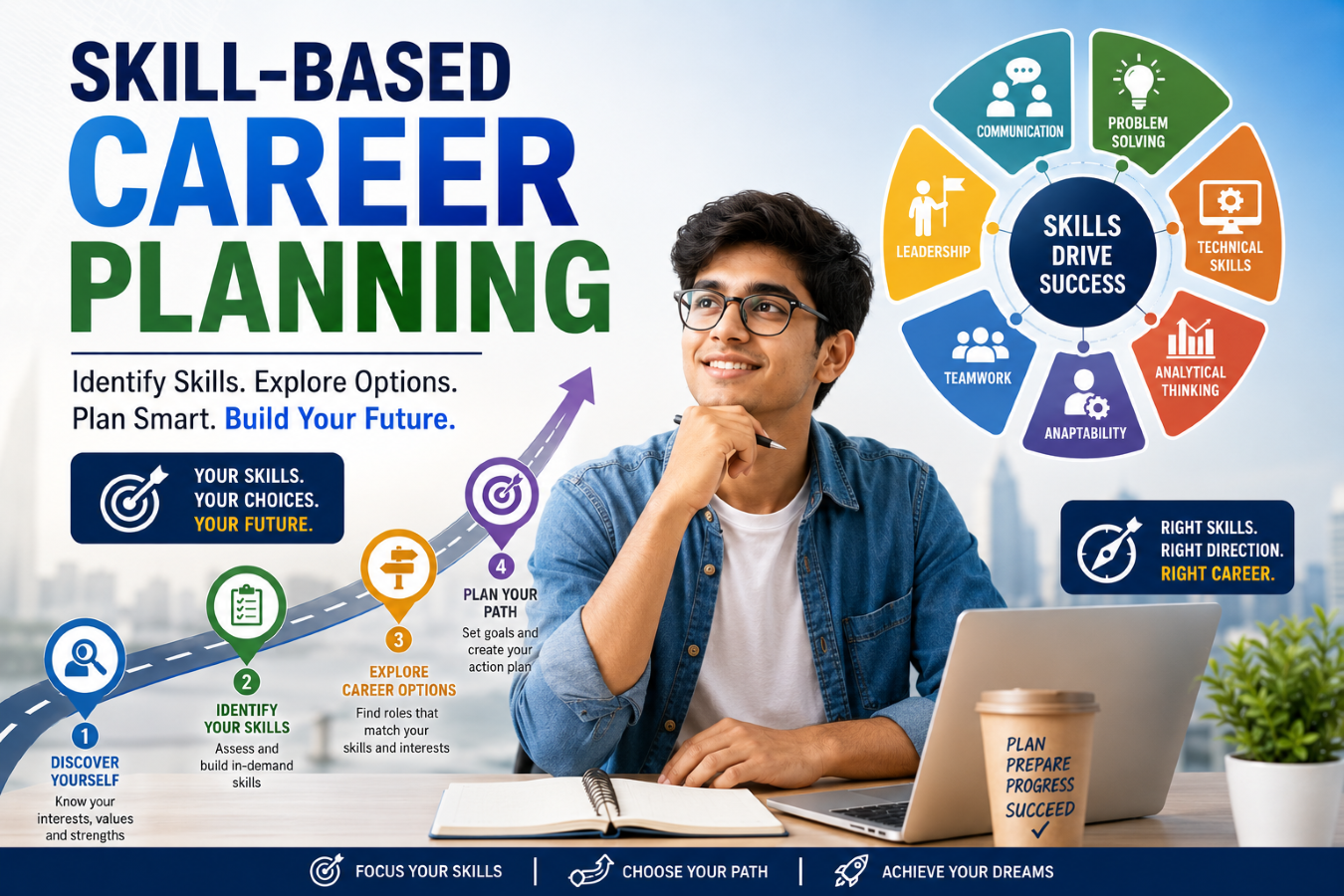
  • Skill-Based Career Planning

    Skill-Based Career Planning

    In today’s rapidly evolving job market, traditional career planning methods are no longer sufficient. The days when a degree alone could guarantee a successful career are fading. Employers now prioritize practical abilities, adaptability, and industry-relevant expertise alongside academic qualifications. As a result, students and young professionals must focus on developing the right skills to remain competitive and future-ready. This shift has made skill-based career planning one of the most effective approaches to building a successful and sustainable career.

    At CVDragon, we believe that career planning should be driven by skills rather than job titles alone. Skill-based career planning helps individuals identify their strengths, understand market demands, bridge skill gaps, and create a roadmap toward meaningful professional growth. By focusing on the skills required for desired careers, students can make informed decisions that improve employability and long-term career prospects.

    What Is Skill-Based Career Planning?

    Skill-based career planning is the process of aligning career goals with the skills needed to achieve them. Instead of focusing solely on a specific job title or academic qualification, this approach emphasizes the development of competencies that are valued across industries and professions.

    The process involves identifying career objectives, understanding industry requirements, evaluating existing skills, and creating a structured plan to acquire the necessary knowledge and experience. This method enables individuals to remain flexible and adapt to changing job market conditions while continuously improving their professional value.

    For example, a student interested in digital marketing would focus on building skills such as content creation, search engine optimization (SEO), social media management, data analytics, and communication. These competencies increase employability and create opportunities across multiple industries.

    Why Skill-Based Career Planning Matters

    The modern workplace is experiencing significant transformation due to technological advancements, automation, artificial intelligence, and evolving business models. Many traditional roles are changing, while entirely new career opportunities are emerging.

    Employers increasingly evaluate candidates based on what they can do rather than simply what they have studied. Skill-based career planning allows students to prepare for these changes by focusing on practical abilities that remain relevant and valuable.

    Key benefits include:

    • Improved employability.
    • Better career decision-making.
    • Enhanced professional confidence.
    • Greater adaptability to industry changes.
    • Stronger job performance.
    • Increased opportunities for career advancement.

    Students who adopt a skill-focused mindset are often better prepared to meet workplace expectations and seize emerging opportunities.

    Understanding the Difference Between Qualifications and Skills

    While qualifications provide foundational knowledge, skills demonstrate the ability to apply that knowledge in real-world situations.

    For example, a business administration student may understand marketing theories through coursework. However, employers often seek candidates who can also create marketing campaigns, analyze customer data, manage social media platforms, and communicate effectively with clients.

    Qualifications open doors, but skills help individuals succeed once those doors are opened. Therefore, effective career planning requires balancing academic achievements with practical skill development.

    Identifying Your Career Interests

    The first step in skill-based career planning is understanding personal interests, strengths, and aspirations.

    Students should ask themselves:

    • What subjects do I enjoy most?
    • What activities motivate me?
    • What problems do I enjoy solving?
    • What type of work environment suits me?
    • Which industries excite me?

    Self-awareness is critical because career satisfaction often depends on aligning professional goals with personal interests and values.

    Exploring different career options through research, internships, workshops, and networking can help students gain clarity about their future direction.

    Researching Industry Skill Requirements

    Once students identify a potential career path, they should investigate the skills required within that field.

    Sources of information include:

    • Job descriptions.
    • Professional networking platforms.
    • Industry reports.
    • Employer career pages.
    • Career counselors.
    • Industry professionals and mentors.

    Reviewing multiple job postings helps students identify recurring skill requirements and understand employer expectations.

    For example, a student interested in data analytics may notice consistent demand for skills such as:

    • Data visualization.
    • Statistical analysis.
    • SQL.
    • Python programming.
    • Business intelligence tools.
    • Communication and presentation abilities.

    Understanding these requirements enables targeted skill development.

    The Importance of Technical Skills

    Technical skills are often the foundation of professional competency. These job-specific abilities allow individuals to perform specialized tasks within their chosen careers.

    Examples include:

    • Coding and software development.
    • Graphic design.
    • Financial analysis.
    • Digital marketing.
    • Engineering software proficiency.
    • Cybersecurity expertise.
    • Data management.

    Students should prioritize technical skills that are highly relevant to their target industry while remaining aware of emerging trends and technologies.

    Online learning platforms, certification programs, workshops, and practical projects offer excellent opportunities for acquiring technical expertise.

    Developing Essential Soft Skills

    While technical skills help individuals perform tasks, soft skills determine how effectively they work with others and adapt to workplace environments.

    Employers consistently rank soft skills among their most important hiring criteria.

    Key soft skills include:

    • Communication.
    • Leadership.
    • Teamwork.
    • Problem-solving.
    • Critical thinking.
    • Adaptability.
    • Emotional intelligence.
    • Time management.

    These competencies contribute significantly to career success regardless of industry or job function.

    Students can develop soft skills through extracurricular activities, volunteer work, internships, leadership roles, and collaborative projects.

    Creating a Personal Skills Inventory

    An effective skill-based career plan begins with understanding current capabilities.

    Students should create a comprehensive inventory of their skills by evaluating:

    • Academic strengths.
    • Technical competencies.
    • Communication abilities.
    • Leadership experiences.
    • Project work.
    • Certifications.
    • Internship experiences.

    This assessment provides a clear picture of existing strengths and identifies areas requiring improvement.

    A personal skills inventory serves as a baseline for future development and progress tracking.

    Conducting a Skill Gap Analysis

    After understanding industry requirements and current abilities, students should perform a skill gap analysis.

    This process involves comparing existing skills with those required for desired career opportunities.

    Example:

    Required Skill Current Level Desired Level
    SEO Beginner Advanced
    Data Analytics Intermediate Advanced
    Communication Intermediate Advanced
    Project Management Beginner Intermediate
    Leadership Beginner Intermediate

    A skill gap analysis helps students prioritize learning efforts and allocate time effectively.

    Building a Skill Development Roadmap

    Once gaps are identified, students should create a structured development plan.

    A roadmap may include:

    Short-Term Goals

    • Complete an online course.
    • Earn a certification.
    • Improve software proficiency.
    • Join a student organization.

    Medium-Term Goals

    • Complete internships.
    • Build a professional portfolio.
    • Participate in competitions.
    • Undertake industry projects.

    Long-Term Goals

    • Develop advanced expertise.
    • Obtain professional certifications.
    • Secure full-time employment.
    • Pursue leadership opportunities.

    A roadmap transforms career aspirations into achievable milestones.

    Gaining Real-World Experience

    Practical experience is one of the most valuable components of skill-based career planning.

    Students can gain hands-on experience through:

    • Internships.
    • Freelance work.
    • Volunteer projects.
    • Research initiatives.
    • Entrepreneurship.
    • Industry competitions.

    Practical exposure allows students to apply theoretical knowledge while developing workplace confidence and professional maturity.

    Employers often favor candidates who can demonstrate real-world accomplishments rather than relying solely on academic credentials.

    Building a Professional Portfolio

    A portfolio serves as tangible evidence of skills and achievements.

    Depending on the field, portfolios may include:

    • Project reports.
    • Research papers.
    • Design samples.
    • Coding projects.
    • Marketing campaigns.
    • Presentations.
    • Case studies.

    A strong portfolio showcases capabilities and provides employers with concrete examples of a candidate’s work.

    Students should update their portfolios regularly as they acquire new skills and experiences.

    Leveraging Certifications for Career Growth

    Professional certifications validate expertise and demonstrate commitment to continuous learning.

    Popular certification areas include:

    • Digital marketing.
    • Data analytics.
    • Cloud computing.
    • Project management.
    • Graphic design.
    • Cybersecurity.
    • Artificial intelligence.

    Relevant certifications can enhance resumes, improve credibility, and increase employment opportunities.

    However, students should prioritize certifications that align directly with their career goals rather than accumulating credentials without strategic purpose.

    The Role of Networking in Skill-Based Career Planning

    Networking plays a crucial role in career development. Building professional relationships can provide valuable insights, mentorship, and career opportunities.

    Students can network through:

    • Career fairs.
    • Industry events.
    • Alumni networks.
    • Professional associations.
    • LinkedIn and other professional platforms.
    • Internship programs.

    Networking often opens doors to internships, referrals, mentorship opportunities, and valuable industry knowledge.

    Future-Proofing Your Career Through Continuous Learning

    The future of work is characterized by constant change. New technologies and business models continue to reshape industries, creating demand for new skills while reducing the relevance of others.

    To remain competitive, students should embrace lifelong learning and continuously update their knowledge.

    Successful professionals understand that skill development does not end after graduation. Instead, it becomes an ongoing process that supports career growth throughout life.

    Conclusion

    Skill-based career planning is a modern and effective approach to achieving professional success. By focusing on practical competencies, students can align their education, experiences, and learning efforts with real-world industry requirements. This strategy helps individuals identify skill gaps, build relevant expertise, gain practical experience, and adapt to changing workplace demands.

    At CVDragon, we encourage students to take a proactive approach to career development by prioritizing skills alongside academic achievements. Through strategic planning, continuous learning, and hands-on experience, students can build strong professional foundations that lead to greater employability, career satisfaction, and long-term success. In a world where skills increasingly define opportunities, investing in skill-based career planning is one of the smartest decisions a student can make for their future.

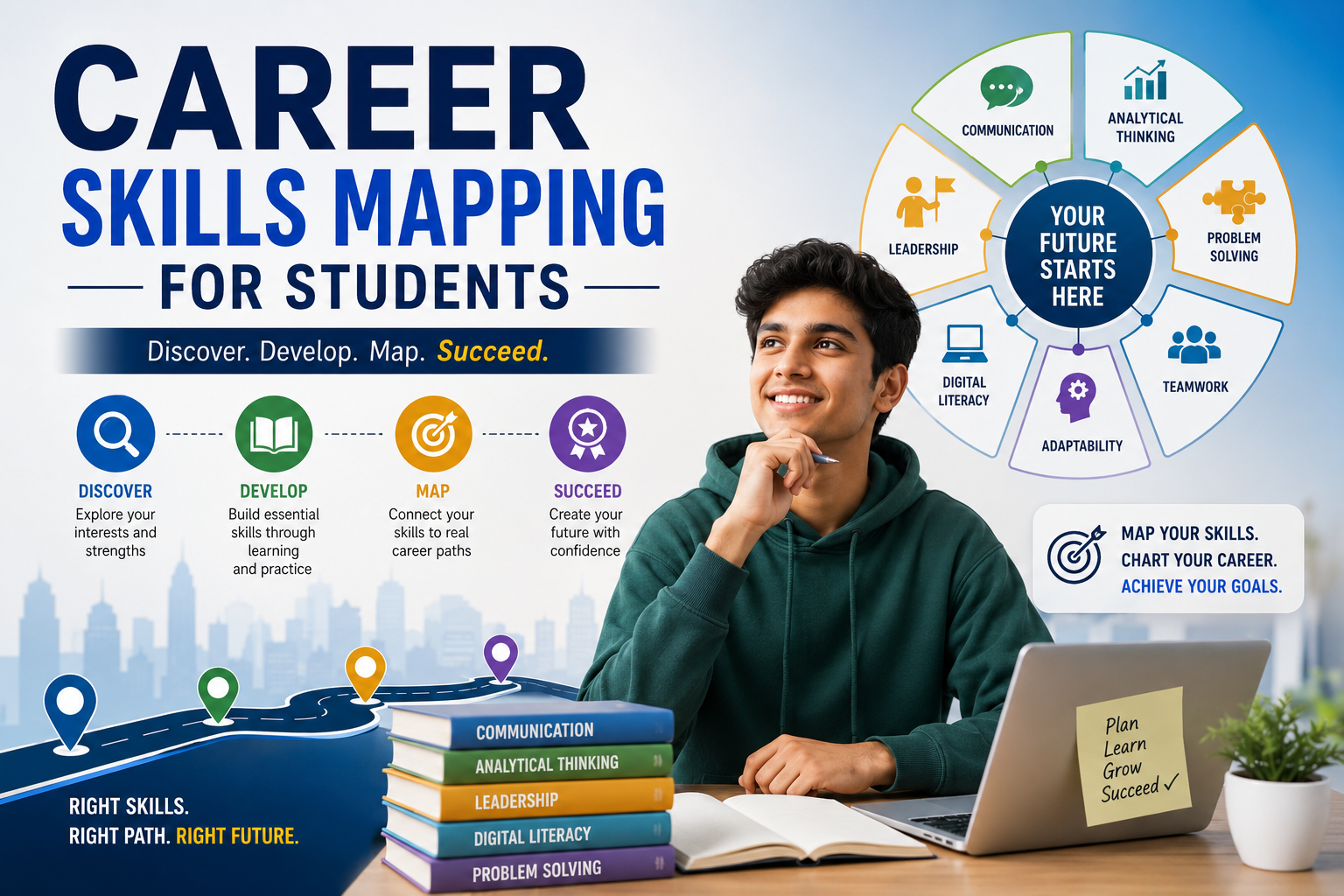
  • Career Skills Mapping for Students: A Strategic Roadmap to Professional Success

    Career Skills Mapping for Students: A Strategic Roadmap to Professional Success

    In an increasingly competitive job market, students need more than academic qualifications to secure rewarding career opportunities. Employers are placing greater emphasis on practical skills, industry knowledge, and workplace readiness when evaluating candidates. As industries evolve rapidly due to technological advancements and changing business demands, students must understand which skills are required for their desired careers and how to develop them effectively. This is where career skills mapping becomes essential.

    At CVDragon, we believe that career success begins with a clear understanding of the skills needed to achieve professional goals. Career skills mapping helps students identify skill gaps, create learning plans, and align their educational journey with industry expectations. By taking a structured approach to skill development, students can improve employability, build confidence, and prepare themselves for long-term career growth.

    What Is Career Skills Mapping?

    Career skills mapping is the process of identifying the skills required for a specific career path and comparing them with a student’s current abilities. This approach helps students understand where they stand today and what they need to learn to reach their desired professional destination.

    Instead of randomly acquiring certifications or learning unrelated topics, students can focus on developing competencies that directly contribute to their career objectives. Career skills mapping creates a personalized roadmap that guides students toward meaningful skill development and professional readiness.

    For example, a student aspiring to become a digital marketer may need skills in SEO, content marketing, social media management, analytics, and communication. By mapping these requirements, the student can systematically work toward mastering each area.

    Why Career Skills Mapping Matters

    Many students graduate without fully understanding the expectations of their chosen industry. This often leads to skill gaps that make the transition from education to employment more challenging.

    Career skills mapping helps students:

    • Understand industry requirements.
    • Identify strengths and weaknesses.
    • Focus learning efforts effectively.
    • Improve internship and job readiness.
    • Build confidence in career planning.
    • Make informed educational decisions.

    By clearly visualizing the skills needed for success, students can take proactive steps to become competitive candidates before entering the workforce.

    Understanding Different Types of Career Skills

    Effective career skills mapping begins with recognizing the various categories of skills that employers value.

    Technical Skills

    Technical skills are job-specific competencies required to perform particular tasks. These skills vary depending on the industry and profession.

    Examples include:

    • Programming and software development.
    • Graphic design.
    • Data analysis.
    • Financial modeling.
    • Digital marketing.
    • Cloud computing.
    • Engineering tools.

    Technical skills often form the foundation of career readiness in specialized fields.

    Soft Skills

    Soft skills relate to how individuals interact, communicate, and work with others. These abilities are highly valued across all industries because they influence workplace effectiveness.

    Important soft skills include:

    • Communication.
    • Teamwork.
    • Leadership.
    • Problem-solving.
    • Adaptability.
    • Emotional intelligence.
    • Time management.

    Employers frequently prioritize candidates who possess both technical expertise and strong interpersonal abilities.

    Digital Skills

    As technology continues to transform workplaces, digital literacy has become a critical requirement across nearly every profession.

    Examples include:

    • Productivity software proficiency.
    • Data visualization.
    • Collaboration platforms.
    • Artificial intelligence tools.
    • Digital communication.
    • Online research capabilities.

    Students who develop strong digital skills position themselves for success in modern work environments.

    Step 1: Define Your Career Goal

    The first stage of career skills mapping is identifying a clear career objective. Students should research potential professions and determine which career paths align with their interests, strengths, and aspirations.

    Questions to consider include:

    • What industries interest me?
    • What type of work do I enjoy?
    • What are my strengths and talents?
    • What career opportunities are growing?
    • What lifestyle and work environment do I prefer?

    Having a defined career goal makes it easier to identify relevant skills and learning priorities.

    Step 2: Research Industry Requirements

    Once students select a target career, they should investigate the skills employers expect in that role.

    Useful sources include:

    • Job descriptions.
    • Professional networking platforms.
    • Industry reports.
    • Career websites.
    • Employer recruitment pages.
    • Industry professionals and mentors.

    Analyzing multiple job postings can reveal common skill requirements and emerging industry trends.

    For example, students pursuing careers in data analytics may discover recurring requirements such as SQL, Python, data visualization, statistical analysis, and business communication.

    Step 3: Assess Current Skills

    The next step is evaluating existing skills honestly and objectively.

    Students can create a personal inventory of:

    • Academic knowledge.
    • Technical competencies.
    • Project experience.
    • Communication abilities.
    • Leadership experiences.
    • Certifications.
    • Extracurricular achievements.

    This self-assessment helps identify strengths while highlighting areas that require improvement.

    Step 4: Identify Skill Gaps

    Skill gap analysis compares current abilities with industry expectations.

    A simple skills mapping table might look like this:

    Required Skill Current Level Target Level
    Data Analysis Beginner Advanced
    Excel Intermediate Advanced
    Presentation Skills Intermediate Advanced
    SQL Beginner Intermediate
    Team Collaboration Strong Strong

    This process allows students to prioritize learning efforts and focus on areas that will have the greatest impact on employability.

    Step 5: Create a Skill Development Plan

    After identifying skill gaps, students should develop a structured learning plan.

    An effective plan includes:

    • Specific learning goals.
    • Online courses.
    • Certifications.
    • Practical projects.
    • Internship opportunities.
    • Networking activities.
    • Progress milestones.

    For example, a student pursuing software development might dedicate three months to learning programming fundamentals, followed by project development and portfolio creation.

    A structured plan transforms career aspirations into actionable steps.

    Step 6: Gain Practical Experience

    Knowledge alone is not enough. Employers seek evidence that students can apply their skills in real-world situations.

    Practical experience can be gained through:

    • Internships.
    • Freelance work.
    • Volunteer projects.
    • Competitions.
    • Research programs.
    • Personal projects.

    Hands-on experience strengthens technical capabilities while developing confidence and workplace readiness.

    Students should document their achievements and include them in their portfolios and resumes.

    Step 7: Track Progress Regularly

    Career skills mapping is not a one-time exercise. Industries evolve, technologies change, and career goals may shift over time.

    Students should regularly review their progress by asking:

    • Which skills have I improved?
    • What new skills are emerging in my industry?
    • Am I meeting my learning milestones?
    • What feedback have I received from mentors or employers?

    Regular evaluations ensure that skill development remains aligned with industry demands.

    The Role of Certifications in Skills Mapping

    Professional certifications provide measurable proof of competency and help students validate their learning.

    Benefits include:

    • Enhanced credibility.
    • Improved employability.
    • Industry recognition.
    • Structured learning pathways.
    • Greater confidence during job applications.

    Students should choose certifications that align closely with their career objectives rather than accumulating credentials without strategic purpose.

    Building a Career-Focused Portfolio

    A portfolio is one of the strongest tools for demonstrating skills to employers.

    A well-developed portfolio may include:

    • Academic projects.
    • Internship experiences.
    • Certifications.
    • Research work.
    • Case studies.
    • Presentations.
    • Professional achievements.

    Employers often prefer candidates who can showcase practical accomplishments rather than simply listing qualifications.

    Common Mistakes Students Should Avoid

    Many students make avoidable mistakes during their career preparation journey.

    Common pitfalls include:

    • Focusing only on academic grades.
    • Ignoring soft skill development.
    • Pursuing irrelevant certifications.
    • Delaying internships.
    • Neglecting networking opportunities.
    • Failing to track skill progress.
    • Avoiding practical projects.

    Awareness of these challenges can help students make more strategic career decisions.

    Future-Proofing Your Career Through Continuous Learning

    The modern workplace is constantly evolving. Technologies, business models, and industry requirements change rapidly, making continuous learning essential.

    Students who develop a growth mindset and commit to lifelong learning are better equipped to adapt to future opportunities and challenges.

    Future-ready professionals continuously update their skills, explore emerging technologies, and remain curious about industry developments.

    Conclusion

    Career skills mapping provides students with a clear and strategic pathway toward professional success. Rather than relying solely on academic qualifications, students can proactively identify industry requirements, assess their abilities, close skill gaps, and build competencies that employers value. By combining technical expertise, soft skills, practical experience, and continuous learning, students can significantly improve their employability and career prospects.

    At CVDragon, we encourage students to take ownership of their professional development through structured career skills mapping. The earlier students begin understanding and developing the skills required for their chosen careers, the more confident and prepared they will be when entering the workforce. A well-planned skills roadmap not only enhances career readiness but also creates a strong foundation for long-term growth, adaptability, and professional achievement.

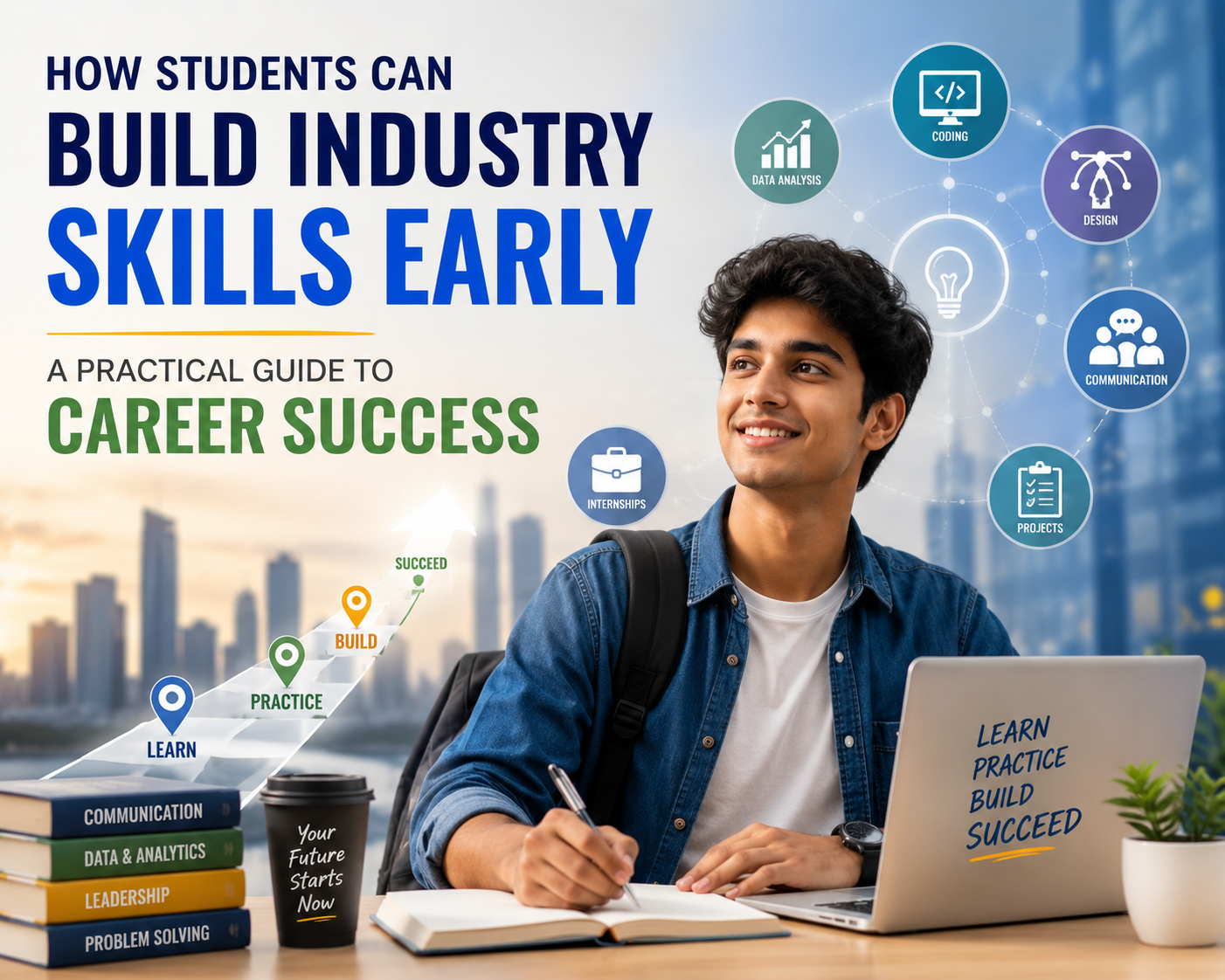
  • How Students Can Build Industry Skills Early: A Practical Guide to Career Success

    How Students Can Build Industry Skills Early: A Practical Guide to Career Success

    In today’s highly competitive job market, academic qualifications alone are no longer enough to guarantee career success. Employers increasingly seek candidates who possess practical industry skills, real-world experience, and the ability to adapt quickly to workplace challenges. For students, developing these skills early can provide a significant advantage when applying for internships, jobs, or entrepreneurial opportunities. At CVDragon, we believe that students who invest in skill development during their academic years are better prepared for long-term career growth and professional success.

    Why Industry Skills Matter for Students

    Industry skills refer to the practical abilities, technical competencies, and professional behaviors that employers value in the workplace. These skills vary across sectors but often include communication, problem-solving, teamwork, digital literacy, project management, and industry-specific technical expertise.

    The gap between classroom learning and workplace expectations is a challenge faced by many graduates. While academic education provides theoretical knowledge, industry skills enable students to apply that knowledge in practical situations. Employers prefer candidates who can contribute from day one rather than requiring extensive training after hiring.

    Students who begin developing industry skills early gain confidence, improve employability, and create stronger career opportunities before graduation.

    The Growing Importance of Skill-Based Hiring

    Modern recruitment trends are shifting toward skill-based hiring. Organizations increasingly evaluate candidates based on their abilities rather than solely focusing on academic scores. This shift is driven by rapid technological advancements, changing business needs, and the demand for adaptable professionals.

    The chart above illustrates how practical skills often play a larger role in employability than academic achievements alone. Students who focus on skill development alongside education position themselves more effectively for career opportunities.

    Start Learning Beyond the Classroom

    One of the most effective ways to build industry skills early is to learn beyond traditional coursework. The internet has made professional learning accessible to everyone. Students can take online courses, attend webinars, join workshops, and participate in virtual training programs related to their field of interest.

    For example, a marketing student can learn digital marketing, SEO, content creation, and social media management. An engineering student can explore programming, data analysis, or automation tools. Business students can gain expertise in financial modeling, project management, or business analytics.

    Continuous learning helps students stay updated with industry trends while developing practical capabilities that employers value.

    Gain Hands-On Experience Through Projects

    Practical projects are among the most valuable tools for skill development. Employers often prioritize candidates who can demonstrate what they have built, solved, or achieved rather than simply listing qualifications.

    Students should actively participate in academic projects, personal initiatives, freelance assignments, hackathons, competitions, or community-based projects. These experiences help them apply theoretical concepts to real-world challenges.

    For instance, a computer science student can create websites or applications, while a business student can conduct market research projects. Such practical work demonstrates initiative, creativity, and problem-solving abilities.

    A strong project portfolio can significantly strengthen a student’s resume and improve job prospects.

    Pursue Internships Early

    Internships provide direct exposure to professional environments and industry practices. Even short-term internships offer valuable insights into workplace expectations, organizational culture, and professional responsibilities.

    Students often wait until their final year to seek internships, but starting earlier can create a substantial advantage. Early internship experiences help students:

    • Understand industry requirements.
    • Develop professional communication skills.
    • Build workplace confidence.
    • Expand professional networks.
    • Identify career interests and strengths.

    Internships also allow students to learn from experienced professionals and gain practical knowledge that cannot be acquired solely through textbooks.

    Develop Strong Communication Skills

    Communication remains one of the most sought-after skills across all industries. Regardless of technical expertise, professionals must effectively share ideas, collaborate with teams, and interact with clients or stakeholders.

    Students can improve communication skills through:

    • Public speaking activities.
    • Group discussions.
    • Presentation assignments.
    • Debate competitions.
    • Writing blogs or articles.
    • Participating in student organizations.

    Strong communication skills improve leadership potential, teamwork, and overall career growth. Employers consistently rank communication among the most valuable workplace competencies.

    Build Digital Literacy

    Technology has transformed nearly every industry. As a result, digital literacy has become a fundamental requirement for modern professionals.

    Students should become comfortable using:

    • Productivity software.
    • Collaboration tools.
    • Data analysis platforms.
    • Industry-specific applications.
    • Artificial intelligence tools.
    • Cloud-based technologies.

    Even non-technical careers increasingly require digital proficiency. Understanding how technology supports business operations can make students more versatile and employable.

    Create a Professional Online Presence

    Today’s employers often review online profiles before making hiring decisions. Students should focus on building a professional digital identity that reflects their skills, achievements, and career aspirations.

    A professional online presence may include:

    • An updated LinkedIn profile.
    • Personal portfolio websites.
    • Project showcases.
    • Professional blog posts.
    • Industry-related content sharing.

    By consistently showcasing skills and accomplishments online, students can attract internship opportunities, networking connections, and potential employers.

    Network with Industry Professionals

    Networking is a powerful career-building strategy that students often underestimate. Building relationships with professionals can provide valuable guidance, mentorship, and career opportunities.

    Students can network through:

    • Industry conferences.
    • Career fairs.
    • Professional associations.
    • Alumni events.
    • Online professional communities.
    • Social networking platforms.

    Meaningful professional relationships often lead to internship referrals, job recommendations, and mentorship opportunities that accelerate career growth.

    Earn Relevant Certifications

    Professional certifications demonstrate commitment to learning and skill development. They provide evidence of practical knowledge and often help students stand out from other candidates.

    Depending on career goals, students can pursue certifications in areas such as:

    • Digital marketing.
    • Data analytics.
    • Project management.
    • Programming languages.
    • Cloud computing.
    • Graphic design.
    • Financial analysis.

    Certifications not only enhance resumes but also help students acquire job-ready skills recognized by employers.

    Participate in Extracurricular Activities

    Extracurricular activities play an important role in developing workplace competencies. Leadership positions in clubs, volunteer organizations, sports teams, and student councils help students cultivate skills that employers value.

    These activities foster:

    • Leadership abilities.
    • Team collaboration.
    • Time management.
    • Conflict resolution.
    • Event management.
    • Decision-making skills.

    Many employers view extracurricular involvement as evidence of initiative, responsibility, and interpersonal effectiveness.

    Learn Problem-Solving and Critical Thinking

    Modern workplaces require professionals who can analyze situations, identify challenges, and develop effective solutions. Problem-solving and critical thinking skills are essential across all industries.

    Students can strengthen these abilities by:

    • Participating in case study competitions.
    • Solving real-world business challenges.
    • Engaging in research activities.
    • Taking part in innovation programs.
    • Working on collaborative projects.

    The ability to approach problems strategically and develop practical solutions makes candidates more valuable to employers.

    Seek Mentorship and Career Guidance

    Mentorship can accelerate skill development by providing personalized advice and industry insights. Experienced mentors help students understand career pathways, avoid common mistakes, and focus on relevant skills.

    Students should seek mentors through:

    • College alumni networks.
    • Faculty members.
    • Industry professionals.
    • Internship supervisors.
    • Professional communities.

    Regular guidance from experienced professionals can significantly improve career planning and skill-building efforts.

    Build a Strong Resume Around Skills

    As students develop industry skills, they should document their achievements effectively. A skill-focused resume highlights practical experience, projects, internships, certifications, and accomplishments.

    Employers are more likely to notice candidates who can clearly demonstrate their capabilities through measurable achievements and relevant experiences.

    A well-structured resume serves as a powerful tool for communicating professional readiness and career potential.

    Conclusion

    Building industry skills early is one of the smartest investments students can make in their future careers. While academic knowledge remains important, practical skills, hands-on experience, communication abilities, digital literacy, and professional networking often determine long-term success in the workplace. Students who actively pursue internships, certifications, projects, mentorship, and continuous learning gain a significant advantage in today’s competitive job market.

    At CVDragon, we encourage students to view skill development as an ongoing journey rather than a one-time effort. The earlier students begin building industry-relevant competencies, the more prepared they will be to seize opportunities, adapt to changing workplace demands, and achieve lasting professional success. By combining education with practical experience, students can confidently bridge the gap between classroom learning and industry expectations, creating a strong foundation for a rewarding and successful career.

  • Learning Through Internships

    Education provides knowledge, but experience teaches application. While classrooms, textbooks, and online courses help students understand concepts and theories, internships offer an opportunity to see how those ideas work in real-world environments. For students preparing to enter the workforce, internships are often one of the most valuable learning experiences available.

    Internships allow students to gain practical exposure, develop professional skills, understand workplace dynamics, and build confidence before starting full-time careers. They bridge the gap between academic learning and professional expectations, helping students become more career-ready and competitive in the job market.

    At CvDragon, we believe internships are much more than short-term work experiences. They are learning opportunities that help students explore industries, strengthen skills, and build a strong foundation for future success.

    What Is an Internship?

    An internship is a temporary work experience program that allows students or recent graduates to gain practical exposure in a professional setting.

    Internships may be:

    • Paid or unpaid
    • Full-time or part-time
    • In-person or remote
    • Short-term or long-term

    They are commonly offered by companies, startups, educational institutions, research organizations, and non-profit organizations.

    The primary goal of an internship is learning through experience.

    Why Internships Matter for Students

    Many students graduate with strong academic knowledge but limited workplace exposure.

    Internships help students:

    • Apply classroom learning
    • Develop practical skills
    • Understand industry expectations
    • Build professional confidence
    • Explore career interests
    • Improve employability

    These benefits make internships an important part of career preparation.

    Moving Beyond Theoretical Learning

    Classroom education often focuses on concepts, principles, and frameworks.

    Internships help students understand:

    • How businesses operate
    • How teams collaborate
    • How projects are managed
    • How decisions are made

    For example, a marketing student may study consumer behavior in class but gain a deeper understanding by observing how marketing campaigns are planned and executed within an organization.

    Practical exposure enhances academic learning.

    Applying Knowledge in Real Situations

    One of the greatest advantages of internships is the opportunity to use knowledge in practical scenarios.

    Students may:

    • Conduct market research
    • Analyze data
    • Create reports
    • Assist with projects
    • Participate in meetings
    • Support operational activities

    Applying knowledge helps transform theory into usable skills.

    Developing Professional Skills

    Internships help students build essential workplace skills that are difficult to develop through academic study alone.

    Communication Skills

    Interns learn how to:

    • Write professional emails
    • Participate in meetings
    • Present ideas clearly
    • Communicate with colleagues

    Effective communication is valuable in every profession.

    Teamwork and Collaboration

    Most workplaces require employees to work with others.

    Internships teach students how to:

    • Collaborate on projects
    • Share responsibilities
    • Support team objectives
    • Handle workplace interactions

    Teamwork is a critical skill across industries.

    Time Management

    Interns often balance multiple tasks and deadlines.

    This helps develop:

    • Organization
    • Prioritization
    • Productivity
    • Professional discipline

    These habits support both academic and career success.

    Problem-Solving Skills

    Workplace challenges rarely have textbook solutions.

    Internships encourage students to:

    • Analyze situations
    • Identify solutions
    • Adapt to changing circumstances
    • Think critically

    These experiences strengthen decision-making abilities.

    Understanding Workplace Culture

    Every organization has its own culture, expectations, and working style.

    Internships provide valuable insights into:

    • Professional behavior
    • Workplace etiquette
    • Organizational structures
    • Business communication practices

    Learning these unwritten rules helps students transition more smoothly into future careers.

    Exploring Career Paths

    Many students are uncertain about their long-term career goals.

    Internships allow them to explore different industries and roles before making major career decisions.

    For example:

    • A business student may discover an interest in human resources.
    • A marketing intern may develop a passion for brand management.
    • A technology student may realize they enjoy data analytics more than software development.

    Career exploration reduces uncertainty and supports informed decision-making.

    Building Industry Knowledge

    Internships expose students to:

    • Industry trends
    • Market challenges
    • Professional tools
    • Business processes

    This knowledge often extends beyond what is taught in academic programs.

    Understanding how industries operate provides valuable context for future learning and career growth.

    Learning from Experienced Professionals

    One of the greatest benefits of internships is access to experienced professionals.

    Students can learn by:

    • Observing experts
    • Asking questions
    • Seeking feedback
    • Participating in discussions

    Mentors and supervisors often provide insights that accelerate professional development.

    Learning directly from experienced individuals can be incredibly valuable.

    Building Confidence

    Many students feel uncertain about entering professional environments.

    Internships help build confidence by providing opportunities to:

    • Complete meaningful tasks
    • Contribute to projects
    • Receive positive feedback
    • Solve real problems

    Confidence grows through experience and achievement.

    Students who complete internships often feel better prepared for future employment.

    Creating a Professional Network

    Professional relationships can play an important role in career growth.

    Internships allow students to connect with:

    • Managers
    • Team leaders
    • Colleagues
    • Industry professionals

    These connections can lead to:

    • Career advice
    • Mentorship opportunities
    • Job referrals
    • Future employment opportunities

    Networking is often an overlooked but valuable benefit of internships.

    Strengthening Your Resume

    Internship experience can significantly enhance a resume.

    Employers often view internships as evidence of:

    • Initiative
    • Professional exposure
    • Practical skills
    • Workplace readiness

    Students can highlight:

    • Responsibilities
    • Projects completed
    • Skills developed
    • Achievements accomplished

    Internships often make candidates more competitive during recruitment processes.

    Building a Portfolio of Work

    Depending on the field, internships may provide opportunities to create portfolio-worthy projects.

    Examples include:

    • Marketing campaigns
    • Research reports
    • Design work
    • Data analysis projects
    • Software applications

    A portfolio provides tangible proof of skills and accomplishments.

    Learning to Accept Feedback

    Constructive feedback is an important part of professional growth.

    Internships help students learn how to:

    • Receive feedback professionally
    • Identify improvement areas
    • Implement suggestions
    • Develop continuously

    Feedback encourages growth and self-awareness.

    Making the Most of an Internship

    Students can maximize learning by:

    Being Curious

    Ask questions and seek understanding.

    Taking Initiative

    Volunteer for responsibilities and projects.

    Building Relationships

    Engage with colleagues and mentors.

    Reflecting on Experiences

    Regularly evaluate what you are learning.

    Seeking Feedback

    Use feedback to improve continuously.

    Active participation leads to greater learning outcomes.

    Common Mistakes Interns Should Avoid

    Treating the Internship as Just a Requirement

    Focus on learning rather than simply completing the program.

    Avoiding Questions

    Curiosity often leads to valuable insights.

    Waiting for Instructions Constantly

    Show initiative when appropriate.

    Ignoring Networking Opportunities

    Build professional relationships whenever possible.

    Neglecting Professionalism

    Maintain a positive attitude and strong work ethic.

    Avoiding these mistakes enhances the internship experience.

    Showcasing Internship Experience Online

    Students can strengthen their professional profiles by highlighting internship experiences on platforms such as:

    • LinkedIn
    • Personal portfolio websites
    • Industry-specific professional communities

    Sharing experiences professionally can increase visibility and credibility.

    Internships and Long-Term Career Growth

    The benefits of internships often extend far beyond the internship period itself.

    Students frequently gain:

    • Better career direction
    • Stronger professional networks
    • Increased confidence
    • Enhanced resumes
    • Improved employability

    These advantages can positively impact career opportunities for years to come.

    Final Thoughts

    Learning through internships is one of the most effective ways to transform academic knowledge into practical expertise. Internships provide real-world exposure, professional skill development, industry insights, and valuable networking opportunities that help students become more prepared for future careers.

    At CvDragon, we encourage students to view internships as learning experiences rather than simply stepping stones to employment. Every project completed, challenge overcome, and lesson learned contributes to personal and professional growth.

    Remember, education provides the foundation, but experience brings that knowledge to life. Internships offer the opportunity to learn, grow, and prepare for the realities of the professional world—making them an invaluable part of any student’s career journey.

  • Skill Development Through Freelancing

    Skill Development Through Freelancing

    In today’s digital economy, learning is no longer limited to classrooms, internships, or traditional jobs. Students and young professionals now have access to opportunities that allow them to gain practical experience, build valuable skills, and earn income at the same time. One of the most effective ways to achieve this is through freelancing.

    Freelancing has transformed from a side-income option into a powerful platform for skill development and career growth. Whether someone is interested in content writing, graphic design, programming, digital marketing, video editing, data analysis, or web development, freelancing provides a real-world environment where skills can be developed through practical application.

    At CvDragon, we believe that freelancing offers students an excellent opportunity to bridge the gap between learning and professional experience. It allows individuals to build confidence, create portfolios, and develop industry-relevant skills while working on real projects.

    What Is Freelancing?

    Freelancing is a form of self-employment where individuals offer their services to clients on a project or contract basis rather than working as permanent employees.

    Freelancers may work in areas such as:

    • Content Writing
    • Graphic Design
    • Web Development
    • Digital Marketing
    • Video Editing
    • Social Media Management
    • Data Analysis
    • Virtual Assistance
    • Translation Services

    The flexibility of freelancing makes it particularly attractive to students and early-career professionals.

    Why Freelancing Is a Powerful Learning Tool

    Traditional learning often focuses on theory and structured assignments. Freelancing, however, introduces real-world challenges that require practical problem-solving and adaptability.

    Through freelancing, individuals learn:

    • How to communicate with clients
    • How to manage deadlines
    • How to solve real business problems
    • How to deliver professional-quality work
    • How to continuously improve their skills

    This hands-on experience accelerates learning significantly.

    Learning by Working on Real Projects

    One of the biggest advantages of freelancing is exposure to real projects.

    Unlike classroom assignments, freelance work often involves:

    • Actual clients
    • Business objectives
    • Performance expectations
    • Measurable outcomes

    For example, a student learning digital marketing may understand campaign concepts theoretically. By managing a real client’s social media account, they gain practical insights into audience engagement, content strategy, and performance analysis.

    Real projects turn knowledge into experience.

    Developing Technical Skills

    Freelancing provides continuous opportunities to improve technical abilities.

    Writing and Content Creation

    Freelance writers learn:

    • Research techniques
    • SEO fundamentals
    • Content structuring
    • Editing and proofreading

    Graphic Design

    Design freelancers develop skills in:

    • Branding
    • Visual communication
    • User experience principles
    • Design software tools

    Programming and Development

    Freelance developers strengthen:

    • Coding abilities
    • Problem-solving skills
    • Software testing knowledge
    • Project implementation experience

    Each completed project contributes to technical growth.

    Building Communication Skills

    Communication is one of the most valuable professional skills.

    Freelancers regularly communicate with:

    • Clients
    • Team members
    • Project managers
    • Business owners

    Through these interactions, they learn how to:

    • Understand requirements
    • Ask clarifying questions
    • Present ideas effectively
    • Handle feedback professionally

    Strong communication skills are valuable in every career path.

    Improving Time Management

    Freelancers are responsible for managing their own schedules and deadlines.

    This teaches:

    • Prioritization
    • Planning
    • Productivity management
    • Self-discipline

    Students who freelance often develop stronger organizational skills that benefit both academics and future careers.

    Learning Problem-Solving Through Experience

    Every freelance project presents unique challenges.

    Freelancers may encounter:

    • Unclear requirements
    • Technical difficulties
    • Tight deadlines
    • Changing client expectations

    Successfully navigating these situations helps develop critical thinking and adaptability.

    Problem-solving becomes a natural part of the learning process.

    Building Confidence Through Practical Success

    Confidence grows through experience.

    Each completed project provides evidence of capability and progress.

    As freelancers:

    • Deliver successful outcomes
    • Receive positive feedback
    • Solve increasingly complex problems

    they become more confident in their skills and professional abilities.

    This confidence often carries over into interviews, presentations, and future employment opportunities.

    Creating a Professional Portfolio

    One of the greatest benefits of freelancing is portfolio development.

    A portfolio showcases:

    • Completed projects
    • Skills demonstrated
    • Results achieved
    • Professional growth

    Unlike certifications alone, a portfolio provides tangible proof of ability.

    Employers often find portfolios highly valuable during hiring decisions.

    Learning Client Management

    Freelancing introduces students to business relationships.

    They learn how to:

    • Understand client expectations
    • Negotiate project requirements
    • Manage revisions
    • Maintain professional relationships

    These experiences provide valuable business and interpersonal skills.

    Developing Financial Awareness

    Freelancing also teaches financial responsibility.

    Freelancers learn about:

    • Budgeting
    • Pricing services
    • Managing income
    • Tracking expenses

    Financial literacy is an important life skill that benefits long-term career success.

    Building Professional Discipline

    Freelancing requires accountability.

    There is often no supervisor monitoring daily activities.

    Success depends on:

    • Consistency
    • Reliability
    • Commitment
    • Self-motivation

    Developing these habits can positively impact every aspect of professional life.

    Freelancing as a Career Exploration Tool

    Many students are uncertain about which career path to pursue.

    Freelancing allows individuals to explore different fields before making long-term commitments.

    For example:

    • A student interested in marketing can try content creation and social media management.
    • A technology student can experiment with web development and data analytics.
    • A creative learner can explore design and branding projects.

    Practical experience often reveals personal strengths and interests.

    Building Transferable Skills

    Freelancing develops many transferable skills valued by employers.

    These include:

    • Communication
    • Leadership
    • Problem-Solving
    • Adaptability
    • Project Management
    • Time Management
    • Critical Thinking

    These skills remain valuable regardless of industry or career path.

    Challenges That Promote Growth

    Freelancing is not always easy.

    Common challenges include:

    • Finding clients
    • Managing workloads
    • Handling feedback
    • Meeting deadlines

    However, overcoming challenges often leads to the greatest growth.

    Every obstacle provides an opportunity to learn and improve.

    Freelancing and Resume Building

    Freelance experience can strengthen resumes significantly.

    Students can include:

    • Project descriptions
    • Client work
    • Skills developed
    • Achievements and outcomes

    Freelancing demonstrates initiative, responsibility, and practical experience.

    For candidates with limited traditional work experience, it can be particularly valuable.

    Showcasing Freelance Work Online

    Students can enhance visibility by showcasing projects on professional platforms such as:

    • LinkedIn
    • GitHub for technical projects
    • Personal portfolio websites
    • Creative portfolio platforms

    An online portfolio can attract both freelance and full-time opportunities.

    Tips for Students Starting Freelancing

    Start Small

    Begin with manageable projects to gain confidence and experience.

    Focus on Learning

    Early projects should prioritize skill development over income.

    Build a Portfolio

    Document completed work and achievements.

    Seek Feedback

    Constructive feedback accelerates improvement.

    Stay Consistent

    Skill development is a gradual process that requires regular practice.

    Consistency often matters more than speed.

    The Future of Work and Freelancing

    The modern workforce increasingly values flexibility, digital skills, and independent problem-solving abilities.

    Freelancing helps students prepare for this environment by teaching:

    • Self-management
    • Continuous learning
    • Professional communication
    • Practical execution

    These qualities are becoming increasingly important across industries.

    Final Thoughts

    Freelancing is more than a way to earn money—it is a powerful platform for skill development, personal growth, and career preparation. By working on real projects, students gain practical experience that complements academic learning and helps them become more confident, capable professionals.

    At CvDragon, we encourage students to view freelancing as an opportunity to learn, experiment, and build valuable experience. Every project completed contributes to stronger skills, a better portfolio, and greater career readiness.

    Remember, skills are developed through action. Freelancing provides a practical environment where students can learn, improve, and grow while creating real value for clients and themselves.