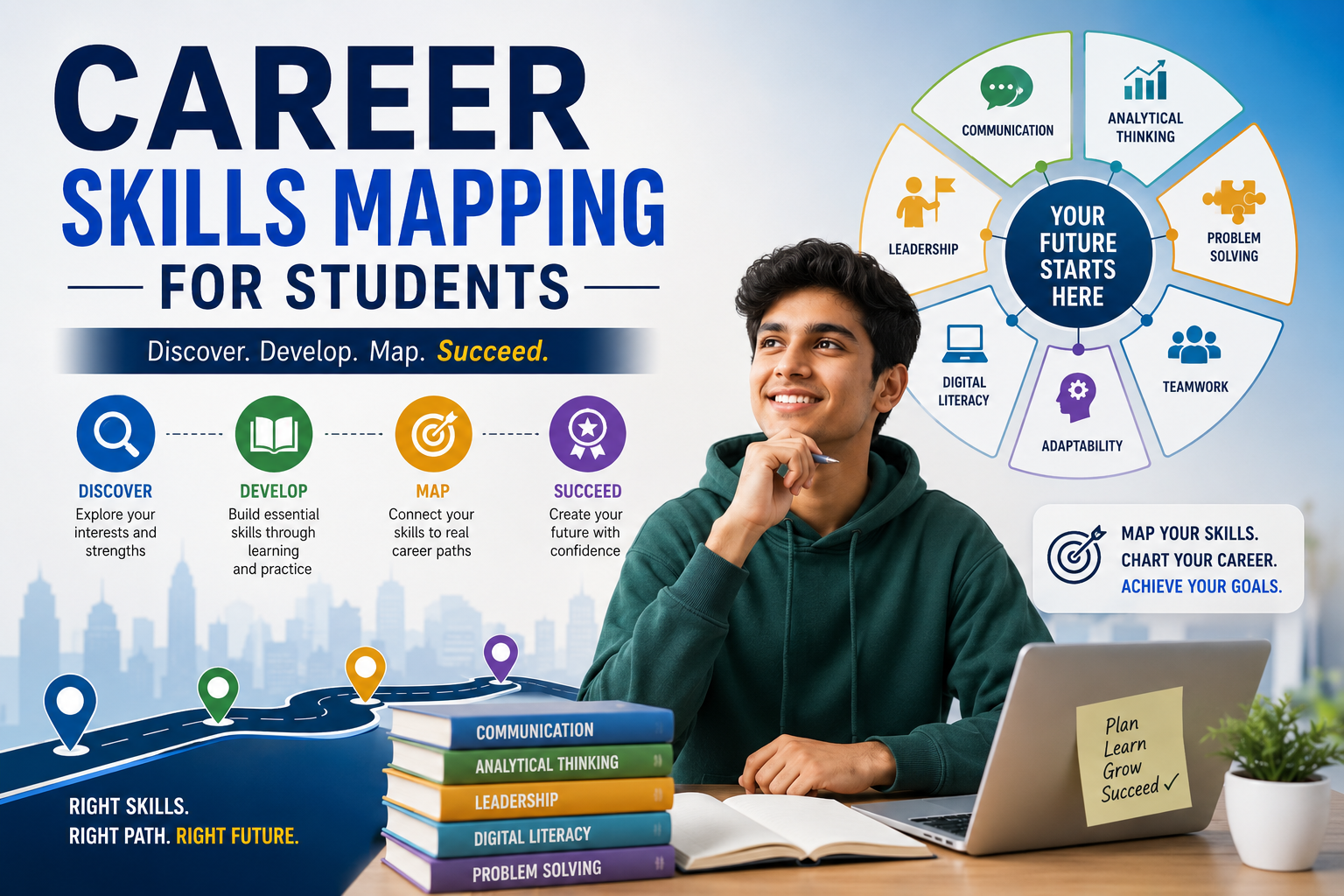
In an increasingly competitive job market, students need more than academic qualifications to secure rewarding career opportunities. Employers are placing greater emphasis on practical skills, industry knowledge, and workplace readiness when evaluating candidates. As industries evolve rapidly due to technological advancements and changing business demands, students must understand which skills are required for their desired careers and how to develop them effectively. This is where career skills mapping becomes essential.
At CVDragon, we believe that career success begins with a clear understanding of the skills needed to achieve professional goals. Career skills mapping helps students identify skill gaps, create learning plans, and align their educational journey with industry expectations. By taking a structured approach to skill development, students can improve employability, build confidence, and prepare themselves for long-term career growth.
What Is Career Skills Mapping?
Career skills mapping is the process of identifying the skills required for a specific career path and comparing them with a student’s current abilities. This approach helps students understand where they stand today and what they need to learn to reach their desired professional destination.
Instead of randomly acquiring certifications or learning unrelated topics, students can focus on developing competencies that directly contribute to their career objectives. Career skills mapping creates a personalized roadmap that guides students toward meaningful skill development and professional readiness.
For example, a student aspiring to become a digital marketer may need skills in SEO, content marketing, social media management, analytics, and communication. By mapping these requirements, the student can systematically work toward mastering each area.
Why Career Skills Mapping Matters
Many students graduate without fully understanding the expectations of their chosen industry. This often leads to skill gaps that make the transition from education to employment more challenging.
Career skills mapping helps students:
- Understand industry requirements.
- Identify strengths and weaknesses.
- Focus learning efforts effectively.
- Improve internship and job readiness.
- Build confidence in career planning.
- Make informed educational decisions.
By clearly visualizing the skills needed for success, students can take proactive steps to become competitive candidates before entering the workforce.
Understanding Different Types of Career Skills
Effective career skills mapping begins with recognizing the various categories of skills that employers value.
Technical Skills
Technical skills are job-specific competencies required to perform particular tasks. These skills vary depending on the industry and profession.
Examples include:
- Programming and software development.
- Graphic design.
- Data analysis.
- Financial modeling.
- Digital marketing.
- Cloud computing.
- Engineering tools.
Technical skills often form the foundation of career readiness in specialized fields.
Soft Skills
Soft skills relate to how individuals interact, communicate, and work with others. These abilities are highly valued across all industries because they influence workplace effectiveness.
Important soft skills include:
- Communication.
- Teamwork.
- Leadership.
- Problem-solving.
- Adaptability.
- Emotional intelligence.
- Time management.
Employers frequently prioritize candidates who possess both technical expertise and strong interpersonal abilities.
Digital Skills
As technology continues to transform workplaces, digital literacy has become a critical requirement across nearly every profession.
Examples include:
- Productivity software proficiency.
- Data visualization.
- Collaboration platforms.
- Artificial intelligence tools.
- Digital communication.
- Online research capabilities.
Students who develop strong digital skills position themselves for success in modern work environments.
Step 1: Define Your Career Goal
The first stage of career skills mapping is identifying a clear career objective. Students should research potential professions and determine which career paths align with their interests, strengths, and aspirations.
Questions to consider include:
- What industries interest me?
- What type of work do I enjoy?
- What are my strengths and talents?
- What career opportunities are growing?
- What lifestyle and work environment do I prefer?
Having a defined career goal makes it easier to identify relevant skills and learning priorities.
Step 2: Research Industry Requirements
Once students select a target career, they should investigate the skills employers expect in that role.
Useful sources include:
- Job descriptions.
- Professional networking platforms.
- Industry reports.
- Career websites.
- Employer recruitment pages.
- Industry professionals and mentors.
Analyzing multiple job postings can reveal common skill requirements and emerging industry trends.
For example, students pursuing careers in data analytics may discover recurring requirements such as SQL, Python, data visualization, statistical analysis, and business communication.
Step 3: Assess Current Skills
The next step is evaluating existing skills honestly and objectively.
Students can create a personal inventory of:
- Academic knowledge.
- Technical competencies.
- Project experience.
- Communication abilities.
- Leadership experiences.
- Certifications.
- Extracurricular achievements.
This self-assessment helps identify strengths while highlighting areas that require improvement.
Step 4: Identify Skill Gaps
Skill gap analysis compares current abilities with industry expectations.
A simple skills mapping table might look like this:
| Required Skill | Current Level | Target Level |
|---|---|---|
| Data Analysis | Beginner | Advanced |
| Excel | Intermediate | Advanced |
| Presentation Skills | Intermediate | Advanced |
| SQL | Beginner | Intermediate |
| Team Collaboration | Strong | Strong |
This process allows students to prioritize learning efforts and focus on areas that will have the greatest impact on employability.
Step 5: Create a Skill Development Plan
After identifying skill gaps, students should develop a structured learning plan.
An effective plan includes:
- Specific learning goals.
- Online courses.
- Certifications.
- Practical projects.
- Internship opportunities.
- Networking activities.
- Progress milestones.
For example, a student pursuing software development might dedicate three months to learning programming fundamentals, followed by project development and portfolio creation.
A structured plan transforms career aspirations into actionable steps.
Step 6: Gain Practical Experience
Knowledge alone is not enough. Employers seek evidence that students can apply their skills in real-world situations.
Practical experience can be gained through:
- Internships.
- Freelance work.
- Volunteer projects.
- Competitions.
- Research programs.
- Personal projects.
Hands-on experience strengthens technical capabilities while developing confidence and workplace readiness.
Students should document their achievements and include them in their portfolios and resumes.
Step 7: Track Progress Regularly
Career skills mapping is not a one-time exercise. Industries evolve, technologies change, and career goals may shift over time.
Students should regularly review their progress by asking:
- Which skills have I improved?
- What new skills are emerging in my industry?
- Am I meeting my learning milestones?
- What feedback have I received from mentors or employers?
Regular evaluations ensure that skill development remains aligned with industry demands.
The Role of Certifications in Skills Mapping
Professional certifications provide measurable proof of competency and help students validate their learning.
Benefits include:
- Enhanced credibility.
- Improved employability.
- Industry recognition.
- Structured learning pathways.
- Greater confidence during job applications.
Students should choose certifications that align closely with their career objectives rather than accumulating credentials without strategic purpose.
Building a Career-Focused Portfolio
A portfolio is one of the strongest tools for demonstrating skills to employers.
A well-developed portfolio may include:
- Academic projects.
- Internship experiences.
- Certifications.
- Research work.
- Case studies.
- Presentations.
- Professional achievements.
Employers often prefer candidates who can showcase practical accomplishments rather than simply listing qualifications.
Common Mistakes Students Should Avoid
Many students make avoidable mistakes during their career preparation journey.
Common pitfalls include:
- Focusing only on academic grades.
- Ignoring soft skill development.
- Pursuing irrelevant certifications.
- Delaying internships.
- Neglecting networking opportunities.
- Failing to track skill progress.
- Avoiding practical projects.
Awareness of these challenges can help students make more strategic career decisions.
Future-Proofing Your Career Through Continuous Learning
The modern workplace is constantly evolving. Technologies, business models, and industry requirements change rapidly, making continuous learning essential.
Students who develop a growth mindset and commit to lifelong learning are better equipped to adapt to future opportunities and challenges.
Future-ready professionals continuously update their skills, explore emerging technologies, and remain curious about industry developments.
Conclusion
Career skills mapping provides students with a clear and strategic pathway toward professional success. Rather than relying solely on academic qualifications, students can proactively identify industry requirements, assess their abilities, close skill gaps, and build competencies that employers value. By combining technical expertise, soft skills, practical experience, and continuous learning, students can significantly improve their employability and career prospects.
At CVDragon, we encourage students to take ownership of their professional development through structured career skills mapping. The earlier students begin understanding and developing the skills required for their chosen careers, the more confident and prepared they will be when entering the workforce. A well-planned skills roadmap not only enhances career readiness but also creates a strong foundation for long-term growth, adaptability, and professional achievement.
Leave a Reply