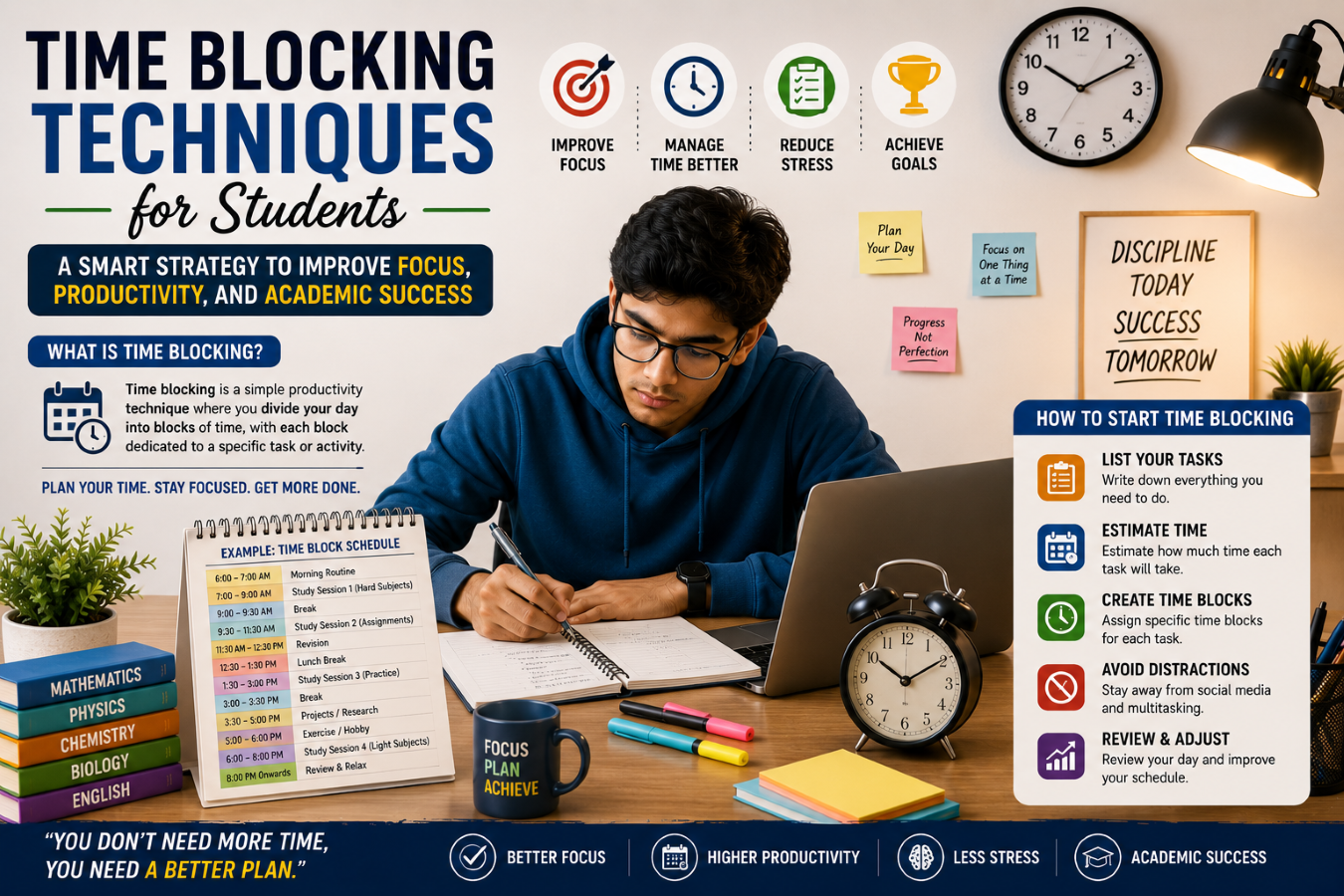
Managing time effectively is one of the biggest challenges students face today. Between attending classes, completing assignments, preparing for exams, participating in extracurricular activities, and maintaining a personal life, it can be difficult to stay organized and productive. Many students struggle with procrastination, distractions, and feeling overwhelmed by their responsibilities. One of the most effective ways to overcome these challenges is through time blocking.
At CVDragon, we believe that successful students are not necessarily those who study the longest but those who manage their time wisely. Time blocking is a practical productivity technique that helps students organize their day into dedicated periods for specific tasks. By assigning a fixed time for studying, projects, breaks, and personal activities, students can improve focus, reduce stress, and achieve better academic and career outcomes.
What Is Time Blocking?
Time blocking is a time management method where students divide their day into blocks of time, with each block dedicated to a specific task or activity. Instead of working from a long to-do list, students schedule exactly when they will complete each task.
For example, rather than planning to “study mathematics sometime today,” a student might block 4:00 PM to 5:30 PM exclusively for mathematics revision. This structured approach reduces decision fatigue and makes it easier to stay focused.
Unlike multitasking, which often decreases productivity, time blocking encourages students to concentrate on one task at a time, leading to better learning and improved efficiency.
Why Time Blocking Is Important for Students
Many students underestimate how much time they lose switching between tasks or getting distracted by social media, notifications, or unplanned activities. Time blocking creates a clear structure that minimizes distractions and helps students stay committed to their priorities.
Some of the key benefits include:
- Improved concentration.
- Better time management.
- Reduced procrastination.
- Increased productivity.
- Lower stress levels.
- Balanced academic and personal life.
- Greater consistency in learning.
By planning each day intentionally, students gain greater control over their schedules and make steady progress toward their goals.
Start by Identifying Your Priorities
Before creating a time-blocking schedule, students should identify their most important responsibilities. These may include:
- Attending classes.
- Completing assignments.
- Preparing for examinations.
- Learning new skills.
- Working on projects.
- Participating in internships.
- Exercise and self-care.
- Family responsibilities.
- Leisure and relaxation.
Understanding priorities ensures that important activities receive dedicated attention instead of being postponed.
Plan Your Day in Advance
One of the most effective time-blocking habits is planning the next day’s schedule the evening before. This simple routine helps students begin each day with clarity and purpose.
When planning, students should:
- List important tasks.
- Estimate how much time each task requires.
- Allocate dedicated time blocks.
- Include buffer time for unexpected interruptions.
- Schedule regular breaks.
Planning ahead reduces uncertainty and makes it easier to begin work immediately.
Group Similar Tasks Together
Task switching can significantly reduce productivity. Instead of alternating between unrelated activities, students should group similar tasks into the same time block.
Examples include:
- Reading multiple chapters during one study session.
- Completing all assignment research together.
- Responding to emails during a single block.
- Watching educational videos consecutively.
- Practicing programming exercises in one session.
Grouping similar activities improves efficiency by allowing the brain to remain focused on one type of work.
Schedule Your Most Important Tasks First
Students are usually most productive during certain hours of the day. Some concentrate better in the morning, while others perform best during the evening.
Identify your peak productivity period and reserve it for high-priority tasks such as:
- Studying difficult subjects.
- Writing reports.
- Solving mathematical problems.
- Preparing presentations.
- Learning technical skills.
Less demanding activities, such as organizing notes or checking emails, can be completed during lower-energy periods.
Use Dedicated Study Blocks
Rather than studying for several hours without structure, divide study time into focused sessions.
For example:
- 8:00 AM – 9:00 AM: Mathematics
- 9:15 AM – 10:15 AM: Science
- 10:30 AM – 11:30 AM: Assignment Writing
- 4:00 PM – 5:00 PM: Skill Development Course
Dedicated study blocks help maintain concentration and make learning more organized.
Include Breaks to Maintain Productivity
Continuous studying can reduce concentration and increase mental fatigue. Short breaks help refresh the mind and improve learning efficiency.
Students should:
- Take a 5–10 minute break after every 45–60 minutes of focused study.
- Stretch or walk during breaks.
- Stay hydrated.
- Avoid spending the entire break on social media.
Well-planned breaks improve long-term focus and prevent burnout.
Minimize Digital Distractions
Technology is one of the biggest obstacles to effective time management. Notifications, messaging apps, and entertainment platforms can quickly interrupt concentration.
To protect study blocks:
- Silence unnecessary notifications.
- Keep your phone away while studying.
- Use website blockers if needed.
- Close unrelated browser tabs.
- Inform family members of your study schedule.
Creating distraction-free time blocks allows students to complete work more efficiently.
Leave Buffer Time Between Activities
Unexpected interruptions are inevitable. Classes may run longer, assignments may require additional research, or personal responsibilities may arise.
Including short buffer periods between major tasks provides flexibility and prevents the entire schedule from falling behind.
For example:
- 2:00 PM – 3:00 PM: Assignment Work
- 3:00 PM – 3:20 PM: Buffer Time
- 3:20 PM – 4:20 PM: Online Course
Buffer time helps students adapt without feeling overwhelmed.
Make Time for Skill Development
Academic success is important, but career readiness also requires practical skills. Students should reserve dedicated blocks each week for learning industry-relevant competencies.
Examples include:
- Programming.
- Digital marketing.
- Graphic design.
- Public speaking.
- Data analytics.
- Financial modeling.
- Artificial intelligence tools.
Consistent skill development enhances employability and supports long-term career growth.
Balance Study with Personal Well-Being
Effective time blocking is not about filling every minute with work. Students should also schedule time for activities that support physical and mental health.
Important personal blocks include:
- Exercise.
- Family time.
- Reading for enjoyment.
- Hobbies.
- Meditation.
- Sleep.
Maintaining balance improves productivity and reduces stress over time.
Review and Adjust Your Schedule
No schedule is perfect from the beginning. Students should regularly evaluate how well their time blocks are working.
Ask yourself:
- Did I complete my planned tasks?
- Which activities took longer than expected?
- What distractions affected my schedule?
- Which time blocks were most productive?
- How can I improve tomorrow’s plan?
Regular reflection helps students create more realistic and effective schedules.
Common Mistakes Students Should Avoid
While time blocking is highly effective, certain mistakes can reduce its benefits.
Common errors include:
- Creating unrealistic schedules.
- Overloading the day with too many tasks.
- Ignoring breaks.
- Not allowing buffer time.
- Constantly changing the schedule.
- Multitasking during study blocks.
- Failing to review progress.
A flexible and realistic schedule is far more sustainable than an overly ambitious one.
Digital Tools That Support Time Blocking
Several digital tools can help students organize their schedules more effectively.
Popular options include:
- Digital calendars.
- Task management applications.
- Productivity planners.
- Reminder apps.
- Study timer applications.
- Project management platforms.
Using these tools consistently can simplify planning and improve accountability.
Time Blocking and Career Success
Learning effective time management during student life provides long-term benefits in the workplace. Professionals who can prioritize tasks, meet deadlines, manage multiple responsibilities, and remain focused are highly valued across industries.
Time blocking helps students develop transferable skills such as:
- Planning.
- Organization.
- Self-discipline.
- Accountability.
- Productivity.
- Stress management.
These habits contribute not only to academic achievement but also to long-term professional success.
Conclusion
Time blocking is one of the most effective techniques students can use to improve productivity, maintain focus, and achieve academic excellence. By organizing the day into dedicated blocks for studying, assignments, skill development, breaks, and personal activities, students gain greater control over their schedules while reducing procrastination and stress. Rather than working reactively, time blocking encourages intentional and consistent progress toward both academic and career goals.
At CVDragon, we encourage students to adopt time blocking as part of their daily routine. When combined with clear goals, disciplined study habits, and continuous skill development, this simple yet powerful technique can transform the way students learn and prepare for future opportunities. Mastering time today is an investment in tomorrow’s academic achievements, career growth, and lifelong success.
Leave a Reply