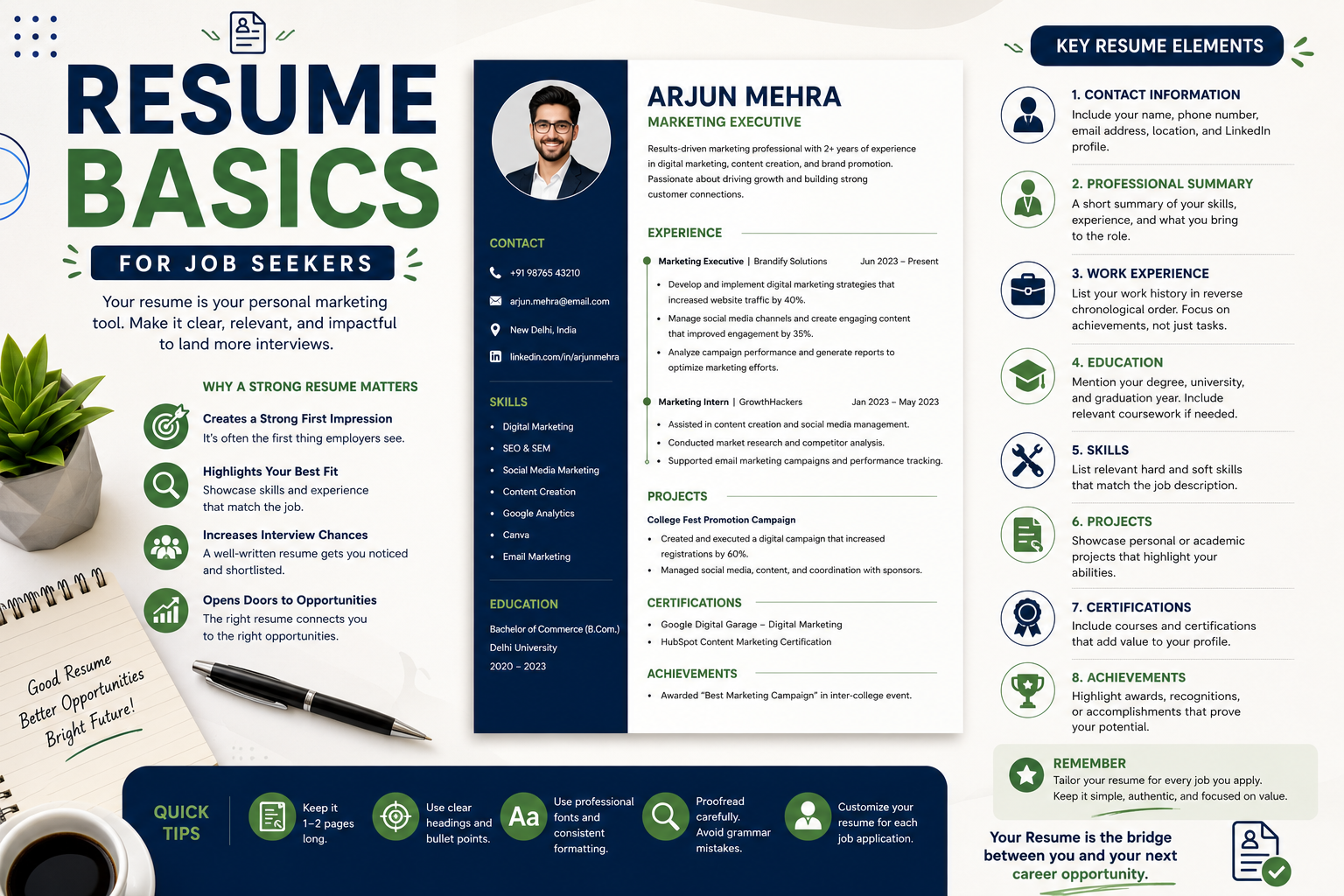
In today’s competitive job market, a well-crafted resume is more than just a document—it’s your personal marketing tool. Whether you’re a fresh graduate or someone looking to switch careers, understanding resume basics is essential to stand out from the crowd. Recruiters often spend only a few seconds scanning a resume, which means yours needs to be clear, impactful, and tailored to the role you’re applying for.
This guide will walk you through the fundamental elements of a strong resume and how you can create one that captures attention and increases your chances of landing an interview.
Understanding the Purpose of a Resume
A resume is not just a summary of your education and work experience. Its primary purpose is to showcase your value to a potential employer. It should highlight your skills, achievements, and experiences in a way that aligns with the job role.
Instead of listing everything you’ve done, focus on what is relevant to the position. Think of your resume as a bridge that connects your background with the employer’s needs.
Choosing the Right Resume Format
Selecting the appropriate format is the first step in building a professional resume. The three most common formats include:
1. Chronological Resume
This format lists your work experience in reverse chronological order. It is ideal for candidates with a consistent work history.
2. Functional Resume
This format focuses on skills rather than work experience. It is suitable for freshers or individuals with career gaps.
3. Combination Resume
This format blends both skills and experience, making it a versatile option for most job seekers.
Choose a format that best represents your strengths and career stage.
Essential Sections of a Resume
A strong resume typically includes the following sections:
1. Contact Information
This should be placed at the top and include your full name, phone number, professional email address, and optionally, your LinkedIn profile.
2. Resume Summary or Objective
A brief statement that highlights your career goals and key qualifications. Keep it concise and tailored to the job.
3. Skills Section
List both technical and soft skills relevant to the role. For example, communication, teamwork, problem-solving, or specific software expertise.
4. Work Experience
Include your previous roles, company names, job titles, and dates of employment. Use bullet points to describe your responsibilities and achievements.
5. Education
Mention your academic qualifications, including degrees, institutions, and graduation dates.
6. Additional Sections (Optional)
You can include certifications, internships, projects, awards, or volunteer experience to strengthen your profile.
Writing Strong Bullet Points
One of the most important aspects of a resume is how you present your experience. Instead of simply listing duties, focus on achievements.
Use action verbs such as “managed,” “developed,” “led,” or “improved.” Whenever possible, include numbers to quantify your impact.
For example:
- Instead of: Responsible for sales
- Write: Increased sales by 20% within six months
This approach makes your contributions more tangible and impressive.
Tailoring Your Resume for Each Job
A common mistake job seekers make is using the same resume for every application. Employers look for candidates who match their specific requirements.
Carefully read the job description and identify key skills and keywords. Incorporate these into your resume where relevant. This not only improves your chances with recruiters but also helps your resume pass Applicant Tracking Systems (ATS).
Customization shows effort and genuine interest in the role.
Keeping It Concise and Clear
Your resume should ideally be one page for freshers and up to two pages for experienced professionals. Avoid unnecessary details and focus on what matters most.
Use simple language, clear headings, and consistent formatting. A cluttered resume can be difficult to read and may discourage recruiters.
White space is your friend—it makes your resume look clean and professional.
Importance of Keywords and ATS Optimization
Many companies use ATS software to filter resumes before they reach a recruiter. To ensure your resume gets noticed, include relevant keywords from the job description.
For example, if the job requires “data analysis” or “project management,” make sure these terms appear in your resume if they reflect your skills.
However, avoid keyword stuffing. The content should still read naturally and make sense.
Common Mistakes to Avoid
Even small errors can create a negative impression. Here are some common mistakes to watch out for:
- Spelling and grammatical errors
- Using an unprofessional email address
- Including irrelevant information
- Writing long paragraphs instead of bullet points
- Providing inaccurate or exaggerated details
Always proofread your resume multiple times before submitting it.
The Role of Design and Formatting
While content is crucial, presentation also matters. A well-designed resume enhances readability and leaves a positive impression.
Use a professional font such as Arial or Calibri, keep font sizes consistent, and use bold or italics sparingly to highlight important information.
Avoid overly creative designs unless you are applying for a design-related role. For most jobs, simplicity works best.
Adding a Personal Touch
Your resume should reflect who you are professionally. Including a short summary, relevant projects, or unique achievements can make your resume stand out.
For example, if you’ve worked on a personal project, freelance assignment, or participated in competitions, include it if it adds value.
This helps employers see you as more than just a list of qualifications.
Updating Your Resume Regularly
A resume is not a one-time document. It should be updated regularly as you gain new skills, experiences, or achievements.
Keeping your resume current ensures that you’re always ready for new opportunities.
Make it a habit to review and update your resume every few months.
Final Thoughts
Creating a strong resume doesn’t have to be complicated. By focusing on clarity, relevance, and impact, you can build a resume that effectively represents your skills and potential.
At CvDragon, we believe that every job seeker has a unique story to tell. Your resume is your chance to tell that story in a way that captures attention and opens doors.
Remember, a great resume doesn’t just list your past—it positions you for your future. Take the time to craft it thoughtfully, and you’ll significantly improve your chances of landing your desired job.
Leave a Reply