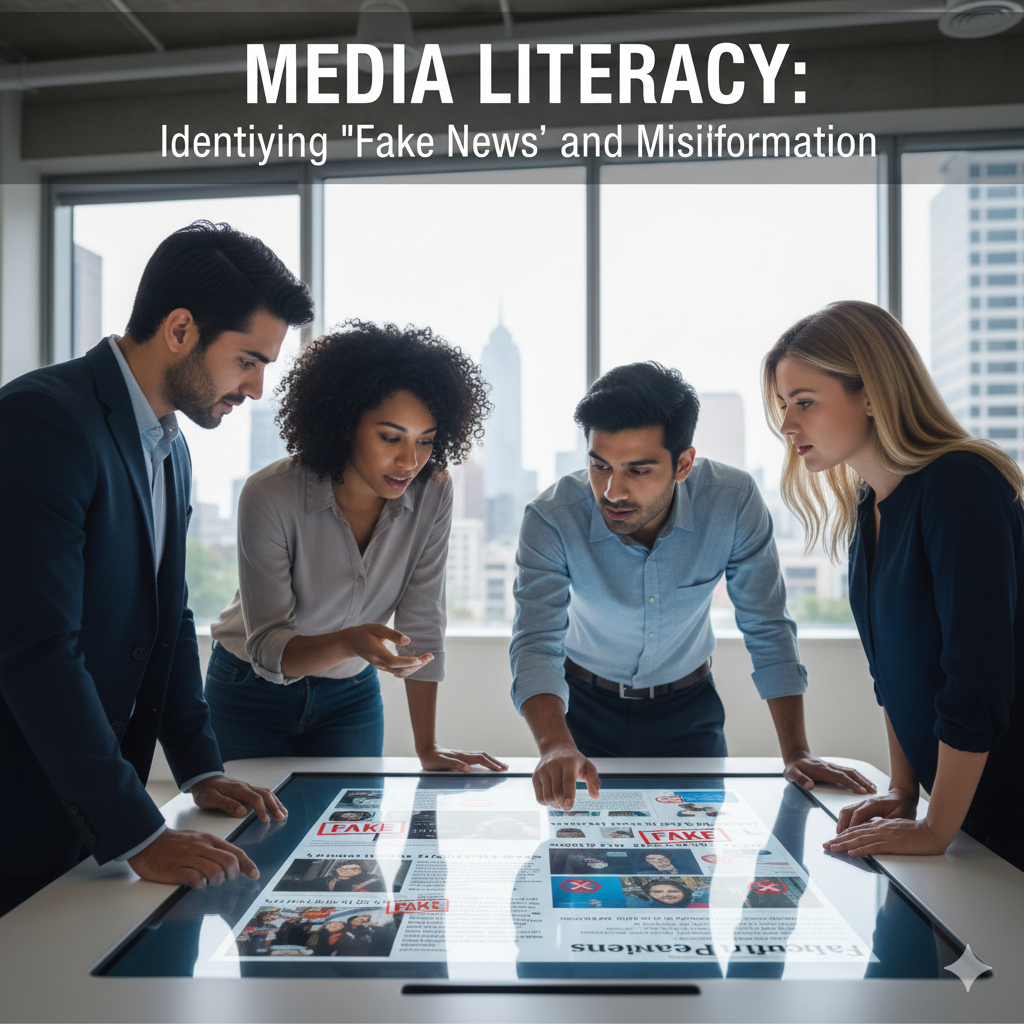
Introduction
We live in a world where information is available instantly. News spreads through social media, websites, messaging apps, and videos within seconds. While this makes it easier to stay informed, it also creates a serious challenge: the spread of fake news and misinformation.
Not everything we see, read, or hear is true. False information can mislead people, create panic, damage reputations, and influence important decisions. This is why media literacy has become an essential life skill.
Media literacy is the ability to access, analyze, evaluate, and verify information before accepting it as true. It helps individuals think critically and make informed decisions.
At CVDragon, we believe media literacy is not just about consuming information—it is about understanding it responsibly. In this article, you will learn what fake news is, why misinformation spreads, and how to identify and avoid it.
What is Media Literacy?
Media literacy is the ability to understand and evaluate media content critically.
It includes the ability to:
- Identify reliable information
- Recognize false or misleading content
- Understand media bias
- Verify sources
Media literacy helps people become informed and responsible consumers of information.
What is Fake News?
Fake news refers to false or misleading information presented as real news.
It is designed to:
- Mislead people
- Influence opinions
- Create confusion
- Gain attention
Fake news may appear professional and convincing.
This makes it dangerous.
What is Misinformation?
Misinformation is false or inaccurate information that is spread, sometimes without harmful intent.
This can include:
- Incorrect facts
- Misleading headlines
- Edited images or videos
Even when shared unintentionally, misinformation causes harm.
Difference Between Fake News and Misinformation
Fake news is intentionally created to deceive.
Misinformation may be shared without knowing it is false.
Both are harmful.
Both require awareness.
Why Fake News and Misinformation Spread So Fast
Understanding the reasons helps prevent it.
1. Social Media Sharing
People share information quickly without verifying it.
Speed is prioritized over accuracy.
2. Emotional Content
Emotional stories spread faster.
Content that creates fear, anger, or excitement gets attention.
3. Lack of Verification
Many people do not check sources.
They believe information immediately.
4. Attention and Profit
Some creators spread fake news to gain:
- Views
- Followers
- Advertising revenue
Attention brings profit.
Dangers of Fake News and Misinformation
Fake news has serious consequences.
Creates Public Panic
False news can create fear.
People make wrong decisions.
Damages Reputations
False information can harm individuals and organizations.
Influences Public Opinion
Fake news can influence beliefs.
It can affect decisions.
Creates Confusion
People do not know what is true.
Trust decreases.
How to Identify Fake News and Misinformation
Media literacy helps you recognize false information.
Here are practical steps.
1. Check the Source
Always check where the information comes from.
Reliable sources are more trustworthy.
Unknown sources require caution.
2. Read Beyond the Headline
Headlines can be misleading.
Read the full content.
Do not judge based only on headlines.
3. Verify with Multiple Sources
Check other trusted sources.
If no reliable source confirms it, be careful.
4. Check the Author
Look for the author’s credibility.
Unknown or suspicious authors may not be reliable.
5. Look at the Date
Old news can be shared as new.
Check publication dates.
6. Watch for Emotional Language
Fake news often uses strong emotional words.
It tries to create fear or anger.
Be cautious.
7. Check Images and Videos
Images can be edited.
Videos can be manipulated.
Do not trust visuals blindly.
8. Question the Purpose
Ask yourself:
Why was this created?
Is it informing or manipulating?
Critical thinking helps.
Importance of Critical Thinking
Critical thinking is essential for media literacy.
It means:
- Questioning information
- Analyzing facts
- Avoiding assumptions
Critical thinkers avoid misinformation.
They make informed decisions.
Role of Social Media Users
Everyone has responsibility.
Before sharing information:
- Verify it
- Check sources
- Confirm accuracy
Responsible sharing prevents misinformation.
Media Literacy for Students
Students must learn media literacy early.
It helps them:
- Avoid false information
- Develop critical thinking
- Make better decisions
It prepares them for the future.
Media Literacy for Professionals
Professionals must also practice media literacy.
It helps them:
- Make informed decisions
- Avoid spreading false information
- Maintain credibility
It protects professional reputation.
How Media Literacy Improves Society
Media literacy creates informed citizens.
It reduces misinformation.
It builds trust.
It strengthens society.
Educated individuals make better decisions.
Simple Habits to Improve Media Literacy
You can improve media literacy easily.
Verify Before Sharing
Do not share immediately.
Check accuracy.
Follow Trusted Sources
Choose reliable news platforms.
Think Critically
Do not believe everything immediately.
Analyze information.
Stay Educated
Learn continuously.
Awareness improves judgment.
Media Literacy is a Modern Survival Skill
In the digital age, information is power.
But false information is dangerous.
Media literacy protects you.
It helps you stay informed.
It helps you stay safe.
Conclusion
Media literacy is essential for identifying fake news and misinformation. In a world filled with information, the ability to verify and evaluate content is a critical life skill.
Fake news and misinformation can mislead, confuse, and harm individuals and society.
By checking sources, thinking critically, and verifying information, you can protect yourself and others.
At CVDragon, we believe informed individuals make better decisions and build stronger careers and communities.
Because in the digital world, being informed is not enough—
You must also be aware.