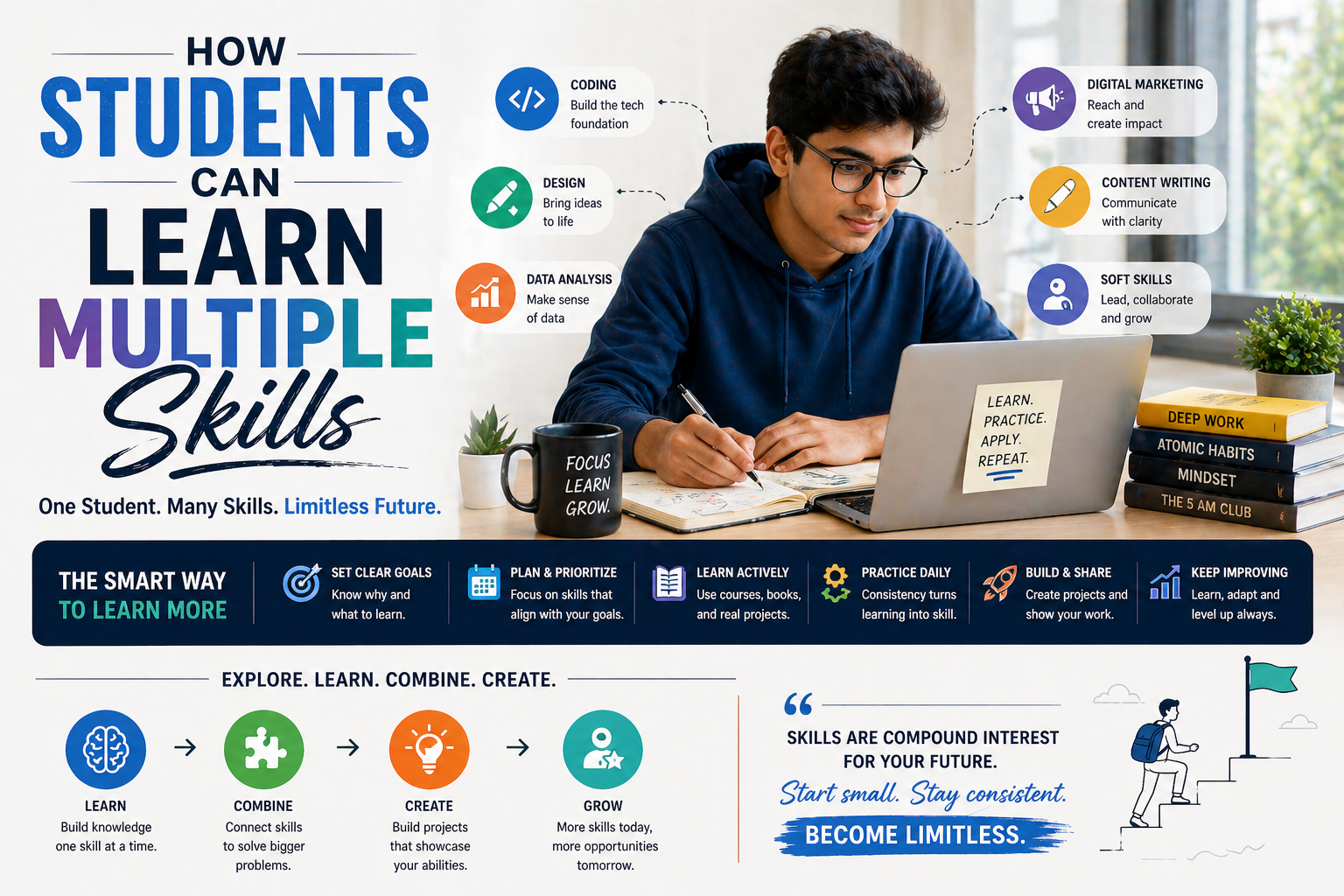
In today’s fast-changing world, relying on just one skill is no longer enough. Students are expected to be adaptable, versatile, and capable of handling multiple challenges. Whether it’s communication, technical knowledge, or creative thinking, learning multiple skills can significantly improve academic performance and career opportunities.
However, many students struggle with a common question: How can I learn multiple skills without feeling overwhelmed? The answer lies in strategy, not pressure. At CvDragon, we believe that with the right approach, students can build multiple skills efficiently and sustainably.
Why Learning Multiple Skills Matters
Learning multiple skills helps students:
- Become more adaptable
- Improve problem-solving ability
- Increase career opportunities
- Build confidence
- Stand out in competitive environments
For example, a student with both marketing knowledge and data analysis skills has a strong advantage in today’s job market.
Focus on Skill Stacking
Instead of learning unrelated skills randomly, focus on skill stacking.
Skill stacking means combining complementary skills that work well together.
Examples:
- Marketing + Content Writing + SEO
- Business + Communication + Data Analysis
- Law + Research + Public Speaking
This approach makes learning more practical and career-focused.
Prioritize One Skill at a Time
Trying to learn multiple skills simultaneously is one of the biggest mistakes students make.
Start with one primary skill.
Once you reach a basic level, introduce a second skill.
For example:
- Month 1: Learn Excel basics
- Month 2: Continue Excel + start Data Analysis
This method reduces overwhelm and improves focus.
Use Time Blocking
Time management is key when learning multiple skills.
Divide your day into focused blocks.
Example:
- Morning: Academic studies
- Afternoon: Skill 1 (e.g., coding)
- Evening: Skill 2 (e.g., communication practice)
Even 30–60 minutes per skill is enough if done consistently.
Apply the 80/20 Rule
The Pareto Principle (80/20 rule) suggests that 80% of results come from 20% of efforts.
Focus on the most important aspects of a skill first.
For example:
- In coding: Learn core concepts before advanced topics
- In language learning: Focus on commonly used words
- In marketing: Understand basics before tools
This helps you learn faster and avoid unnecessary complexity.
Use Microlearning Techniques
Microlearning means learning in small, focused sessions.
Instead of studying for long hours:
- Watch a short tutorial
- Practice one concept
- Revise key points
This makes it easier to manage multiple skills without burnout.
Practice Actively
Learning multiple skills requires practice, not just theory.
Examples:
- Coding → Build small projects
- Communication → Practice speaking daily
- Writing → Write blogs or essays
- Business → Analyze case studies
Active practice helps skills develop faster and more effectively.
Track Your Progress
Tracking helps you stay organized when managing multiple skills.
You can track:
- Time spent on each skill
- Topics completed
- Improvement levels
Tools like:
- Notion
- Google Sheets
- Trello
can help you monitor your progress easily.
Avoid Overloading Yourself
Learning multiple skills does not mean learning everything at once.
Limit yourself to 2–3 skills at a time.
Too many skills can lead to confusion and burnout.
Focus on quality over quantity.
Build a Consistent Routine
Consistency is more important than intensity.
Instead of long study sessions, aim for daily practice.
Example:
- 30 minutes coding
- 20 minutes reading
- 15 minutes communication practice
Daily effort leads to long-term improvement.
Learn from Multiple Sources
Use a mix of resources to improve your skills:
- Online courses
- YouTube tutorials
- Books
- Practice platforms
- Mentors
Different sources provide different perspectives, which improves understanding.
Combine Learning with Real-Life Application
One of the best ways to learn multiple skills is to use them together.
For example:
- Create a blog → Writing + SEO + Marketing
- Start a small project → Planning + Execution + Analysis
- Participate in competitions → Communication + Strategy
This makes learning more practical and engaging.
Take Breaks and Avoid Burnout
Learning multiple skills can be tiring if not managed properly.
Take breaks regularly.
Rest helps your brain absorb information better.
Balance is essential for long-term success.
Stay Patient and Flexible
Skill development takes time.
Progress may be slow in the beginning.
Be patient and adjust your learning strategy if needed.
Consistency will eventually bring results.
Final Thoughts
Learning multiple skills is not about doing more—it’s about learning smarter. By focusing on skill stacking, managing your time effectively, and practicing consistently, students can build valuable skills without feeling overwhelmed.
At CvDragon, we encourage students to take a structured and balanced approach to skill development. The goal is not to learn everything quickly, but to learn effectively and sustainably.
Remember, even small daily progress across multiple skills can lead to powerful long-term results.
Leave a Reply