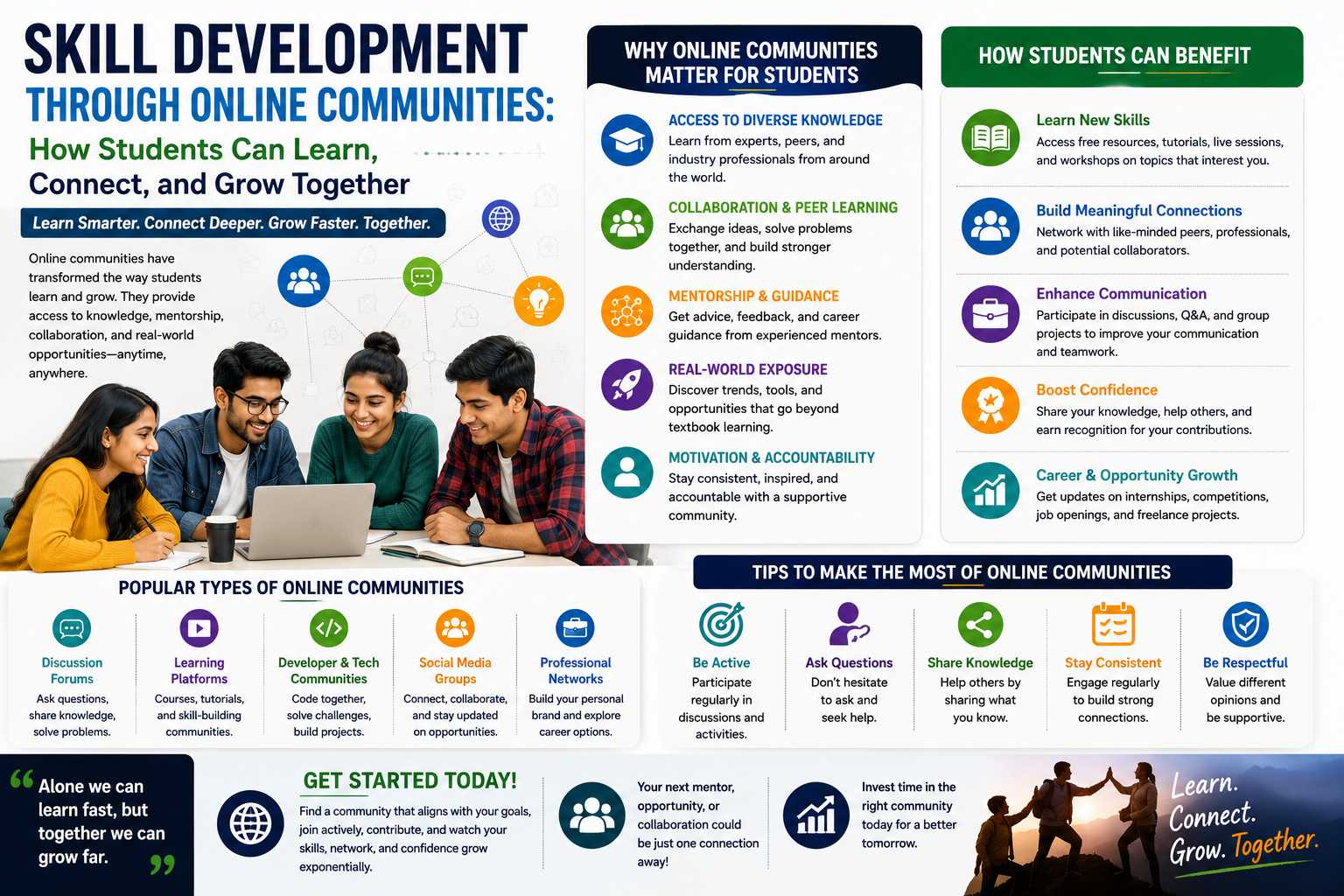
In today’s digital world, learning is no longer limited to classrooms, libraries, or traditional educational institutions. Students now have access to a vast global network of online communities where they can learn new skills, exchange ideas, ask questions, collaborate on projects, and connect with people who share similar interests. From programming and data science to design, digital marketing, entrepreneurship, and communication, online communities have become valuable spaces for continuous skill development.
At CVDragon, we believe that students can accelerate their personal and professional growth by becoming active participants in online learning communities. These platforms provide opportunities to learn from experienced professionals, practice skills through real-world discussions, receive feedback, and discover career opportunities. When used effectively, online communities can complement formal education and help students develop the practical skills required to succeed in today’s competitive job market.
What Are Online Learning Communities?
Online learning communities are digital spaces where individuals come together to share knowledge, discuss topics, solve problems, and learn from one another. These communities may exist on dedicated learning platforms, professional networks, discussion forums, social media groups, or collaborative platforms.
Examples include communities focused on:
- Programming and software development.
- Data science and artificial intelligence.
- Digital marketing.
- Graphic and UI/UX design.
- Entrepreneurship.
- Finance and investing.
- Career development.
- Language learning.
- Academic research.
The key advantage of these communities is that students can interact with people from different backgrounds, industries, and experience levels.
Why Online Communities Matter for Skill Development
Traditional education provides students with foundational knowledge, but online communities can help them apply that knowledge in practical environments.
Participating in online communities allows students to:
- Learn from experienced professionals.
- Ask questions and receive feedback.
- Discover industry trends.
- Practice problem-solving.
- Collaborate on projects.
- Build professional networks.
- Find mentors.
- Explore career opportunities.
This combination of learning and interaction helps students develop skills beyond what they may learn through textbooks or lectures.
Learn from Industry Professionals
One of the greatest benefits of online communities is access to people who are already working in the industry.
Students can follow professionals, read their experiences, participate in discussions, and learn about real-world challenges. This exposure provides insights into how theoretical concepts are applied in professional environments.
For example, a student interested in cybersecurity can learn from security professionals discussing current threats, while an aspiring digital marketer can follow conversations about SEO, content strategy, and changing consumer behavior.
Learning directly from professionals helps students develop a clearer understanding of industry expectations.
Ask Questions and Solve Problems
Students often hesitate to ask questions in classrooms because they may fear making mistakes or appearing uninformed. Online communities can provide a more flexible environment for asking questions and seeking guidance.
Whether a student is struggling with a programming error, trying to understand a complex concept, or looking for feedback on a project, online communities often provide valuable support.
Asking thoughtful questions also improves communication and problem-solving skills. Over time, students learn how to explain problems clearly, evaluate possible solutions, and apply feedback effectively.
Practice Skills Through Real Discussions
Skill development requires practice. Reading about a skill is not enough; students need opportunities to apply their knowledge.
Online communities encourage practical learning through:
- Technical discussions.
- Challenges.
- Case studies.
- Competitions.
- Project collaborations.
- Peer reviews.
For example, a student learning data analytics might participate in discussions about real datasets and analysis techniques. Similarly, a design student may share a project and receive feedback from other designers.
This practical interaction strengthens understanding and builds confidence.
Collaborate on Projects
Collaboration is an essential workplace skill. Most professional environments require employees to work with colleagues, clients, and stakeholders.
Online communities provide opportunities to collaborate with people from different locations and backgrounds. Students can work together on:
- Open-source projects.
- Research initiatives.
- Business ideas.
- Hackathons.
- Content projects.
- Design challenges.
- Technology experiments.
Collaborative projects help students develop communication, teamwork, leadership, and project management skills.
Build a Professional Network
Networking is an important part of career development. Online communities allow students to build relationships long before they enter the workforce.
Students can connect with:
- Industry professionals.
- Recruiters.
- Entrepreneurs.
- Researchers.
- Mentors.
- Fellow students.
- Potential collaborators.
A strong professional network can provide valuable advice, referrals, internship opportunities, and career guidance.
However, networking should be approached genuinely. Students should focus on contributing to discussions and building meaningful relationships rather than simply asking people for jobs.
Find Mentors and Role Models
Mentorship can significantly influence a student’s career journey. Online communities make it easier to discover experienced individuals who are willing to share advice and guidance.
Students can learn from mentors about:
- Career paths.
- Industry expectations.
- Skill development.
- Professional challenges.
- Job preparation.
- Workplace culture.
Following the journey of experienced professionals can also help students identify the skills they need to develop to achieve similar career goals.
Improve Communication Skills
Online community participation requires students to communicate clearly and professionally.
Whether writing a question, explaining a solution, giving feedback, or presenting an idea, students practice expressing themselves effectively.
Over time, this improves:
- Written communication.
- Professional etiquette.
- Active listening.
- Constructive feedback.
- Persuasive communication.
These skills are valuable across almost every career.
Discover Industry Trends
Industries are constantly evolving. Technologies, tools, and professional practices that are relevant today may change within a few years.
Online communities provide real-time exposure to industry conversations and emerging trends. Students can discover:
- New technologies.
- Emerging career paths.
- In-demand skills.
- Industry challenges.
- New tools and platforms.
Staying informed helps students make better decisions about their education and career development.
Build a Portfolio Through Community Participation
Online communities can also contribute to a student’s professional portfolio.
Students can showcase:
- Projects they contributed to.
- Open-source work.
- Technical solutions.
- Research contributions.
- Competition achievements.
- Community leadership roles.
For example, participating in an open-source project can demonstrate technical skills and collaboration. Organizing a community event can showcase leadership and project management abilities.
These experiences can strengthen a resume and provide valuable examples during job interviews.
Learn Through Peer-to-Peer Education
Learning does not always have to come from teachers or experts. Students can learn a great deal from their peers.
Peer-to-peer learning allows students to:
- Exchange different perspectives.
- Explain concepts to one another.
- Share resources.
- Review each other’s work.
- Solve problems collaboratively.
Teaching others can also strengthen the student’s own understanding. When you explain a concept clearly, you often discover gaps in your own knowledge.
Choose the Right Online Communities
Not every online community provides the same learning value. Students should select communities based on their career interests and learning goals.
Before joining, consider:
- Is the community active?
- Are discussions relevant?
- Do experienced professionals participate?
- Is feedback constructive?
- Are members respectful?
- Are learning opportunities available?
Joining a few high-quality communities is often more beneficial than joining dozens of inactive groups.
Practice Digital Professionalism
Students should remember that online interactions contribute to their digital reputation.
Good practices include:
- Communicating respectfully.
- Avoiding unnecessary arguments.
- Giving constructive feedback.
- Crediting other people’s work.
- Protecting personal information.
- Following community guidelines.
A positive online presence can support future networking and career opportunities.
Avoid Passive Participation
Simply joining an online community is not enough. Students should actively participate to gain meaningful benefits.
Instead of only reading posts, try to:
- Ask thoughtful questions.
- Answer questions when possible.
- Share useful resources.
- Participate in discussions.
- Join collaborative projects.
- Request feedback.
- Document your learning journey.
Active participation creates stronger learning outcomes and increases visibility within the community.
Balance Online Learning with Formal Education
Online communities should complement formal education rather than completely replace it.
Students can combine:
- Academic learning.
- Online courses.
- Community discussions.
- Practical projects.
- Internships.
- Certifications.
This blended approach creates a more complete learning experience by combining theoretical knowledge with practical exposure.
The Role of Online Communities in Career Readiness
Employers increasingly value candidates who demonstrate initiative, adaptability, collaboration, and continuous learning. Active participation in professional communities can help students develop these qualities.
Community-based learning can provide examples of:
- Problem-solving.
- Teamwork.
- Leadership.
- Communication.
- Technical skills.
- Industry awareness.
These experiences can be highlighted on resumes, portfolios, and during interviews when they are relevant to the target role.
Conclusion
Skill development through online communities offers students a powerful way to supplement traditional education and prepare for the modern workplace. By interacting with professionals, collaborating on projects, asking questions, sharing knowledge, and staying informed about industry trends, students can develop practical skills while building valuable professional networks.
At CVDragon, we encourage students to view online communities as more than social platforms. When approached with curiosity, consistency, and professionalism, they can become valuable environments for learning, networking, mentorship, and career growth. The skills students develop through these communities can strengthen their resumes, expand their portfolios, and improve their confidence when entering the professional world.
The future of learning is increasingly collaborative and connected. Students who actively participate in meaningful online communities today can build the knowledge, skills, relationships, and professional confidence needed to succeed in tomorrow’s competitive job market.
Leave a Reply