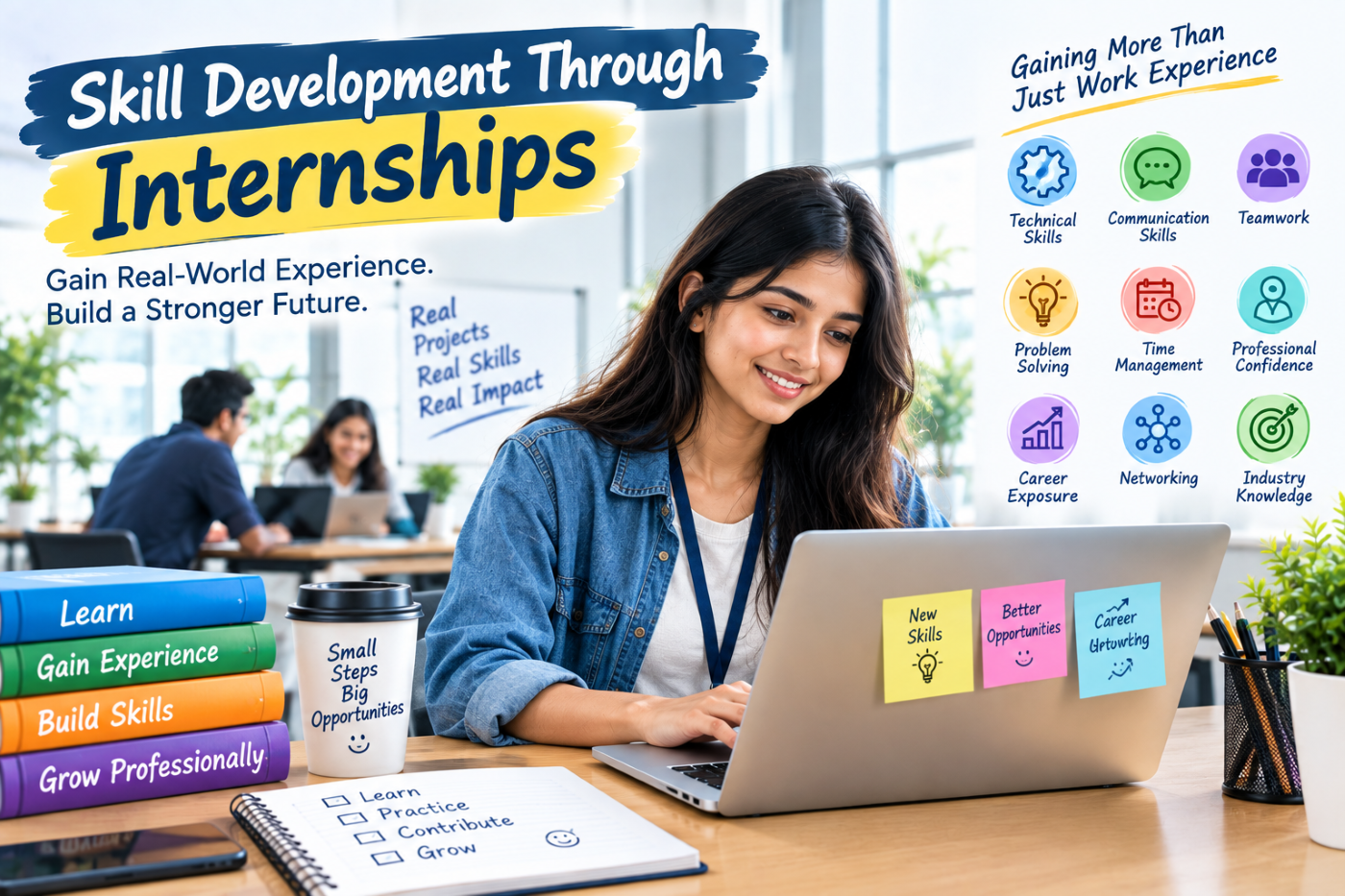
Academic education gives students important theoretical knowledge, but professional success also requires practical experience. Students may understand concepts from lectures and textbooks, yet applying those concepts in an actual workplace can be a completely different experience. Internships provide an opportunity to bridge this gap by allowing students to work on practical assignments, interact with professionals, understand workplace expectations, and develop skills that can support their future careers.
Skill development through internships is particularly valuable because students learn by doing. They may participate in projects, solve workplace problems, communicate with colleagues, attend meetings, use professional tools, and manage deadlines. These experiences can help students understand how their academic knowledge connects with real professional responsibilities.
At cvDragon, we believe internships should be viewed as learning opportunities rather than simply short-term work experiences. A meaningful internship can help students discover their strengths, identify skill gaps, build professional confidence, and develop evidence that can later strengthen their resumes and portfolios.
What Is Skill Development Through Internships?
Skill development through internships refers to the process of building technical, professional, and interpersonal abilities by gaining practical experience within an organization. Unlike classroom learning, internships expose students to real tasks, workplace processes, professional communication, and organizational expectations.
Depending on the industry, an intern might work on software development, market research, financial analysis, content creation, customer support, data management, engineering projects, human resources, design, or business operations.
The experience can help students understand not only what they have learned but also how that knowledge is applied in a professional environment.
Why Internships Matter for Students
Internships can provide students with exposure to the workplace before they begin their full-time careers. This exposure can make the transition from education to employment more familiar.
Through internships, students can develop:
- Technical and industry-specific skills.
- Communication skills.
- Teamwork.
- Time management.
- Problem-solving.
- Professional behavior.
- Adaptability.
- Workplace confidence.
- Networking abilities.
- Project management skills.
The value of an internship depends largely on the quality of the experience and the student’s willingness to learn and participate actively.
Turn Classroom Knowledge Into Practical Skills
One of the biggest benefits of an internship is the opportunity to apply academic knowledge.
For example, a student studying finance may understand financial analysis theoretically but gain practical experience by preparing reports or working with financial data. A computer science student may learn programming concepts in class and then use those concepts while contributing to a software project.
This practical application can make academic learning more meaningful.
Students may also discover that professional work requires them to adapt concepts rather than simply reproduce what they learned in a classroom.
Develop Technical and Industry-Specific Skills
Internships can expose students to tools, platforms, processes, and technologies used in their chosen industries.
A student may learn how to use:
- Industry-specific software.
- Data analysis tools.
- Project management platforms.
- Design applications.
- Programming environments.
- Customer relationship systems.
- Business communication tools.
Students should pay attention to the tools and technologies they encounter during their internship and record those that they genuinely learn and use.
These skills can later become valuable additions to their resumes.
Improve Communication Skills
Professional communication is different from casual conversations or classroom discussions.
During an internship, students may need to write emails, participate in meetings, explain ideas, ask questions, prepare reports, or communicate with clients and colleagues.
These experiences can help students learn how to:
- Communicate clearly.
- Listen actively.
- Ask professional questions.
- Write concise emails.
- Present information.
- Adapt communication to different audiences.
Strong communication can complement technical knowledge and help students work more effectively with others.
Learn Teamwork in a Professional Environment
Most organizations rely on teams to complete projects and achieve business objectives. Internships allow students to experience this collaborative environment directly.
An intern may work with people from different departments, backgrounds, and levels of experience.
Students can learn how to:
- Divide responsibilities.
- Coordinate tasks.
- Share updates.
- Meet team deadlines.
- Accept different opinions.
- Resolve misunderstandings.
- Support colleagues.
These experiences can help students understand that professional teamwork requires reliability and communication, not just cooperation.
Build Problem-Solving Skills
Workplace problems are often different from textbook exercises. They may be unclear, involve multiple factors, or require solutions within limited resources.
Internships give students opportunities to encounter these situations.
For example, an intern may discover that a dataset contains missing information, a project deadline has changed, or a customer has a problem that requires immediate attention.
With guidance from experienced professionals, students can learn how to understand the situation, identify possible solutions, and decide how to proceed.
This practical problem-solving experience can be highly valuable when students begin applying for full-time positions.
Develop Time Management
Interns may have several responsibilities at the same time. They may need to complete an assignment, attend a meeting, respond to requests, and contribute to a project within the same period.
This teaches students how to prioritize tasks and manage deadlines.
A simple approach is to categorize tasks according to:
Urgency: What needs attention first?
Importance: What has the greatest impact?
Deadline: When must it be completed?
Effort: How much time is required?
Learning how to manage these factors can prepare students for professional workloads.
Learn Professional Workplace Etiquette
An internship provides exposure to workplace expectations that are difficult to learn entirely from textbooks.
Students can observe how professionals:
- Conduct meetings.
- Communicate with colleagues.
- Handle disagreements.
- Respond to feedback.
- Meet deadlines.
- Dress appropriately for the environment.
- Communicate with clients.
- Maintain professional relationships.
These observations can help students understand the difference between academic and professional environments.
Learn From Mentors and Experienced Professionals
Internships can provide students with access to people who have professional experience in their chosen field.
Students should use this opportunity to ask thoughtful questions and learn from their mentors.
For example, they can ask:
- Which skills are most useful in this field?
- What should I learn next?
- What mistakes should beginners avoid?
- How did you develop your career?
- Which tools or technologies should I explore?
A good mentor can provide perspectives that students may not receive through traditional academic learning.
Build Professional Confidence
Students may feel uncertain about their abilities before their first internship. Working in a professional environment can gradually make workplace situations more familiar.
Completing assignments, participating in meetings, receiving positive feedback, and overcoming challenges can help students recognize their capabilities.
Confidence should not come from assuming that everything will be easy. It should come from knowing that challenges can be approached through preparation, learning, and persistence.
Learn From Feedback
Feedback is one of the most valuable parts of an internship.
Students may receive feedback about their technical work, communication, punctuality, organization, or approach to problem-solving.
Instead of becoming defensive, students can use feedback to identify areas for improvement.
A useful approach is:
Listen → Understand → Apply → Review
If a supervisor suggests that a student’s reports need to be more concise, the student can apply that feedback to the next report and evaluate whether the improvement is noticeable.
Build a Professional Network
Internships can help students begin developing professional relationships.
They may interact with:
- Managers.
- Mentors.
- Team members.
- Other interns.
- Industry professionals.
- Clients.
Students should maintain professional relationships even after an internship ends. Staying connected through professional networking platforms or occasional updates can help them remain part of the professional community they entered through the internship.
Networking should focus on genuine relationships and learning rather than immediately asking for favors.
Explore Career Interests
An internship can help students determine whether a particular career path is suitable for them.
Sometimes students have an idealized understanding of a profession based on what they read online or learn in class. An internship provides a more realistic view.
A student may discover that they enjoy data analysis but not customer-facing work. Another may discover an unexpected interest in project management or consulting.
This kind of self-discovery can help students make better-informed career decisions.
Build a Stronger Resume
Internship experience can add meaningful professional evidence to a student’s resume.
However, students should avoid simply writing:
“Completed an internship at XYZ Company.”
Instead, they should describe what they actually contributed.
For example:
“Supported market research by analyzing competitor information and preparing weekly findings for the marketing team.”
This demonstrates both the responsibility and the skill involved.
Students can highlight:
- Projects completed.
- Tools used.
- Responsibilities handled.
- Problems solved.
- Results achieved.
- Skills developed.
At cvDragon, we encourage students to describe experiences in a way that clearly communicates their contribution and the skills they developed.
Create Portfolio Evidence From Internship Work
Where company policies permit, students can use internship experiences to strengthen their portfolios.
They may include:
- Publicly shareable projects.
- Non-confidential presentations.
- Case studies.
- Research summaries.
- Design samples.
- Code samples.
- Reports created during the internship.
Students should always respect confidentiality, intellectual property, and organizational policies. Sensitive company information should never be shared publicly without permission.
Make the Most of a Remote Internship
Remote internships can also provide valuable skill development.
Students working remotely may need to become more proactive about communication, task management, and collaboration.
They can strengthen their experience by:
- Attending virtual meetings actively.
- Providing regular updates.
- Asking questions when requirements are unclear.
- Managing their own schedule.
- Documenting completed tasks.
- Learning collaboration tools.
Remote internships can help students develop digital workplace skills that are increasingly relevant across many industries.
What Students Should Do Before an Internship
Preparation can make an internship more productive.
Before starting, students should research the organization and understand the basic responsibilities associated with their role.
They can also identify a few learning objectives.
For example:
Goal 1: Learn one industry-specific tool.
Goal 2: Complete one meaningful project.
Goal 3: Improve professional communication.
Goal 4: Understand how the industry operates.
Having clear objectives helps students measure what they gain from the experience.
What Students Should Do During an Internship
Students should take an active approach rather than waiting for every task to be assigned.
They can:
- Ask relevant questions.
- Volunteer for appropriate tasks.
- Take notes during meetings.
- Request feedback.
- Observe experienced colleagues.
- Keep track of accomplishments.
- Learn from mistakes.
- Maintain professional communication.
Being proactive does not mean taking on responsibilities beyond one’s capabilities. Students should ask for guidance whenever necessary.
Reflect After the Internship
The learning process should continue after the internship ends.
Students can review:
- What skills did I develop?
- What projects did I contribute to?
- What challenges did I face?
- What feedback did I receive?
- Which career areas interested me?
- What skills should I develop next?
This reflection can help students convert an internship into a long-term career development plan.
Common Internship Mistakes to Avoid
Students should avoid treating an internship simply as a certificate-collecting exercise.
Common mistakes include:
- Arriving unprepared.
- Avoiding questions.
- Ignoring feedback.
- Missing deadlines.
- Communicating poorly.
- Failing to document achievements.
- Sharing confidential information.
- Focusing only on completing assigned tasks without learning from them.
An internship becomes more valuable when students actively engage with the learning process.
Conclusion
Skill development through internships can give students practical exposure that complements their academic education. By working on real assignments, communicating with professionals, managing deadlines, solving problems, and receiving feedback, students can develop skills that may be difficult to build through classroom learning alone.
At cvDragon, we believe internships should be viewed as opportunities to learn, experiment, contribute, and understand the professional world. Students can use internships to develop technical abilities, communication skills, teamwork, problem-solving, time management, professional confidence, and industry awareness.
The value of an internship is not determined only by the company name or the certificate received at the end. What matters is what the student learned, what they contributed, and how they use that experience to prepare for the next opportunity.
Students who approach internships with curiosity, responsibility, and a willingness to accept feedback can turn a short-term work experience into a meaningful step toward their long-term career development. By documenting their achievements and connecting them with their resume, portfolio, and future goals, they can continue benefiting from the experience long after the internship has ended.
Leave a Reply