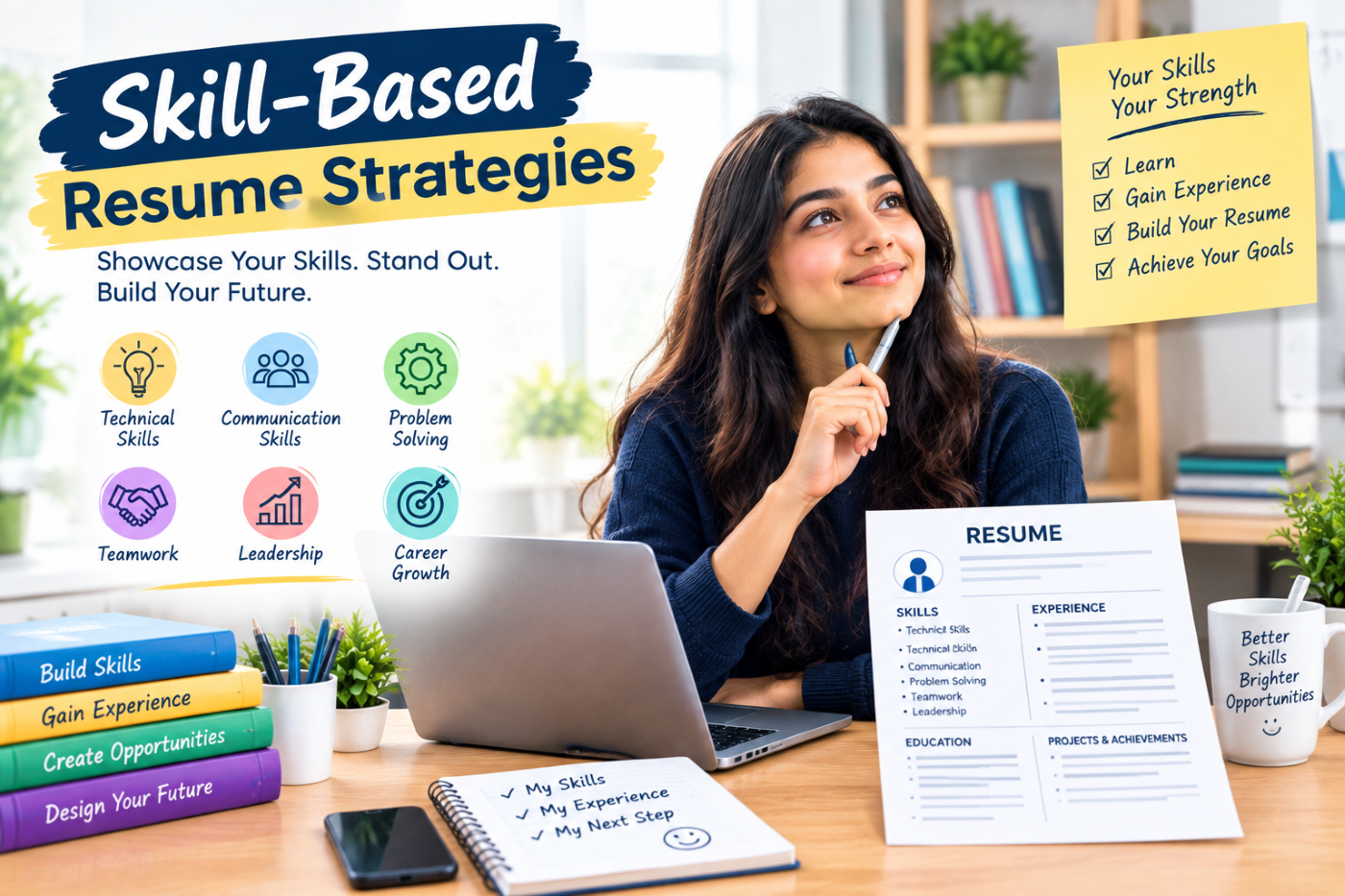
A resume is more than a list of academic qualifications and activities. For students and fresh graduates, it is an opportunity to communicate what they can contribute to an organization. Since many students have limited professional experience, their skills, projects, academic work, certifications, competitions, internships, and other learning experiences can become important parts of their resume.
This is where skill-based resume strategies can make a difference. Instead of focusing only on job titles or previous employment, a skill-focused resume highlights the abilities a candidate has developed and demonstrates how those skills have been applied. This approach can be particularly useful for students, freshers, candidates with limited experience, and individuals applying for roles where practical skills are important.
At cvDragon, we believe students should learn how to present their abilities clearly and honestly. A well-structured resume should help recruiters quickly understand a candidate’s relevant skills, experiences, and potential contribution.
What Is a Skill-Based Resume?
A skill-based resume focuses strongly on the abilities and competencies a candidate brings to a role. Rather than allowing employment history to dominate the document, this approach gives greater attention to relevant skills and evidence of their application.
For example, a student applying for a digital marketing internship may have limited work experience but could have completed projects involving social media campaigns, content creation, keyword research, analytics, or market research.
Instead of simply stating “Digital Marketing Skills,” the student can connect those skills with actual experiences and projects.
This makes the resume more meaningful because it demonstrates not only what the student claims to know but also how they have used it.
Why Skill-Based Resume Strategies Matter
Employers often look for candidates who can perform specific tasks and solve particular problems. A degree can show educational background, but a resume can provide more detail about practical capabilities.
Students can use a skill-based approach to highlight:
- Technical abilities.
- Communication skills.
- Problem-solving.
- Research.
- Data analysis.
- Leadership.
- Teamwork.
- Project management.
- Creativity.
- Industry-specific knowledge.
The key is relevance. Students should focus on skills that match the requirements of the position they are applying for.
Start by Identifying Your Core Skills
Before writing a resume, students should identify the skills they actually possess.
They can review their academic projects, internships, competitions, volunteer work, part-time activities, certifications, and personal projects.
For example, a student who completed a research project may have developed skills in:
- Research.
- Data collection.
- Analysis.
- Report writing.
- Presentation.
A student who participated in a team hackathon may have developed:
- Programming.
- Problem-solving.
- Collaboration.
- Time management.
- Presentation.
Creating a skills inventory can help students identify experiences they might otherwise overlook.
Separate Technical Skills From Soft Skills
A strong skill-based resume should distinguish between technical and interpersonal abilities.
Technical skills may include:
- Programming languages.
- Data analysis tools.
- Accounting software.
- Graphic design applications.
- Digital marketing tools.
- Database technologies.
- Spreadsheet analysis.
Soft skills may include:
- Communication.
- Teamwork.
- Leadership.
- Adaptability.
- Critical thinking.
- Time management.
- Problem-solving.
Students should avoid filling the resume with generic soft skills without evidence. Whenever possible, they should demonstrate these abilities through projects, activities, or achievements.
Match Skills With the Job Description
One of the most important skill-based resume strategies is tailoring the resume to the specific opportunity.
Students should carefully read the job description and identify the skills, tools, qualifications, and responsibilities emphasized by the employer.
For example, if a job description mentions:
“Data analysis, Excel, reporting, and problem-solving,”
a student with those abilities should ensure that these skills are clearly represented in relevant sections of the resume.
This does not mean copying the job description. It means presenting genuine skills using terminology that accurately reflects the requirements of the role.
Use a Clear Skills Section
A dedicated skills section allows recruiters to quickly identify relevant capabilities.
Instead of creating a long list containing every skill a student has encountered, the section should focus on the most relevant abilities.
For example:
Technical Skills: Excel, SQL, Python, Data Visualization
Business Skills: Market Research, Business Analysis, Reporting
Professional Skills: Communication, Teamwork, Problem-Solving
This structure makes the information easier to scan.
Support Skills With Evidence
Simply listing a skill does not necessarily demonstrate proficiency.
Compare these two approaches:
Weak:
Communication, Leadership, Problem-Solving
Stronger:
Led a four-member student team during a case competition, coordinated research responsibilities, and presented the final recommendation to a judging panel.
The second example provides evidence that the student has practiced leadership, communication, teamwork, and problem-solving.
Whenever possible, students should connect skills to specific experiences.
Use Projects to Demonstrate Skills
Projects are particularly valuable for students who have limited professional experience.
A project can demonstrate how a student applied knowledge to complete a specific objective.
A project description could include:
- What the project was about.
- What the student’s role was.
- Which tools or skills were used.
- What problem was addressed.
- What the outcome was.
For example, a computer science student could describe an application they developed rather than simply listing programming languages.
This provides employers with a clearer understanding of practical capability.
Highlight Academic Projects Strategically
Academic projects should not be ignored simply because they were completed as part of coursework.
If a project demonstrates skills relevant to the target role, it can be valuable resume content.
A student applying for a business analyst role could highlight a project involving market research and data analysis. A design student could showcase a branding project. An engineering student could describe a prototype or technical design project.
The important factor is relevance and the student’s actual contribution.
Include Competitions and Hackathons
Competitions, hackathons, case challenges, and similar activities can provide strong evidence of skill development.
These experiences can demonstrate:
- Problem-solving.
- Teamwork.
- Creativity.
- Time management.
- Technical knowledge.
- Communication.
- Decision-making.
Students should describe what they actually did rather than simply mentioning participation.
For example:
“Developed and presented a prototype with a four-member team during a 24-hour hackathon, contributing to solution design and technical implementation.”
This communicates skills more effectively than simply writing “Participated in hackathon.”
Use Action-Oriented Language
Strong resume bullet points usually begin with clear action words.
Useful examples include:
- Developed.
- Analyzed.
- Designed.
- Created.
- Managed.
- Coordinated.
- Researched.
- Implemented.
- Presented.
- Organized.
- Improved.
- Built.
- Evaluated.
Instead of writing:
“Responsible for creating social media posts.”
students could write:
“Created social media content for a student campaign and monitored engagement to identify high-performing content.”
The second version focuses on action and contribution.
Quantify Achievements Where Possible
Numbers can make resume statements more specific.
Students can include measurable information when it is accurate and relevant.
For example:
- Coordinated a 5-member project team.
- Analyzed 500+ survey responses.
- Designed 20 social media creatives.
- Completed a 4-week research project.
- Presented findings to a panel of 3 judges.
Students should never invent numbers simply to make a resume appear stronger. The purpose of quantification is to provide genuine context.
Organize Skills by Relevance
Not every skill deserves equal space on a resume.
Students should prioritize skills based on the target position.
For a software development role, programming languages and development tools may be more important. For a marketing position, communication, market research, content creation, analytics, and campaign-related skills may deserve greater attention.
A tailored resume allows recruiters to identify relevant qualifications quickly.
Avoid Skill Bars and Unsupported Ratings
Some resumes use visual bars such as:
Python: 90%
Communication: 85%
These ratings can be difficult to interpret because there is no universal measurement behind them.
Instead, students can provide evidence of skill through projects, certifications, internships, competitions, or practical experiences.
Evidence is generally more useful than an arbitrary percentage.
Keep the Resume ATS-Friendly
Many organizations use Applicant Tracking Systems (ATS) to help organize and screen applications.
A skill-based resume should therefore remain easy for both software and humans to read.
Students should generally use:
- Clear section headings.
- Standard terminology.
- Simple formatting.
- Relevant keywords.
- Consistent structure.
- Easy-to-read text.
Important skills should not be hidden inside graphics or overly complicated design elements.
Create Different Versions for Different Roles
Students do not necessarily need to use exactly the same resume for every application.
A student may have several skill areas and can emphasize different ones depending on the role.
For example:
Marketing Resume: Content, SEO, Market Research, Analytics
Business Analyst Resume: Excel, SQL, Data Analysis, Reporting
Software Resume: Programming, Development, Databases, Problem-Solving
The underlying experiences can remain truthful while the emphasis changes according to the opportunity.
Do Not Overstate Your Skills
Skill-based resumes work best when they are honest.
Students should avoid claiming expertise in tools or technologies they have only briefly encountered.
Instead, they can use accurate descriptions such as:
- Familiar with.
- Basic knowledge of.
- Working knowledge of.
- Practiced through academic projects.
- Used in a personal project.
Being precise about skill level is better than making an exaggerated claim that may become obvious during an interview.
Connect Skills With Career Goals
Students should think about their resume as part of a broader career development strategy.
If a student wants to become a data analyst, they can gradually develop relevant skills through courses, projects, competitions, internships, and practical exercises.
The resume then becomes a record of that development.
This creates a useful cycle:
Career Goal → Skill Development → Practical Experience → Evidence → Resume
As students gain more experience, they can continuously update the resume.
Review and Update Your Skills Regularly
Skills change over time. Students may learn new tools, complete projects, earn certifications, or gain internship experience.
A resume should therefore not remain unchanged for years.
Students can review it every few months and ask:
- What new skills have I developed?
- Which projects have I completed?
- What experiences are most relevant now?
- Are my strongest skills clearly visible?
- Does the resume match my current career direction?
Regular updates make it easier to apply when an opportunity appears.
How cvDragon Can Help Students Present Their Skills
At cvDragon, the focus is on helping students communicate their education, skills, experiences, and career potential through a structured resume.
Students should remember that a resume is not simply a list of everything they have done. It is a carefully selected representation of the experiences and abilities most relevant to their career goals.
A skill-based strategy can help students present their strengths more clearly, particularly when they have limited formal employment experience.
Conclusion
Skill-based resume strategies can help students shift the focus from simply listing qualifications to demonstrating what they can actually do. By identifying relevant skills, connecting them with projects and experiences, using action-oriented language, tailoring content to job descriptions, and providing evidence of their abilities, students can create more meaningful resumes.
At cvDragon, we believe that every student has experiences worth presenting. Academic projects, competitions, hackathons, certifications, internships, volunteer activities, and personal projects can all contribute to a student’s professional story when they are presented clearly and honestly.
The strongest skill-based resume is not necessarily the one with the longest list of skills. It is the one that makes relevant abilities easy to understand and supports those abilities with meaningful evidence.
Students should therefore focus on building skills first and documenting them consistently. As their abilities grow, their resume can evolve with them—creating a clearer connection between what they have learned, what they can do, and the career opportunities they want to pursue.
Leave a Reply