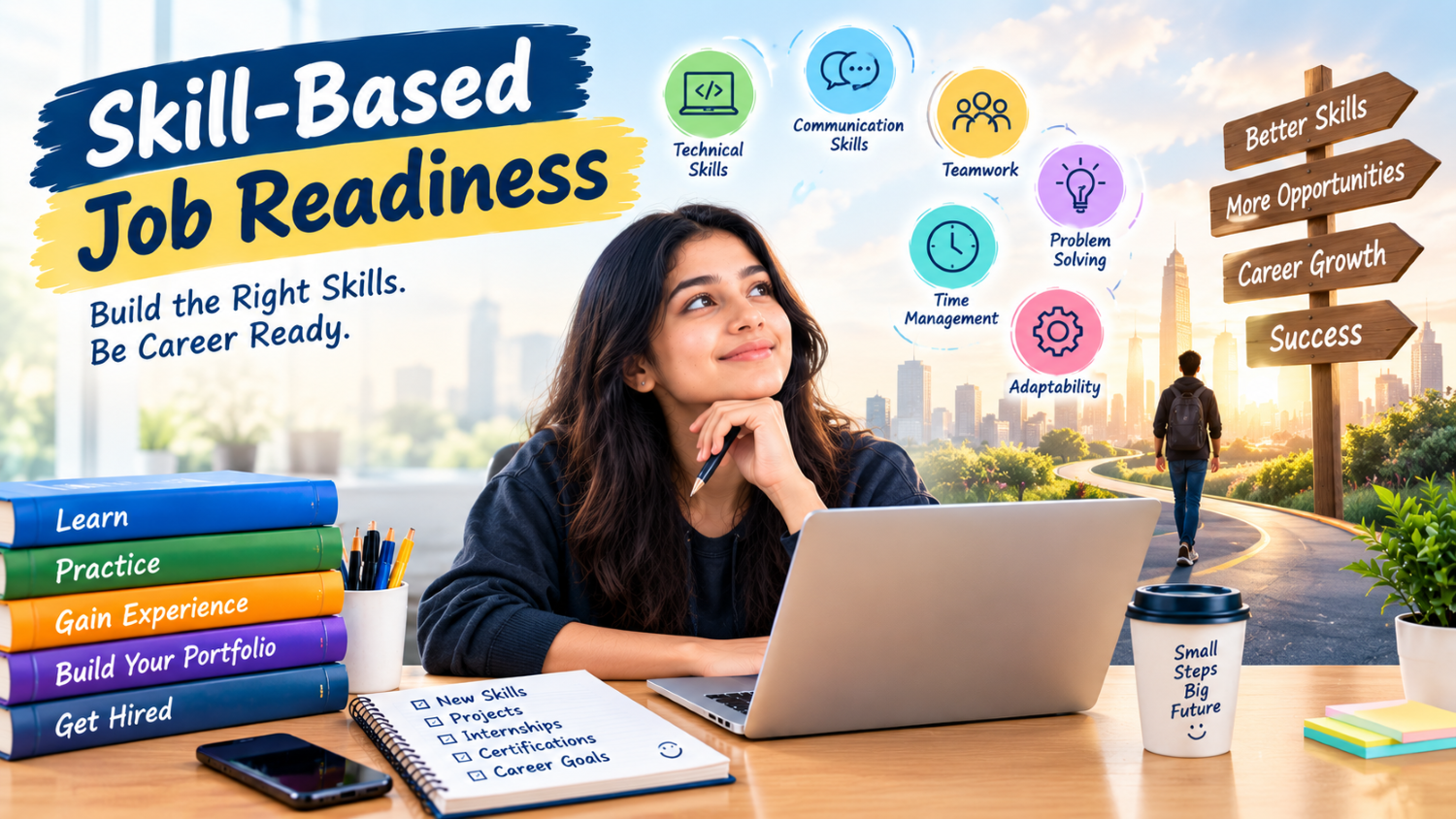
Getting a degree is an important milestone for students, but entering the professional world requires more than academic qualifications. Employers often look for candidates who can apply knowledge, solve problems, communicate effectively, work with others, use relevant tools, and respond to changing workplace requirements. This is why skill-based job readiness has become an important part of career preparation.
Skill-based job readiness refers to a student’s ability to demonstrate the practical, technical, and interpersonal skills needed to perform effectively in a workplace. Instead of focusing only on what students have studied, it emphasizes what they can actually do. This approach encourages students to develop relevant skills, gain practical experience, validate their abilities, and communicate their strengths clearly.
At cvDragon, we believe students should begin preparing for employment long before they graduate. Building job readiness is a gradual process that combines education, skill development, practical experience, self-assessment, and continuous improvement. Students who start early can use their college years to experiment, learn, build projects, participate in internships, and create evidence of their capabilities.
What Is Skill-Based Job Readiness?
Skill-based job readiness is the ability to apply relevant skills in professional situations. These skills may include technical knowledge, communication, teamwork, problem-solving, digital literacy, time management, adaptability, and industry-specific abilities.
For example, a student applying for a software development role may need programming, debugging, database, version control, and problem-solving skills. A student interested in marketing may need communication, research, content creation, analytics, and digital marketing skills.
Job readiness does not mean knowing everything before entering the workforce. It means having a foundation that allows students to learn, contribute, and adapt when they begin working.
Why Skills Matter Alongside Academic Qualifications
Academic education provides students with important theoretical foundations. However, professional environments often require students to apply that knowledge to practical situations.
Consider a student who has studied financial analysis. Understanding financial concepts is valuable, but an employer may also want to know whether the student can work with spreadsheets, analyze data, prepare reports, communicate findings, and make sense of business information.
Similarly, a computer science student may understand programming concepts but still need experience building applications, debugging code, collaborating with developers, and managing project requirements.
The combination of knowledge and practical skills can help students become more prepared for workplace responsibilities.
Identify the Skills Required for Your Target Career
The first step toward skill-based job readiness is understanding which skills are relevant to the career a student wants to pursue.
Students can research job descriptions, internship opportunities, industry resources, and professional requirements to identify commonly requested abilities.
For example, a student interested in data analytics may identify skills such as:
- Excel or spreadsheet analysis.
- SQL.
- Statistics.
- Data visualization.
- Analytical thinking.
- Communication.
- Business understanding.
Once students understand the requirements, they can compare them with their current abilities and identify areas that need development.
Conduct a Personal Skills Assessment
Students should regularly evaluate their existing skills.
A simple assessment can divide skills into three categories:
Strong: Skills the student can demonstrate confidently.
Developing: Skills the student understands but needs more practice with.
Beginner: Skills the student has limited experience in.
Students should support these classifications with evidence.
For example, instead of saying, “I am strong in presentation,” a student can identify presentations, competitions, or seminars where they have actually demonstrated that ability.
This makes the assessment more realistic.
Build Technical Skills
Technical skills vary according to career direction.
Students should identify the tools, technologies, software, and methods commonly used in their chosen field and gradually develop familiarity with them.
Depending on the career, these might include:
- Programming languages.
- Data analysis tools.
- Design software.
- Cloud technologies.
- Accounting platforms.
- Digital marketing tools.
- Project management software.
- Business intelligence platforms.
Students do not need to master every tool available. They should prioritize skills that are relevant to their goals and then build deeper expertise through practice.
Develop Transferable Skills
Technical abilities are only one part of job readiness. Transferable skills can be useful across many different roles and industries.
Important transferable skills include:
- Communication.
- Teamwork.
- Problem-solving.
- Critical thinking.
- Time management.
- Adaptability.
- Creativity.
- Organization.
- Collaboration.
- Professionalism.
These skills can be developed through academic projects, student organizations, competitions, internships, volunteering, presentations, and part-time responsibilities.
Learn Through Practical Projects
Projects are one of the most effective ways for students to convert knowledge into practical skills.
A project gives students an opportunity to define a problem, research possible solutions, apply knowledge, overcome challenges, and produce an outcome.
For example, students can:
- Build a website.
- Analyze a public dataset.
- Develop a marketing campaign.
- Create a financial model.
- Design a mobile application.
- Conduct market research.
- Develop a business plan.
- Create a design portfolio.
Projects also give students something concrete to discuss during interviews.
Gain Experience Through Internships
Internships can help students understand how skills are used in professional environments.
During an internship, students may work with experienced professionals, participate in meetings, contribute to projects, use industry tools, and manage workplace responsibilities.
Students should not treat internships only as opportunities to obtain certificates. They should actively observe, ask questions, request feedback, and document the skills they develop.
After an internship, students can reflect on what they learned and identify the areas they want to improve next.
Use Certifications Strategically
Certifications can support skill development when chosen carefully.
A relevant certification can provide a structured learning path and, depending on the credential, an assessment of knowledge or skills.
Students should avoid collecting certifications simply to increase the number of credentials on their resumes.
Instead, they should ask:
What skill will I gain from this certification?
Is the skill relevant to my career goal?
Can I apply what I learn in a project or practical activity?
The strongest approach is often to combine certification learning with practical application.
Build a Digital Skills Portfolio
Students can create a digital portfolio to showcase evidence of their abilities.
A portfolio may include:
- Projects.
- Internship experiences.
- Certifications.
- Research.
- Presentations.
- Competition participation.
- Design work.
- Technical work.
- Case studies.
For each project, students can explain the objective, their role, tools used, challenges, and outcome.
This gives employers greater context than a simple list of skills.
Validate Your Skills
Claiming a skill is different from demonstrating it.
Students can validate their abilities through:
- Practical assessments.
- Projects.
- Internships.
- Certifications.
- Competitions.
- Case studies.
- Portfolio work.
- Mock interviews.
- Feedback from mentors.
For example, instead of simply listing “Python” on a resume, a student can demonstrate the skill through a Python project or coding assessment.
Skill validation provides students with evidence to support their professional claims.
Improve Communication Skills
Strong communication is an important part of job readiness.
Students should practice communicating ideas clearly through:
- Presentations.
- Group discussions.
- Written assignments.
- Professional emails.
- Interviews.
- Project demonstrations.
They should also learn how to explain technical or complex information in language that others can understand.
Good communication is not about using complicated words. It is about making information clear, relevant, and easy to understand.
Develop Problem-Solving Ability
Workplace problems do not always come with clearly defined answers.
Students can develop problem-solving skills by participating in case studies, competitions, simulations, projects, and practical challenges.
A useful problem-solving process is:
Understand the problem → Gather information → Identify options → Evaluate solutions → Take action → Review the outcome
Practicing this process can help students become more comfortable dealing with unfamiliar situations.
Learn Teamwork and Collaboration
Most professional environments involve collaboration.
Students can develop teamwork skills through group assignments, student organizations, hackathons, case competitions, sports, volunteering, and internships.
They should learn how to divide responsibilities, communicate progress, handle different opinions, meet shared deadlines, and support team members.
Students should also understand that teamwork does not mean agreeing with everyone. Healthy collaboration can involve respectful discussion and constructive disagreement.
Practice Time Management
Students often manage multiple academic and extracurricular responsibilities. These experiences can help them develop workplace time-management skills.
Students can use techniques such as:
- Prioritizing tasks.
- Breaking large projects into smaller activities.
- Setting deadlines.
- Using calendars.
- Creating daily task lists.
- Avoiding unnecessary distractions.
Time management should focus on completing important work effectively rather than simply staying busy.
Prepare for Interviews Through Real Examples
Students should prepare for interviews by reflecting on their actual experiences.
For example, instead of memorizing generic answers about leadership, students can prepare a real example of when they coordinated a project or event.
A useful structure is:
Situation → Task → Action → Result
This helps students explain what happened, what they personally did, and what they learned.
Practical examples can make interview answers more specific and easier to understand.
Develop Adaptability
The workplace can change quickly. New technologies, processes, responsibilities, and business requirements can emerge.
Students can develop adaptability by learning new tools, working on unfamiliar projects, participating in different activities, and becoming comfortable receiving feedback.
Being adaptable does not mean constantly changing direction. It means being willing to learn when circumstances require it.
Create a Skill Development Plan
Students can turn their career goals into a practical development plan.
For example:
Career Goal: Data Analyst
Current Skills: Excel, basic statistics
Skills to Develop: SQL, visualization, Python
Practical Experience: Build three data projects
Validation: Complete relevant assessments or certifications
Career Preparation: Apply for internships and practice interviews
This approach makes job preparation more structured and measurable.
Keep Your Resume Skill-Focused
A skill-based approach should also influence how students present themselves on their resumes.
Instead of creating a long list of skills, students should connect skills with evidence.
For example:
Data Analysis: Analyzed a public sales dataset and created a dashboard to identify monthly trends.
This is stronger than simply writing:
Data Analysis — Advanced
At cvDragon, we encourage students to present their skills honestly and connect them with projects, internships, certifications, achievements, and other relevant experiences.
Avoid Waiting Until Graduation
One of the biggest mistakes students can make is waiting until their final semester to begin developing job-ready skills.
Students can start much earlier.
First-year students can explore different fields and build foundational skills. Second-year students can work on projects and certifications. Third-year students can pursue internships and competitions. Final-year students can focus on advanced projects, portfolios, resumes, interviews, and applications.
There is no single timeline that applies to everyone, but starting early provides more opportunities to experiment and improve.
Continuously Measure and Improve
Job readiness is not a one-time achievement.
Students should periodically ask:
What skills have I developed?
What evidence can I provide?
Which skills are still weak?
What does my target industry require?
What should I learn next?
This creates a continuous cycle:
Assess → Learn → Practice → Apply → Validate → Improve
Following this cycle can help students remain focused even as their career interests change.
Conclusion
Skill-based job readiness helps students move beyond simply earning academic qualifications and focus on developing abilities they can apply in professional situations. Technical skills, communication, teamwork, problem-solving, adaptability, time management, and practical experience can all contribute to becoming more prepared for employment.
At cvDragon, we believe career preparation should begin before the job search. Students can use their academic years to identify relevant skills, build projects, complete internships, pursue meaningful certifications, participate in competitions, create portfolios, and continuously assess their progress.
The goal is not to become an expert in everything. It is to build a relevant combination of skills, gain practical experience, and develop evidence that demonstrates what you can contribute.
Students who follow a skill-focused approach can make their career preparation more intentional. By consistently learning, practicing, applying, validating, and improving, they can build a stronger foundation for entering the professional world and continuing to grow throughout their careers.
Leave a Reply