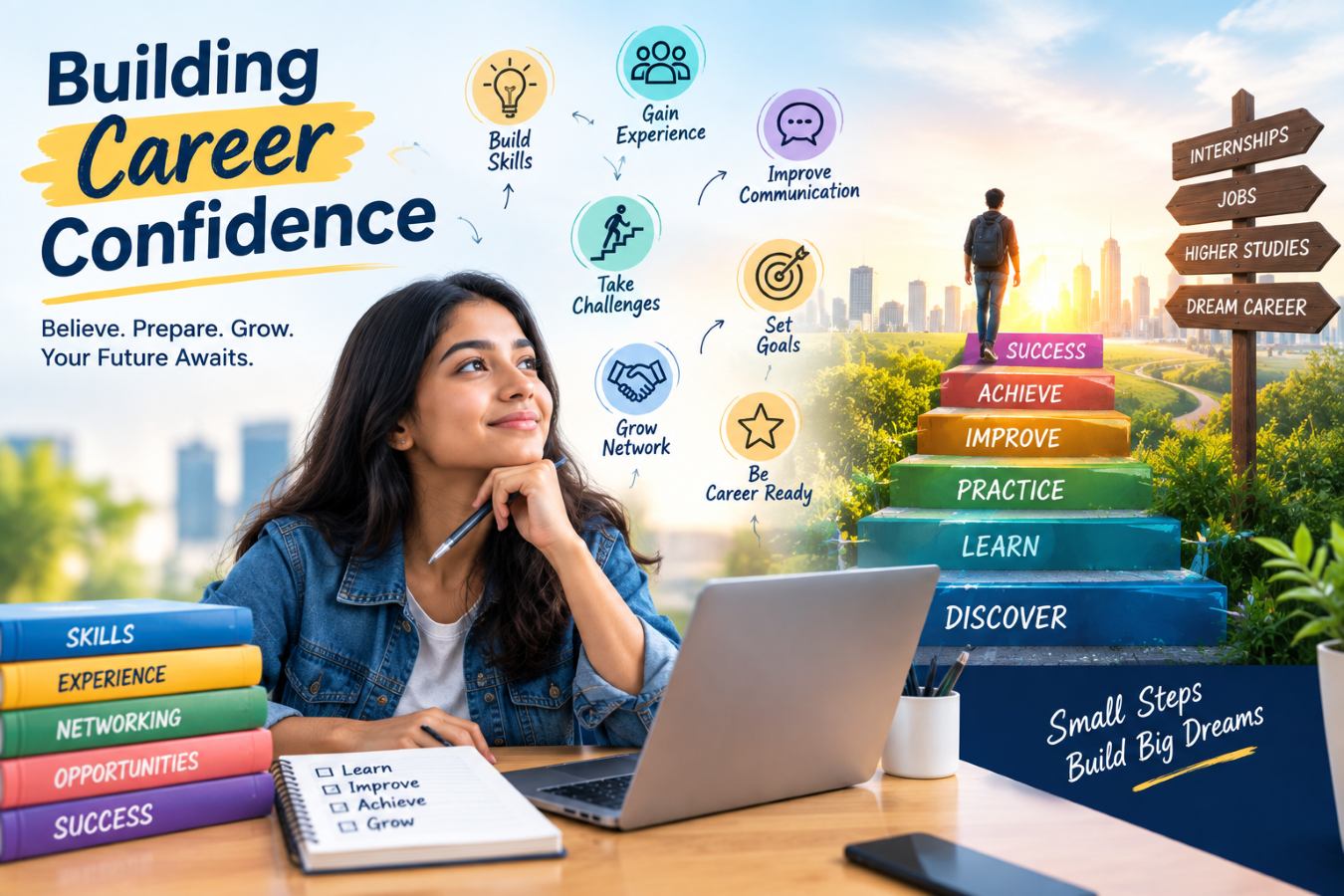
Career planning can feel exciting, but it can also create uncertainty for students. Questions about choosing the right career, developing relevant skills, preparing a resume, attending interviews, finding internships, and competing with other candidates can sometimes make students doubt their abilities. Building career confidence can help students approach these situations with greater clarity and a willingness to learn.
Career confidence does not mean believing that a student already knows everything or will succeed at every opportunity. Instead, it means developing trust in one’s ability to learn, adapt, communicate, solve problems, and improve. A confident student understands their strengths while also recognizing areas where more development is needed.
At cvDragon, we believe career confidence is developed through preparation, experience, continuous learning, and practical action. Students do not have to wait until graduation to start building it. Small steps taken during school or college can gradually create a stronger foundation for future career opportunities.
What Is Career Confidence?
Career confidence is the belief that you can make informed career decisions, develop relevant skills, communicate your abilities, and handle professional challenges.
It is different from overconfidence. A confident student does not assume they are already perfect. Instead, they understand that skills can be developed through practice and experience.
For example, a student may initially feel uncomfortable speaking during a presentation. Rather than deciding that they are simply “bad at communication,” they can practice speaking, participate in discussions, seek feedback, and gradually improve.
This mindset turns confidence into something that can be developed rather than something students either have or do not have.
Why Career Confidence Matters
Students may have strong academic results but still feel uncertain when applying for internships or attending interviews. Career confidence can help them communicate their abilities more effectively and approach new opportunities with a growth-oriented attitude.
Confidence can support students when they need to:
- Choose a career direction.
- Apply for internships.
- Attend interviews.
- Build professional networks.
- Present projects.
- Participate in competitions.
- Learn unfamiliar skills.
- Handle constructive feedback.
- Recover from rejection.
The more prepared students become, the easier it can be to approach professional situations with a clear understanding of their abilities.
Start by Understanding Your Strengths
Building career confidence begins with self-awareness.
Students should take time to identify the skills, interests, experiences, and activities they genuinely enjoy. Strengths do not always come from academic subjects. A student may be good at organizing events, explaining concepts to others, solving technical problems, designing visuals, leading teams, or communicating with people.
Students can create a simple list of:
- Technical skills.
- Soft skills.
- Academic achievements.
- Projects.
- Competitions.
- Volunteer experiences.
- Leadership activities.
- Hobbies related to career interests.
This exercise can help students recognize that they already possess abilities that can contribute to their career development.
Set Small and Achievable Goals
Career goals can sometimes feel overwhelming when students think about them as one large objective.
Instead of saying, “I need to build my entire career,” students can break the process into smaller goals.
For example:
This month: Learn one industry-relevant skill.
Next month: Complete a practical project.
After that: Update the resume and portfolio.
Next: Apply for suitable internships.
Each completed step provides evidence of progress. These small achievements can gradually strengthen confidence.
Build Skills Through Practice
Confidence grows when students know they can perform a task.
A student who wants to become a data analyst can practice with datasets. Someone interested in software development can build applications. An aspiring marketer can create sample campaigns. A student interested in public speaking can participate in presentations or debates.
Practical experience makes skills more tangible.
Instead of simply saying, “I want to become good at this,” students can create opportunities to practice the skill regularly.
Learn Through Projects
Projects are one of the best ways to build both skills and career confidence.
A project gives students an opportunity to take an idea from planning to execution. Along the way, they may encounter technical problems, time constraints, unexpected changes, and mistakes.
Completing the project demonstrates that they can work through challenges.
Projects can include:
- Websites.
- Mobile applications.
- Research studies.
- Marketing campaigns.
- Business plans.
- Data analysis projects.
- Design portfolios.
- Social initiatives.
- Engineering prototypes.
Students can document these projects and later use them as evidence of practical ability.
Improve Communication Skills
Career confidence is closely connected with communication.
Students may have strong technical knowledge, but they also need to explain their ideas clearly to teachers, recruiters, colleagues, clients, and other professionals.
Students can improve communication by practicing:
- Presentations.
- Group discussions.
- Public speaking.
- Professional emails.
- Interviews.
- Networking conversations.
- Project explanations.
One useful exercise is to explain a complex topic in simple language. If students can explain their project clearly to someone unfamiliar with the subject, they are developing an important professional communication skill.
Prepare for Interviews
Interviews can feel intimidating when students are unsure what to expect.
Preparation can reduce some of this uncertainty.
Students can practice answering questions such as:
- Tell me about yourself.
- What are your strengths?
- What skills are you developing?
- Tell me about a project you completed.
- Describe a challenge you faced.
- Why are you interested in this opportunity?
- What did you learn from a mistake?
Students should avoid memorizing every answer word-for-word. Instead, they should understand their experiences well enough to discuss them naturally.
Mock interviews can also help students become more comfortable with the interview environment.
Learn From Feedback
Feedback is one of the most effective tools for improving career readiness.
Students may sometimes avoid feedback because criticism can feel uncomfortable. However, constructive feedback can reveal areas that are difficult to identify independently.
After receiving feedback, students can ask:
What did I do well?
What can I improve?
What specific action can I take next?
For example, if a student receives feedback that their presentation contains too much information, they can practice simplifying their slides and focusing on key points.
Each improvement can contribute to greater confidence.
Take Part in Competitions and Challenges
Competitions provide students with opportunities to test their skills in practical environments.
Students can participate in:
- Hackathons.
- Case competitions.
- Business challenges.
- Debates.
- Quizzes.
- Design competitions.
- Research contests.
- Entrepreneurship events.
The goal does not always have to be winning. Participating allows students to practice problem-solving, teamwork, time management, communication, and decision-making.
Even an unsuccessful result can provide useful feedback for future improvement.
Build a Professional Network
Networking can help students become more comfortable interacting with professionals and peers.
Students can begin by participating in college events, professional communities, workshops, seminars, competitions, and industry events.
A simple professional conversation can teach students how to introduce themselves, discuss their interests, ask questions, and learn from other people’s experiences.
Networking should not be viewed only as a way to find a job. It can also be a way to learn about industries, career paths, skills, and professional expectations.
Stop Comparing Every Step With Others
Career confidence can be affected when students constantly compare themselves with classmates or people they see online.
One student may secure an internship early, while another may need more time to discover their preferred career direction. Someone may have strong technical skills, while another person may excel at communication or leadership.
Every student has a different starting point and learning journey.
Instead of asking, “Am I ahead of everyone else?” students can ask:
“Am I improving compared with where I was before?”
Personal progress provides a more useful measure of development.
Learn to Handle Rejection
Rejection is a normal part of career development.
Students may not receive every internship they apply for. They may not pass every interview or win every competition.
These experiences can be disappointing, but they can also provide opportunities to improve.
After a rejection, students can review:
- Was the application relevant?
- Did the resume communicate the right skills?
- Was interview preparation sufficient?
- Were there skill gaps?
- Can feedback be requested?
One unsuccessful application does not define a student’s potential.
Keep Learning New Skills
The professional world changes continuously. New technologies, tools, and work practices can create new skill requirements.
Students can build confidence by developing a habit of continuous learning.
They can use:
- Online courses.
- Workshops.
- Books.
- Podcasts.
- Tutorials.
- Professional communities.
- Projects.
- Competitions.
Learning does not always have to involve a formal qualification. Sometimes developing a practical skill and applying it to a project can provide valuable experience.
Create a Strong Resume and Portfolio
A resume and portfolio can help students communicate their abilities.
Students should keep track of meaningful achievements instead of trying to remember everything when an opportunity appears.
They can maintain a record of:
- Projects.
- Certifications.
- Competitions.
- Internships.
- Leadership experiences.
- Volunteer work.
- Technical skills.
- Academic achievements.
At cvDragon, we believe that a resume should present a student’s development clearly and honestly. When students understand their own experiences and skills, they can also discuss them more confidently during interviews.
Build Confidence Through Consistency
Career confidence does not usually appear overnight.
It develops through repeated action.
A student who practices presentations every month becomes more comfortable speaking. Someone who completes projects regularly becomes more confident explaining their work. A student who applies for internships repeatedly becomes more familiar with the application process.
Consistency matters more than trying to become perfect immediately.
Small actions repeated over time can create significant progress.
Create a Career Development Routine
Students can create a simple weekly routine to keep career development moving forward.
For example:
Monday: Learn a new skill.
Tuesday: Practice the skill.
Wednesday: Work on a project.
Thursday: Improve communication or interview skills.
Friday: Research career opportunities.
Weekend: Review progress and plan the following week.
The exact schedule can vary, but having a routine can make career development more manageable.
Recognize Progress
Students often focus heavily on what they still need to achieve and overlook what they have already accomplished.
Maintaining a career progress journal can help.
Students can record:
- New skills learned.
- Projects completed.
- Challenges overcome.
- Positive feedback.
- Interview experiences.
- New connections.
- Areas for improvement.
Looking back at this record can help students see how much they have developed over time.
Conclusion
Building career confidence is a gradual process that combines self-awareness, preparation, practice, experience, and continuous learning. Students do not need to know everything about their future career before they begin. They simply need to take consistent steps toward understanding their interests and developing useful skills.
At cvDragon, we believe that career confidence comes from knowing what you can do, understanding what you still need to learn, and being willing to keep improving. Projects, competitions, internships, networking, feedback, and practical learning experiences can all contribute to this process.
Students should remember that confidence does not mean never feeling nervous or uncertain. It means being prepared to take action even when a situation feels unfamiliar.
A strong career journey is built one experience at a time. Every skill learned, project completed, challenge faced, and lesson gained can strengthen a student’s confidence and career readiness.
The goal is not to become perfect before entering the professional world. The goal is to become prepared enough to take the next step, curious enough to keep learning, and confident enough to believe that improvement is always possible.
Leave a Reply