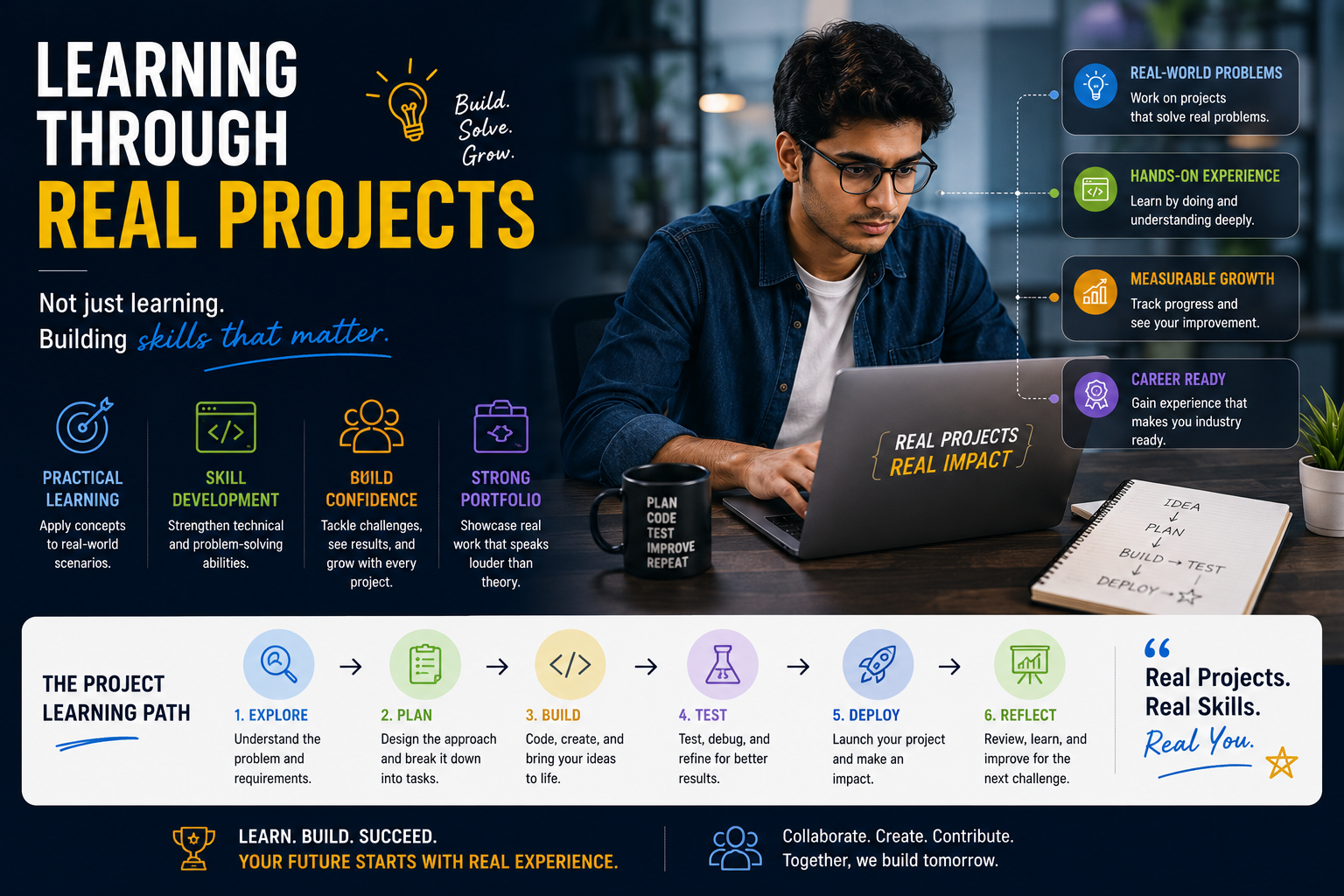
In today’s rapidly changing world, learning is no longer limited to classrooms, textbooks, and lectures. While theoretical knowledge remains important, employers and educational institutions increasingly value individuals who can apply what they know to solve real-world problems. This is where project-based learning becomes a powerful tool for personal and professional growth.
Learning through real projects allows students to move beyond passive learning and actively engage with concepts, challenges, and practical applications. Whether it’s creating a business plan, building a website, conducting research, designing a marketing campaign, or developing a mobile application, projects provide hands-on experience that deepens understanding and builds valuable skills.
At CvDragon, we believe that real learning happens when knowledge is put into action. Projects help students bridge the gap between theory and practice, making them more confident, capable, and career-ready.
What Is Learning Through Real Projects?
Learning through real projects is an educational approach where students gain knowledge and skills by working on practical tasks or solving real-world problems.
Instead of simply memorizing information, learners:
- Apply concepts in practical situations
- Solve meaningful challenges
- Create tangible outcomes
- Develop critical thinking abilities
- Gain hands-on experience
Projects transform learning from a passive activity into an active and engaging process.
Why Real Projects Improve Learning
Many students struggle to retain information because they only encounter it in theoretical form.
When learners apply knowledge through projects, they:
- Understand concepts more deeply
- Remember information longer
- Develop practical skills
- Improve problem-solving abilities
- Gain confidence in their capabilities
Learning becomes more meaningful when students can see how concepts work in real situations.
The Difference Between Studying and Applying
Traditional studying often focuses on:
- Reading
- Memorization
- Note-taking
- Exam preparation
Project-based learning focuses on:
- Creating
- Building
- Testing
- Experimenting
- Solving problems
Both approaches have value, but application helps transform knowledge into usable skills.
How Projects Create Deeper Understanding
When working on a project, students often encounter challenges that require them to:
- Research new information
- Analyze problems
- Make decisions
- Adapt strategies
- Evaluate outcomes
This process strengthens understanding far more effectively than passive learning alone.
For example, a student studying digital marketing may understand social media concepts in theory. However, designing and managing a mock social media campaign provides practical insights that textbooks cannot fully deliver.
Projects Build Problem-Solving Skills
One of the greatest benefits of project-based learning is the development of problem-solving abilities.
Real projects rarely proceed perfectly.
Students often face:
- Unexpected obstacles
- Limited resources
- Time constraints
- Technical difficulties
Overcoming these challenges teaches adaptability and resilience—qualities highly valued by employers.
Learning by Doing Increases Retention
Research consistently shows that active participation improves learning retention.
Students are more likely to remember information when they:
- Practice it
- Apply it
- Teach it
- Use it repeatedly
Learning through projects encourages all of these activities.
Instead of simply reading about a concept, students experience it firsthand.
Real Projects Develop Career-Ready Skills
Employers often seek candidates who possess practical skills alongside academic qualifications.
Projects help students develop:
Communication Skills
Students learn to:
- Present ideas
- Share findings
- Collaborate with others
- Explain complex concepts clearly
Leadership Skills
Many projects require students to:
- Coordinate teams
- Delegate responsibilities
- Manage timelines
- Make decisions
Time Management Skills
Projects often involve deadlines and multiple tasks, helping students learn how to prioritize effectively.
Critical Thinking Skills
Students must evaluate options, identify solutions, and make informed decisions throughout the project process.
These transferable skills are valuable across virtually every profession.
Examples of Real Learning Projects
Projects can be created in almost any field.
Business and Marketing
- Market research studies
- Business plan development
- Brand strategy creation
- Consumer behavior analysis
Technology
- Website development
- Mobile app creation
- Software programming projects
- Data analytics dashboards
Education
- Lesson plan development
- Learning resource creation
- Educational workshops
Finance
- Investment simulations
- Financial analysis reports
- Budget planning projects
Creative Fields
- Graphic design portfolios
- Video production projects
- Content creation campaigns
The possibilities are virtually endless.
Building a Portfolio Through Projects
One major advantage of project-based learning is the ability to build a portfolio.
A portfolio provides evidence of:
- Skills
- Knowledge
- Creativity
- Accomplishments
Unlike exam scores alone, projects demonstrate what a student can actually do.
A strong portfolio can support applications for:
- Internships
- Scholarships
- Freelance work
- College placements
- Full-time jobs
Projects Help Students Discover Their Interests
Many students are uncertain about their career paths.
Working on real projects can help identify:
- Personal strengths
- Areas of interest
- Preferred work styles
- Potential career directions
Through experimentation and hands-on experience, students gain valuable insights about themselves.
How to Start Learning Through Projects
Students often believe they need advanced knowledge before starting projects.
In reality, projects can begin at any skill level.
Step 1: Choose a Topic
Select an area that interests you.
Examples:
- Digital marketing
- Coding
- Graphic design
- Data analytics
- Entrepreneurship
Step 2: Define a Goal
Ask yourself:
“What do I want to create or solve?”
Clear goals improve focus.
Step 3: Break the Project into Tasks
Large projects become manageable when divided into smaller steps.
Step 4: Research and Learn
Identify knowledge gaps and learn what is needed to complete the project.
Step 5: Build and Test
Apply what you learn through action.
Step 6: Document Results
Record achievements, challenges, and lessons learned.
Documentation becomes valuable for future resumes and portfolios.
Learning from Failure
Not every project will succeed perfectly.
However, setbacks often provide some of the most valuable learning experiences.
Projects teach students:
- Resilience
- Adaptability
- Continuous improvement
- Growth mindset thinking
Failure becomes feedback rather than a permanent setback.
Combining Projects with Academic Learning
Project-based learning does not replace traditional education.
Instead, it enhances it.
Students can strengthen classroom learning by applying concepts through projects.
For example:
- Marketing students can design campaigns.
- Finance students can analyze investment portfolios.
- Computer science students can build applications.
- Business students can create startup plans.
Application reinforces understanding.
Showcasing Projects on Resumes
Projects can significantly strengthen student resumes.
Include:
- Project title
- Objective
- Responsibilities
- Tools used
- Outcomes achieved
Projects often compensate for limited professional experience and demonstrate initiative.
Using Online Platforms to Share Projects
Students can showcase their work through professional platforms such as:
- GitHub for technical projects
- Personal portfolio websites
- Online design portfolios
Sharing projects publicly can attract opportunities and demonstrate credibility.
The Future Belongs to Practical Learners
As industries continue to evolve, employers increasingly value candidates who can apply knowledge effectively.
Degrees and certifications remain important, but practical experience often distinguishes top candidates.
Students who consistently work on projects develop:
- Stronger skills
- Greater confidence
- Better portfolios
- Improved employability
Project-based learning prepares individuals for real-world challenges.
Final Thoughts
Learning through real projects is one of the most effective ways to transform knowledge into practical skills. Projects encourage active participation, deepen understanding, develop problem-solving abilities, and prepare students for future careers.
At CvDragon, we encourage students to move beyond passive learning and embrace hands-on experiences. Every project completed becomes a stepping stone toward personal growth, professional development, and career success.
Remember, knowledge becomes truly valuable when it is applied. The more projects you undertake, the more skills you develop, and the closer you move toward achieving your goals.
Leave a Reply