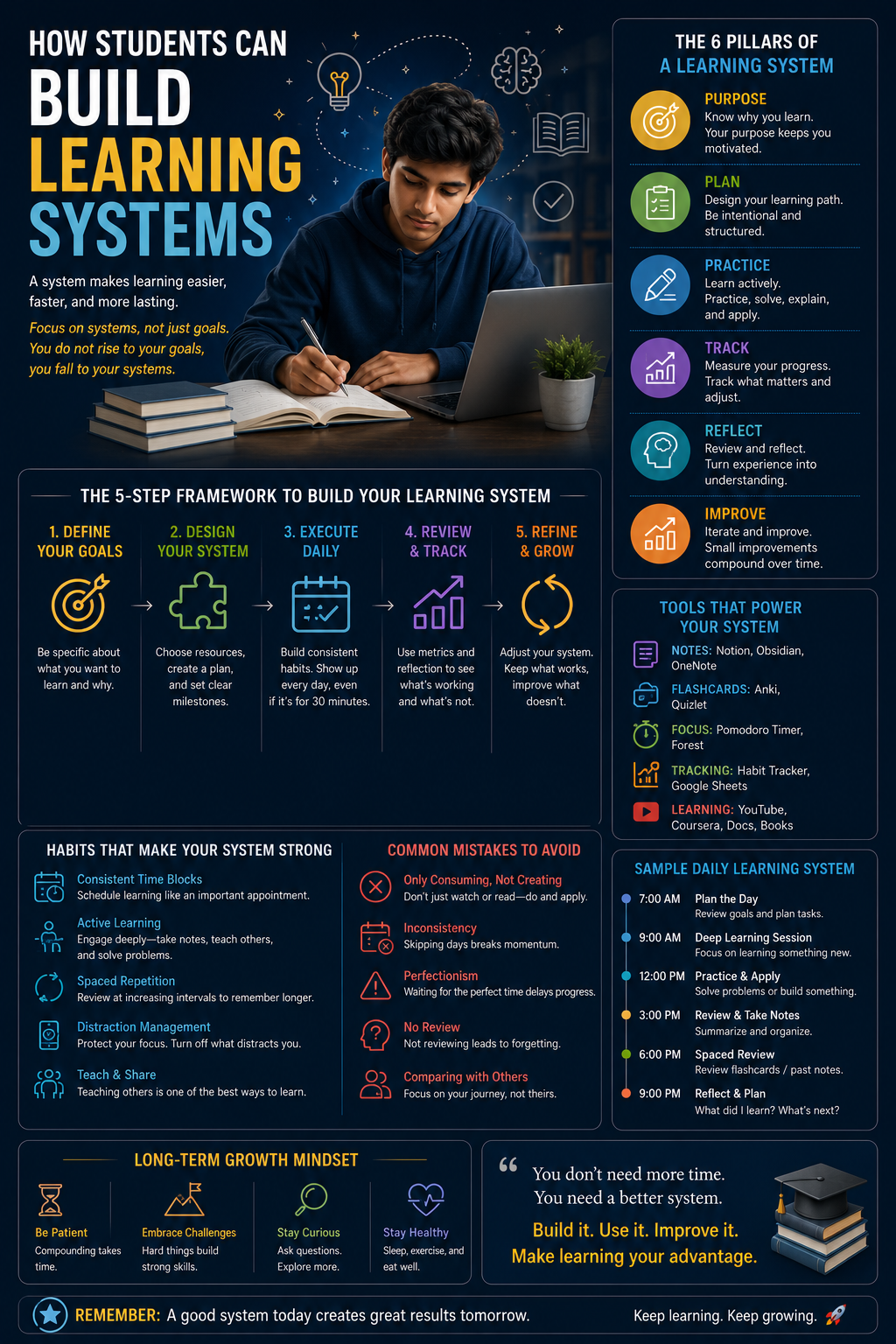
Many students rely on motivation when it comes to studying. They feel productive on some days and distracted on others. While motivation can help temporarily, it often changes based on mood, energy, or circumstances. Successful learners usually depend on something stronger: systems.
A learning system is a structured process that helps students study consistently, track progress, and improve over time. Instead of depending on sudden bursts of inspiration, systems create routines that make learning more organized and sustainable.
At CvDragon, we believe students should focus less on short-term motivation and more on building learning systems that support long-term success.
What Is a Learning System?
A learning system is a set of habits, routines, tools, and processes designed to make learning consistent and effective.
Rather than asking:
“How motivated do I feel today?”
Students ask:
“What does my system say I should do today?”
Learning systems reduce uncertainty and create structure.
Examples of system components:
- Study schedules
- Learning goals
- Review methods
- Progress tracking
- Study environments
- Daily routines
The purpose is to make learning repeatable.
Why Systems Matter More Than Motivation
Motivation changes frequently.
Students often experience:
- Productive days
- Low-energy days
- Stressful periods
- Distractions
Systems help maintain progress even when motivation is low.
Benefits include:
- Consistency
- Better organization
- Reduced stress
- Stronger learning habits
- Long-term improvement
Small actions repeated consistently create powerful results.
Start with Clear Learning Goals
Every system needs direction.
Students should define:
- What they want to learn
- Why it matters
- When they want to achieve it
Instead of:
“I want to improve coding.”
Write:
“Complete Python basics in six weeks.”
Specific goals create focus.
Break Large Goals into Small Steps
Large goals often feel overwhelming.
Break them into manageable actions.
Example:
Goal:
Learn digital marketing
Smaller steps:
- Understand SEO basics
- Learn keyword research
- Practice content optimization
- Study analytics tools
Small tasks make progress easier to maintain.
Create a Fixed Study Routine
Learning systems become stronger when routines stay predictable.
Choose regular study times.
Example:
- Morning revision
- Afternoon coursework
- Evening skill practice
Consistency helps train the brain.
Eventually studying begins to feel automatic.
Design Your Study Environment Carefully
Environment strongly influences behavior.
Create a study space that supports concentration.
Suggestions:
- Remove distractions
- Organize materials
- Keep essentials nearby
- Reduce unnecessary clutter
Small environmental changes often improve focus significantly.
Use Time Blocks
Students sometimes study without structure.
Time blocking creates focused learning periods.
Example:
- 45 minutes study
- 10-minute break
- Continue next session
Working in focused intervals often improves productivity.
Time boundaries reduce procrastination.
Include Active Learning Methods
Systems should not rely only on reading.
Add methods such as:
- Active recall
- Practice questions
- Teaching concepts
- Writing summaries
- Mind mapping
Active engagement improves understanding.
Learning becomes more effective.
Build a Review System
Many students learn information once and forget it later.
Include regular revision cycles.
Example:
Review:
- Day 1
- Day 3
- Day 7
- Day 14
This follows principles of spaced repetition.
Frequent review strengthens memory.
Useful tools include Anki and Quizlet.
Track Progress Consistently
Learning systems work best when students monitor growth.
Track:
- Hours studied
- Topics completed
- Skills learned
- Practice sessions
- Weak areas
Progress tracking creates motivation and accountability.
Digital tools such as Notion can help organize learning systems.
Prepare for Obstacles
No system works perfectly every day.
Students may face:
- Exams
- Fatigue
- Unexpected responsibilities
- Low motivation
Build flexibility into your system.
Missing one session should not end the routine.
Focus on returning quickly.
Reduce Friction
Make studying easier to start.
Examples:
- Keep books ready
- Prepare notes beforehand
- Organize materials in advance
Small obstacles create resistance.
Simple systems reduce effort.
Use Reflection Sessions
Learning systems improve when students evaluate them regularly.
Ask:
- What worked this week?
- What created difficulties?
- What needs adjustment?
Reflection turns experience into improvement.
Systems should evolve over time.
Avoid Common Mistakes
Students often make system-building mistakes.
Avoid:
Creating Unrealistic Plans
Overly ambitious systems often fail.
Depending Only on Motivation
Motivation is unreliable.
Ignoring Breaks
Rest supports learning quality.
Tracking Too Much
Complex systems become difficult to maintain.
Keep things simple.
Learning Systems for Different Goals
Examples:
Exam Preparation
- Daily revision
- Practice tests
- Weekly review sessions
Skill Development
- Structured lessons
- Practice projects
- Progress tracking
Career Growth
- Reading
- Skill stacking
- Certifications
- Portfolio work
Systems can support almost any learning objective.
Long-Term Benefits of Learning Systems
Students who build systems often develop:
- Discipline
- Consistency
- Better focus
- Stronger learning habits
- Improved time management
Over time, systems reduce dependence on willpower.
Final Thoughts
Learning systems help students create consistency in an unpredictable world. Instead of waiting for motivation, students create structures that support learning automatically.
At CvDragon, we encourage students to focus on processes rather than temporary bursts of effort. Small routines, repeated daily, often produce bigger results than occasional intense studying.
Remember, successful learning is rarely about doing extraordinary things once. It is usually about doing ordinary things consistently through strong systems.
Leave a Reply