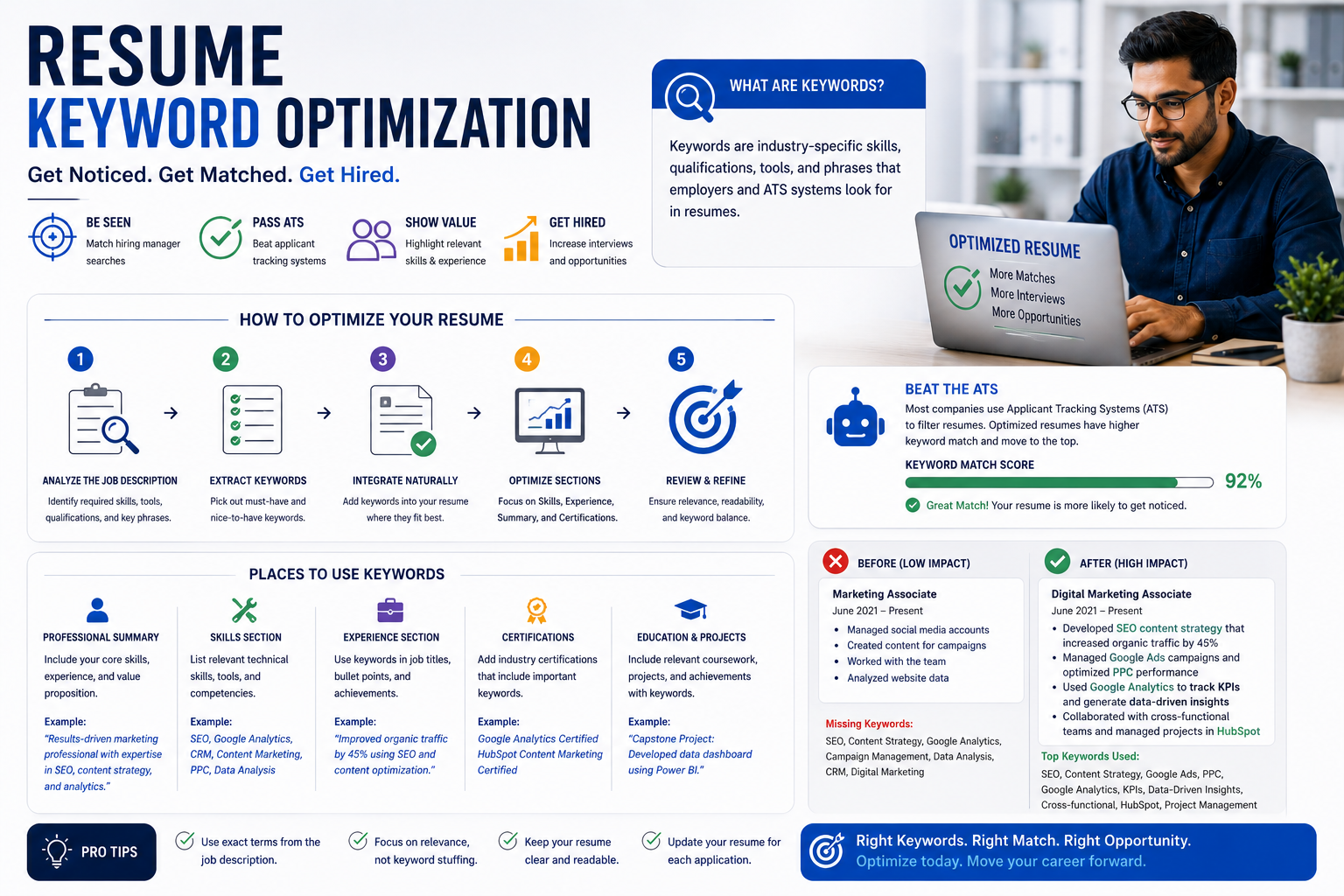
In today’s digital hiring landscape, having a well-written resume is not enough—you also need to ensure it gets noticed. This is where resume keyword optimization becomes essential. Most companies use Applicant Tracking Systems (ATS) like Workday and Greenhouse to filter resumes before a recruiter even sees them.
If your resume does not contain the right keywords, it may never reach human eyes—even if you are highly qualified.
At CvDragon, we help job seekers understand how to strategically use keywords to improve their chances of getting shortlisted.
What Are Resume Keywords?
Resume keywords are specific words or phrases that describe:
- Skills
- Job roles
- Tools and technologies
- Qualifications
- Industry terms
These keywords are usually taken directly from the job description.
Examples:
- Digital Marketing
- Data Analysis
- Project Management
- SEO
- Financial Reporting
ATS systems scan resumes for these terms to determine relevance.
Why Keyword Optimization Matters
Keyword optimization helps your resume:
- Pass ATS screening
- Rank higher in recruiter searches
- Match job requirements
- Increase visibility
- Improve shortlisting chances
Without proper keywords, your resume may get filtered out early.
How ATS Uses Keywords
ATS software scans your resume and compares it with the job description.
It looks for:
- Exact keyword matches
- Frequency of keywords
- Context of usage
- Section placement
Resumes with higher keyword relevance are ranked better.
Identify the Right Keywords
The first step is analyzing the job description carefully.
Look for:
1. Job Titles
Example:
- Marketing Executive
- Data Analyst
- HR Manager
2. Skills
Example:
- SEO
- Excel
- Communication
- Leadership
3. Tools and Technologies
Example:
- Google Analytics
- Python
- CRM software
4. Action Words
Example:
- Managed
- Developed
- Analyzed
- Led
These are all important keywords to include.
Where to Use Keywords in Your Resume
Strategic placement is just as important as selecting the right keywords.
1. Resume Summary
Include key skills and job titles.
Example:
“Digital marketing professional with expertise in SEO, content strategy, and data analysis.”
2. Skills Section
List keywords clearly.
Example:
- SEO
- Data Analysis
- MS Excel
- Project Management
3. Work Experience
Use keywords naturally in bullet points.
Example:
- Managed SEO campaigns to increase website traffic
- Analyzed marketing data using Excel
4. Certifications and Projects
Mention tools and skills used.
Example:
- Google Analytics Certification
- Data analysis project using Excel
Use Both Hard and Soft Skill Keywords
Hard Skills
These are technical and measurable.
Examples:
- Coding
- Financial analysis
- SEO
- Data visualization
Soft Skills
These describe personal abilities.
Examples:
- Communication
- Leadership
- Teamwork
- Problem-solving
A balanced mix improves your resume.
Avoid Keyword Stuffing
One of the biggest mistakes is overloading your resume with keywords.
Example of bad practice:
“SEO SEO SEO Digital Marketing SEO Expert SEO Specialist”
This looks unnatural and may be flagged by ATS.
Fix:
Use keywords naturally within meaningful sentences.
Use Variations of Keywords
Different companies may use different terms for the same skill.
Example:
- “Data Analysis”
- “Data Analytics”
- “Data Interpretation”
Including variations increases your chances of matching.
Match Keywords with Job Description
Customize your resume for each job.
Do not use the same keywords for every application.
If one job requires “content marketing” and another requires “copywriting,” adjust your resume accordingly.
Focus on Relevant Keywords Only
Adding irrelevant keywords can hurt your resume.
Only include skills and terms you genuinely possess.
Recruiters may test your knowledge during interviews.
Use Industry-Specific Keywords
Each industry has its own terminology.
Examples:
Marketing
- SEO
- PPC
- Lead Generation
Finance
- Financial Reporting
- Budgeting
- Auditing
HR
- Recruitment
- Employee Engagement
- Payroll
Using industry-specific keywords improves targeting.
Keep Formatting ATS-Friendly
Even with the right keywords, poor formatting can reduce effectiveness.
Use:
- Standard headings
- Simple layout
- Bullet points
- No graphics or tables
This ensures ATS can read your keywords correctly.
Test Your Resume
Before applying, review your resume:
- Does it match the job description?
- Are important keywords included?
- Is the language natural?
You can also compare your resume with the job posting manually.
Common Keyword Mistakes to Avoid
Avoid these errors:
- Missing important keywords
- Using vague language
- Overstuffing keywords
- Ignoring job-specific terms
- Using outdated skills
Small mistakes can impact ATS ranking.
Final Thoughts
Resume keyword optimization is one of the most important strategies for modern job applications. It ensures your resume gets noticed by both ATS systems and recruiters.
At CvDragon, we recommend tailoring your resume for every job, using relevant keywords, and maintaining a natural writing style.
Remember, the goal is not just to pass the system—but to clearly show that you are the right fit for the role.
A well-optimized resume is your gateway to more interview opportunities.
Leave a Reply