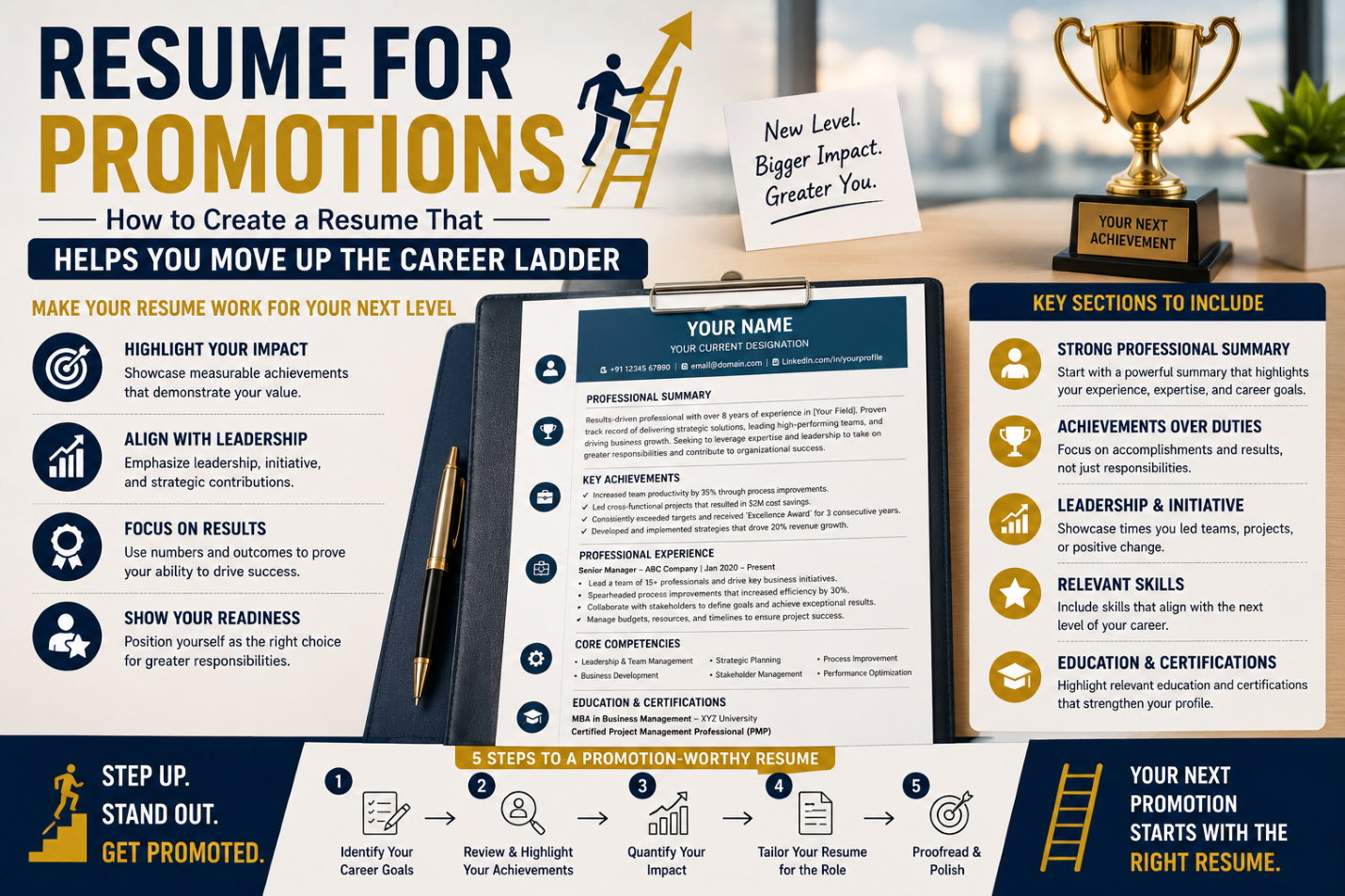
Earning a promotion is one of the most rewarding milestones in any professional career. It reflects your dedication, performance, leadership potential, and ability to contribute to organizational success. However, many professionals assume that because they already work within a company, they don’t need an updated resume when applying for an internal promotion. In reality, a well-crafted promotion resume can significantly strengthen your application by showcasing your accomplishments, growth, and readiness for greater responsibilities.
At CVDragon, we believe that a promotion resume should do more than summarize your job history—it should demonstrate how your achievements, leadership skills, and measurable contributions have prepared you for the next level. Whether you’re applying for a supervisory position, managerial role, department head, or senior executive opportunity, an effective resume can help decision-makers recognize your potential.
Why You Need a Resume for an Internal Promotion
Even if your managers know your work, they may not be fully aware of every accomplishment, project, or contribution you’ve made over the years. A promotion resume provides a structured overview of your professional journey and highlights why you are the best candidate for the new role.
A strong promotion resume helps you:
- Showcase measurable achievements.
- Highlight leadership experience.
- Demonstrate career growth.
- Present new skills and certifications.
- Align your experience with the requirements of the promoted position.
- Stand out among internal and external applicants.
A professionally written resume reinforces your commitment to career advancement and professionalism.
Understand the Requirements of the New Role
Before updating your resume, carefully review the job description for the position you are seeking. Identify the responsibilities, technical skills, leadership expectations, and qualifications required.
Ask yourself:
- What new responsibilities will this role involve?
- Which achievements demonstrate my readiness?
- What leadership experience can I highlight?
- Which skills match the job requirements?
- What measurable results support my promotion?
Tailoring your resume to the position helps decision-makers quickly see your suitability.
Write a Strong Professional Summary
The professional summary should immediately communicate your experience, achievements, and readiness for greater responsibility.
An effective summary should include:
- Total years of professional experience.
- Industry expertise.
- Current role.
- Key accomplishments.
- Leadership capabilities.
- Career objective aligned with the promotion.
Example:
“Results-oriented Operations Executive with over eight years of experience in process improvement, cross-functional team leadership, and project management. Successfully led operational initiatives that reduced costs by 18% and improved productivity across multiple departments. Seeking to leverage leadership experience and strategic planning skills in a managerial role.”
A concise and impactful summary creates a strong first impression.
Highlight Career Progression
One of the most important aspects of a promotion resume is demonstrating professional growth within the organization.
Show progression by highlighting:
- Promotions received.
- Increased responsibilities.
- Leadership opportunities.
- Departmental transfers with expanded roles.
- Major projects completed.
- New technical expertise acquired.
Employers value employees who consistently grow and take on additional responsibilities.
Focus on Achievements, Not Responsibilities
Avoid simply listing daily tasks from your current position. Instead, emphasize measurable accomplishments that demonstrate your impact.
Instead of writing:
- Managed daily operations.
Write:
- Streamlined operational workflows, reducing processing time by 25% while improving team productivity and customer satisfaction.
Achievement-focused statements show the value you bring to the organization.
Quantify Your Results
Numbers provide credibility and make accomplishments more persuasive.
Examples include:
- Increased sales revenue by 30%.
- Reduced operational costs by 15%.
- Improved customer satisfaction ratings by 22%.
- Led a team of 20 employees.
- Completed projects ahead of schedule.
- Reduced employee turnover by 18%.
- Managed annual budgets exceeding $2 million.
Whenever possible, support achievements with measurable outcomes.
Demonstrate Leadership Skills
Promotions often involve managing people, projects, or strategic initiatives. Therefore, leadership experience should be prominently featured.
Highlight examples such as:
- Mentoring junior employees.
- Leading project teams.
- Coordinating cross-functional departments.
- Conducting employee training.
- Managing budgets.
- Driving organizational improvements.
- Resolving complex challenges.
Leadership examples help decision-makers visualize your success in a more senior role.
Showcase Problem-Solving Abilities
Organizations promote individuals who can solve problems effectively.
Include examples where you:
- Improved business processes.
- Resolved operational challenges.
- Introduced innovative solutions.
- Increased efficiency.
- Reduced costs.
- Improved customer experience.
Demonstrating initiative and strategic thinking strengthens your promotion application.
Highlight Professional Development
Continuous learning signals ambition and commitment to career growth.
Include relevant:
- Professional certifications.
- Leadership training.
- Industry workshops.
- Online courses.
- Conferences attended.
- Internal company development programs.
Professional development demonstrates that you are preparing yourself for higher responsibilities.
Include Key Skills
Your skills section should align with the promoted position.
Examples include:
Leadership Skills
- Team Leadership
- Coaching and Mentoring
- Strategic Planning
- Decision Making
- Conflict Resolution
- Performance Management
Technical Skills
- Project Management
- Data Analysis
- CRM Systems
- ERP Platforms
- Financial Planning
- Business Intelligence
- Process Improvement
Professional Skills
- Communication
- Negotiation
- Time Management
- Stakeholder Management
- Problem Solving
- Change Management
Tailor the list according to the position you are applying for.
Showcase Major Projects
Large-scale projects often demonstrate readiness for promotion.
Include projects where you:
- Led cross-functional teams.
- Managed significant budgets.
- Implemented new technologies.
- Improved organizational performance.
- Achieved business objectives.
- Delivered measurable results.
Describe your specific role and the positive outcomes achieved.
Optimize Your Resume for ATS
If your organization uses an Applicant Tracking System (ATS), ensure your resume is compatible.
Best practices include:
- Use standard section headings.
- Include keywords from the job posting.
- Maintain simple formatting.
- Avoid graphics and complex tables.
- Use professional fonts.
- Save the resume in the requested file format.
ATS optimization ensures your resume reaches hiring managers successfully.
Keep the Resume Professional and Concise
Even with years of experience, your resume should remain focused and easy to read.
General recommendations include:
- One to two pages for most professionals.
- Clear section headings.
- Consistent formatting.
- Professional language.
- Achievement-based bullet points.
- Minimal unnecessary information.
Recruiters and managers appreciate resumes that communicate value quickly.
Common Mistakes to Avoid
Many professionals weaken their promotion applications by making avoidable mistakes.
Common errors include:
- Listing responsibilities instead of achievements.
- Failing to update recent accomplishments.
- Ignoring leadership experience.
- Using the same resume prepared years ago.
- Including outdated skills.
- Writing generic summaries.
- Not tailoring the resume to the new position.
Regularly updating your resume ensures it accurately reflects your current capabilities.
Support Your Resume with Strong Evidence
When applying for promotions, your resume becomes even stronger when supported by:
- Performance reviews.
- Awards and recognitions.
- Client appreciation.
- Successful project outcomes.
- Leadership initiatives.
- Professional certifications.
- Training achievements.
These accomplishments reinforce your credibility and strengthen your application.
Preparing for the Promotion Interview
A strong resume not only helps secure an interview but also prepares you for the discussion.
Be ready to explain:
- Your biggest achievements.
- Leadership experiences.
- Challenges you successfully handled.
- Process improvements you introduced.
- Goals you achieved.
- How you will add value in the promoted role.
Your resume should serve as a roadmap for confidently discussing your career accomplishments.
Conclusion
A resume for promotions is a powerful career development tool that showcases your achievements, leadership potential, and readiness for greater responsibility. Rather than focusing solely on job duties, it should highlight measurable accomplishments, professional growth, problem-solving abilities, and the value you have consistently delivered to your organization. A tailored, achievement-focused resume helps decision-makers recognize your ability to succeed at the next level.
At CVDragon, we encourage professionals to treat internal promotion opportunities with the same level of preparation as external job applications. By updating your resume, highlighting your strongest accomplishments, and aligning your experience with the requirements of the new role, you can confidently position yourself as the ideal candidate for career advancement. Your next promotion begins with effectively communicating the impact you’ve already made and the leadership you are ready to provide in the future.
Leave a Reply