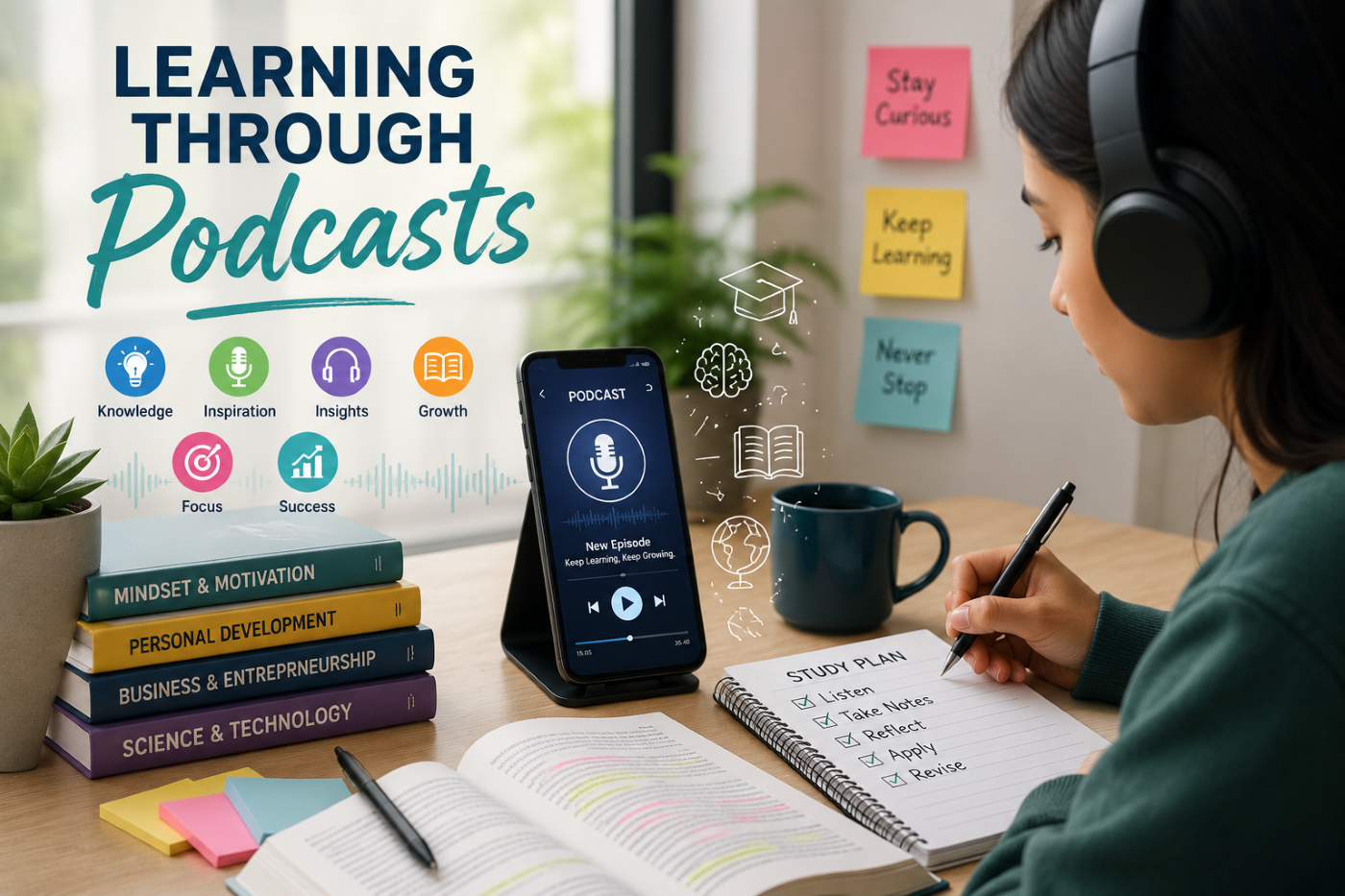
Learning is no longer restricted to classrooms, textbooks, and traditional study sessions. With smartphones, laptops, and digital media, students can now access educational content almost anywhere. One increasingly popular way to learn is through podcasts. From career advice and technology to history, business, science, communication, and personal development, podcasts offer students an engaging way to explore ideas and gain knowledge while going about their daily routines.
For students, learning through podcasts can be especially valuable because it allows education to fit into busy schedules. A student can listen while traveling to college, exercising, taking a walk, or completing routine tasks. However, podcasts should not simply become background noise. When used intentionally, they can complement formal education, encourage curiosity, introduce new perspectives, and help students develop a habit of continuous learning.
At CVDragon, we believe that students who develop a mindset of lifelong learning can build stronger academic foundations and prepare themselves for changing career demands. Podcasts are one of many digital resources that can help students expand their knowledge beyond the classroom and discover new areas of interest.
What Is Podcast-Based Learning?
Podcast-based learning involves using audio programs to gain knowledge, explore ideas, and develop skills. Podcasts are available across a wide range of subjects, making it possible for students to find content related to almost any area of interest.
Students can listen to podcasts about:
- Technology and innovation.
- Business and entrepreneurship.
- Science and research.
- History and culture.
- Personal development.
- Career planning.
- Communication skills.
- Leadership.
- Finance.
- Current affairs.
- Language learning.
Some podcasts are created specifically for education, while others are hosted by professionals who share their experiences and insights from the workplace.
Why Podcasts Are Useful for Students
One of the biggest benefits of podcasts is flexibility. Unlike traditional learning resources, podcasts do not always require students to sit in front of a screen.
Students can listen while:
- Commuting.
- Walking.
- Exercising.
- Traveling.
- Taking breaks.
- Completing routine activities.
This makes podcasts particularly useful for students with busy schedules.
However, listening should not replace focused study when the subject requires active practice or deep concentration. Podcasts work best as a supplement to other learning methods.
Learn from Experts and Industry Professionals
Many podcasts feature interviews with professionals, researchers, entrepreneurs, educators, and industry leaders.
Listening to these conversations can help students understand:
- How professionals built their careers.
- What challenges they faced.
- How industries are changing.
- Which skills are becoming important.
- What employers expect from candidates.
For example, a student interested in technology can listen to discussions about artificial intelligence and cybersecurity. Someone interested in entrepreneurship can learn from founders discussing how they built businesses.
These conversations provide perspectives that students may not encounter in traditional academic environments.
Explore Career Options
Choosing a career can be difficult when students have limited exposure to professional life. Podcasts can help them explore different industries and career paths.
Students can listen to episodes about:
- Career journeys.
- Different professions.
- Industry trends.
- Workplace experiences.
- Professional skills.
- Entrepreneurship.
Hearing real stories from people working in different fields can help students understand what various careers actually involve.
However, students should remember that one person’s experience does not represent an entire industry. Career decisions should be based on multiple sources of information, including research, mentorship, internships, and practical experience.
Develop Communication and Listening Skills
Listening is an important communication skill, yet it is often overlooked.
Podcasts encourage students to listen carefully to conversations, explanations, interviews, and storytelling. Over time, this can improve their ability to:
- Understand different viewpoints.
- Follow complex discussions.
- Identify important information.
- Recognize tone and context.
- Process spoken information.
Students can also observe how experienced speakers communicate ideas, explain complex topics, and structure conversations.
These observations can help improve their own communication and presentation skills.
Learn New Languages Through Podcasts
Podcasts can be particularly useful for language learning.
Students can listen to content designed for language learners or explore podcasts created for native speakers. Regular listening can improve:
- Vocabulary.
- Pronunciation.
- Listening comprehension.
- Sentence structure.
- Familiarity with natural conversation.
A useful approach is to begin with slower, beginner-friendly content and gradually move toward more advanced conversations.
Students can write down unfamiliar words, look up their meanings, and try using them in their own sentences.
Stay Updated on Industry Trends
Industries are constantly evolving, and students need to stay aware of changes that may affect their future careers.
Podcasts can provide discussions about:
- Emerging technologies.
- New business models.
- Changing workplace practices.
- Economic developments.
- Industry challenges.
- Future career opportunities.
Listening to relevant podcasts regularly can help students develop a broader understanding of their chosen field.
For example, a student pursuing a career in digital marketing might listen to discussions about search engine optimization, social media trends, content strategy, and artificial intelligence.
Use Podcasts to Supplement Academic Learning
Podcasts can complement traditional academic study by providing alternative explanations and real-world perspectives.
For example:
A history student can listen to discussions about historical events.
A business student can explore conversations about entrepreneurship and management.
A science student can listen to researchers discussing discoveries.
A computer science student can learn about emerging technologies.
This additional exposure can help students connect theoretical concepts with real-world applications.
However, students should verify important academic information using textbooks, research papers, official educational resources, and guidance from teachers.
Create a Personalized Learning Playlist
Students can make podcast learning more organized by creating playlists based on specific goals.
For example:
Career Development Playlist
- Resume advice.
- Interview preparation.
- Workplace skills.
Technology Playlist
- Artificial intelligence.
- Programming.
- Cybersecurity.
Personal Development Playlist
- Productivity.
- Communication.
- Leadership.
A personalized playlist makes it easier to focus on specific learning objectives instead of listening randomly.
Take Notes While Listening
Listening alone may not always lead to long-term retention. Students can improve learning outcomes by taking brief notes.
Write down:
- Key ideas.
- Important terms.
- Useful resources.
- Interesting questions.
- Practical advice.
Students do not need to record every word. Instead, they should focus on capturing information they want to remember or explore further.
After listening, reviewing these notes can reinforce learning.
Turn Listening into Active Learning
The best way to learn from podcasts is to move beyond passive listening.
After listening to an episode, ask:
- What did I learn?
- What surprised me?
- Do I agree with the speaker?
- How does this relate to my studies?
- How can I apply this information?
Students can also discuss interesting ideas with classmates or write short reflections.
This turns podcast listening into a more active learning experience.
Follow Multiple Perspectives
Students should avoid relying on a single podcast or creator for information about complex topics.
Different experts may have different opinions, experiences, or interpretations.
Listening to multiple perspectives helps students:
- Compare ideas.
- Identify biases.
- Develop critical thinking.
- Understand disagreements.
- Form independent opinions.
This is especially important when learning about controversial or rapidly changing subjects.
Avoid Information Overload
The abundance of podcasts can sometimes become overwhelming. Students may subscribe to dozens of shows but never have enough time to listen to them.
Instead of trying to consume everything, choose a small number of high-quality podcasts that align with your learning goals.
A focused approach is more valuable than an endless list of subscriptions.
Students should prioritize content that is:
- Relevant.
- Reliable.
- Informative.
- Appropriate for their level.
- Connected to their goals.
Build a Consistent Listening Routine
Consistency is more important than quantity.
Students can create a simple routine, such as:
- Listen to one educational episode during the daily commute.
- Spend 20 minutes listening during a walk.
- Choose one career-focused episode every weekend.
- Review notes after completing an episode.
A regular habit can gradually build knowledge over time.
The goal is not to listen for hours every day but to make learning a natural part of everyday life.
Combine Podcasts with Other Learning Methods
Podcasts are most effective when combined with other educational resources.
Students can use podcasts alongside:
- Textbooks.
- Online courses.
- YouTube tutorials.
- Academic lectures.
- Online communities.
- Practical projects.
- Internships.
- Mentorship.
For example, a student learning digital marketing might read a textbook for foundational concepts, watch tutorials for practical demonstrations, listen to industry podcasts for expert insights, and then apply the knowledge by creating a personal project.
This combination creates a richer learning experience.
Use Podcasts for Career Preparation
Podcasts can also support students preparing to enter the job market.
Career-focused episodes may help students learn about:
- Resume writing.
- Interview preparation.
- Networking.
- Personal branding.
- Workplace communication.
- Leadership.
- Professional etiquette.
Students can use these insights to improve their career preparation and become more confident when applying for internships and entry-level positions.
Learn from Real Career Stories
Career journeys often include failures, unexpected opportunities, career changes, and lessons that students may not find in textbooks.
Listening to real stories can teach students that professional growth is rarely a perfectly straight path.
These stories can encourage students to:
- Learn from failure.
- Stay adaptable.
- Develop resilience.
- Explore new opportunities.
- Think strategically about their careers.
The experiences of others can provide inspiration while helping students develop realistic expectations about professional life.
Verify Information and Think Critically
Not every podcast is a reliable source of information. Podcasts can contain opinions, personal experiences, incomplete information, or inaccurate claims.
Students should develop the habit of asking:
- Who created this content?
- Does the speaker have relevant expertise?
- Is evidence provided?
- Are multiple perspectives available?
- Can the information be verified?
Critical thinking is essential when consuming any form of digital content.
Create Your Own Educational Podcast
Students who become comfortable with podcast learning can take the next step by creating their own content.
They could create a podcast about:
- College experiences.
- Academic subjects.
- Career exploration.
- Student entrepreneurship.
- Technology.
- Personal development.
Creating a podcast can help develop:
- Communication skills.
- Research skills.
- Interviewing abilities.
- Content creation.
- Public speaking.
- Project management.
It can also become a valuable portfolio project when presented professionally.
How Podcast Learning Can Support a Student’s Resume
Simply listening to podcasts is unlikely to be a significant resume achievement. However, the knowledge and skills gained through podcast learning can become valuable when applied.
For example, students can:
- Build projects based on what they learn.
- Participate in industry discussions.
- Develop new skills.
- Create educational content.
- Apply expert advice to career preparation.
The focus should always be on demonstrating the results of learning rather than simply listing the content consumed.
Conclusion
Learning through podcasts gives students a flexible and accessible way to expand their knowledge beyond traditional education. By listening to experts, exploring career journeys, learning new languages, developing communication skills, and staying informed about industry trends, students can make continuous learning part of their everyday lives.
At CVDragon, we encourage students to use podcasts as one part of a broader learning strategy. The most effective learners do not simply consume information—they question it, take notes, discuss it, verify it, and apply it.
The true value of podcast learning lies in what students do after they press play. A conversation can introduce a new idea, but action turns that idea into knowledge and eventually into skill. By combining podcasts with academic study, practical projects, online courses, professional communities, and real-world experiences, students can build a stronger foundation for their personal and professional growth.
In a rapidly changing world, the ability to keep learning is one of the most valuable skills a student can develop. Podcasts make that journey more flexible, accessible, and engaging—allowing students to turn everyday listening into meaningful opportunities for growth.
Leave a Reply