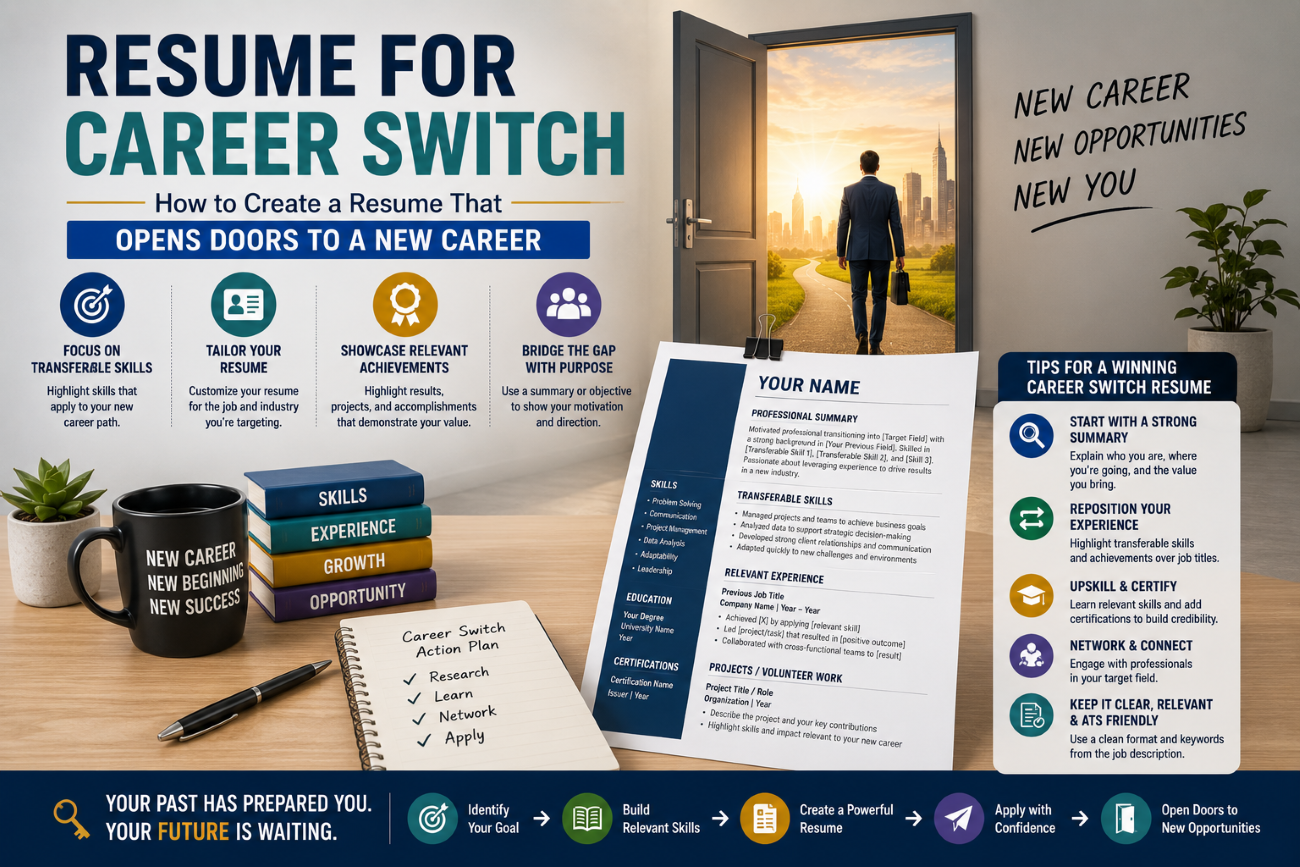
Changing careers can be one of the most exciting and rewarding decisions in a professional journey. Whether you’re moving from sales to digital marketing, teaching to corporate training, finance to data analytics, or customer service to human resources, a career switch offers opportunities for personal growth, higher job satisfaction, and long-term career advancement. However, one of the biggest challenges career changers face is creating a resume that convinces employers they are qualified for a role in a new industry.
At CVDragon, we believe that a career change is not about starting from scratch—it’s about presenting your existing skills, experiences, and achievements in a way that aligns with your new career goals. A well-crafted career change resume highlights transferable skills, relevant accomplishments, certifications, and your ability to adapt, helping recruiters see your potential beyond your previous job titles.
Why a Career Change Resume Is Different
A traditional resume focuses on career progression within the same industry. In contrast, a career change resume is designed to emphasize relevant skills and experiences that can be applied to a different field.
Recruiters may initially question why you are changing careers or whether you have the necessary qualifications. Your resume should answer these questions by demonstrating that your previous experience has prepared you for success in your new role.
The goal is to shift the focus from where you worked to what you can contribute.
Start with a Strong Professional Summary
The professional summary is one of the first sections recruiters read, making it especially important for career changers. It should clearly communicate your career objective, highlight your transferable skills, and explain the value you bring to the new role.
An effective summary includes:
- Your years of professional experience.
- Key transferable skills.
- Relevant achievements.
- Certifications or training related to the new field.
- Career objective aligned with the target role.
For example:
“Results-driven professional with eight years of experience in customer relationship management and team leadership, transitioning into Human Resources. Skilled in communication, employee engagement, conflict resolution, and organizational development. Recently completed HR certification and eager to apply people management expertise in a dynamic HR environment.”
A compelling summary immediately helps employers understand your career direction.
Focus on Transferable Skills
Transferable skills are abilities that remain valuable across different industries and job roles. These skills often become the strongest selling point in a career change resume.
Examples include:
- Communication.
- Leadership.
- Project management.
- Problem-solving.
- Time management.
- Team collaboration.
- Customer service.
- Data analysis.
- Strategic planning.
- Presentation skills.
- Critical thinking.
- Adaptability.
Instead of emphasizing industry-specific tasks from your previous role, demonstrate how these transferable skills can contribute to success in your new profession.
Tailor Your Resume to the Target Job
One of the biggest mistakes career changers make is sending the same resume to every employer.
Study the job description carefully and identify:
- Required technical skills.
- Preferred qualifications.
- Industry keywords.
- Key responsibilities.
- Desired competencies.
Customize your resume to match these requirements while remaining truthful about your experience.
Using language similar to the job description also improves compatibility with Applicant Tracking Systems (ATS).
Highlight Relevant Certifications and Training
If you have completed courses, certifications, workshops, or bootcamps related to your new career, make them highly visible on your resume.
Examples include:
- Digital Marketing Certification.
- Data Analytics Certification.
- Project Management Certification.
- Human Resources Training.
- Cloud Computing Certification.
- Programming Courses.
- UX/UI Design Programs.
- Business Analysis Certifications.
These credentials demonstrate your commitment to learning and show employers that you have invested in developing relevant knowledge.
Showcase Relevant Projects
Practical experience can be just as valuable as formal employment, especially when changing careers.
Include projects such as:
- Personal projects.
- Freelance assignments.
- Volunteer work.
- Internship experience.
- Academic projects.
- Case studies.
- Portfolio work.
For example, someone transitioning into digital marketing might include a personal blog, SEO optimization project, social media campaign, or Google Ads practice project.
Projects demonstrate practical application of your newly acquired skills and strengthen your credibility.
Present Work Experience Strategically
Your previous jobs remain valuable even if they belong to another industry. The key is to focus on achievements and responsibilities that relate to your target role.
Instead of listing every duty, emphasize accomplishments that demonstrate transferable abilities.
For example, rather than writing:
- Managed daily customer service operations.
Write:
- Led a customer support team of 12 members, improved client satisfaction by 25%, resolved complex customer issues, and developed training materials to improve service quality.
This highlights leadership, communication, training, and problem-solving skills that are useful in many industries.
Include Quantifiable Achievements
Recruiters appreciate measurable results because they provide evidence of impact.
Examples include:
- Increased sales by 30%.
- Reduced operational costs by 18%.
- Managed projects valued at $500,000.
- Trained over 100 employees.
- Improved customer satisfaction ratings by 20%.
- Reduced response time by 40%.
Numbers strengthen your credibility regardless of your previous industry.
Build a Skills-Focused Resume
For career changers, a skills-focused or hybrid resume format often works better than a strictly chronological format.
Suggested structure:
- Contact Information
- Professional Summary
- Core Skills
- Certifications
- Relevant Projects
- Professional Experience
- Education
- Additional Achievements
This structure allows recruiters to notice your qualifications before focusing on your previous job history.
Demonstrate Continuous Learning
Employers value candidates who actively invest in their professional development.
Show your commitment by including:
- Online courses.
- Industry webinars.
- Professional workshops.
- Conferences.
- Independent learning.
- Membership in professional organizations.
Continuous learning demonstrates adaptability and a genuine interest in your chosen field.
Optimize for Applicant Tracking Systems (ATS)
Most employers use ATS software to screen resumes before recruiters review them.
To improve ATS compatibility:
- Use standard section headings.
- Include keywords from the job description.
- Avoid graphics and tables.
- Use simple formatting.
- Save the document in the requested file format.
- Spell industry terms correctly.
An ATS-friendly resume increases the likelihood of reaching hiring managers.
Address Employment Gaps Positively
Some career transitions involve education, certifications, or personal development that may create employment gaps.
Rather than leaving gaps unexplained, use them to highlight productive activities such as:
- Professional training.
- Certification programs.
- Freelance projects.
- Volunteer work.
- Personal portfolio development.
- Skill-building initiatives.
Employers generally appreciate candidates who use career breaks constructively.
Build a Strong Portfolio
For many industries, a portfolio is just as important as a resume.
Depending on your career goal, your portfolio might include:
- Writing samples.
- Design work.
- Software applications.
- Marketing campaigns.
- Research reports.
- Business case studies.
- Data dashboards.
- Presentation materials.
A portfolio provides tangible proof of your abilities and can significantly strengthen your job applications.
Common Mistakes Career Changers Should Avoid
When preparing a career change resume, avoid these common errors:
- Focusing only on previous job titles.
- Ignoring transferable skills.
- Using a generic professional summary.
- Sending the same resume for every application.
- Omitting certifications and projects.
- Including irrelevant work experience.
- Failing to tailor keywords for ATS.
- Underestimating volunteer or freelance work.
Avoiding these mistakes improves the effectiveness of your resume and helps recruiters understand your career transition.
The Importance of a Positive Career Narrative
Changing careers is a strength, not a weakness. Your resume should reflect confidence, curiosity, and a willingness to grow.
Instead of apologizing for changing industries, emphasize:
- Your adaptability.
- Diverse experiences.
- Broad problem-solving abilities.
- Fresh perspectives.
- Continuous learning mindset.
Many employers appreciate candidates who bring unique experiences from different industries because they often contribute innovative ideas and diverse viewpoints.
Conclusion
A career change resume is more than a document listing previous jobs—it is a strategic tool that demonstrates how your existing experience, transferable skills, certifications, and achievements prepare you for success in a new field. By focusing on relevant competencies, measurable accomplishments, practical projects, and continuous learning, career changers can confidently position themselves for exciting new opportunities.
At CVDragon, we understand that changing careers is a significant step, and the right resume can make all the difference. Whether you’re transitioning into technology, marketing, finance, human resources, healthcare, or another industry, presenting your strengths in a clear and compelling way will help employers recognize your potential. With careful planning and a tailored resume, your career switch can become the beginning of an exciting new chapter filled with growth, learning, and long-term professional success.
Leave a Reply