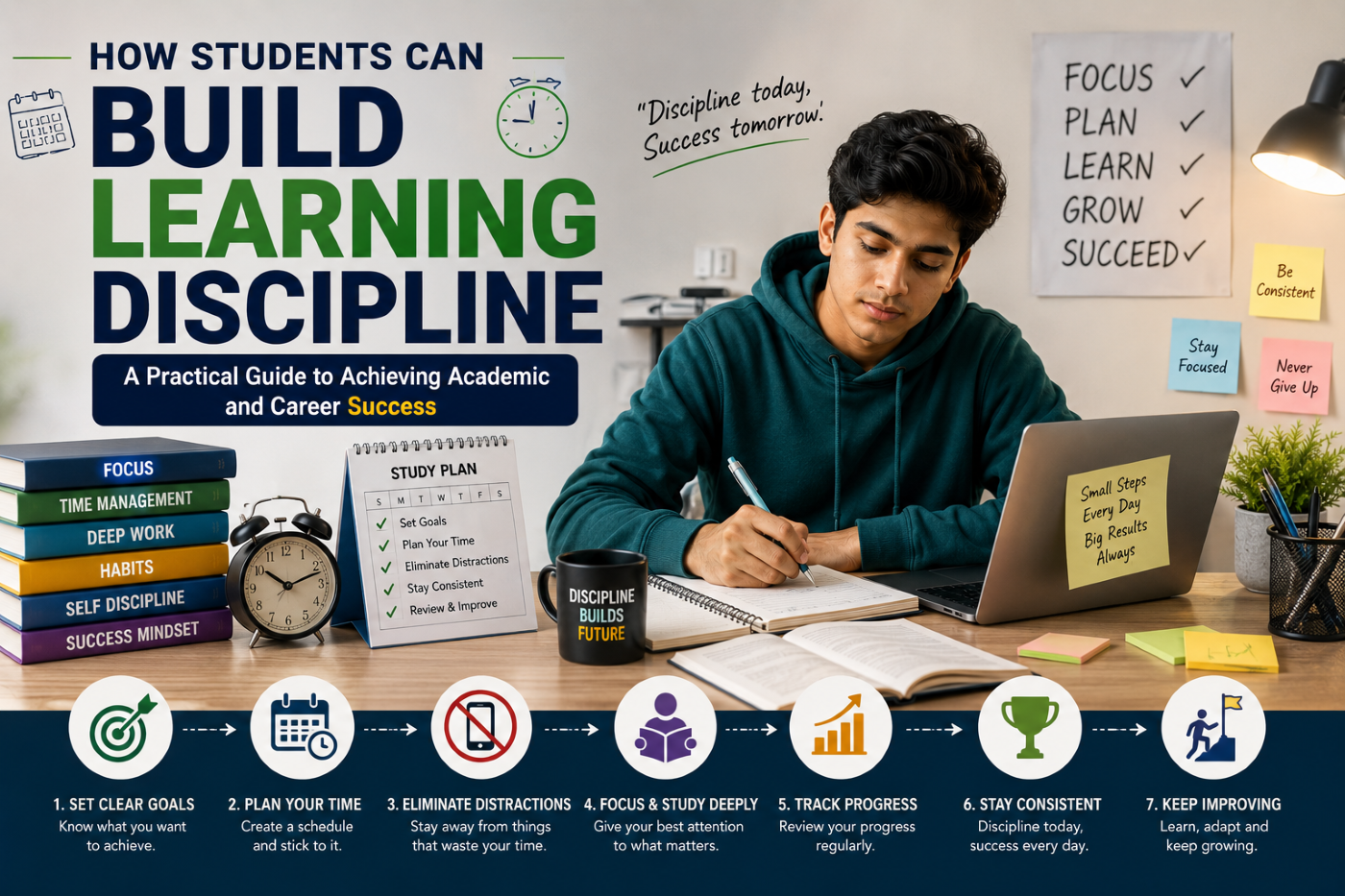
Success in education and professional life is rarely the result of talent alone. More often, it comes from consistency, commitment, and the ability to stay focused on long-term goals. This is where learning discipline plays a vital role. Learning discipline is the habit of studying regularly, managing time effectively, maintaining focus, and continuously improving knowledge and skills, even when motivation fluctuates. In today’s fast-paced world filled with distractions, developing learning discipline has become one of the most valuable qualities a student can possess.
At CVDragon, we believe that disciplined learning is the foundation of lifelong success. Students who cultivate strong learning habits not only achieve better academic results but also develop the resilience, adaptability, and work ethic needed to excel in their careers. Learning discipline is not about studying for long hours; it is about creating sustainable habits that encourage continuous growth and productivity.
What Is Learning Discipline?
Learning discipline refers to the ability to follow a consistent study routine, stay committed to educational goals, and prioritize learning despite distractions or challenges. It involves self-control, effective planning, and the willingness to continue learning even when tasks become difficult.
Unlike motivation, which can change from day to day, discipline provides consistency. A motivated student may study when they feel inspired, but a disciplined student studies because it is part of their routine and commitment to personal growth.
Developing learning discipline helps students become more independent, responsible, and confident in their ability to achieve long-term goals.
Why Learning Discipline Matters
In today’s competitive academic and professional environment, knowledge alone is not enough. Students must continuously update their skills, adapt to changing technologies, and remain committed to lifelong learning.
Learning discipline offers several important benefits:
- Improves academic performance.
- Strengthens time management.
- Builds consistency and accountability.
- Enhances focus and concentration.
- Reduces procrastination.
- Develops problem-solving abilities.
- Supports long-term career growth.
Students who practice disciplined learning are better prepared for examinations, internships, professional certifications, and workplace challenges.
Set Clear Learning Goals
The first step toward building discipline is defining clear and achievable learning objectives. Without specific goals, students often lose focus and struggle to measure their progress.
Effective learning goals should be:
- Specific.
- Measurable.
- Achievable.
- Relevant.
- Time-bound.
For example, instead of saying, “I want to improve my programming skills,” a better goal would be, “I will complete one Python module and build a small project within four weeks.”
Clear goals provide direction and make it easier to stay committed.
Create a Consistent Study Routine
Consistency is the foundation of discipline. Establishing a regular study schedule helps train the brain to associate certain times of the day with focused learning.
Students should:
- Choose fixed study hours.
- Allocate time for different subjects or skills.
- Include short breaks to maintain concentration.
- Balance academics with extracurricular activities and rest.
A predictable routine reduces decision fatigue and makes studying a natural part of daily life.
Prioritize Tasks Effectively
Not all learning activities have the same level of importance. Students should identify high-priority tasks and complete them before less important ones.
Creating a daily or weekly task list helps organize responsibilities and prevents last-minute stress.
Prioritization can include:
- Assignment deadlines.
- Examination preparation.
- Skill development courses.
- Project work.
- Revision sessions.
Focusing on important tasks first improves productivity and ensures steady progress.
Eliminate Distractions
Digital distractions are among the biggest obstacles to disciplined learning. Social media notifications, entertainment platforms, and constant smartphone usage can significantly reduce concentration.
To create a distraction-free learning environment:
- Keep your study area organized.
- Silence unnecessary notifications.
- Limit social media during study sessions.
- Use website blockers if needed.
- Study in a quiet, comfortable space.
Minimizing distractions allows students to concentrate more effectively and complete tasks in less time.
Develop Active Learning Habits
Simply reading textbooks is not always the most effective way to learn. Active learning encourages deeper understanding and improves long-term retention.
Students can practice active learning by:
- Taking notes.
- Summarizing concepts in their own words.
- Solving practical problems.
- Teaching others.
- Participating in discussions.
- Applying knowledge through projects.
These methods help transform information into practical understanding.
Practice Time Management
Time management is closely linked to learning discipline. Students who manage their time effectively can balance academics, personal interests, and skill development without feeling overwhelmed.
Useful time management strategies include:
- Breaking large tasks into smaller goals.
- Setting realistic deadlines.
- Using planners or digital calendars.
- Scheduling regular revision sessions.
- Reviewing daily progress.
Efficient time management reduces stress while increasing productivity.
Build Learning Through Small Daily Habits
Discipline develops gradually through consistent daily actions rather than dramatic changes.
Simple habits include:
- Reading for 30 minutes each day.
- Practicing coding problems regularly.
- Learning five new vocabulary words daily.
- Watching one educational video each evening.
- Reviewing class notes before sleeping.
Small habits accumulate over time, leading to significant long-term improvement.
Learn from Mistakes and Feedback
Every student encounters setbacks during their learning journey. Instead of viewing mistakes as failures, disciplined learners treat them as opportunities for improvement.
Constructive feedback from teachers, mentors, or peers helps students identify weaknesses and refine their learning strategies.
Developing a growth mindset encourages continuous improvement and builds resilience when facing academic challenges.
Maintain Physical and Mental Well-Being
Learning discipline is easier to sustain when students take care of their health. A healthy body and mind support concentration, memory, and overall productivity.
Students should prioritize:
- Adequate sleep.
- Nutritious meals.
- Regular exercise.
- Hydration.
- Stress management.
- Mindfulness or relaxation techniques.
Maintaining balance prevents burnout and supports long-term learning success.
Use Technology Wisely
Technology can either distract or empower students, depending on how it is used.
Educational technologies can support disciplined learning through:
- Online courses.
- Digital flashcards.
- Productivity apps.
- Note-taking software.
- Educational podcasts.
- Learning management systems.
Students should intentionally use technology as a learning tool rather than allowing it to become a source of distraction.
Stay Curious and Keep Learning
Curiosity fuels lifelong learning. Students should explore topics beyond their academic curriculum, read widely, attend webinars, and engage with industry trends.
Continuous learning helps students remain adaptable and competitive in a rapidly changing world.
Developing curiosity also makes learning more enjoyable, reducing the feeling that studying is merely an obligation.
Track Your Progress
Monitoring progress helps students stay motivated and recognize improvements over time.
Students can track:
- Hours spent studying.
- Courses completed.
- Books read.
- Skills acquired.
- Projects finished.
- Academic performance.
Celebrating small achievements builds confidence and reinforces disciplined habits.
Build Accountability
Accountability increases commitment to learning goals. Students can stay accountable by:
- Joining study groups.
- Sharing goals with friends or mentors.
- Participating in peer learning sessions.
- Reporting progress regularly.
- Working with career mentors.
Having someone to encourage and monitor progress often improves consistency and motivation.
Common Challenges to Learning Discipline
Many students struggle with discipline due to common obstacles such as:
- Procrastination.
- Lack of clear goals.
- Poor time management.
- Fear of failure.
- Digital distractions.
- Inconsistent routines.
- Low self-confidence.
Recognizing these challenges is the first step toward overcoming them. Small, consistent improvements are far more effective than attempting drastic changes overnight.
Learning Discipline and Career Success
Employers value professionals who are self-motivated, dependable, and committed to continuous improvement. Learning discipline developed during student life translates directly into workplace success.
Disciplined learners are more likely to:
- Adapt to new technologies.
- Complete professional certifications.
- Meet deadlines consistently.
- Develop leadership qualities.
- Pursue lifelong learning.
- Advance in their careers.
These qualities contribute to long-term employability and professional growth in an ever-changing job market.
Conclusion
Learning discipline is one of the most valuable habits students can develop for academic excellence and lifelong career success. It is built through consistent routines, clear goals, effective time management, active learning, and the determination to improve every day. While motivation may come and go, discipline provides the steady foundation needed to achieve meaningful results.
At CVDragon, we encourage students to view learning as a continuous journey rather than a short-term requirement. By developing disciplined study habits, embracing curiosity, and committing to personal growth, students can unlock their full potential and prepare themselves for the challenges and opportunities of the future. The habits built today will not only shape academic achievements but also lay the groundwork for a successful and fulfilling career.
Leave a Reply