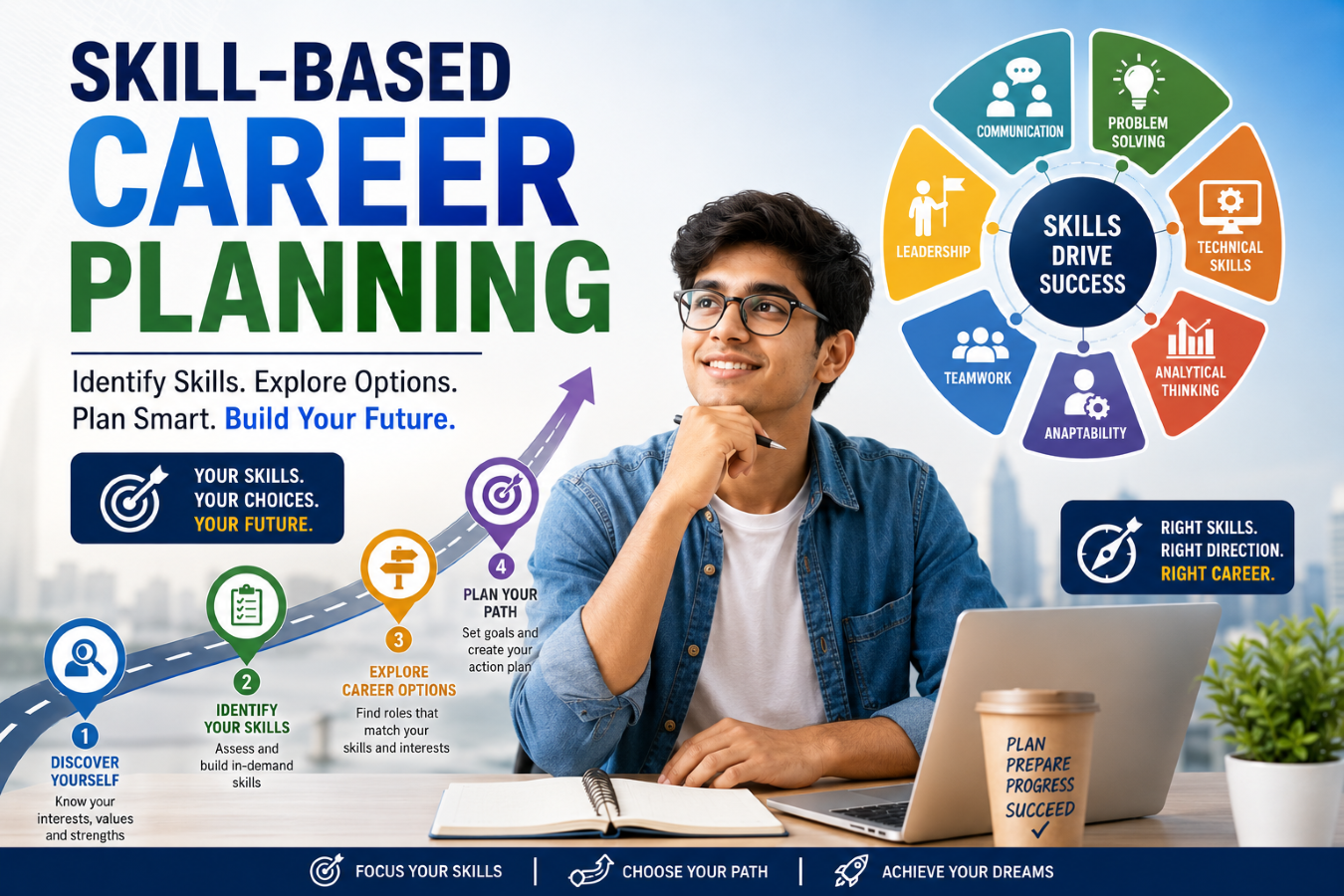
In today’s rapidly evolving job market, traditional career planning methods are no longer sufficient. The days when a degree alone could guarantee a successful career are fading. Employers now prioritize practical abilities, adaptability, and industry-relevant expertise alongside academic qualifications. As a result, students and young professionals must focus on developing the right skills to remain competitive and future-ready. This shift has made skill-based career planning one of the most effective approaches to building a successful and sustainable career.
At CVDragon, we believe that career planning should be driven by skills rather than job titles alone. Skill-based career planning helps individuals identify their strengths, understand market demands, bridge skill gaps, and create a roadmap toward meaningful professional growth. By focusing on the skills required for desired careers, students can make informed decisions that improve employability and long-term career prospects.
What Is Skill-Based Career Planning?
Skill-based career planning is the process of aligning career goals with the skills needed to achieve them. Instead of focusing solely on a specific job title or academic qualification, this approach emphasizes the development of competencies that are valued across industries and professions.
The process involves identifying career objectives, understanding industry requirements, evaluating existing skills, and creating a structured plan to acquire the necessary knowledge and experience. This method enables individuals to remain flexible and adapt to changing job market conditions while continuously improving their professional value.
For example, a student interested in digital marketing would focus on building skills such as content creation, search engine optimization (SEO), social media management, data analytics, and communication. These competencies increase employability and create opportunities across multiple industries.
Why Skill-Based Career Planning Matters
The modern workplace is experiencing significant transformation due to technological advancements, automation, artificial intelligence, and evolving business models. Many traditional roles are changing, while entirely new career opportunities are emerging.
Employers increasingly evaluate candidates based on what they can do rather than simply what they have studied. Skill-based career planning allows students to prepare for these changes by focusing on practical abilities that remain relevant and valuable.
Key benefits include:
- Improved employability.
- Better career decision-making.
- Enhanced professional confidence.
- Greater adaptability to industry changes.
- Stronger job performance.
- Increased opportunities for career advancement.
Students who adopt a skill-focused mindset are often better prepared to meet workplace expectations and seize emerging opportunities.
Understanding the Difference Between Qualifications and Skills
While qualifications provide foundational knowledge, skills demonstrate the ability to apply that knowledge in real-world situations.
For example, a business administration student may understand marketing theories through coursework. However, employers often seek candidates who can also create marketing campaigns, analyze customer data, manage social media platforms, and communicate effectively with clients.
Qualifications open doors, but skills help individuals succeed once those doors are opened. Therefore, effective career planning requires balancing academic achievements with practical skill development.
Identifying Your Career Interests
The first step in skill-based career planning is understanding personal interests, strengths, and aspirations.
Students should ask themselves:
- What subjects do I enjoy most?
- What activities motivate me?
- What problems do I enjoy solving?
- What type of work environment suits me?
- Which industries excite me?
Self-awareness is critical because career satisfaction often depends on aligning professional goals with personal interests and values.
Exploring different career options through research, internships, workshops, and networking can help students gain clarity about their future direction.
Researching Industry Skill Requirements
Once students identify a potential career path, they should investigate the skills required within that field.
Sources of information include:
- Job descriptions.
- Professional networking platforms.
- Industry reports.
- Employer career pages.
- Career counselors.
- Industry professionals and mentors.
Reviewing multiple job postings helps students identify recurring skill requirements and understand employer expectations.
For example, a student interested in data analytics may notice consistent demand for skills such as:
- Data visualization.
- Statistical analysis.
- SQL.
- Python programming.
- Business intelligence tools.
- Communication and presentation abilities.
Understanding these requirements enables targeted skill development.
The Importance of Technical Skills
Technical skills are often the foundation of professional competency. These job-specific abilities allow individuals to perform specialized tasks within their chosen careers.
Examples include:
- Coding and software development.
- Graphic design.
- Financial analysis.
- Digital marketing.
- Engineering software proficiency.
- Cybersecurity expertise.
- Data management.
Students should prioritize technical skills that are highly relevant to their target industry while remaining aware of emerging trends and technologies.
Online learning platforms, certification programs, workshops, and practical projects offer excellent opportunities for acquiring technical expertise.
Developing Essential Soft Skills
While technical skills help individuals perform tasks, soft skills determine how effectively they work with others and adapt to workplace environments.
Employers consistently rank soft skills among their most important hiring criteria.
Key soft skills include:
- Communication.
- Leadership.
- Teamwork.
- Problem-solving.
- Critical thinking.
- Adaptability.
- Emotional intelligence.
- Time management.
These competencies contribute significantly to career success regardless of industry or job function.
Students can develop soft skills through extracurricular activities, volunteer work, internships, leadership roles, and collaborative projects.
Creating a Personal Skills Inventory
An effective skill-based career plan begins with understanding current capabilities.
Students should create a comprehensive inventory of their skills by evaluating:
- Academic strengths.
- Technical competencies.
- Communication abilities.
- Leadership experiences.
- Project work.
- Certifications.
- Internship experiences.
This assessment provides a clear picture of existing strengths and identifies areas requiring improvement.
A personal skills inventory serves as a baseline for future development and progress tracking.
Conducting a Skill Gap Analysis
After understanding industry requirements and current abilities, students should perform a skill gap analysis.
This process involves comparing existing skills with those required for desired career opportunities.
Example:
| Required Skill | Current Level | Desired Level |
|---|---|---|
| SEO | Beginner | Advanced |
| Data Analytics | Intermediate | Advanced |
| Communication | Intermediate | Advanced |
| Project Management | Beginner | Intermediate |
| Leadership | Beginner | Intermediate |
A skill gap analysis helps students prioritize learning efforts and allocate time effectively.
Building a Skill Development Roadmap
Once gaps are identified, students should create a structured development plan.
A roadmap may include:
Short-Term Goals
- Complete an online course.
- Earn a certification.
- Improve software proficiency.
- Join a student organization.
Medium-Term Goals
- Complete internships.
- Build a professional portfolio.
- Participate in competitions.
- Undertake industry projects.
Long-Term Goals
- Develop advanced expertise.
- Obtain professional certifications.
- Secure full-time employment.
- Pursue leadership opportunities.
A roadmap transforms career aspirations into achievable milestones.
Gaining Real-World Experience
Practical experience is one of the most valuable components of skill-based career planning.
Students can gain hands-on experience through:
- Internships.
- Freelance work.
- Volunteer projects.
- Research initiatives.
- Entrepreneurship.
- Industry competitions.
Practical exposure allows students to apply theoretical knowledge while developing workplace confidence and professional maturity.
Employers often favor candidates who can demonstrate real-world accomplishments rather than relying solely on academic credentials.
Building a Professional Portfolio
A portfolio serves as tangible evidence of skills and achievements.
Depending on the field, portfolios may include:
- Project reports.
- Research papers.
- Design samples.
- Coding projects.
- Marketing campaigns.
- Presentations.
- Case studies.
A strong portfolio showcases capabilities and provides employers with concrete examples of a candidate’s work.
Students should update their portfolios regularly as they acquire new skills and experiences.
Leveraging Certifications for Career Growth
Professional certifications validate expertise and demonstrate commitment to continuous learning.
Popular certification areas include:
- Digital marketing.
- Data analytics.
- Cloud computing.
- Project management.
- Graphic design.
- Cybersecurity.
- Artificial intelligence.
Relevant certifications can enhance resumes, improve credibility, and increase employment opportunities.
However, students should prioritize certifications that align directly with their career goals rather than accumulating credentials without strategic purpose.
The Role of Networking in Skill-Based Career Planning
Networking plays a crucial role in career development. Building professional relationships can provide valuable insights, mentorship, and career opportunities.
Students can network through:
- Career fairs.
- Industry events.
- Alumni networks.
- Professional associations.
- LinkedIn and other professional platforms.
- Internship programs.
Networking often opens doors to internships, referrals, mentorship opportunities, and valuable industry knowledge.
Future-Proofing Your Career Through Continuous Learning
The future of work is characterized by constant change. New technologies and business models continue to reshape industries, creating demand for new skills while reducing the relevance of others.
To remain competitive, students should embrace lifelong learning and continuously update their knowledge.
Successful professionals understand that skill development does not end after graduation. Instead, it becomes an ongoing process that supports career growth throughout life.
Conclusion
Skill-based career planning is a modern and effective approach to achieving professional success. By focusing on practical competencies, students can align their education, experiences, and learning efforts with real-world industry requirements. This strategy helps individuals identify skill gaps, build relevant expertise, gain practical experience, and adapt to changing workplace demands.
At CVDragon, we encourage students to take a proactive approach to career development by prioritizing skills alongside academic achievements. Through strategic planning, continuous learning, and hands-on experience, students can build strong professional foundations that lead to greater employability, career satisfaction, and long-term success. In a world where skills increasingly define opportunities, investing in skill-based career planning is one of the smartest decisions a student can make for their future.
Leave a Reply