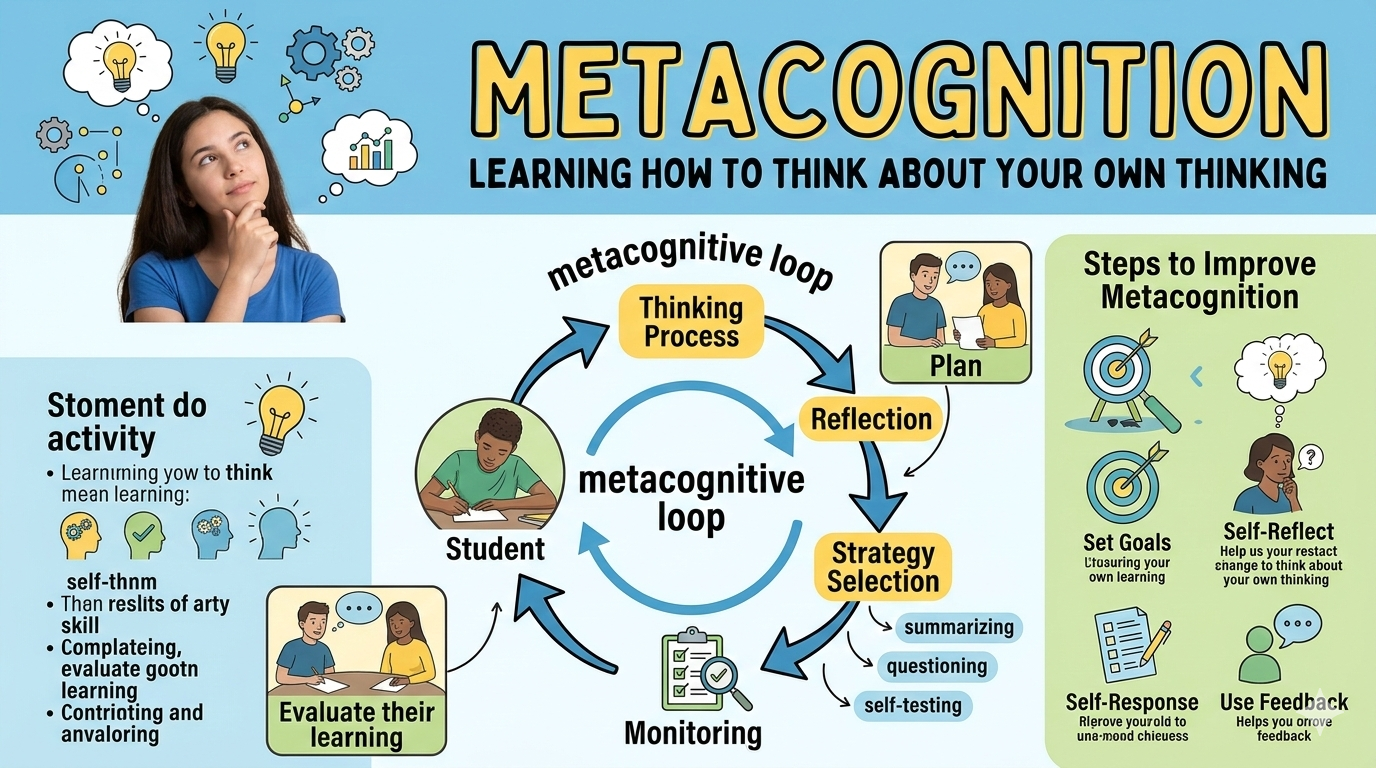
In today’s fast-changing academic and professional world, success is no longer defined only by intelligence or hard work. Instead, it increasingly depends on how effectively individuals understand, monitor, and improve their own thinking processes. This powerful ability is known as metacognition — often described as thinking about thinking.
Metacognition plays a vital role in learning, decision-making, problem-solving, leadership, and career development. Whether you are a student preparing for exams, a professional aiming to improve productivity, or a leader navigating complex challenges, mastering metacognitive skills can significantly enhance performance and personal growth.
At CVDragon, we believe that lifelong success begins with self-awareness and intentional learning. This article explores what metacognition is, why it matters, and how you can practically develop this essential cognitive skill.
What Is Metacognition?
Metacognition refers to the awareness and control individuals have over their own thought processes. It involves understanding:
- How you learn
- How you solve problems
- How you make decisions
- When your understanding is incomplete
- What strategies help you perform better
In simple terms, metacognition answers questions such as:
- Do I really understand this concept?
- Why did I make that mistake?
- What learning method works best for me?
- How can I improve next time?
Psychologists generally divide metacognition into two main components:
1. Metacognitive Knowledge
This includes awareness of:
- Your strengths and weaknesses
- Learning styles and preferences
- Effective strategies for different tasks
For example, realizing that you remember information better through visualization rather than memorization reflects metacognitive knowledge.
2. Metacognitive Regulation
This involves actively managing thinking through:
- Planning
- Monitoring progress
- Evaluating outcomes
Students who review their performance after exams or professionals who analyze completed projects demonstrate strong metacognitive regulation.
Why Metacognition Matters in Modern Learning
Traditional education often emphasizes what to learn, but metacognition focuses on how to learn effectively. Research consistently shows that individuals with strong metacognitive skills:
- Learn faster and retain information longer
- Adapt easily to new environments
- Make better decisions
- Solve complex problems efficiently
- Demonstrate higher academic and workplace success
In an era driven by digital transformation and continuous skill development, the ability to self-direct learning has become indispensable.
The Role of Metacognition in Academic Success
Many students struggle not because they lack intelligence, but because they lack awareness of ineffective learning habits.
Metacognitive learners:
- Set clear learning goals
- Choose appropriate study strategies
- Track understanding during study sessions
- Adjust methods when results are poor
For instance, instead of rereading textbooks repeatedly, a metacognitive student might switch to self-testing or teaching concepts to others — methods proven to improve retention.
By understanding how their minds work, learners transform passive studying into active mastery.
Metacognition in Professional Growth
Metacognition extends far beyond classrooms. In professional environments, it strengthens:
Decision-Making
Professionals who evaluate their assumptions and biases make more informed decisions.
Problem-Solving
Reflective thinking enables employees to approach challenges strategically rather than react emotionally.
Leadership Development
Effective leaders regularly assess their communication style, management approach, and team impact.
Career Advancement
Self-aware professionals identify skill gaps early and pursue targeted improvement.
Employers increasingly value individuals who demonstrate reflection, adaptability, and continuous improvement — all outcomes of metacognitive thinking.
Key Metacognitive Skills Everyone Should Develop
1. Self-Awareness
Recognizing how emotions, habits, and beliefs influence thinking is the foundation of metacognition.
Ask yourself:
- What distracts me?
- When am I most productive?
- Which tasks challenge me most?
2. Planning
Before starting any task, consider:
- What is the objective?
- What strategy should I use?
- How much time will this require?
Planning prevents confusion and increases efficiency.
3. Monitoring Understanding
During learning or work processes, pause periodically to evaluate progress.
Questions to consider:
- Am I understanding this clearly?
- Do I need additional resources?
- Should I change my approach?
4. Reflection and Evaluation
After completing a task, analyze outcomes:
- What worked well?
- What mistakes occurred?
- What will I do differently next time?
Reflection transforms experiences into long-term learning.
Practical Techniques to Improve Metacognition
Developing metacognition does not require complex tools. Small daily practices can produce significant improvements.
Keep a Learning Journal
Document:
- Challenges faced
- Strategies used
- Lessons learned
Writing promotes deeper awareness of thought patterns.
Practice Self-Questioning
Before, during, and after tasks, ask reflective questions such as:
- What is my goal?
- Do I understand this?
- How can I improve?
Use the “Pause and Think” Method
Instead of rushing decisions, take short pauses to evaluate reasoning and potential consequences.
Teach What You Learn
Explaining concepts to others exposes knowledge gaps and strengthens understanding.
Break Tasks into Steps
Monitoring smaller milestones makes it easier to track thinking and progress.
Metacognition and Emotional Intelligence
Metacognition is closely connected to emotional intelligence. Understanding thoughts also helps individuals regulate emotions such as stress, frustration, or overconfidence.
For example:
- Recognizing anxiety before exams allows students to adopt calming strategies.
- Professionals aware of emotional reactions can avoid impulsive decisions.
This combination improves resilience, communication, and interpersonal relationships.
Overcoming Common Barriers to Metacognitive Thinking
Despite its benefits, many individuals struggle to practice metacognition due to:
Lack of Reflection Time
Fast-paced routines leave little room for evaluation. Scheduling reflection periods can solve this issue.
Fear of Mistakes
Viewing errors negatively prevents learning. Metacognitive thinkers treat mistakes as feedback.
Overconfidence
Assuming mastery without testing understanding leads to poor outcomes.
Digital Distractions
Constant notifications reduce deep thinking and self-awareness.
Building metacognitive habits requires intentional effort and patience.
Metacognition in the Digital Age
Modern technology provides unlimited information but also creates cognitive overload. Metacognition helps individuals:
- Filter reliable information
- Focus attention effectively
- Avoid misinformation
- Manage digital distractions
- Learn independently online
In remote learning and hybrid workplaces, self-regulated thinkers outperform those relying solely on external supervision.
How Educators and Organizations Can Encourage Metacognition
Institutions and workplaces can foster metacognitive development by:
- Encouraging reflective assignments
- Promoting feedback discussions
- Supporting problem-based learning
- Allowing experimentation without fear of failure
- Providing mentoring and coaching opportunities
When reflection becomes part of organizational culture, innovation and collaboration naturally improve.
The Long-Term Benefits of Metacognitive Thinking
Individuals who consistently practice metacognition experience lasting advantages:
- Greater confidence in learning new skills
- Improved adaptability in changing careers
- Enhanced creativity and innovation
- Stronger leadership capabilities
- Better mental clarity and focus
Most importantly, metacognition empowers individuals to become independent lifelong learners — a critical requirement in the modern knowledge economy.
Conclusion: Thinking Smarter, Not Just Harder
Metacognition transforms learning from a passive activity into an intentional, self-directed process. By understanding how we think, we gain the ability to improve how we learn, work, and grow.
Success today depends less on memorizing information and more on continuously refining thinking strategies. Students become better learners, professionals become better decision-makers, and leaders become more effective when they consciously evaluate their cognitive processes.
At CVDragon, we emphasize skills that prepare individuals not only for employment but for sustained personal and professional excellence. Developing metacognitive awareness is one of the most powerful investments anyone can make toward lifelong growth.
Start small — reflect on your next decision, question your assumptions, and evaluate your outcomes. Over time, these simple habits will reshape how you think, learn, and succeed.
Because true intelligence lies not just in knowledge, but in understanding how you use it.
Leave a Reply