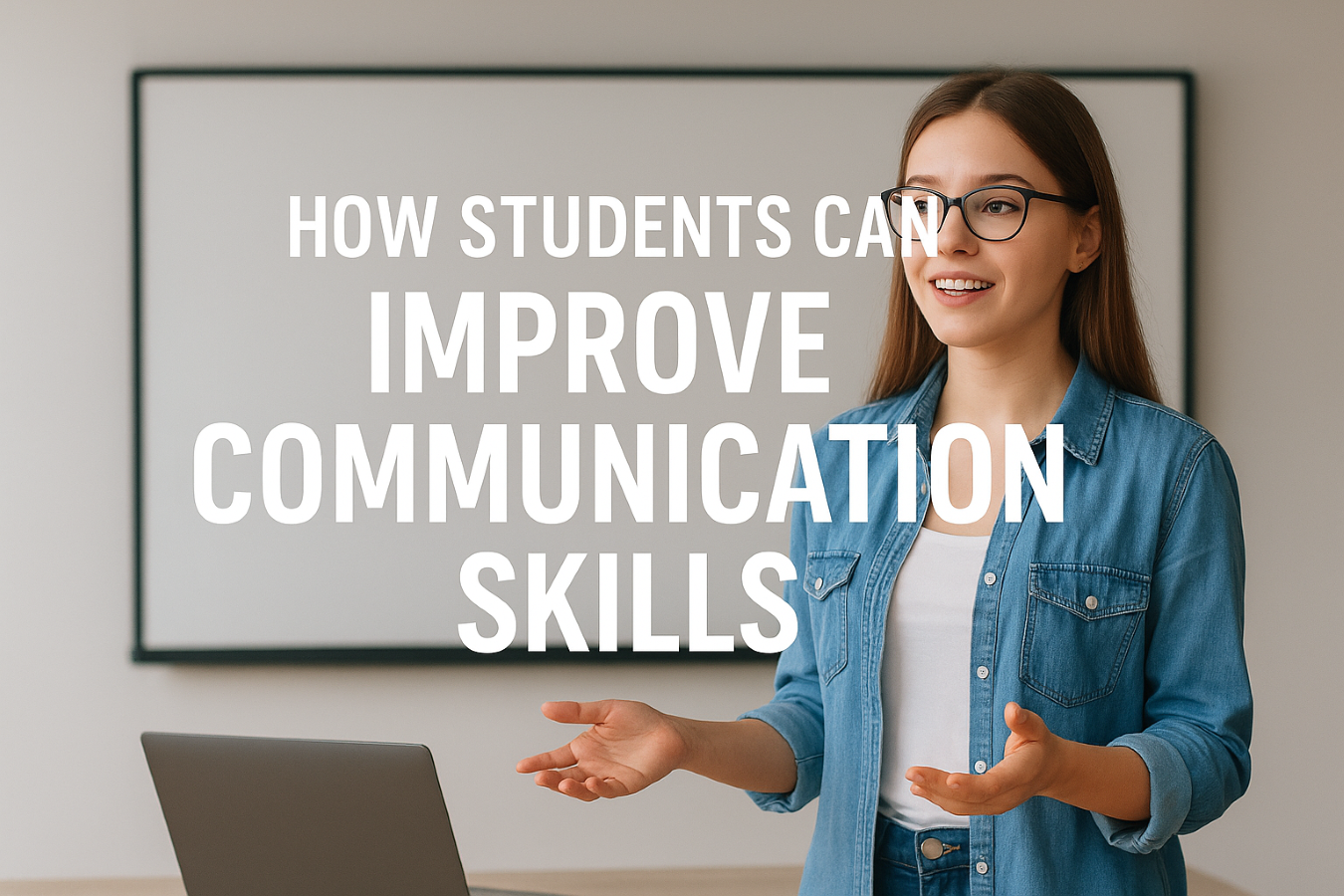
In today’s fast-paced and competitive world, communication skills are no longer just an advantage—they are a necessity. Whether it’s speaking confidently in class, presenting ideas in group discussions, or expressing thoughts during interviews, effective communication plays a vital role in shaping a student’s personal and professional success.
Strong communication helps students convey ideas clearly, build positive relationships, and enhance their academic and career opportunities. However, many students struggle with public speaking, articulation, or writing clarity due to lack of practice and confidence. The good news? Communication skills can be developed and mastered with the right approach.
Here’s a complete guide on how students can improve their communication skills and unlock their full potential.
-
Understand the Importance of Communication
The first step in improving communication is understanding why it matters. Communication isn’t just about talking—it involves listening, understanding, and responding effectively.
Good communication helps students:
- Express ideas confidently and logically.
- Build teamwork and leadership qualities.
- Strengthen academic performance through active participation.
- Create positive impressions during interviews or internships.
- Form stronger social and professional networks.
Recognizing its importance motivates students to practice consistently and consciously improve.
-
Focus on Active Listening
Communication is a two-way process. To be an effective communicator, one must first be a good listener. Many students focus solely on speaking, forgetting that understanding others’ perspectives is equally important.
To improve active listening:
- Pay full attention when someone is speaking.
- Avoid interrupting or pre-judging.
- Summarize what you heard to confirm understanding.
- Ask questions to show engagement.
Active listening helps students respond meaningfully, build empathy, and strengthen mutual respect in conversations.
-
Expand Vocabulary and Grammar Skills
A strong vocabulary allows students to express themselves more precisely and creatively. At the same time, good grammar ensures clarity and professionalism in speech and writing.
Here are some effective ways to build vocabulary:
- Read books, articles, and newspapers regularly.
- Learn a few new words daily and use them in sentences.
- Play word games or use vocabulary apps.
- Watch English shows, podcasts, or TED Talks to understand usage in real contexts.
Remember, vocabulary is not about using complex words—it’s about choosing the right words for the right context.
-
Practice Public Speaking
Public speaking is one of the best ways to boost communication confidence. Many students fear speaking in front of others, but regular practice can overcome this anxiety.
Start small—speak in classroom discussions, student clubs, or among friends. Gradually participate in debates, elocutions, or presentations. Record yourself speaking and identify areas of improvement such as tone, speed, and body language.
The key is practice. The more you speak, the more natural and confident you become.
-
Improve Non-Verbal Communication
Words make up only part of communication; the rest is conveyed through body language, facial expressions, and tone of voice. Non-verbal cues reflect confidence and authenticity.
To improve non-verbal communication:
- Maintain eye contact when speaking.
- Use open and confident body posture.
- Smile appropriately to appear approachable.
- Match facial expressions with your message.
These subtle cues can significantly enhance how others perceive your communication and personality.
-
Develop Writing Skills
In academic and professional settings, written communication is just as important as verbal skills. Students must learn to express thoughts clearly through essays, emails, and reports.
Tips to improve writing:
- Practice writing daily (journals, blogs, or letters).
- Organize your content with an introduction, body, and conclusion.
- Keep sentences concise and avoid unnecessary jargon.
- Proofread your work to correct grammatical errors.
Good writing reflects structured thinking and professionalism—skills that are invaluable in any career.
-
Engage in Group Discussions
Participating in group discussions helps students refine both speaking and listening skills. It teaches them to respect diverse opinions, think critically, and articulate ideas clearly under pressure.
During group discussions:
- Speak logically and stay on topic.
- Be polite, even when disagreeing.
- Encourage others to contribute.
- Summarize points effectively.
These discussions prepare students for real-world collaboration, teamwork, and problem-solving scenarios.
-
Seek Constructive Feedback
Improvement begins with self-awareness. Seek feedback from teachers, mentors, or peers about your communication style. Constructive criticism helps identify weak areas—whether it’s pronunciation, confidence, or clarity.
You can also record your speeches or conversations to self-evaluate tone, speed, and coherence. Accept feedback positively and work consistently to overcome shortcomings.
-
Learn from Great Communicators
Observation is one of the best learning tools. Students can watch great speakers, leaders, or influencers to understand their style, tone, and structure.
Study TED Talks, motivational speakers, or successful entrepreneurs to learn how they engage audiences and express ideas with impact. Notice how they use pauses, gestures, and storytelling to captivate listeners.
By observing and adapting these techniques, students can refine their own unique communication style.
-
Practice Empathy and Emotional Intelligence
Communication is not only about delivering information—it’s about connecting emotionally. Empathy helps you understand others’ feelings and respond thoughtfully.
Developing emotional intelligence allows students to:
- Handle conflicts calmly.
- Build strong relationships.
- Communicate sensitively and respectfully.
An empathetic communicator is more persuasive, trustworthy, and effective in both academic and professional environments.
-
Use Technology and Tools to Practice
In the digital era, students can leverage technology to improve communication. Apps like Grammarly, Duolingo, and Speechify help refine grammar, pronunciation, and writing.
You can also join online speaking clubs, discussion forums, or English improvement platforms to practice in real time with global peers. Platforms like cvDragon encourage students to showcase their communication skills through resumes, interviews, and networking activities—making them more confident for the professional world.
-
Build Confidence Through Consistent Practice
Confidence doesn’t appear overnight—it develops with persistence and exposure. Communicate daily, even in small interactions like greeting classmates or explaining a concept.
Remember:
- Mistakes are part of learning.
- Speak slowly and clearly.
- Believe in your ideas.
Every conversation is an opportunity to grow. The more you communicate, the more fluent, expressive, and assured you’ll become.
Conclusion
Communication skills are the foundation of personal growth and professional success. For students, mastering this skill can open doors to leadership roles, career opportunities, and lifelong relationships.
Improving communication is a journey of continuous learning—listening actively, speaking clearly, writing effectively, and connecting emotionally. It’s not just about words; it’s about understanding, empathy, and confidence.
At cvDragon, we empower students to develop these essential skills through practical tools and personalized guidance. By enhancing communication, students can present themselves better, express their talents confidently, and stand out in today’s competitive world.
Start today—speak, write, listen, and grow into the communicator you aspire to be.
Leave a Reply