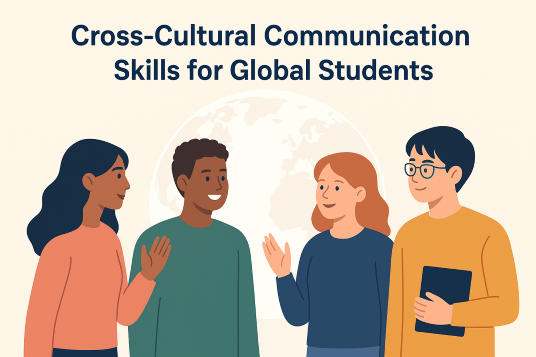
In an increasingly interconnected world, students are no longer limited by borders. Whether they are studying abroad, engaging in virtual global classrooms, or collaborating with peers from diverse cultures, today’s learners must be able to bridge cultural differences with confidence. At CVDragon, we believe cross-cultural communication is one of the most valuable skills students can develop—both for academic success and for thriving in international careers.
Here’s how global students can build stronger communication skills and connect more effectively across cultures.
1. Understanding Cultural Differences
Every culture has its own communication style, values, and social norms. What feels polite or natural in one country may seem direct or unusual in another. Students benefit greatly from recognizing these differences and approaching them with curiosity rather than judgment.
Some dimensions to explore include:
-
High-context vs. low-context communication
-
Formality levels
-
Attitudes toward time (strict or flexible)
-
Hierarchy and respect in conversations
-
Personal space and non-verbal cues
Understanding these cultural dynamics helps prevent misunderstandings and fosters smoother interactions.
2. Active Listening With an Open Mind
Cross-cultural communication is just as much about listening as speaking. Global students should practice:
-
Paying attention to tone and body language
-
Asking open-ended questions
-
Avoiding assumptions
-
Clarifying meaning when needed
-
Showing genuine interest in others’ perspectives
Active listening not only improves communication but also builds trust across diverse groups.
3. Adapting Communication Styles
Flexibility is key. Students often discover that their preferred communication style may not always resonate in a multicultural setting. Being willing to adjust tone, pace, and choice of words shows respect and increases the likelihood of being understood clearly.
For instance:
-
Using simple, clear language when speaking with non-native English speakers
-
Slowing down speech without sounding condescending
-
Avoiding slang or culturally specific jokes
-
Being aware of gestures that may have different meanings internationally
Adaptability enhances both collaboration and cultural understanding.
4. Developing Strong Non-Verbal Awareness
Non-verbal cues—eye contact, facial expressions, gestures, and posture—play a powerful role in communication and vary greatly between cultures.
Students should be aware that:
-
Direct eye contact may signal confidence in some cultures but disrespect in others
-
Hand gestures can mean completely different things depending on the country
-
Silence can communicate agreement, respect, or disagreement based on context
Recognizing these variations helps students communicate more effectively and respectfully.
5. Building Empathy and Cultural Sensitivity
Empathy allows students to step into the experiences of people from different backgrounds. It helps them communicate without bias and respond with compassion.
Ways to cultivate empathy include:
-
Learning about other cultures through conversations, books, or travel
-
Respecting cultural celebrations and traditions
-
Being patient when language barriers arise
-
Avoiding stereotypes and generalizations
Cultural sensitivity strengthens relationships and makes global environments more inclusive.
6. Embracing Collaboration in Multicultural Teams
Many academic projects now involve diverse team members, either in person or online. Students gain valuable insights when they collaborate across cultures. Effective teamwork requires:
-
Clear roles and expectations
-
Respectful disagreements
-
Encouraging quieter team members to share ideas
-
Celebrating diverse viewpoints
-
Finding common goals
These experiences prepare students for multinational workplaces where cross-cultural collaboration is the norm.
7. Continuous Learning and Self-Reflection
Cross-cultural communication is not a one-time lesson—it’s a lifelong learning process. Students should take time to reflect on their interactions:
-
What went well?
-
What could be improved?
-
How did cultural differences influence the conversation?
Self-awareness helps students grow and refine their communication skills over time.
Conclusion
Mastering cross-cultural communication helps global students thrive academically, socially, and professionally. By staying open-minded, adaptable, and empathetic, they can build meaningful connections across borders and navigate the global landscape with confidence.
At CVDragon, we encourage students to embrace cultural diversity as a pathway to personal and professional growth—because the ability to connect across cultures is one of the most powerful skills of the future.
Leave a Reply