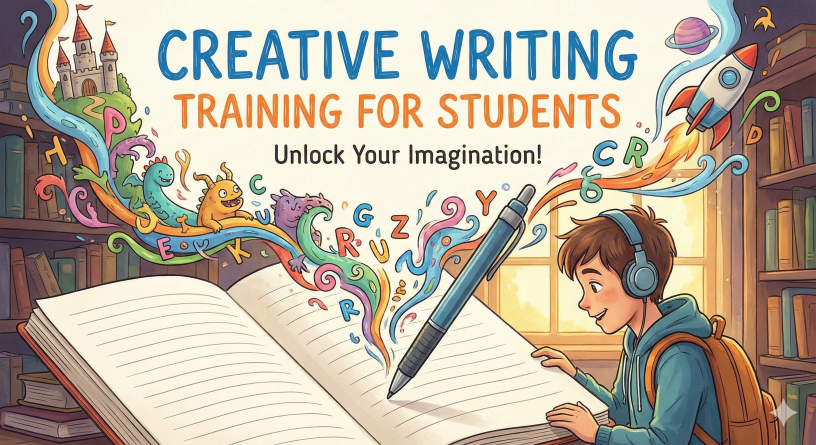
In today’s fast-paced world, communication and creativity are two of the most valuable skills a student can develop. Creative writing — the art of expressing ideas, emotions, and stories through words — helps students build these skills beautifully. More than just crafting stories or poems, creative writing sharpens critical thinking, strengthens language skills, and boosts confidence.
Whether students dream of becoming authors or simply want to enhance their academic writing, creative writing training opens the doors to self-expression and intellectual growth. Let’s explore how creative writing training benefits students, why it’s important, and the best ways to develop creative writing skills.
What Is Creative Writing?
Creative writing is any form of writing that goes beyond academic or technical formats. It focuses on imagination, originality, and emotional depth. It includes:
-
Short stories
-
Poems
-
Essays
-
Scripts and dialogues
-
Personal narratives
-
Fiction and fantasy writing
-
Descriptive writing
-
Journaling
Unlike academic writing, creative writing encourages students to think freely, use their imagination, and convey thoughts in unique ways.
Why Creative Writing Training Is Important for Students
Creative writing is more than an artistic activity — it plays a powerful role in intellectual and emotional development.
1. Enhances Imagination and Creativity
Creative writing encourages students to visualize scenarios, build characters, and think creatively. It trains their minds to explore possibilities beyond what they already know.
2. Improves Language and Vocabulary Skills
Writing helps students understand grammar, sentence structure, and vocabulary organically. They learn how to express ideas clearly and beautifully.
3. Strengthens Critical Thinking
Students must develop logical plots, analyze characters, and resolve conflicts in their stories — all of which require critical thinking.
4. Boosts Emotional Expression
Creative writing provides a safe outlet for expressing emotions and thoughts. It enhances self-awareness and emotional intelligence.
5. Encourages Confidence and Communication
Sharing written work helps students overcome fear and build communication skills, which are vital in academics and the workplace.
6. Builds Academic Writing Skills
Creative writing also improves clarity, coherence, and structure — skills that benefit academic essays, reports, and exams.
7. Promotes Problem-Solving Skills
Every story has a conflict that needs resolution. This inspires students to think strategically and develop problem-solving abilities.
How Creative Writing Training Helps Students
Creative writing training provides structured techniques, practice opportunities, and personalized guidance that help students grow as writers. Training supports them in:
-
Overcoming writer’s block
-
Understanding creative elements
-
Developing unique writing styles
-
Learning editing and revision
-
Improving storytelling techniques
-
Gaining feedback and refining their craft
Best Methods of Creative Writing Training for Students
Here are the most effective, engaging, and student-friendly ways to develop creative writing skills:
1. Reading Widely and Regularly
Reading is the foundation of good writing. It exposes students to various styles, genres, and ideas.
Encourage students to read:
-
Short stories
-
Novels
-
Poetry
-
Essays
-
Biographies
-
Blogs and articles
Reading enriches vocabulary, teaches storytelling patterns, and sparks creativity.
2. Daily Writing Practice
Writing regularly — even in small amounts — strengthens fluency and confidence. Students can practice through:
-
Journaling
-
Creative prompts
-
Descriptions of real-life experiences
-
Dialogue exercises
-
Micro-stories
Consistency is more important than perfection.
3. Use of Creative Writing Prompts
Prompts are a great way to kick-start imagination. Examples include:
-
“Write a story that starts with an unexpected message.”
-
“Describe a world where gravity works differently.”
-
“Write from the perspective of an object in your room.”
Prompts challenge students to think creatively and try new ideas.
4. Learning Story Structure
Understanding story structure helps students create engaging narratives. They should learn about:
-
Exposition
-
Rising action
-
Conflict
-
Climax
-
Falling action
-
Resolution
Training also helps them understand character development, setting, and themes.
5. Participating in Creative Writing Workshops
Workshops provide an interactive space where students share their work, receive feedback, and learn new techniques. They also encourage teamwork and confidence-building.
6. Encouraging Freewriting
Freewriting involves writing continuously for a set time without worrying about grammar or structure. It helps students:
-
Overcome writer’s block
-
Generate raw ideas
-
Improve creativity
-
Discover personal writing styles
7. Exploring Poetry and Descriptive Writing
Poetry teaches rhythm, imagery, and emotional depth. Descriptive writing enhances observation skills. Together, they help students create powerful, expressive pieces.
8. Introducing Literary Devices
Understanding literary devices enriches creative writing. Students should practice using:
-
Similes and metaphors
-
Personification
-
Imagery
-
Alliteration
-
Hyperbole
-
Symbolism
These tools bring writing to life.
9. Encouraging Brainstorming and Mind Mapping
Before writing, students can organize their ideas visually. Mind maps help them connect plot elements, character traits, and themes in one place.
10. Practicing Editing and Revision
Great writers are great editors. Creative writing training teaches students how to:
-
Spot repetition
-
Improve clarity
-
Fix grammar issues
-
Strengthen storyline flow
-
Remove unnecessary details
Revising teaches discipline and attention to detail.
11. Using Digital Tools for Writing
Students can benefit from tools that improve writing quality:
-
Grammarly
-
Hemingway Editor
-
Google Docs
-
Scrivener
-
Writing prompt apps
These tools help with grammar, structure, and creativity.
12. Participating in Competitions and Publishing Opportunities
Competitions motivate students to write with purpose. Publishing work in school magazines, blogs, or online platforms builds confidence and a sense of achievement.
How Teachers and Schools Can Support Creative Writing Training
Schools play a major role in nurturing creativity. Here’s how educators can help:
✔ Create a positive and encouraging writing environment
✔ Introduce fun writing activities
✔ Provide supportive feedback
✔ Incorporate creative writing into the curriculum
✔ Organize storytelling competitions, writing clubs, and poetry slams
✔ Celebrate students’ creative work
Such initiatives help students explore their potential freely.
The Impact of Creative Writing on a Student’s Future
Creative writing builds lifelong skills that extend far beyond the classroom. It helps students become:
-
Better communicators
-
Stronger thinkers
-
Innovative problem-solvers
-
Confident professionals
-
Emotionally intelligent individuals
Whether they pursue careers in media, marketing, business, literature, journalism, psychology, or even STEM fields, creative writing enhances their ability to express ideas effectively.
Conclusion
Creative writing training is a powerful tool that shapes students into imaginative, articulate, and confident individuals. It nurtures creativity, sharpens thinking, and strengthens communication — all key skills needed in education, careers, and personal growth.
By encouraging regular practice, providing structured guidance, and offering engaging activities, schools and parents can help students unlock their inner storytellers.
With the right training, every student can become a creative and expressive writer — not just on paper, but in life.
Leave a Reply