Author: admin

  • How to Build Networking Skills as a Student

    How to Build Networking Skills as a Student

    In today’s competitive world, your network is your net worth—especially for students stepping into their professional journeys. Whether you’re preparing for internships, your first job, or future business opportunities, building strong networking skills can open doors to endless possibilities.

    At cvDragon, we believe networking isn’t just about collecting contacts; it’s about building genuine, mutually beneficial relationships that help you grow personally and professionally. Let’s explore how you can develop networking skills as a student and why it’s one of the smartest investments in your future.

    1. Understand the Importance of Networking Early

    Many students underestimate networking, thinking it’s something that starts after graduation. In reality, networking should begin during your college years.

    Building connections early helps you:

    • Gain career insights from industry professionals.

    • Find internship and job opportunities through referrals.

    • Learn soft skills like communication, confidence, and empathy.

    • Develop mentors and peers who guide and support your goals.

    Remember, networking isn’t just about what you can get—it’s also about what you can give. The most successful networks are built on mutual respect, trust, and shared value.

    2. Start with Your Campus Network

    Your university or college is one of the best places to start building your network. You already have access to a community of professors, alumni, and students with diverse experiences and connections.

    Here’s how to make the most of it:

    • Connect with professors and academic mentors: They can recommend you for internships, research projects, or industry events.

    • Participate in student clubs and societies: Whether it’s a marketing club, tech society, or debate team, these communities help you meet like-minded peers.

    • Engage in group projects: Collaborating with classmates enhances teamwork and builds connections that often last beyond graduation.

    • Attend alumni meets: Alumni can offer valuable insights into your desired career path and even help you find your first professional opportunity.

    At cvDragon, we encourage students to actively engage with their campus community—because networking begins in classrooms and corridors.

    3. Leverage LinkedIn and Other Online Platforms

    In the digital era, networking extends far beyond face-to-face interactions. Platforms like LinkedIn, Twitter (X), and professional communities make it easy to connect with industry experts across the globe.

    Here’s how you can use them effectively:

    • Optimize your LinkedIn profile: Use a professional photo, strong headline, and detailed bio. Highlight your education, skills, and achievements.

    • Follow companies and professionals: Stay updated on industry trends and engage with relevant content.

    • Share your insights: Post about what you’re learning, projects you’re working on, or career topics you find interesting.

    • Send personalized connection requests: When reaching out, mention why you want to connect. A short, polite message goes a long way.

    At cvDragon, we help students craft professional online profiles that stand out. A well-designed LinkedIn or cvDragon profile not only showcases your skills but also builds your credibility in the job market.

    4. Attend Workshops, Webinars, and Networking Events

    One of the best ways to enhance your networking skills is by putting yourself in professional environments. Attending industry-specific events helps you interact with people outside your immediate circle.

    Look out for:

    • Career fairs and internship expos

    • Guest lectures and industry talks

    • Online webinars and virtual networking sessions

    • Workshops hosted by companies or recruiters

    When attending these events, don’t be afraid to ask questions, introduce yourself, and exchange contact information. A simple conversation could lead to an internship, mentorship, or long-term professional relationship.

    5. Develop Strong Communication and Listening Skills

    Networking isn’t just about talking—it’s about building rapport. The key to effective networking is mastering active listening and clear communication.

    Here’s how to strengthen your interpersonal skills:

    • Be genuinely interested: Ask thoughtful questions about others’ experiences.

    • Listen more than you speak: People appreciate when you value their opinions.

    • Maintain positive body language: Smile, make eye contact, and show confidence.

    • Follow up: After meeting someone, send a thank-you message or a quick email to stay connected.

    At cvDragon, we’ve seen that students who communicate clearly and confidently tend to attract more opportunities and make lasting impressions.

    6. Find a Mentor

    A mentor can play a pivotal role in shaping your academic and career journey. They provide guidance, constructive feedback, and networking introductions.

    You can find mentors through:

    • Your college professors or advisors.

    • Senior professionals on LinkedIn.

    • Alumni groups or student mentorship programs.

    Once you find a mentor, maintain a consistent and respectful relationship. Share your progress, seek advice, and show gratitude. A mentor’s endorsement can open many doors in your future career.

    7. Volunteer and Collaborate on Real Projects

    Volunteering and participating in projects help you gain real-world experience and connect with people who share your passions.

    For instance:

    • Join a non-profit organization or campus event committee.

    • Collaborate with peers on a start-up or research project.

    • Participate in hackathons or marketing competitions.

    These activities help you apply classroom learning in real situations while expanding your network of professionals, mentors, and collaborators.

    8. Stay Authentic and Consistent

    The biggest mistake students make is treating networking as a transaction. True networking is about building genuine relationships—not chasing opportunities.

    Here’s what authenticity looks like:

    • Don’t reach out only when you need something.

    • Offer help, share resources, or provide feedback.

    • Stay consistent—engage, comment, and support others’ achievements.

    When you’re genuine, people remember you—not as someone who networked for gain, but as someone who added value to their circle.

    9. Keep Refining Your Personal Brand

    Your personal brand is how others perceive you professionally. As a student, this includes your online presence, communication style, and the way you carry yourself.

    To strengthen it:

    • Maintain an updated resume or cvDragon profile.

    • Be active in professional communities.

    • Share achievements, certifications, or personal growth stories.

    • Always stay professional online.

    cvDragon helps students create impactful profiles that reflect their unique strengths and career aspirations—making a powerful impression on recruiters and peers alike.

    Conclusion

    Networking isn’t just a skill—it’s a lifelong habit. As a student, every classmate, professor, event, or online interaction is a potential connection that could shape your future.

    By being curious, confident, and consistent, you can turn everyday conversations into meaningful professional relationships.

    At cvDragon, we empower students to not just build resumes, but to build relationships that matter. Remember, opportunities often come through people—and the stronger your network, the brighter your future.
  • The Role of Mindfulness in Student Productivity

    The Role of Mindfulness in Student Productivity

    In today’s fast-paced academic world, students are under constant pressure to perform well, manage deadlines, and juggle multiple responsibilities. With increasing distractions—especially from technology—maintaining focus and productivity has become a major challenge.

    This is where mindfulness steps in as a powerful solution. At cvDragon, we believe that mindfulness is not just a wellness trend—it’s a scientifically proven practice that helps students achieve better focus, emotional balance, and academic success.

    Let’s explore how mindfulness plays a vital role in enhancing student productivity and how you can apply it in daily life.

    What Is Mindfulness?

    Mindfulness means being fully present in the moment—aware of your thoughts, feelings, surroundings, and actions without judgment. It’s the art of focusing your attention deliberately rather than letting it wander.

    For students, mindfulness can mean paying attention during lectures, managing stress before exams, or staying calm while handling academic challenges.

    It’s about training your mind to respond consciously instead of reacting impulsively.

    The Science Behind Mindfulness and Productivity

    Several studies have shown that mindfulness directly impacts the brain’s prefrontal cortex, which governs attention, decision-making, and emotional regulation. Regular mindfulness practice:

    • Improves concentration and cognitive performance.

    • Reduces anxiety and stress, leading to clearer thinking.

    • Enhances memory and learning capacity.

    • Promotes better sleep and overall well-being.

    By practicing mindfulness, students can rewire their brains for greater focus, discipline, and productivity—skills that are essential for academic success and beyond.

    1. Mindfulness Enhances Focus and Concentration

    Distractions are everywhere—social media, notifications, multitasking—all of which reduce attention span and quality of work. Mindfulness trains students to recognize distractions and bring their attention back to the task at hand.

    For instance, mindful studying means dedicating undivided attention to learning materials, avoiding multitasking, and being aware of when the mind starts to wander.

    Example Practice:
    Try the “Pomodoro + Mindfulness” technique—study for 25 minutes, then take a 5-minute break to focus on your breathing or surroundings. This helps refresh your mind while maintaining high productivity levels.

    At cvDragon, we encourage students to include mindful techniques in their daily routines to improve concentration and manage academic tasks more efficiently.

    2. Reduces Stress and Exam Anxiety

    Exams, presentations, and deadlines often trigger stress and anxiety among students. Chronic stress not only affects performance but also impacts mental and physical health.

    Mindfulness helps by teaching students to observe their thoughts without being overwhelmed by them. Through deep breathing or meditation, they learn to remain calm under pressure and approach challenges with clarity.

    Example Practice:
    Before an exam or presentation, take five slow breaths, focusing on each inhale and exhale. This simple act can lower your heart rate and bring mental stability, helping you perform better.

    cvDragon’s Insight:
    We’ve seen that students who integrate mindfulness techniques report higher confidence and reduced stress levels, especially during peak academic seasons.

    3. Improves Time Management

    Time management is a cornerstone of student productivity. Often, students struggle to prioritize tasks or underestimate how much time assignments will take.

    Mindfulness helps by increasing self-awareness—students become more conscious of how they spend their time and how their habits impact performance. When you’re mindful, you can identify unproductive behaviors (like procrastination) and replace them with focused actions.

    Example Practice:
    Start your day with a mindful planning ritual—take five minutes to review your to-do list, visualize completing each task, and commit to being fully present throughout the day.

    At cvDragon, we emphasize that mindful time management not only improves productivity but also creates a more balanced academic lifestyle.

    4. Boosts Emotional Intelligence and Resilience

    Mindfulness teaches students to understand their emotions and respond thoughtfully. When facing academic setbacks—like low grades or criticism—mindful students are less likely to react with frustration or self-doubt.

    Instead, they approach problems with resilience and self-compassion, allowing them to learn and improve without harsh self-judgment.

    Example Practice:
    End your day with a gratitude reflection—write down three positive experiences or lessons learned. This builds optimism and emotional balance, key traits for academic and personal growth.

    5. Encourages Better Decision-Making

    A cluttered or anxious mind often leads to impulsive decisions. Mindfulness clears mental fog and helps students make rational, intentional choices—whether it’s managing priorities, choosing study partners, or planning careers.

    By practicing mindfulness, students develop patience and clarity, allowing them to align their actions with long-term goals rather than short-term impulses.

    cvDragon’s Approach:
    Our career and education guidance platform integrates personal development tools that encourage mindful self-reflection, helping students make confident, purpose-driven choices for their future.

    6. Improves Overall Well-Being and Academic Performance

    Ultimately, mindfulness enhances not only productivity but also overall mental, emotional, and physical well-being. Students who practice mindfulness experience:

    • Better sleep and relaxation.

    • Improved relationships with peers and teachers.

    • Higher motivation and engagement in academics.

    A healthy, balanced mind naturally performs better. When students learn to manage stress, focus effectively, and maintain emotional stability, productivity becomes a byproduct of their well-being.

    Practical Mindfulness Techniques for Students

    Here are some simple ways students can incorporate mindfulness into their daily lives:

    1. Mindful Breathing: Take a few minutes each day to focus solely on your breath. This anchors your mind and reduces stress.

    2. Meditation: Dedicate 10 minutes daily to quiet reflection or guided meditation. Apps like Calm or Headspace can help.

    3. Mindful Studying: Study with full attention—no distractions, no multitasking.

    4. Digital Detox: Schedule device-free hours during study or rest time.

    5. Mindful Walking: Take short walks between study sessions, observing your surroundings.

    6. Journaling: Write down your thoughts, feelings, and gratitude daily to stay self-aware and positive.

    Even five minutes of mindfulness practice can make a significant difference in focus and mental clarity.

    Conclusion

    Mindfulness is more than a relaxation technique—it’s a powerful productivity tool for students. By cultivating awareness, focus, and emotional balance, mindfulness empowers students to study smarter, handle stress gracefully, and achieve their academic goals with confidence.

    At cvDragon, we believe true success begins with a balanced mind. By integrating mindfulness into daily routines, students can unlock their full potential—both in academics and in life.

    Start small, stay consistent, and let mindfulness guide you toward a more focused, productive, and fulfilling educational journey.

  • The Importance of Financial Literacy for Students

    In today’s world, where financial decisions influence every aspect of life—from education to career choices—financial literacy has become an essential life skill, not just for adults but especially for students. Yet, many young people graduate from school or college without a clear understanding of how to manage their finances effectively.

    At CVDragon, we believe that empowering students with financial knowledge early on can help them build a secure and independent future. Financial literacy isn’t just about managing money—it’s about making informed decisions, setting goals, and creating habits that lead to long-term stability and success.

    What Is Financial Literacy?

    Financial literacy refers to the ability to understand and use various financial skills effectively. These include budgeting, saving, investing, understanding credit, and managing debt. It’s the foundation for making sound financial choices that support one’s goals and lifestyle.

    For students, financial literacy means knowing how to:

    • Manage monthly allowances or part-time earnings.

    • Make smart spending choices.

    • Save for short- and long-term goals.

    • Understand loans, especially student loans or credit cards.

    • Plan for future investments and financial independence.

    In short, financial literacy equips students with the tools to take control of their financial future rather than leaving it to chance.

    Why Financial Literacy Matters for Students

    1. Builds Strong Money Management Habits

    Good financial habits start early. Students who learn how to create and follow a budget are better prepared to manage their finances responsibly later in life. Understanding how to balance income and expenses helps them avoid debt traps and unnecessary financial stress.

    Learning to track spending and differentiate between “needs” and “wants” teaches students the importance of mindful consumption—a valuable skill in today’s consumer-driven world.

    2. Prevents Debt and Financial Stress

    With easy access to credit cards, online shopping, and digital payments, students can quickly fall into the habit of overspending. Without proper financial education, many young people find themselves struggling with debt before they even begin their careers.

    Financial literacy helps students understand how interest rates work, what credit scores mean, and how to use credit responsibly. This knowledge allows them to make informed choices about borrowing and avoid common financial pitfalls.

    3. Encourages Saving and Investing Early

    One of the greatest benefits of financial literacy is developing a savings mindset. Students who learn to save a portion of their income, even if small, understand the value of financial discipline.

    Over time, these small savings can grow into significant investments. Learning about basic investment concepts—like compound interest, mutual funds, and stocks—gives students a head start in building wealth and achieving financial freedom.

    At CVDragon, we emphasize that even students with limited income can begin saving and investing smartly with the right financial guidance.

    4. Promotes Financial Independence

    Financial literacy helps students become self-reliant and confident in managing their own money. It encourages them to plan their finances rather than depend on others for financial decisions.

    Whether it’s managing pocket money, handling part-time job earnings, or planning expenses during higher education, financially literate students develop a sense of independence that extends beyond money management—it builds overall confidence and responsibility.

    5. Helps Make Smarter Career and Education Choices

    Finances play a major role in shaping academic and career decisions. Understanding concepts like return on investment (ROI), education loans, and salary expectations can help students make better choices about which courses or careers are financially sustainable.

    For example, a student aware of the cost of education and future earning potential can evaluate whether a particular degree or institution aligns with their long-term financial goals. This kind of practical financial awareness can prevent years of financial hardship.

    6. Builds a Foundation for Long-Term Success

    Financial literacy doesn’t just help students in the present—it sets them up for success throughout their lives. Knowing how to budget, save, invest, and plan for emergencies lays the groundwork for financial stability.

    Financially literate individuals are also better equipped to handle life’s uncertainties—whether it’s an unexpected expense, a job change, or an economic downturn. They can make rational decisions under pressure because they understand their financial options.

    How Students Can Improve Financial Literacy

    Building financial literacy doesn’t happen overnight, but small, consistent steps make a big difference. Here are a few ways students can start:

    • Learn the basics: Read books, blogs, and articles on personal finance.

    • Use budgeting apps: Track expenses and create spending goals.

    • Attend workshops: Many educational institutions and organizations offer financial literacy programs.

    • Seek mentorship: Talk to financially savvy family members or professionals.

    • Start small investments: Learn about SIPs, digital savings platforms, or basic stock investing.

    At CVDragon, we encourage students to view financial learning as part of their personal development journey. Just as they invest in building their careers and resumes, they should also invest time in understanding their finances.

    Conclusion: Financial Literacy Is the Key to a Secure Future

    Financial literacy is not just about money—it’s about freedom, confidence, and control. For students, learning financial skills early can shape their entire future—helping them make smart choices, avoid debt, and build lasting wealth.

    As the world becomes increasingly complex and financially driven, being financially literate is as important as academic excellence. At CVDragon, we believe that empowering students with financial knowledge today means creating responsible, confident, and successful professionals tomorrow.

  • Emotional Intelligence Training for Students

    Emotional Intelligence Training for Students

    In today’s fast-paced and competitive world, academic excellence alone is no longer enough to define a student’s potential. What truly distinguishes successful students from others is their emotional intelligence (EI) — the ability to recognize, understand, and manage emotions effectively. Whether it’s handling stress before an exam, collaborating with peers on group projects, or dealing with failure, emotional intelligence determines how students respond to challenges and grow from them.

    At CvDragon, we believe that emotional intelligence is not just a “soft skill” — it’s a core life skill. Our training programs help students develop emotional awareness, empathy, resilience, and social understanding, enabling them to thrive in both academic and personal environments.

    This article explores why emotional intelligence is essential for students, how it impacts their success, and the most effective strategies to develop it through structured training.

    1. What Is Emotional Intelligence (EI)?

    Emotional intelligence refers to the capacity to identify, understand, and regulate one’s own emotions while also recognizing and influencing the emotions of others.

    According to psychologist Daniel Goleman, EI has five core components:

    1. Self-Awareness – Recognizing one’s emotions and their effects.

    2. Self-Regulation – Controlling impulses and managing stress effectively.

    3. Motivation – Staying focused and positive in pursuit of goals.

    4. Empathy – Understanding and responding to others’ feelings.

    5. Social Skills – Building and maintaining healthy relationships.

    When students master these abilities, they not only perform better academically but also handle life’s pressures with maturity and confidence.

    2. Why Emotional Intelligence Matters for Students

    a. Improves Academic Performance

    Students with high emotional intelligence can manage exam anxiety, stay motivated, and maintain focus. They approach learning with curiosity and persistence — essential traits for long-term academic success. Studies show that emotionally intelligent students often outperform peers with similar IQ levels because they can handle academic pressure calmly.

    b. Strengthens Relationships

    School and college life involve constant interaction with classmates, teachers, and peers. Emotional intelligence helps students build stronger relationships by improving communication, empathy, and conflict resolution skills. They learn to listen actively and respond thoughtfully, creating a more positive and cooperative learning environment.

    c. Builds Resilience and Mental Well-being

    Academic life can be stressful — from exam results to peer pressure and future uncertainties. Emotionally intelligent students are better equipped to handle setbacks. Instead of giving up, they bounce back stronger, using challenges as learning experiences.

    d. Enhances Leadership and Teamwork

    In group projects or extracurricular activities, emotionally intelligent students shine as leaders. They can motivate team members, handle disagreements diplomatically, and create harmony within groups.

    e. Promotes Career Readiness

    Employers increasingly value emotional intelligence as a top skill. For students preparing to enter the workforce, developing EI ensures they can adapt, collaborate, and communicate effectively in professional settings.

    At CvDragon, we integrate emotional intelligence training into our student development programs to prepare learners not just for exams — but for life.

    3. Key Elements of Emotional Intelligence Training

    Developing emotional intelligence requires conscious effort and structured training. CvDragon’s approach focuses on these essential pillars:

    a. Self-Awareness Development

    Students are guided to reflect on their emotions — what triggers stress, anger, or motivation. Through journaling, mindfulness exercises, and self-assessment tools, they learn to identify emotional patterns and understand their behavioral impact.
    Example: Before reacting to a poor grade, students learn to pause, analyze their emotions, and approach improvement rationally.

    b. Managing Emotions (Self-Regulation)

    Training helps students develop emotional control techniques — deep breathing, meditation, or reframing thoughts — to prevent impulsive reactions. This skill is especially useful during exams, presentations, or high-pressure situations.

    CvDragon coaches emphasize emotional pause and response — encouraging students to think before reacting, fostering maturity and calmness.

    c. Empathy Building

    Understanding others’ perspectives is the heart of emotional intelligence. Through group discussions, role-playing, and storytelling, students learn to put themselves in others’ shoes, enhancing emotional sensitivity and kindness.

    Empathy training helps reduce bullying, improves peer relationships, and creates inclusive environments where every student feels valued.

    d. Motivation and Goal Setting

    Emotionally intelligent individuals are driven not by external rewards but by internal satisfaction. CvDragon’s programs teach students how to set realistic goals, visualize success, and stay motivated despite setbacks.
    By linking emotional satisfaction with achievement, students learn the importance of intrinsic motivation — a key driver of lifelong learning.

    e. Communication and Social Skills

    Good communication is rooted in emotional understanding. Students learn how to express thoughts confidently yet respectfully, read nonverbal cues, and practice active listening.
    This training enhances their public speaking, teamwork, and networking abilities — vital for future academic and career success.

    4. Strategies to Cultivate Emotional Intelligence in Students

    Beyond formal training, here are actionable strategies that can help students strengthen their emotional intelligence daily:

    a. Practice Mindfulness

    Encourage mindfulness exercises such as deep breathing, meditation, or reflection breaks. It helps students remain present, reduce anxiety, and improve emotional clarity.

    b. Encourage Journaling

    Writing about emotions helps students process feelings and recognize recurring emotional patterns. It’s a simple yet powerful way to improve self-awareness.

    c. Promote Group Activities

    Team-based learning fosters empathy and cooperation. Students learn how different personalities work together toward shared goals — a vital emotional lesson for adulthood.

    d. Use Constructive Feedback

    Instead of harsh criticism, use feedback that focuses on improvement. This boosts motivation and emotional maturity. CvDragon’s mentoring sessions are built around growth feedback, helping students reflect, not retreat.

    e. Develop Emotional Vocabulary

    Teaching students to name their emotions — such as “frustrated,” “disappointed,” or “anxious” — helps them understand and manage feelings better instead of suppressing them.

    5. CvDragon’s Emotional Intelligence Training Approach

    At CvDragon, our student training programs are designed to bridge emotional learning with real-world application. Here’s how we do it:

    ✔ Interactive Workshops

    Our workshops blend theory with practical exercises — from emotion-recognition games to stress-management challenges — keeping sessions engaging and memorable.

    ✔ Personalized Emotional Assessments

    We help students identify their emotional strengths and weaknesses through guided evaluations, offering a customized development roadmap.

    ✔ Real-life Scenarios and Role-Play

    Simulated interactions — like handling peer disagreements or responding to criticism — prepare students to apply emotional intelligence in everyday life.

    ✔ Expert Mentorship

    Our mentors guide students through emotional challenges, providing support, perspective, and strategies to navigate them successfully.

    ✔ Continuous Progress Tracking

    Students track their growth in self-awareness, empathy, and confidence, ensuring that emotional development remains a lifelong practice.

    6. The Long-Term Benefits of Emotional Intelligence Training

    When students cultivate emotional intelligence early, the benefits last a lifetime:

    • Better Academic Focus: Reduced anxiety and improved concentration lead to higher performance.

    • Stronger Relationships: Improved communication builds trust and teamwork.

    • Greater Self-Confidence: Students believe in their abilities and handle criticism constructively.

    • Enhanced Career Prospects: Emotional maturity makes them better leaders, decision-makers, and collaborators.

    • Improved Well-being: Managing emotions effectively reduces stress and improves mental health.

    Ultimately, emotional intelligence creates balanced individuals — those who succeed not just in school but in life.

    7. Conclusion: Shaping Emotionally Strong Futures with CvDragon

    In a world driven by academic scores and competition, emotional intelligence offers a deeper, more human dimension of success. It teaches students how to stay calm in chaos, empathize with others, and lead with compassion — traits that define not just great professionals, but great people.

    At CvDragon, we are committed to nurturing emotionally intelligent learners who can face life with confidence, empathy, and resilience. Through our tailored training and mentorship, we help students not only understand their emotions but use them as powerful tools for growth.

    After all, intelligence may open doors — but emotional intelligence ensures you walk through them gracefully.

  • The Power of Volunteering in Skill Building

    The Power of Volunteering in Skill Building

    In today’s fast-paced and competitive world, employers seek more than just academic qualifications — they value skills, experience, and character. While formal education lays the foundation, volunteering helps individuals develop real-world abilities that make them stand out. It’s not just about giving back to society — it’s about growing as a person and sharpening essential professional skills.

    At CvDragon, we believe volunteering is one of the most effective, practical, and meaningful ways to enhance your skill set while making a positive difference. Whether you’re a student, a fresh graduate, or a professional looking to upskill, volunteering offers countless opportunities to learn, lead, and grow.

    💡 What Is Volunteering, Really?

    Volunteering is more than just donating your time. It’s a commitment to contribute your energy, ideas, and abilities to causes you care about — without expecting monetary rewards. From teaching underprivileged children and organizing community events to assisting in environmental projects or digital awareness campaigns, volunteering offers diverse experiences that shape both personality and professionalism.

    The most inspiring part? Every volunteering experience teaches something new — communication, teamwork, leadership, empathy, or problem-solving. And these are precisely the skills that recruiters value most today.

    🧠 Why Volunteering Is a Hidden Powerhouse for Skill Building

    Volunteering may not appear on a paycheck, but it pays off in skills that last a lifetime. Let’s look at how it transforms personal and professional development:

    1. 🗣️ Enhances Communication and Interpersonal Skills

    When you volunteer, you meet people from all walks of life — community members, organizers, sponsors, and beneficiaries. To collaborate effectively, you learn how to listen actively, communicate clearly, and express empathy.

    For instance, if you volunteer to teach children, you naturally develop patience and clarity in explaining concepts. Similarly, if you coordinate an event, you practice negotiation, persuasion, and team communication. These skills are invaluable in both corporate and social settings.

    2. 🤝 Develops Leadership and Teamwork Abilities

    Volunteering environments often bring together people with diverse perspectives. Working as part of a group teaches collaboration, conflict resolution, and the art of leading by example.

    If you’ve ever led a small group during a cleanliness drive or managed volunteers at a fundraising event, you’ve already practiced leadership and project management — without even realizing it.

    Employers admire candidates who can both work in a team and take initiative, and volunteering helps you master both qualities naturally.

    3. 💻 Builds Technical and Organizational Skills

    Modern volunteering goes beyond traditional community work. Many NGOs and startups now look for volunteers skilled in social media management, graphic design, data collection, event coordination, or content creation.

    By taking on such roles, you not only contribute meaningfully but also gain hands-on experience with tools and platforms that enhance your resume. For instance, volunteering for a digital awareness campaign may help you learn online marketing or data analytics — skills directly useful in professional jobs.

    4. 🧭 Improves Problem-Solving and Adaptability

    Volunteers often face unexpected challenges — limited resources, last-minute cancellations, or logistical issues. Handling these teaches you how to think on your feet, remain calm under pressure, and find creative solutions.

    These experiences make you more resilient and adaptable, qualities that are increasingly important in the ever-changing workplace.

    5. 💬 Strengthens Emotional Intelligence (EQ)

    Empathy and understanding others’ emotions form the heart of emotional intelligence. Volunteering exposes you to diverse human experiences — poverty, education gaps, environmental struggles — which enhances your ability to empathize, manage emotions, and connect authentically.

    Strong EQ not only improves personal relationships but also boosts leadership, decision-making, and workplace harmony.

    6. 🚀 Expands Your Professional Network

    Volunteering brings you in touch with professionals, mentors, and organizations from various fields. These interactions can open doors to internships, job offers, and collaborations.

    Many employers view active volunteers as self-motivated, dependable, and socially responsible — traits that make a candidate stand out.

    At CvDragon, we encourage students to include volunteering experiences on their CVs because they showcase initiative, community engagement, and soft skills — three things that truly impress recruiters.

    🌱 Volunteering as a Path to Self-Discovery

    Beyond skills, volunteering helps individuals discover themselves. It pushes you out of your comfort zone and helps you recognize your interests, values, and strengths.

    You might find that you love teaching, enjoy organizing events, or are passionate about sustainability. These realizations often influence career choices and help individuals align their professional goals with their personal purpose.

    For students unsure of their future paths, volunteering provides clarity — it’s like a practical internship for life.

    💼 How CvDragon Encourages Volunteering as a Career Booster

    At CvDragon, we’ve seen countless students and professionals transform their career prospects through volunteering. Including such experiences on a CV adds authentic depth — showing that you’ve not only studied theory but also applied skills in the real world.

    Our platform helps you:

    • Highlight volunteering experience effectively on your resume.

    • Showcase skills learned such as communication, leadership, or project management.

    • Build a professional portfolio that demonstrates initiative and social awareness.

    We believe every volunteer experience tells a story — one of growth, compassion, and contribution — and employers love to see that story come alive in your profile.

    🧩 Practical Tips: How to Make the Most of Volunteering

    To gain maximum benefits from volunteering, treat it like a professional learning opportunity. Here’s how:

    1. Choose causes that match your passion and career goals.
      For example, if you’re studying finance, volunteer for NGOs that manage donations or budgets.

    2. Set clear objectives.
      Identify what you wish to learn — teamwork, leadership, or a new technical skill.

    3. Be consistent.
      Long-term commitment shows dedication and helps you build trust and credibility.

    4. Document your achievements.
      Keep a record of your contributions, such as events organized, funds raised, or people trained.

    5. Reflect and update your CV.
      Mention the skills, results, and impact you created during your volunteering journey.

    🌎 Real-World Impact: Stories That Inspire

    Across the globe, volunteering has empowered millions to grow both personally and professionally.

    • A marketing student who volunteered for an NGO’s social media team discovered her strength in digital storytelling and later became a content strategist.

    • An engineering graduate who volunteered in rural water projects learned project coordination — a skill that helped him land a job in infrastructure management.

    Each volunteer experience, big or small, contributes to shaping not just a career — but a better version of oneself.

    💬 The Ripple Effect: Building a Better Society

    When individuals volunteer, they don’t just build their own skills — they strengthen their communities. Volunteering fosters unity, empathy, and shared purpose. It’s a beautiful exchange: society benefits from your service, and you benefit from invaluable experience.

    This dual impact — personal growth and social contribution — is what makes volunteering truly powerful.

    🌟 Final Thought

    Volunteering is the bridge between learning and living. It’s where knowledge meets purpose and skills meet service. Every hour spent helping others also shapes your communication, leadership, creativity, and empathy — skills that define both successful professionals and responsible citizens.

    At CvDragon, we encourage every student and job seeker to see volunteering not as an extra activity, but as a transformative journey. It’s the ultimate form of skill-building — one that helps you grow, connect, and create change, all at once.

    So, the next time you get a chance to volunteer — take it. You won’t just make a difference in someone’s life; you’ll make a lasting difference in your own.

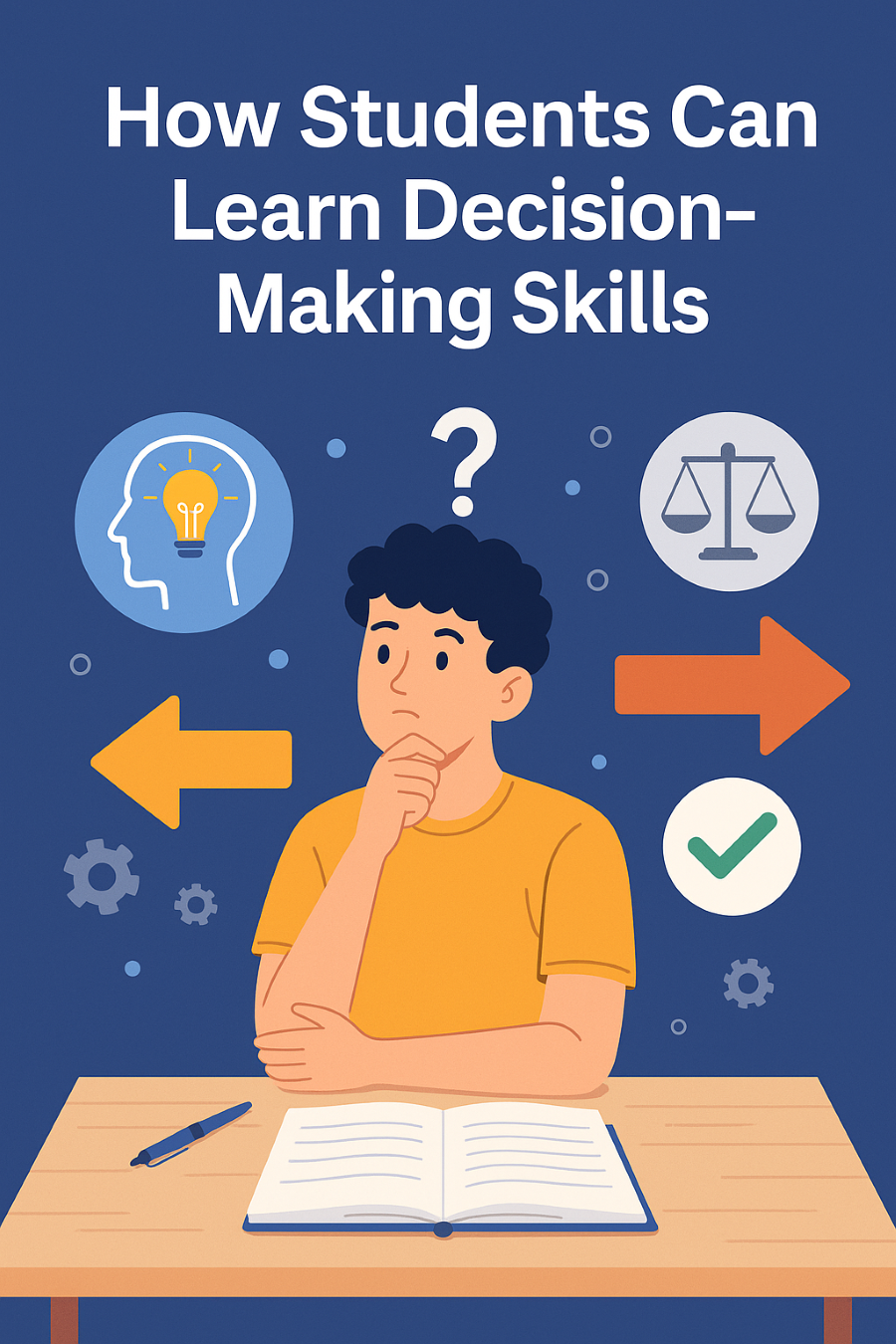
  • How Students Can Learn Decision-Making Skills

    How Students Can Learn Decision-Making Skills

    In today’s fast-paced and uncertain world, decision-making has become one of the most critical life skills for students. Every day, students face choices—what subjects to study, how to manage time, which career path to pursue, or how to handle peer pressure. While some decisions may seem small, each one builds the foundation for future success.

    At cvDragon, we believe that learning to make sound decisions is not about perfection—it’s about developing clarity, confidence, and critical thinking. Decision-making is not an innate ability; it’s a skill that can be learned, practiced, and mastered. In this article, we explore how students can develop effective decision-making skills and apply them in both academic and real-life situations.

    1. Understand What Decision-Making Really Means

    Decision-making is the process of choosing the best possible option from available alternatives. It’s not just about making quick judgments—it involves analyzing situations, understanding consequences, and evaluating options logically and emotionally.

    For students, decision-making goes beyond academics. It involves choices that shape personality, values, and future goals. For instance:

    • Choosing the right stream after high school (Commerce, Science, Arts).

    • Deciding whether to pursue higher studies or work experience.

    • Balancing studies with extracurricular activities.

    Understanding the importance of thoughtful decision-making helps students take ownership of their actions and outcomes—an essential quality for leadership and personal growth.

    2. Develop Self-Awareness

    Good decisions start with self-awareness. Students must first understand their strengths, weaknesses, interests, and values.

    Self-awareness acts as a compass—it helps students identify what truly matters to them instead of being influenced by others.

    Here’s how students can build it:

    • Self-reflection: Take time to think about what excites or motivates you.

    • Journaling: Write about your thoughts, feelings, and daily decisions to understand patterns.

    • Feedback: Ask teachers or friends for honest opinions about your abilities and behavior.

    At cvDragon, we often emphasize personality assessments and skill analysis, as they give students clarity on what aligns best with their natural potential. The more aware you are of yourself, the better your decisions will be.

    3. Learn to Gather and Evaluate Information

    Before making any decision, information is power. Students should learn to research, analyze, and compare options before coming to a conclusion.

    For example, if a student is choosing between pursuing an MBA or preparing for government exams, they must:

    • Gather details about eligibility, scope, and job opportunities.

    • Analyze long-term benefits and risks.

    • Compare based on personal interest, financial situation, and time commitment.

    Critical thinking plays a huge role here. Students should always ask themselves:

    • “What are the pros and cons of this choice?”

    • “What evidence supports my decision?”

    • “Am I considering emotional impulses or logical facts?”

    Making informed decisions builds confidence and reduces regret later.

    4. Practice Problem-Solving

    Every decision involves solving a problem—be it time management, career selection, or academic challenges. Students who learn structured problem-solving can make better decisions faster.

    Here’s a simple 4-step approach students can use:

    1. Identify the problem – Understand what decision needs to be made.

    2. List possible options – Brainstorm multiple alternatives.

    3. Evaluate consequences – Analyze the outcomes of each option.

    4. Choose and act – Select the most beneficial and feasible choice.

    Practicing this approach on small, everyday matters—like prioritizing assignments or managing social time—helps students strengthen their decision-making “muscles.”

    5. Manage Emotions Wisely

    Emotions can both empower and mislead decision-making. While enthusiasm and passion inspire bold choices, fear and stress may lead to poor ones.

    Students must learn emotional intelligence (EQ)—the ability to recognize and manage emotions before making choices.

    Tips to enhance emotional balance:

    • Take a break before deciding when angry or upset.

    • Meditate or practice deep breathing to stay calm under pressure.

    • Discuss concerns with trusted mentors or family.

    At cvDragon, we believe that emotionally intelligent students make not only smart decisions but also empathetic ones—an essential quality for personal and professional success.

    6. Learn from Real-Life Examples

    One of the best ways to learn decision-making is through real-world observation. Students can analyze how leaders, entrepreneurs, or historical figures made their decisions—and the lessons behind them.

    For example:

    • How did Steve Jobs decide to drop out and start Apple?

    • How did Mahatma Gandhi’s decisions shape India’s independence movement?

    • What do entrepreneurs consider before investing in a startup?

    Discussing such cases in classrooms or group projects encourages analytical thinking and moral reasoning. Students learn that every great decision requires vision, risk-taking, and resilience.

    7. Take Small, Everyday Decisions Seriously

    Decision-making is like a muscle—the more you use it, the stronger it becomes. Small choices made daily—like managing time, handling distractions, or choosing priorities—build decision-making habits.

    For instance:

    • Choosing to study for 30 minutes instead of scrolling social media.

    • Deciding to attend a workshop instead of skipping it.

    • Saying “no” to peer pressure when it goes against your values.

    Each small decision contributes to self-discipline, confidence, and accountability—qualities that prepare students for bigger life choices ahead.

    8. Accept Mistakes and Learn from Them

    Even the smartest people make wrong decisions sometimes—and that’s okay. Mistakes are opportunities for growth.

    Students must understand that poor decisions don’t define them; how they respond and learn from them does.

    Whenever a decision doesn’t go as planned:

    • Reflect on what went wrong.

    • Identify what could have been done differently.

    • Use the experience to improve future decisions.

    At cvDragon, we encourage students to maintain a “learning mindset.” Every experience—good or bad—adds wisdom. Over time, this reflection leads to better choices and greater maturity.

    9. Seek Guidance and Mentorship

    Sometimes, students hesitate to seek advice because they fear appearing indecisive. However, consulting others doesn’t mean weakness—it means wisdom.

    Mentors, teachers, parents, and career counselors can offer valuable perspectives that students might overlook.

    To make the most of mentorship:

    • Be open about your doubts and goals.

    • Ask specific questions about options and outcomes.

    • Weigh the advice against your own reasoning.

    At cvDragon, we guide students in understanding themselves through mentorship and skill-based evaluation, helping them make confident career and life decisions.

    10. Develop Long-Term Thinking

    Many students make decisions based on short-term comfort—like choosing an easier subject or avoiding a challenging task. However, long-term thinking teaches them to look beyond immediate gratification.

    Ask questions such as:

    • “Where do I see myself in five years?”

    • “Will this choice help me reach my future goals?”

    • “Is this decision aligned with my values?”

    Building this long-term vision helps students make purpose-driven choices, not impulsive ones.

    Conclusion: Decision-Making is the Key to Growth

    In a world full of distractions and uncertainty, decision-making is more than a skill—it’s a life compass. Students who can think critically, stay calm, and act confidently are better prepared to face academic challenges, career paths, and personal hurdles.

    At cvDragon, our mission is to empower students with the right mindset and skills for making informed decisions that shape brighter futures. We help learners analyze their strengths, explore options, and make choices that lead to growth, confidence, and success.

    Remember—every decision you make today shapes the person you’ll become tomorrow. So, think wisely, act confidently, and keep learning from every step of your journey.

  • Developing Adaptability in Students

    Developing Adaptability in Students

    In a world where change is the only constant, adaptability has become one of the most crucial skills students can develop. Whether it’s adjusting to new learning environments, navigating academic challenges, or preparing for future careers, the ability to adapt determines how successfully one thrives amidst uncertainty.

    At CvDragon, we believe that adaptability is not just about survival—it’s about growth, creativity, and resilience. As the job market evolves and industries transform with technology, developing adaptability in students has become essential for long-term success.

    What Is Adaptability and Why It Matters

    Adaptability is the capacity to adjust one’s thoughts, behaviors, and strategies in response to changing conditions or unexpected challenges. It’s the difference between getting stuck when things shift—and evolving to meet new demands.

    In education and career development, adaptability means:

    • Adjusting to new teaching methods and technologies.

    • Embracing feedback and learning from mistakes.

    • Balancing academics, extracurriculars, and personal life.

    • Responding calmly to failure, uncertainty, or pressure.

    Students who are adaptable are not only more emotionally intelligent, but also more likely to succeed in their professional journeys. They can handle stress better, learn faster, and remain open to new ideas—a skill every employer today values.

    1. The Modern World Demands Adaptable Learners

    The global landscape is shifting faster than ever. Automation, AI, and digital transformation are changing the nature of work, and the jobs of tomorrow may not even exist today.

    Employers now prioritize soft skills like adaptability, communication, and problem-solving over purely technical expertise. According to LinkedIn’s 2025 Workplace Learning Report, adaptability ranks among the top five most in-demand skills across industries.

    For students, this means that success is no longer about memorizing facts—it’s about learning how to learn, unlearn, and relearn. Adaptability ensures that they stay relevant, capable, and confident in any environment.

    2. Why Adaptability Should Be Taught Early

    Adaptability doesn’t happen by chance—it’s nurtured through experiences, guidance, and mindset training. When introduced early, students develop the flexibility to manage academic, social, and emotional challenges effectively.

    Early exposure to adaptable thinking helps students:

    • Cope better with academic transitions (like moving from school to college).

    • Embrace technology in education instead of fearing it.

    • Approach failures as learning opportunities rather than obstacles.

    • Build self-confidence and resilience.

    At CvDragon, we encourage institutions and educators to integrate adaptability training into their curriculum through experiential learning, collaboration, and reflective practice.

    3. Building a Growth Mindset: The Foundation of Adaptability

    Adaptability begins with a growth mindset—a belief that abilities can be developed through effort and persistence. Students with a growth mindset view challenges as opportunities to learn, while those with a fixed mindset often avoid them.

    Ways to Cultivate a Growth Mindset:

    • Encourage curiosity and experimentation.

    • Replace “I can’t do this” with “I can’t do this yet.”

    • Reward effort, not just results.

    • Discuss real-life examples of perseverance and innovation.

    When students internalize the idea that growth is continuous, they become more open to change. This mindset builds emotional resilience and inspires them to take initiative rather than resist new experiences.

    4. Embracing Technology and Change

    The rise of digital learning tools and AI-driven education has changed how students study and interact with information. Those who adapt quickly to these innovations gain a significant edge.

    Adaptability in this context involves:

    • Learning how to use digital platforms like Google Classroom, Zoom, or AI study tools effectively.

    • Managing distractions in online learning environments.

    • Staying curious and updated about emerging technologies.

    At CvDragon, we help students and institutions bridge the gap between traditional learning and digital transformation by promoting adaptable digital literacy skills—turning technology into a learning ally instead of a barrier.

    5. Resilience: The Emotional Side of Adaptability

    Adaptability isn’t just cognitive—it’s emotional. Students face pressures from exams, social expectations, and personal challenges. Emotional resilience enables them to stay balanced and confident, even when things don’t go as planned.

    How students can build emotional adaptability:

    • Practice mindfulness and self-reflection.

    • Set realistic goals and celebrate small wins.

    • Learn to manage stress through time management and healthy habits.

    • Build a support network of mentors, friends, or counselors.

    When students develop emotional resilience, they become better equipped to navigate both academic and personal setbacks with a calm, solution-oriented attitude.

    6. Collaboration and Adaptability Go Hand-in-Hand

    Adaptable students are also great team players. In group projects or future workplaces, adaptability manifests as flexibility in communication, openness to diverse ideas, and a willingness to compromise when needed.

    Educational programs can enhance adaptability through:

    • Group discussions and problem-solving challenges.

    • Cross-disciplinary projects that mix different skill sets.

    • Peer feedback sessions that teach students how to adjust and grow from critique.

    These experiences mimic real-world dynamics, helping students prepare for careers where teamwork and agility are essential.

    7. Role of Educators in Nurturing Adaptability

    Teachers and mentors play a vital role in fostering adaptability among students. A classroom environment that promotes exploration, creativity, and reflection naturally cultivates adaptable learners.

    Educators can support adaptability by:

    • Using project-based learning to expose students to real-world scenarios.

    • Providing opportunities for self-directed learning.

    • Encouraging critical thinking and problem-solving exercises.

    • Offering constructive feedback that motivates improvement.

    At CvDragon, we advocate for a teaching approach that goes beyond rote learning—one that encourages curiosity, adaptability, and lifelong learning.

    8. Preparing for Future Careers with Adaptability

    In the professional world, adaptability translates into career resilience. Employers prefer candidates who can quickly adjust to new roles, learn unfamiliar tools, and handle workplace change with confidence.

    Students with strong adaptability skills are better equipped to:

    • Thrive in diverse work environments.

    • Transition between different roles or industries.

    • Handle feedback and evolve with organizational changes.

    • Remain productive even in high-pressure or uncertain conditions.

    At CvDragon, we help students showcase their adaptability in their resumes, interviews, and professional portfolios, ensuring they stand out as future-ready professionals.

    9. The CvDragon Perspective: Shaping Adaptable Futures

    At CvDragon, we understand that adaptability is not a one-time achievement—it’s a continuous process of learning, reflection, and evolution. Our student-focused approach emphasizes career-readiness through adaptability, helping learners prepare for a world that never stops changing.

    We guide students to:

    • Develop dynamic skill sets suited for multiple industries.

    • Build confidence in tackling new opportunities.

    • Foster curiosity and lifelong learning habits.

    Through personalized career tools, workshops, and mentorship, CvDragon empowers students to embrace change—not fear it.

    Conclusion: Adaptability—The Skill of the Future

    The future belongs to those who can adapt, innovate, and grow through change. For students, adaptability is the foundation of both academic excellence and career success. It helps them stay grounded during uncertainty and motivated during transformation.

    As education evolves and workplaces demand agility, teaching adaptability is no longer optional—it’s a necessity.

    At CvDragon, we believe adaptability turns ordinary learners into extraordinary achievers—ready to navigate the challenges of tomorrow with confidence, creativity, and courage.

  • How Students Can Enhance Presentation Skills

    How Students Can Enhance Presentation Skills

    In today’s fast-paced, communication-driven world, presentation skills have become an essential life skill. Whether you’re presenting a project in college, pitching an idea during an internship, or addressing an audience in your future career, the ability to communicate confidently and clearly can set you apart from the crowd.

    At cvDragon, we believe that mastering presentation skills is not just about speaking well — it’s about expressing your ideas with impact, connecting with your audience, and leaving a lasting impression. In this blog, we’ll explore why presentation skills matter, the common challenges students face, and practical strategies to enhance them.

    Why Presentation Skills Matter for Students

    Many students assume that presentation skills are only relevant for public speakers or marketing professionals. However, effective communication and presentation abilities are valuable in every field — from engineering to law, from business to design.

    Here’s why improving your presentation skills can be a game-changer:

    1. Boosts Confidence – Regularly practicing presentations helps students overcome stage fright and build self-assurance.

    2. Enhances Academic Performance – Many college assignments and evaluations include oral presentations or group projects that require strong delivery skills.

    3. Improves Employability – Employers seek candidates who can articulate ideas clearly, persuade effectively, and lead discussions — all of which are integral parts of good presentation skills.

    4. Builds Leadership and Communication – Strong presenters naturally develop leadership qualities as they learn to influence and engage others.

    In short, presentation skills go beyond the classroom — they prepare students for the real world.

    Common Challenges Students Face in Presentations

    Before diving into improvement techniques, let’s acknowledge the hurdles most students face when presenting:

    • Stage Fright: The fear of speaking in front of peers or professors can make even the best-prepared student stumble.

    • Lack of Structure: Many presentations fail because the speaker jumps from one idea to another without a clear flow.

    • Monotone Delivery: Reading directly from slides or notes can make the presentation dull and disengaging.

    • Poor Visual Aids: Overloaded slides, inconsistent fonts, and lack of visuals often distract rather than support the message.

    • Limited Practice: Confidence comes from rehearsal, but most students underestimate the power of preparation.

    The good news? Every one of these challenges can be overcome with focused effort, smart techniques, and consistent practice.

    Practical Tips to Enhance Presentation Skills

    Let’s explore some actionable strategies students can use to develop and refine their presentation skills.

    1. Understand Your Audience

    Every great presentation starts with knowing who you’re speaking to. Are they your professors? Peers? Industry professionals?

    Tailor your tone, content, and examples to match their level of understanding and interest. For instance, if you’re presenting a technical topic to non-technical listeners, simplify your terms and use analogies.

    At cvDragon, we always emphasize audience-first communication, as understanding your listeners helps you connect and engage effectively.

    2. Structure Your Presentation Clearly

    A well-structured presentation keeps your audience hooked. Use the classic “Tell them what you’re going to tell them, tell them, and then tell them what you told them” approach.

    Here’s a simple structure:

    • Introduction: Start with a hook — a question, a quote, or a surprising fact. Introduce your topic and why it matters.

    • Body: Divide your key points into 3–4 sections. Use examples, stories, or visuals to support each point.

    • Conclusion: Summarize your message and end with a strong takeaway or call-to-action.

    Remember: clarity beats complexity. The goal is not to impress with jargon but to express with simplicity.

    3. Use Visuals Wisely

    Slides and visuals should complement your speech, not replace it. Avoid text-heavy slides — instead, use images, infographics, charts, or minimal text to emphasize key ideas.

    Follow the “6×6 rule”: no more than 6 words per line and 6 lines per slide.
    Choose readable fonts, consistent colors, and relevant visuals that make your content more appealing.

    Tools like Canva, PowerPoint, and Google Slides offer pre-made templates that can help you design professional, engaging presentations easily.

    4. Practice, Record, and Refine

    Practice isn’t just about memorizing lines — it’s about refining your delivery. Rehearse aloud, time yourself, and even record your practice sessions.

    Watching your own recording helps you identify areas for improvement — like body language, filler words (“um,” “like,” “you know”), or pacing issues.

    Try practicing in front of a mirror, or better yet, with friends who can provide constructive feedback.

    At cvDragon, we encourage students to use mock presentations to simulate real scenarios. This helps build confidence and reduce nervousness before the actual day.

    5. Focus on Body Language and Eye Contact

    Your body speaks louder than words. Maintain an open posture, avoid crossing your arms, and use hand gestures to emphasize points naturally.

    Make eye contact with different people in the audience — it creates connection and shows confidence. Move around slightly to keep energy flowing but avoid pacing nervously.

    Smile genuinely — it relaxes you and makes the audience more receptive.

    6. Manage Nervousness with Breathing Techniques

    Even experienced speakers feel nervous before presenting. The trick is not to eliminate anxiety but to manage it.

    Before stepping on stage:

    • Take deep breaths to calm your nerves.

    • Visualize a successful presentation.

    • Focus on your message, not on yourself.

    Remember: your audience wants you to succeed — they’re not judging every mistake. A little nervous energy can even make your presentation more dynamic and passionate.

    7. Engage Your Audience

    A presentation is not a monologue — it’s a conversation. Involve your audience through:

    • Questions (“How many of you have experienced this?”)

    • Short polls or activities

    • Real-life examples or stories they can relate to

    Engagement not only makes your presentation memorable but also eases your own tension as you connect with listeners.

    8. Develop Your Own Speaking Style

    Don’t try to imitate others — authenticity resonates. Observe great speakers, but adapt their techniques to your personality.

    Whether you’re humorous, calm, or passionate — embrace your natural style. Confidence grows when you stay true to who you are.

    9. Seek Feedback and Learn Continuously

    After every presentation, ask for feedback from professors or peers. What worked well? What can you improve?

    Take notes and apply them next time. Growth is a continuous process, and every presentation is a step toward mastery.

    You can also watch TED Talks or YouTube presentations to learn storytelling techniques, tone modulation, and stage presence.

    10. Leverage Technology

    In today’s digital age, students can enhance presentations through tech-driven tools:

    • Interactive slides with Mentimeter or Prezi

    • AI-based speech practice apps for pacing and pronunciation

    • Online presentation platforms for virtual seminars or webinars

    At cvDragon, we encourage students to explore such tools as part of their professional development journey. They not only enhance presentations but also showcase tech-savvy skills to employers.

    How cvDragon Helps Students Improve Communication and Presentation Skills

    At cvDragon, we empower students to build not only impressive resumes but also essential career skills. Our platform provides guidance and tools to help students present themselves professionally — whether in resumes, interviews, or real-world communication scenarios.

    By enhancing your presentation and communication skills, you’re not just improving academic performance — you’re shaping your personal brand. And that’s what cvDragon is all about: helping students stand out with confidence.

    Final Thoughts

    Effective presentation skills can transform how you express yourself — in class, at work, and beyond. It’s not about being perfect; it’s about being prepared, passionate, and authentic.

    So, take every opportunity to speak, present, and share your ideas. The more you do it, the better you’ll get. Remember, even the greatest speakers started with shaky hands and nervous voices — but they kept practicing until confidence became second nature.

    At cvDragon, we’re here to support you every step of the way — from building your profile to mastering your presence. Because when you present well, you don’t just share information — you inspire.

  • Untitled post 86

    In an age driven by innovation, creativity is no longer a “nice-to-have” skill — it’s a necessity. From problem-solving to communication and emotional intelligence, creative thinking helps young learners navigate a rapidly changing world with confidence and adaptability.

    At CVDragon, we believe that creativity is not just about art or imagination — it’s about the ability to think differently, explore multiple perspectives, and find new ways to approach challenges. The earlier children develop creative thinking habits, the better prepared they are for academic success, personal growth, and future careers.

    In this article, we’ll explore what creative thinking means for young learners, why it’s crucial, and several proven techniques to cultivate it — both inside and outside the classroom.

    1. What Is Creative Thinking?

    Creative thinking is the ability to look at problems, ideas, or situations from a fresh perspective. It’s about connecting seemingly unrelated concepts to form something new.

    For young learners, creative thinking manifests as curiosity, exploration, imagination, and a willingness to take risks. It’s not limited to artistic skills — it extends to science, math, writing, technology, and even interpersonal relationships.

    In essence, creative thinking helps children question, imagine, experiment, and innovate — all essential skills for success in the 21st century.

    2. Why Creative Thinking Matters for Young Learners

    In a world where automation and AI handle routine tasks, creativity sets humans apart. Cultivating this skill early offers lifelong benefits:

    • Enhances problem-solving skills: Children learn to find multiple solutions rather than one fixed answer.

    • Improves academic performance: Creative learners engage more deeply and think critically about what they learn.

    • Builds emotional resilience: Thinking creatively helps kids handle failure as an opportunity to try again differently.

    • Encourages curiosity: It drives them to explore new subjects and develop a genuine love for learning.

    • Boosts collaboration: Creative activities often involve teamwork, helping learners share ideas and respect different perspectives.

    In short, creative thinking transforms education from memorization into meaningful exploration — empowering young minds to lead, adapt, and innovate.

    3. Creative Thinking Techniques for Young Learners

    Here are some effective and practical techniques educators and parents can use to encourage creativity in children.

    a) Brainstorming Games

    Brainstorming allows kids to think freely without fear of being “wrong.” Encourage them to generate as many ideas as possible, no matter how wild they seem.

    For example, ask:

    • “What can we do with a paperclip besides clip paper?”

    • “How many different ways can we use a spoon?”

    These simple prompts unlock imaginative thinking and encourage divergent thought — a crucial element of creativity.

    Tip: In group brainstorming sessions, emphasize that no idea is “silly.” Create an environment of openness and laughter to help kids share freely.

    b) Mind Mapping

    Mind mapping helps children visually connect ideas. Start with a central concept — say, “rainforest” — and branch out into related ideas like “animals,” “plants,” “weather,” and “conservation.”

    This technique teaches children to see relationships between ideas, improving both their creativity and memory retention.

    Digital tools like Canva or MindMeister can make this activity even more engaging, but even a simple notebook and colored pencils work beautifully.

    c) Role-Playing and Storytelling

    Nothing sparks imagination like stepping into someone else’s shoes. Role-playing games allow children to explore different characters, emotions, and scenarios.

    For instance:

    • Act out what it’s like to be an astronaut discovering a new planet.

    • Imagine being a teacher, a chef, or a scientist for a day.

    Storytelling builds empathy and perspective-taking, while also enhancing language skills and confidence.

    Encourage children to create their own endings or “plot twists” — this fosters flexibility in thinking and a sense of ownership in their ideas.

    d) “What If” Scenarios

    This simple yet powerful question fuels imagination: “What if?”

    Ask things like:

    • “What if humans could talk to animals?”

    • “What if school was on the moon?”

    • “What if cars could swim instead of drive?”

    These thought experiments train kids to think beyond boundaries. They also teach cause-and-effect reasoning — linking imagination with logical analysis.

    e) Design Thinking Projects

    Design Thinking — the process of empathizing, defining, ideating, prototyping, and testing — is one of the most powerful frameworks for nurturing creativity.

    For young learners, this can be simplified into fun projects like:

    • “Design a better lunchbox.”

    • “Invent a new toy for your pet.”

    • “Solve a problem your school faces (like waste or noise).”

    Through this hands-on approach, children learn to analyze problems, generate solutions, and refine ideas — developing critical and creative thinking simultaneously.

    f) Art Integration in Learning

    Art-based learning goes beyond drawing or painting — it’s about integrating creativity into all subjects.

    For example:

    • In science, ask children to draw how they imagine atoms look.

    • In math, create stories around numbers or patterns.

    • In social studies, build a 3D model of a historical landmark.

    Art makes abstract concepts tangible and helps visual learners grasp complex ideas faster.

    g) Encouraging Curiosity and Questioning

    The foundation of creativity is curiosity. Instead of rushing to provide answers, encourage children to ask more questions.

    When a child asks, “Why is the sky blue?” respond with, “That’s an interesting question! What do you think?”

    This approach turns learning into an exploration rather than a lecture. It empowers children to seek their own answers, nurturing both confidence and curiosity.

    h) Journaling and Reflection

    A creative journal can be a treasure trove for young minds. Encourage kids to jot down ideas, doodles, dreams, or daily reflections.

    Journaling helps them process thoughts, recognize patterns, and document imaginative ideas. Over time, it strengthens self-expression and emotional awareness — both essential components of creativity.

    i) Outdoor Exploration

    Nature is the greatest classroom of all. Outdoor activities stimulate all the senses and inspire curiosity.

    Encourage learners to:

    • Collect leaves and classify them.

    • Sketch insects or clouds.

    • Observe patterns in trees, stones, or animal behavior.

    These activities promote observation, analysis, and wonder — vital building blocks of creativity.

    j) Collaborative Projects

    Working together fosters idea exchange and innovation. Assign group activities that require creative collaboration, like building a mini bridge, writing a group story, or organizing a mock “innovation fair.”

    Through teamwork, children learn communication, leadership, compromise, and creative problem-solving — life skills that go far beyond the classroom.

    4. The Role of Educators and Parents

    Fostering creativity isn’t about forcing children to “think creatively.” It’s about creating environments that make creative thinking natural.

    Here’s how educators and parents can play a role:

    • Encourage exploration: Give children the freedom to experiment without fear of mistakes.

    • Provide open-ended materials: Blocks, clay, paper, and recyclable items spark imagination.

    • Celebrate effort, not just outcomes: Praise the process of thinking, not only the final result.

    • Model curiosity: When adults stay curious and open-minded, children mirror that behavior.

    • Limit screen time: Balance digital engagement with hands-on creative activities.

    The goal isn’t perfection — it’s progress. Every small creative effort strengthens the child’s confidence and curiosity.

    5. Creativity in the Digital Era

    While technology often gets blamed for reducing creativity, it can also enhance it when used wisely.

    Digital tools like coding platforms, online art studios, and virtual simulations help learners experiment with design, storytelling, and invention. However, balance is key — combining tech-based creativity with real-world exploration ensures a holistic creative mindset.

    At CVDragon, we encourage blending both — using technology as a tool for imagination, not a replacement for it.

    6. Building a Future of Creative Thinkers

    Today’s young learners are tomorrow’s innovators, entrepreneurs, and leaders. By nurturing creative thinking early, we’re helping them build a mindset that embraces uncertainty, values curiosity, and thrives on innovation.

    As education evolves, creativity will remain at the heart of human progress. It’s what fuels discovery, empathy, and transformation.

    At CVDragon, we’re committed to helping students develop not just academic skills but also the creative confidence to shape a brighter future.

    Because creativity doesn’t just prepare children for the world — it empowers them to change it.

    CVDragon – Empowering Young Minds to Think, Create, and Lead.

  • How Students Can Improve Writing Skills

    How Students Can Improve Writing Skills

    In today’s world, communication is everything — and at the heart of good communication lies strong writing skills. Whether you’re a student writing essays, preparing for exams, or building your professional resume, the ability to express your thoughts clearly and persuasively can set you apart.

    At cvDragon, we’ve helped thousands of students build professional resumes and develop key communication skills that make them career-ready. One thing we’ve learned is that great writing isn’t a gift — it’s a skill. And like any skill, it can be learned, practiced, and mastered with the right approach.

    In this article, we’ll explore how students can improve their writing skills and turn words into a powerful tool for success.

    Why Writing Skills Matter for Students

    Writing is more than just putting words on paper — it’s how you think, learn, and connect with the world.

    Strong writing skills help you:

    • Perform better academically, from essays to exams and research projects.

    • Communicate ideas effectively, both in academic and professional settings.

    • Build confidence, by expressing opinions clearly and persuasively.

    • Create better resumes and cover letters, which are crucial in the job market.

    • Develop critical thinking, since writing requires structure and logic.

    In short, good writing skills are not only essential for success in education but also for building a professional identity.

    1. Read Regularly — The Foundation of Good Writing

    Great writers are almost always great readers. Reading helps you understand how ideas are structured, how arguments are built, and how language can be used creatively.

    Here’s how reading improves writing:

    • Expands vocabulary: The more words you encounter, the richer your language becomes.

    • Teaches sentence rhythm: You start to recognize how sentences flow naturally.

    • Shows structure and tone: You learn different writing styles — persuasive, narrative, academic, or creative.

    Try reading a mix of materials: books, essays, news articles, blogs, or even high-quality online journals. And don’t just read passively — analyze how writers express ideas and what makes their writing effective.

    2. Write Every Day — Practice Is Key

    Writing, like any other skill, improves with practice. You don’t need to write long essays every day — short journal entries, summaries, or reflections can make a huge difference.

    Here’s how you can start:

    • Keep a daily journal where you describe your thoughts or day.

    • Write short essays on topics you enjoy.

    • Summarize what you’ve learned in class.

    • Practice writing emails or formal messages.

    Over time, daily writing will make you more comfortable expressing your ideas clearly and confidently.

    At cvDragon, we encourage students to develop writing habits not just for academics, but also for career growth — like writing clear resumes, impactful LinkedIn summaries, and professional emails.

    3. Expand Your Vocabulary Naturally

    A strong vocabulary allows you to express ideas precisely. However, memorizing word lists isn’t effective unless you understand context.

    Here’s how to build vocabulary the smart way:

    • Learn new words from context while reading.

    • Keep a vocabulary journal — note down words, meanings, and examples.

    • Use flashcards or apps like Quizlet for quick revision.

    • Most importantly, use new words in your writing — that’s how they stick.

    Remember: good writing isn’t about using complex words, but about using the right words.

    4. Focus on Structure and Clarity

    A well-organized piece of writing is easier to read and understand. Whether it’s an essay, report, or even a social media caption, structure gives your writing purpose.

    Here’s a simple way to structure your writing:

    1. Introduction: Present your main idea or argument.

    2. Body: Explain or support your points with examples or evidence.

    3. Conclusion: Summarize your message and leave a lasting impression.

    Avoid long, confusing sentences. Instead, aim for clarity — each sentence should contribute to your main point.

    Pro Tip: Read your writing aloud. If it sounds awkward, simplify it. Good writing flows naturally, like conversation.

    5. Learn Grammar and Punctuation — The Backbone of Writing

    Grammar isn’t about memorizing rules — it’s about ensuring your message is understood. Even the best ideas lose impact if your writing is full of errors.

    Focus on these areas:

    • Subject-verb agreement

    • Tenses (past, present, future consistency)

    • Sentence fragments and run-ons

    • Correct punctuation (especially commas and semicolons)

    • Capitalization and spelling

    There are many tools like Grammarly or Hemingway Editor that can help you identify and correct mistakes. However, the goal should be to learn from them — not just fix them.

    6. Edit and Revise — Writing Is Rewriting

    The first draft is never perfect — and that’s okay. Professional writers know that great writing comes from editing and revising.

    After you finish writing:

    • Take a short break, then revisit your text with fresh eyes.

    • Check for grammar and clarity.

    • Remove unnecessary words or repetitive phrases.

    • Strengthen weak arguments with examples.

    • Ensure your tone matches the audience (formal, casual, academic, etc.).

    Editing helps you see your writing from a reader’s perspective — and that’s the key to improvement.

    7. Seek Feedback and Learn from It

    One of the fastest ways to improve is to let others read your work. Teachers, peers, or mentors can offer valuable insights you might miss.

    Ask for feedback on:

    • Clarity of your ideas

    • Grammar and word choice

    • Flow and tone

    • Engagement — does your writing hold attention?

    Don’t take criticism personally — use it constructively. Every piece of feedback is a step toward becoming a stronger writer.

    At cvDragon, we often remind students that feedback is part of growth. Whether it’s a resume draft or a writing sample, polishing it based on feedback makes all the difference.

    8. Use Writing Tools Wisely

    Today’s students have access to a wide range of digital tools that make writing easier and more effective.

    Some helpful ones include:

    • Grammarly: For grammar and punctuation checking.

    • Hemingway App: To simplify complex sentences.

    • Google Docs: For real-time collaboration and feedback.

    • Evernote or Notion: For organizing notes and writing ideas.

    These tools can save time, improve accuracy, and help you maintain consistency — especially when preparing academic or professional documents.

    9. Understand Your Audience and Purpose

    Good writing always considers the reader. Are you writing for a teacher, a recruiter, or a general audience online?

    Understanding your audience helps you:

    • Adjust tone and style (formal vs. conversational).

    • Choose appropriate vocabulary.

    • Structure content according to the reader’s expectations.

    For example:

    • Academic writing demands formality and evidence.

    • Resume writing requires clarity and results-oriented language.

    • Blog writing should feel engaging and relatable.

    At cvDragon, we help students tailor their resumes, essays, and profiles for specific audiences — ensuring every word counts.

    10. Stay Consistent and Track Progress

    Improvement doesn’t happen overnight. Writing is a continuous process — every essay, report, or even social media post you write contributes to growth.

    Set goals like:

    • Writing 200 words daily.

    • Learning five new words each week.

    • Editing one old piece of writing per week.

    Review your progress monthly. Compare older writings with new ones — you’ll be amazed at how much you’ve improved.

    11. Learn from Great Writers

    Finally, study how great writers express themselves. Read essays, blogs, or articles from respected sources. Notice how they:

    • Open with strong hooks.

    • Organize thoughts logically.

    • Use examples to strengthen points.

    • Maintain flow between paragraphs.

    You can also watch interviews or podcasts where authors discuss their writing process — it’s inspiring and educational.

    How cvDragon Helps Students Build Writing Confidence

    At cvDragon, we believe writing is one of the most valuable skills students can develop. Through our platform, we help students:

    • Create professional resumes and cover letters.

    • Learn to describe their achievements effectively.

    • Improve written communication for job and college applications.

    • Present themselves confidently in both academic and career settings.

    We combine technology and guidance to help every student express their unique potential — clearly, confidently, and professionally.

    Final Thoughts

    Improving writing skills is a journey — one that requires patience, curiosity, and consistency. Every word you write helps you grow, think critically, and communicate better.

    Start small, write often, and keep learning. Whether it’s an essay, an email, or your first resume, strong writing will always open new doors.

    At cvDragon, we’re here to guide you every step of the way — helping you transform your thoughts into impactful words that build your future.