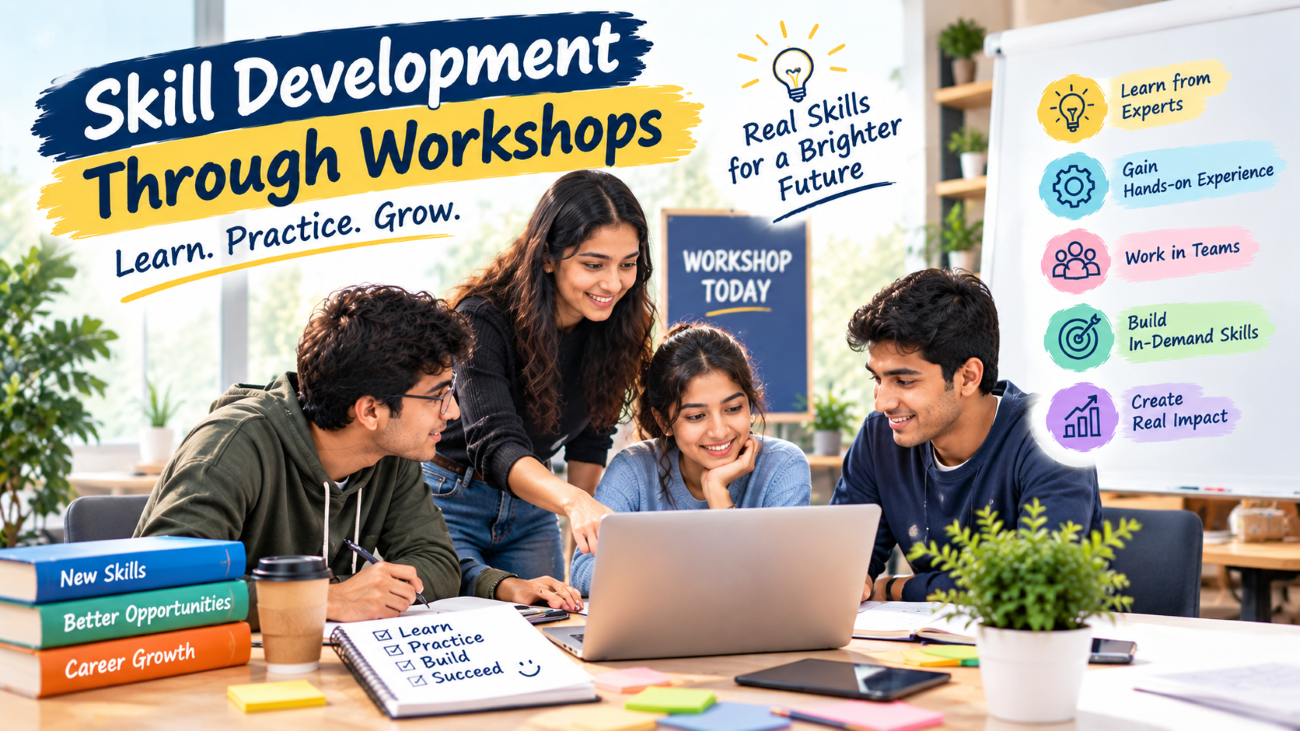
Students have access to many ways of learning beyond classrooms and textbooks. Online courses, internships, competitions, projects, certifications, and workshops can all contribute to skill development. Among these, workshops provide a particularly interactive learning experience because they often combine expert guidance, practical activities, discussions, demonstrations, and hands-on practice.
For students, attending a workshop can be an opportunity to explore a new subject, strengthen an existing skill, interact with people who share similar interests, and gain practical knowledge. However, the real value of a workshop does not come simply from attending it. Students gain more when they actively participate, ask questions, practice what they learn, and continue developing the skill afterward.
At cvDragon, we believe skill development should be an active and continuous process. Workshops can provide students with a focused learning environment where they can experiment with new ideas, receive feedback, and connect classroom knowledge with practical applications.
What Is a Skill Development Workshop?
A skill development workshop is a structured learning session designed to help participants understand and practice a specific skill or subject. Workshops can range from a few hours to several days and may be conducted in classrooms, training centers, colleges, conferences, or online environments.
Workshops can focus on areas such as:
- Communication skills.
- Public speaking.
- Coding and technology.
- Digital marketing.
- Data analysis.
- Entrepreneurship.
- Leadership.
- Design.
- Financial literacy.
- Project management.
- Interview preparation.
- Creative problem-solving.
Unlike traditional lectures, workshops often encourage participants to actively engage with the subject through exercises, discussions, demonstrations, group activities, and practical assignments.
Why Workshops Matter for Students
Students sometimes understand a concept theoretically but struggle to apply it. Workshops can help bridge this gap by creating opportunities for practical learning.
For example, a student may understand the principles of public speaking from a textbook but gain a different kind of experience when asked to deliver a short presentation and receive feedback.
Similarly, learning about programming concepts is different from actually writing and debugging code during a technical workshop.
Workshops can therefore complement academic education by providing opportunities to learn, practice, receive feedback, and improve.
Explore Skills Outside the Classroom
One of the biggest advantages of workshops is that they allow students to explore subjects beyond their regular curriculum.
A commerce student may attend a coding workshop. A computer science student might participate in a leadership workshop. A design student could explore entrepreneurship.
This exposure can help students discover interests they did not know they had.
Not every workshop needs to directly relate to a student’s degree. Some can help students develop transferable skills that are useful across different careers.
Choose Workshops Based on Learning Goals
Students should not attend workshops simply because they are available or popular.
Before registering, they can ask:
What do I want to learn?
Is the workshop suitable for my current skill level?
Will I get an opportunity to practice?
Who is conducting the workshop?
What will I be able to do after completing it?
A student interested in data analytics, for example, may benefit more from a workshop involving hands-on analysis than from a session that only provides a general introduction.
Having a clear objective can make workshop participation more purposeful.
Learn From Experts and Practitioners
Workshops are often led by teachers, trainers, industry professionals, entrepreneurs, researchers, or experienced practitioners.
Learning directly from someone with practical experience can expose students to perspectives that may not appear in textbooks.
A workshop facilitator might explain:
- How a particular skill is used professionally.
- Common mistakes beginners make.
- Which tools are widely used.
- How professionals approach problems.
- What skills employers commonly expect.
- How classroom concepts connect with real situations.
Students should use these opportunities to ask thoughtful questions and understand how their learning connects with potential career paths.
Make Workshops Interactive
Simply sitting through a workshop is unlikely to provide the full benefit.
Students should participate actively whenever possible.
They can:
- Ask questions.
- Take notes.
- Complete practical exercises.
- Participate in discussions.
- Volunteer for activities.
- Work with other participants.
- Request clarification.
- Try the techniques being demonstrated.
Active participation can improve understanding and help students remember concepts more effectively.
Practice During the Workshop
Workshops are particularly valuable when students get an opportunity to practice.
For example, a communication workshop could ask students to deliver a short presentation. A coding workshop could involve building a simple application. A design workshop could involve creating a prototype.
Students should treat these activities as opportunities to experiment rather than worrying about making every attempt perfect.
Making mistakes during practice can help students understand what they need to improve.
Develop Communication Skills
Many workshops involve discussions, presentations, group activities, or demonstrations. These activities can naturally help students improve communication.
Students can practice:
- Explaining ideas clearly.
- Asking questions.
- Listening actively.
- Giving presentations.
- Participating in discussions.
- Providing constructive feedback.
These skills are useful across academic and professional environments.
A student who becomes comfortable explaining ideas during workshops may also become better prepared for interviews, presentations, meetings, and teamwork.
Build Teamwork Through Group Activities
Workshops often involve collaborative exercises.
Students may be asked to solve a problem in groups, create a presentation, develop a project, or discuss a case study.
These activities can help students learn how to:
- Divide responsibilities.
- Share ideas.
- Listen to different perspectives.
- Manage disagreements.
- Complete tasks within deadlines.
- Present a team’s work.
Group activities can also help students understand how different strengths contribute to a shared outcome.
Learn Through Real-World Examples
The most useful workshops often connect concepts with realistic situations.
For example, a digital marketing workshop might use a sample business and ask participants to develop a marketing campaign.
A business workshop could present a case involving declining sales and ask students to identify possible causes.
A technology workshop might ask participants to develop a solution for a specific user problem.
These examples can help students understand how knowledge is applied beyond examinations.
Build Confidence Through Practice
Students may sometimes hesitate to participate because they are afraid of making mistakes.
Workshops can provide a relatively controlled environment where students can experiment and receive guidance.
Successfully completing a small task can give students confidence to attempt more challenging activities.
For example, a student who is uncomfortable speaking in front of others might begin with a short workshop activity and gradually become more comfortable delivering longer presentations.
Confidence should come from repeated practice and improvement rather than from simply attending an event.
Network With Other Learners
Workshops can also provide opportunities to meet students and professionals with similar interests.
Students can build connections by:
- Participating in group discussions.
- Exchanging ideas.
- Collaborating on activities.
- Joining relevant communities.
- Staying in touch with useful professional contacts.
Networking should not be viewed only as asking people for opportunities. Students can first focus on learning, sharing knowledge, and developing genuine professional relationships.
Ask for Feedback
Feedback can make workshop learning much more valuable.
Students should take advantage of opportunities to ask instructors or facilitators:
What did I do well?
What could I improve?
What should I practice next?
For example, after a presentation activity, a facilitator might suggest improving structure, speaking pace, or audience engagement.
Students should write down useful feedback and use it when practicing later.
Continue Learning After the Workshop
A workshop should be considered a starting point rather than the end of learning.
If students learn a new skill during a two-hour workshop but never practice it again, they may quickly forget much of the information.
Instead, students can create a follow-up plan.
For example:
Workshop: Introduction to Data Visualization
Next Step: Practice with a public dataset
Project: Create a dashboard
Feedback: Ask a mentor to review it
Improvement: Build a second version
This turns a short workshop into a longer skill development journey.
Turn Workshop Learning Into Projects
Students can strengthen their learning by creating projects based on workshop concepts.
A student attending a web development workshop could build a simple website. Someone attending a content writing workshop could create a portfolio of articles. A student participating in an entrepreneurship workshop could develop a basic business idea.
Projects provide evidence that the student has moved from learning to application.
They can also become useful additions to a digital portfolio.
Document Workshop Experiences
Students should keep track of workshops they attend, particularly when the sessions are relevant to their career goals.
They can record:
- Workshop title.
- Date.
- Organizer.
- Topics covered.
- Skills developed.
- Practical activities completed.
- Projects created.
- Key takeaways.
This information can be useful when updating a resume or preparing for interviews.
However, students should focus on meaningful learning rather than simply creating a long list of workshop participation certificates.
Add Relevant Workshops to Your Resume
Workshops can be included on a resume when they demonstrate relevant learning or practical development.
For example, instead of simply writing:
“Attended a Digital Marketing Workshop.”
a student could explain:
“Completed a hands-on digital marketing workshop covering SEO fundamentals, content strategy, and campaign planning.”
If the workshop involved a practical project, students can mention the project separately.
At cvDragon, we encourage students to connect learning experiences with skills and evidence rather than simply listing activities.
Use Workshops to Identify Skill Gaps
A workshop can sometimes reveal that a student knows less about a subject than they expected.
This is not necessarily a negative outcome.
Suppose a student attends a beginner-level programming workshop and realizes they struggle with basic concepts. That experience can help them identify programming fundamentals as an area for further development.
Similarly, a student might discover that they understand technical concepts but need to improve communication or presentation.
Workshops can therefore act as informal skill assessments.
Choose a Variety of Learning Experiences
Students should avoid relying on workshops alone.
A balanced skill development journey can include:
Workshops + Courses + Projects + Internships + Competitions + Feedback
Each experience serves a different purpose.
Workshops can provide focused exposure and guided practice. Courses can provide structured learning. Projects provide application. Internships provide workplace experience. Competitions create challenges. Feedback helps students improve.
Combining these experiences can create a stronger learning journey.
Avoid Collecting Certificates Without Skills
One common mistake is attending workshops mainly to collect certificates.
A certificate can document participation, but it does not automatically demonstrate mastery.
Students should ask themselves:
What can I actually do now that I could not do before the workshop?
If the answer is clear, the workshop has contributed to genuine development.
For example, after a design workshop, a student may be able to create a basic prototype. After a presentation workshop, they may be able to structure and deliver a clearer presentation.
The skill gained matters more than the number of certificates collected.
Create a Personal Workshop Learning Plan
Students can make workshops part of a larger career development plan.
For example:
Career Interest: Digital Marketing
Workshop: SEO Fundamentals
Skill Developed: Keyword research
Practice: Conduct keyword research for a sample website
Project: Create an SEO content plan
Next Step: Learn analytics
This approach connects short learning experiences with long-term career development.
Conclusion
Skill development through workshops can give students opportunities to learn new concepts, practice practical abilities, interact with experts, collaborate with peers, and explore career interests. The interactive nature of workshops can make learning more engaging and help students connect conceptual understanding with practical situations.
At cvDragon, we believe the real value of a workshop comes from what students do with the knowledge afterward. Attending a session is only the first step. Practicing the skill, applying it through a project, seeking feedback, documenting the experience, and continuing to learn can turn a short workshop into meaningful career development.
Students can follow a simple approach:
Attend → Participate → Practice → Apply → Get Feedback → Improve
By making workshops part of a broader skill development strategy, students can gradually build technical abilities, soft skills, confidence, practical experience, and evidence for their future resumes and portfolios.
The goal is not to attend every workshop available. It is to choose learning experiences that support genuine development and then put those lessons into action. Over time, these small learning experiences can become valuable building blocks for a student’s vocational journey.
Leave a Reply