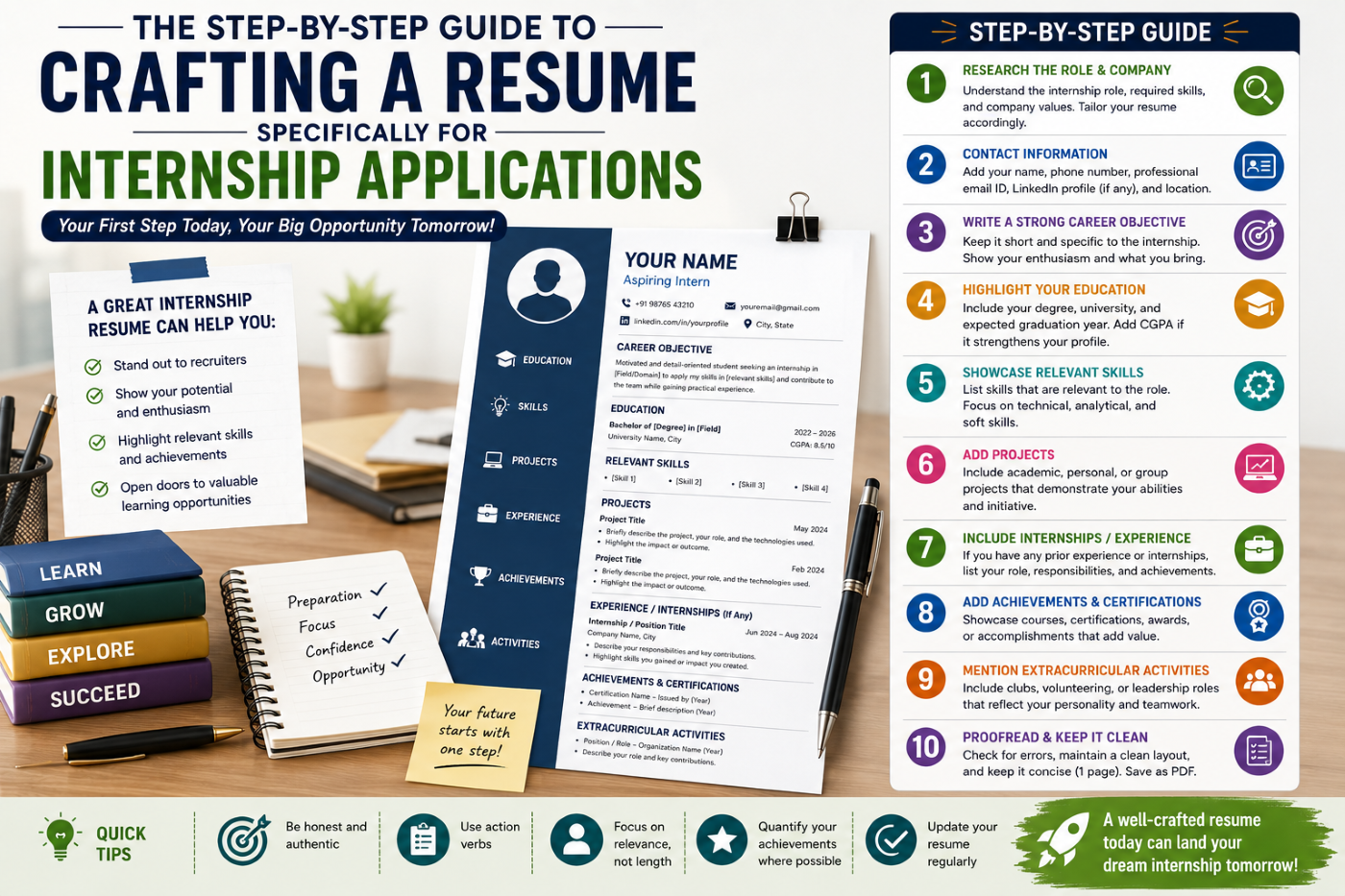
Landing an internship is one of the most important milestones in a student’s career journey. It provides valuable hands-on experience, helps develop industry-specific skills, expands professional networks, and often serves as a gateway to full-time employment. However, with thousands of students applying for limited internship opportunities, standing out requires more than just good academic performance. A well-crafted internship resume can significantly increase your chances of getting noticed by recruiters.
At CVDragon, we believe that every student has the potential to build an impressive resume, even without extensive work experience. An internship resume should focus on your education, skills, projects, achievements, certifications, and willingness to learn. It should present your strengths in a professional and organized manner while demonstrating your readiness to contribute to an organization. This step-by-step guide will help you create an internship resume that captures employers’ attention and improves your chances of securing valuable internship opportunities.
Why an Internship Resume Is Important
An internship resume is often the first interaction a recruiter has with you. Since most students have limited professional experience, recruiters look for evidence of potential rather than years of employment.
A strong internship resume helps you:
- Make a positive first impression.
- Showcase your academic background.
- Highlight relevant skills.
- Demonstrate practical experience through projects.
- Present certifications and extracurricular achievements.
- Improve your chances of passing Applicant Tracking Systems (ATS).
- Secure interviews for internship opportunities.
A professional resume communicates that you are serious about your career and prepared to learn in a professional environment.
Step 1: Understand the Internship Requirements
Before writing your resume, carefully read the internship description. Every company looks for different qualifications, skills, and competencies.
Identify:
- Required technical skills.
- Preferred soft skills.
- Educational qualifications.
- Industry keywords.
- Key responsibilities.
- Desired certifications.
Tailoring your resume to match these requirements increases your chances of getting shortlisted.
Step 2: Add Professional Contact Information
Begin your resume with accurate and professional contact details.
Include:
- Full name.
- Mobile number.
- Professional email address.
- City and state.
- LinkedIn profile (if updated).
- Portfolio or GitHub link (if relevant).
Avoid using unprofessional email addresses, as they can create a negative impression.
Step 3: Write a Strong Career Objective
Since most internship applicants have limited work experience, a career objective helps explain your goals and enthusiasm.
An effective objective should mention:
- Your educational background.
- Career interests.
- Relevant skills.
- Willingness to learn.
- Value you can bring to the organization.
Example:
“Motivated Computer Science student with a strong foundation in programming, problem-solving, and software development. Seeking an internship opportunity to apply technical skills, gain practical industry experience, and contribute to innovative projects while continuing to grow professionally.”
Keep the objective concise, relevant, and tailored to the internship.
Step 4: Highlight Your Educational Background
For students, education is one of the strongest sections of the resume.
Include:
- Degree or course name.
- College or university.
- Expected graduation year.
- Percentage or CGPA (if strong).
- Relevant coursework.
If you have received academic awards or scholarships, include them to strengthen your profile.
Step 5: Showcase Relevant Skills
Recruiters want interns who possess both technical and interpersonal skills.
Technical Skills
Examples include:
- Programming languages.
- Microsoft Excel.
- Data analysis.
- Graphic design.
- Digital marketing.
- Web development.
- SQL.
- Python.
- Java.
- Canva.
- Power BI.
Soft Skills
Include skills such as:
- Communication.
- Teamwork.
- Problem-solving.
- Adaptability.
- Time management.
- Critical thinking.
- Creativity.
- Leadership.
- Attention to detail.
Choose skills that are relevant to the internship you are applying for.
Step 6: Add Academic and Personal Projects
Projects demonstrate your ability to apply classroom knowledge to practical situations.
Include:
- Project title.
- Objective.
- Your role.
- Tools or technologies used.
- Key outcomes.
For example:
Student Attendance Management System
- Developed a web-based attendance system using Python and SQL.
- Improved attendance tracking accuracy.
- Designed a user-friendly interface for teachers and students.
Projects help compensate for limited work experience and showcase practical abilities.
Step 7: Include Certifications
Professional certifications demonstrate initiative and continuous learning.
Examples include:
- Digital Marketing Certification.
- Data Analytics Certification.
- Python Programming.
- Artificial Intelligence Fundamentals.
- Cybersecurity Basics.
- Financial Modeling.
- Cloud Computing.
- Excel Advanced.
- Project Management.
Relevant certifications strengthen your internship application and improve employability.
Step 8: Highlight Extracurricular Activities
Employers appreciate students who actively participate beyond academics.
Examples include:
- Student leadership positions.
- College clubs.
- Volunteer work.
- Sports achievements.
- Cultural events.
- Technical competitions.
- Debate competitions.
- Event management.
These activities demonstrate leadership, teamwork, and organizational skills.
Step 9: Mention Internships or Volunteer Experience
If you have completed any previous internships, part-time jobs, freelancing assignments, or volunteer work, include them even if they are unrelated.
Focus on transferable skills such as:
- Communication.
- Teamwork.
- Customer service.
- Leadership.
- Organization.
- Problem-solving.
Every professional experience contributes to your overall profile.
Step 10: Optimize Your Resume for ATS
Many organizations use Applicant Tracking Systems to filter resumes before recruiters review them.
To improve ATS compatibility:
- Use standard headings such as Education, Skills, Projects, and Certifications.
- Include keywords from the internship description.
- Avoid graphics and tables.
- Use simple fonts.
- Save the file in the requested format.
- Maintain consistent formatting.
An ATS-friendly resume increases your chances of reaching the hiring manager.
Step 11: Keep the Design Professional
A clean and organized resume is easier to read and leaves a better impression.
Best practices include:
- One-page resume for most students.
- Clear headings.
- Consistent font style.
- Adequate spacing.
- Bullet points for readability.
- Professional formatting.
Avoid unnecessary colors, graphics, or decorative elements unless applying for creative roles.
Step 12: Proofread Carefully
Small mistakes can reduce your credibility.
Before submitting your resume:
- Check spelling and grammar.
- Verify dates and contact details.
- Ensure consistent formatting.
- Remove unnecessary information.
- Confirm that all links work correctly.
A polished resume reflects professionalism and attention to detail.
Common Mistakes Students Should Avoid
Many internship applicants unintentionally weaken their resumes by making avoidable errors.
Common mistakes include:
- Using generic career objectives.
- Listing irrelevant information.
- Including too many skills without evidence.
- Ignoring projects and certifications.
- Using unprofessional email addresses.
- Sending the same resume to every company.
- Failing to tailor the resume for the internship.
- Submitting resumes with spelling or formatting errors.
Avoiding these mistakes significantly improves the quality of your application.
Additional Tips to Strengthen Your Internship Resume
To make your resume even more competitive:
- Build a professional LinkedIn profile.
- Create an online portfolio if relevant.
- Participate in hackathons and competitions.
- Publish personal projects on GitHub.
- Complete industry-recognized certifications.
- Learn in-demand digital skills.
- Join student organizations.
- Stay updated with industry trends.
These efforts demonstrate initiative and make your profile more attractive to recruiters.
How CVDragon Helps Students Build Winning Internship Resumes
Creating an internship resume can feel overwhelming, especially for students with limited experience. CVDragon simplifies the process by helping students design professional, ATS-friendly resumes that highlight their strengths effectively. From selecting the right format to showcasing projects, certifications, and skills, CVDragon empowers students to present themselves confidently to employers.
Whether you are applying for your first internship or aiming for a prestigious organization, a well-crafted resume can make a significant difference in your career journey.
Conclusion
An internship resume is much more than a summary of your education—it is your opportunity to demonstrate potential, enthusiasm, and readiness to learn. By understanding the internship requirements, highlighting relevant skills, showcasing projects, earning certifications, and optimizing your resume for ATS, you can create a document that captures recruiters’ attention and increases your chances of securing valuable internship opportunities.
At CVDragon, we encourage students to start building strong resumes early in their academic journey. Every project completed, certification earned, competition entered, and skill developed adds value to your professional profile. With the right preparation and a thoughtfully crafted internship resume, you can confidently take the first step toward building a successful and rewarding career.
Leave a Reply