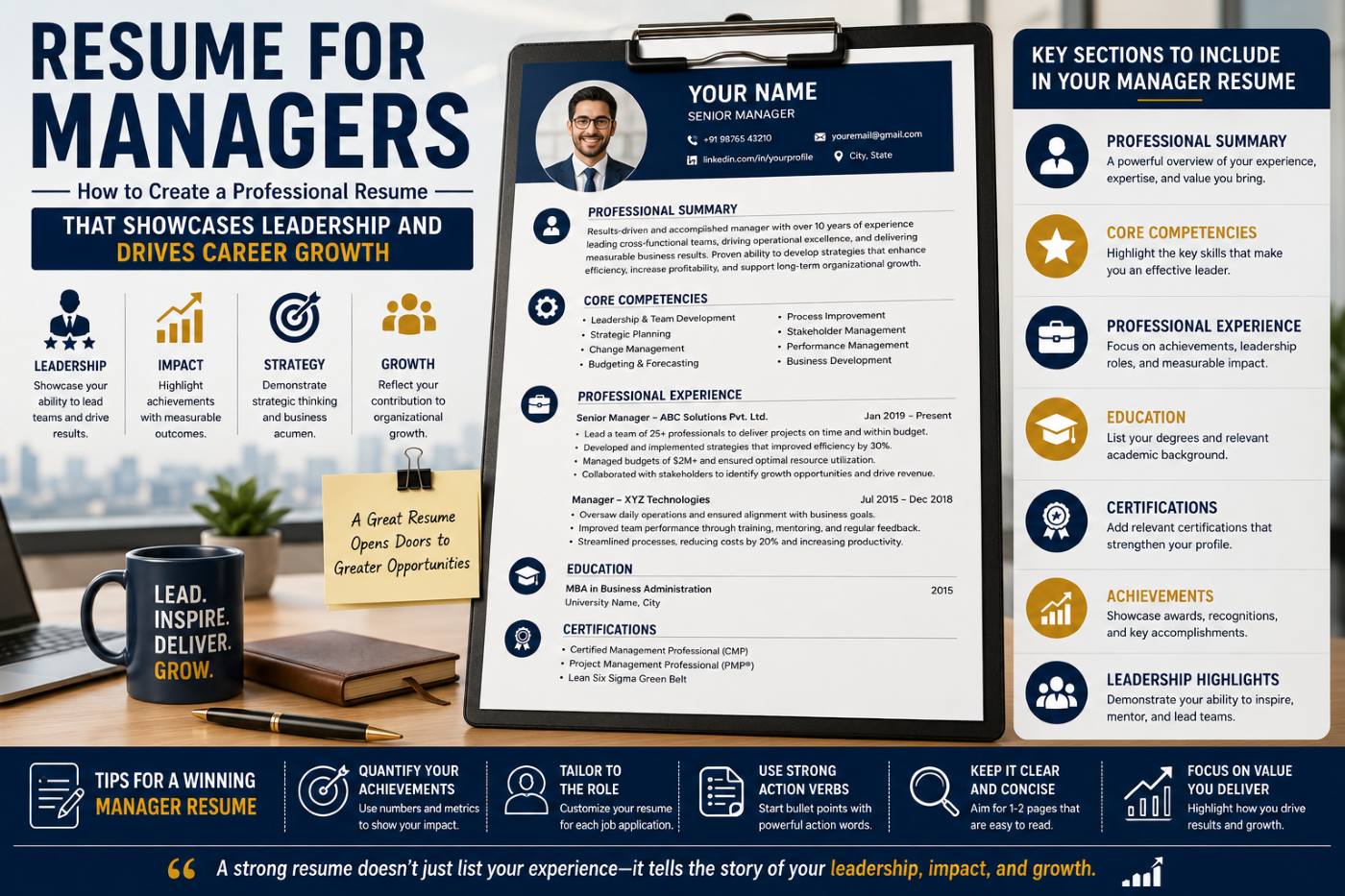
In today’s competitive job market, managers are expected to bring much more than technical expertise to an organization. They are responsible for leading teams, driving business growth, managing resources, solving complex problems, and achieving strategic objectives. Whether you are applying for a new managerial role, seeking a promotion, or exploring leadership opportunities in another organization, your resume plays a critical role in making a strong first impression.
At CVDragon, we believe that a manager’s resume should highlight leadership, measurable achievements, strategic thinking, and business impact. Instead of simply listing responsibilities, it should tell the story of how you have led teams, improved processes, delivered results, and contributed to organizational success. A professionally crafted manager resume can help you stand out in Applicant Tracking Systems (ATS) and capture the attention of hiring managers.
Why Managers Need a Strong Resume
Recruiters reviewing applications for management positions are looking for candidates who can inspire teams, make informed decisions, manage projects, and deliver measurable outcomes. They want evidence of leadership, accountability, and the ability to contribute to business success.
A well-written manager resume helps you:
- Demonstrate leadership experience.
- Showcase measurable achievements.
- Highlight strategic decision-making.
- Present project management expertise.
- Emphasize business results.
- Improve ATS compatibility.
- Position yourself for senior leadership roles.
Your resume should communicate not only what you have done but also the value you have created for previous employers.
Understand the Purpose of Your Resume
A manager’s resume is a professional marketing document designed to demonstrate why you are the best candidate for a leadership role. Rather than including every task you performed, focus on the accomplishments that illustrate your ability to manage people, improve business performance, and solve organizational challenges.
Every section should answer an important question:
“How have I made a positive impact on my organization?”
Keeping this objective in mind helps you create a focused and compelling resume.
Begin with a Powerful Professional Summary
The professional summary is the first section most recruiters read. It should provide a concise overview of your leadership experience, industry expertise, and key accomplishments.
A strong summary typically includes:
- Years of management experience.
- Industry specialization.
- Leadership strengths.
- Core competencies.
- Significant achievements.
- Career objective aligned with the target role.
Example:
“Results-driven Operations Manager with 12+ years of experience leading cross-functional teams, improving operational efficiency, and driving business growth. Proven ability to manage multi-million-dollar budgets, streamline business processes, and develop high-performing teams. Skilled in strategic planning, project management, and organizational leadership.”
An impactful summary immediately positions you as a capable leader.
Highlight Core Leadership Skills
The skills section should emphasize both technical expertise and leadership capabilities relevant to management positions.
Leadership Skills
- Team Leadership
- Strategic Planning
- Performance Management
- Employee Development
- Change Management
- Conflict Resolution
- Decision Making
- Stakeholder Management
- Cross-functional Collaboration
- Organizational Development
Technical Skills
- Project Management
- Budget Management
- Business Analysis
- CRM Systems
- ERP Platforms
- Data Analytics
- Process Improvement
- Risk Management
- Business Intelligence
- Performance Reporting
Select skills that closely match the requirements of the position you are targeting.
Showcase Professional Experience with Achievements
The professional experience section should focus on accomplishments rather than routine responsibilities.
Instead of writing:
- Managed daily department operations.
Write:
- Directed a team of 35 employees across multiple departments, improving operational efficiency by 28% while reducing annual costs by 18%.
Achievement-oriented statements demonstrate leadership, accountability, and measurable business impact.
For each position, include:
- Job title.
- Organization name.
- Employment dates.
- Leadership responsibilities.
- Key achievements.
- Quantifiable business outcomes.
This approach helps recruiters understand the value you bring as a manager.
Quantify Your Success
Numbers strengthen your resume by providing clear evidence of your contributions.
Examples include:
- Increased annual revenue by 35%.
- Reduced operating costs by 20%.
- Managed budgets exceeding $5 million.
- Improved employee retention by 22%.
- Led teams of more than 50 employees.
- Increased customer satisfaction ratings by 30%.
- Delivered projects ahead of schedule and under budget.
Whenever possible, use percentages, revenue figures, team sizes, or project values to demonstrate your achievements.
Demonstrate Leadership Experience
Leadership is one of the most important qualities employers seek in managers.
Highlight experiences such as:
- Leading cross-functional teams.
- Mentoring employees.
- Conducting performance reviews.
- Developing future leaders.
- Managing organizational change.
- Building high-performing teams.
- Coaching underperforming employees.
- Improving workplace culture.
These examples show your ability to motivate others and achieve organizational objectives.
Include Strategic Projects
Major projects provide excellent evidence of your management capabilities.
Describe projects where you:
- Implemented new business systems.
- Led digital transformation initiatives.
- Improved operational efficiency.
- Expanded into new markets.
- Introduced process automation.
- Managed mergers or acquisitions.
- Delivered business transformation programs.
For each project, explain the challenge, your role, the actions you took, and the measurable results achieved.
Highlight Certifications and Professional Development
Continuous learning demonstrates commitment to leadership excellence.
Relevant certifications may include:
- Project Management certifications.
- Lean Six Sigma.
- Agile or Scrum certifications.
- Leadership development programs.
- Business analytics certifications.
- Financial management qualifications.
- Industry-specific credentials.
Professional development strengthens your credibility and shows employers that you continue to enhance your management skills.
Optimize Your Resume for ATS
Most medium and large organizations use Applicant Tracking Systems to screen resumes before they reach recruiters.
To improve ATS compatibility:
- Use standard section headings.
- Include relevant keywords from the job description.
- Avoid graphics, text boxes, and complex tables.
- Use professional fonts.
- Maintain consistent formatting.
- Save the file in the requested format.
An ATS-friendly resume increases your chances of being shortlisted.
Tailor Your Resume for Every Management Role
Different management positions require different competencies. A Sales Manager, HR Manager, Operations Manager, and IT Manager each need a unique emphasis.
Before applying:
- Review the job description carefully.
- Prioritize relevant achievements.
- Highlight industry-specific expertise.
- Include matching leadership skills.
- Adjust your professional summary to align with the role.
Customizing your resume demonstrates attention to detail and improves relevance.
Common Mistakes Managers Should Avoid
Even experienced professionals sometimes weaken their resumes by making avoidable mistakes.
Common errors include:
- Listing responsibilities instead of achievements.
- Writing lengthy paragraphs.
- Including outdated experience.
- Using generic leadership statements.
- Omitting measurable results.
- Ignoring ATS optimization.
- Failing to tailor the resume for each application.
A concise, results-oriented resume is far more effective than a lengthy document filled with routine duties.
Showcase Soft Skills
Strong managers combine technical expertise with excellent interpersonal skills.
Important soft skills include:
- Communication.
- Emotional intelligence.
- Negotiation.
- Problem-solving.
- Adaptability.
- Decision-making.
- Team building.
- Conflict management.
- Critical thinking.
Where possible, demonstrate these skills through achievements rather than simply listing them.
Keep Your Resume Updated
Leadership careers evolve continuously. Regularly updating your resume ensures it reflects your latest accomplishments and professional growth.
Include:
- Recent promotions.
- New certifications.
- Successful projects.
- Awards and recognitions.
- Leadership initiatives.
- Business improvements.
- Additional responsibilities.
An updated resume allows you to respond quickly when new career opportunities arise.
Conclusion
A manager’s resume should do more than summarize work history—it should clearly demonstrate leadership, strategic thinking, measurable achievements, and the ability to deliver business results. By focusing on accomplishments, quantifying success, highlighting leadership experience, and tailoring your resume to each opportunity, you can position yourself as a strong candidate for managerial and senior leadership roles. A well-structured, ATS-friendly resume also improves your visibility during the hiring process and increases your chances of securing interviews.
At CVDragon, we understand that leadership is built through experience, results, and continuous growth. Whether you are applying for your first management position or pursuing a senior executive role, your resume should reflect the value you bring to an organization. By presenting your achievements with clarity and confidence, you can demonstrate your readiness to lead teams, drive innovation, and contribute to long-term business success.
Leave a Reply