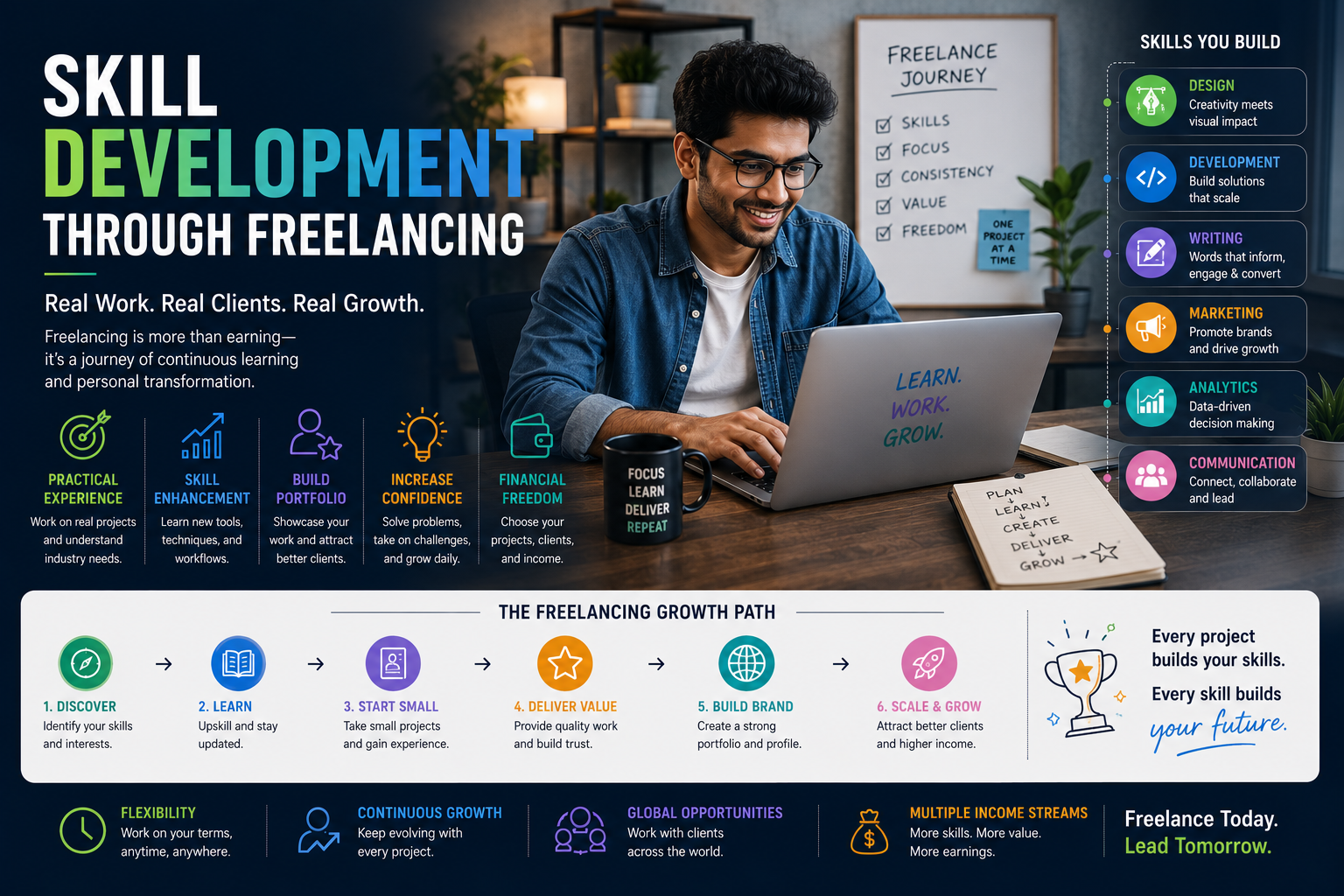
In today’s digital economy, learning is no longer limited to classrooms, internships, or traditional jobs. Students and young professionals now have access to opportunities that allow them to gain practical experience, build valuable skills, and earn income at the same time. One of the most effective ways to achieve this is through freelancing.
Freelancing has transformed from a side-income option into a powerful platform for skill development and career growth. Whether someone is interested in content writing, graphic design, programming, digital marketing, video editing, data analysis, or web development, freelancing provides a real-world environment where skills can be developed through practical application.
At CvDragon, we believe that freelancing offers students an excellent opportunity to bridge the gap between learning and professional experience. It allows individuals to build confidence, create portfolios, and develop industry-relevant skills while working on real projects.
What Is Freelancing?
Freelancing is a form of self-employment where individuals offer their services to clients on a project or contract basis rather than working as permanent employees.
Freelancers may work in areas such as:
- Content Writing
- Graphic Design
- Web Development
- Digital Marketing
- Video Editing
- Social Media Management
- Data Analysis
- Virtual Assistance
- Translation Services
The flexibility of freelancing makes it particularly attractive to students and early-career professionals.
Why Freelancing Is a Powerful Learning Tool
Traditional learning often focuses on theory and structured assignments. Freelancing, however, introduces real-world challenges that require practical problem-solving and adaptability.
Through freelancing, individuals learn:
- How to communicate with clients
- How to manage deadlines
- How to solve real business problems
- How to deliver professional-quality work
- How to continuously improve their skills
This hands-on experience accelerates learning significantly.
Learning by Working on Real Projects
One of the biggest advantages of freelancing is exposure to real projects.
Unlike classroom assignments, freelance work often involves:
- Actual clients
- Business objectives
- Performance expectations
- Measurable outcomes
For example, a student learning digital marketing may understand campaign concepts theoretically. By managing a real client’s social media account, they gain practical insights into audience engagement, content strategy, and performance analysis.
Real projects turn knowledge into experience.
Developing Technical Skills
Freelancing provides continuous opportunities to improve technical abilities.
Writing and Content Creation
Freelance writers learn:
- Research techniques
- SEO fundamentals
- Content structuring
- Editing and proofreading
Graphic Design
Design freelancers develop skills in:
- Branding
- Visual communication
- User experience principles
- Design software tools
Programming and Development
Freelance developers strengthen:
- Coding abilities
- Problem-solving skills
- Software testing knowledge
- Project implementation experience
Each completed project contributes to technical growth.
Building Communication Skills
Communication is one of the most valuable professional skills.
Freelancers regularly communicate with:
- Clients
- Team members
- Project managers
- Business owners
Through these interactions, they learn how to:
- Understand requirements
- Ask clarifying questions
- Present ideas effectively
- Handle feedback professionally
Strong communication skills are valuable in every career path.
Improving Time Management
Freelancers are responsible for managing their own schedules and deadlines.
This teaches:
- Prioritization
- Planning
- Productivity management
- Self-discipline
Students who freelance often develop stronger organizational skills that benefit both academics and future careers.
Learning Problem-Solving Through Experience
Every freelance project presents unique challenges.
Freelancers may encounter:
- Unclear requirements
- Technical difficulties
- Tight deadlines
- Changing client expectations
Successfully navigating these situations helps develop critical thinking and adaptability.
Problem-solving becomes a natural part of the learning process.
Building Confidence Through Practical Success
Confidence grows through experience.
Each completed project provides evidence of capability and progress.
As freelancers:
- Deliver successful outcomes
- Receive positive feedback
- Solve increasingly complex problems
they become more confident in their skills and professional abilities.
This confidence often carries over into interviews, presentations, and future employment opportunities.
Creating a Professional Portfolio
One of the greatest benefits of freelancing is portfolio development.
A portfolio showcases:
- Completed projects
- Skills demonstrated
- Results achieved
- Professional growth
Unlike certifications alone, a portfolio provides tangible proof of ability.
Employers often find portfolios highly valuable during hiring decisions.
Learning Client Management
Freelancing introduces students to business relationships.
They learn how to:
- Understand client expectations
- Negotiate project requirements
- Manage revisions
- Maintain professional relationships
These experiences provide valuable business and interpersonal skills.
Developing Financial Awareness
Freelancing also teaches financial responsibility.
Freelancers learn about:
- Budgeting
- Pricing services
- Managing income
- Tracking expenses
Financial literacy is an important life skill that benefits long-term career success.
Building Professional Discipline
Freelancing requires accountability.
There is often no supervisor monitoring daily activities.
Success depends on:
- Consistency
- Reliability
- Commitment
- Self-motivation
Developing these habits can positively impact every aspect of professional life.
Freelancing as a Career Exploration Tool
Many students are uncertain about which career path to pursue.
Freelancing allows individuals to explore different fields before making long-term commitments.
For example:
- A student interested in marketing can try content creation and social media management.
- A technology student can experiment with web development and data analytics.
- A creative learner can explore design and branding projects.
Practical experience often reveals personal strengths and interests.
Building Transferable Skills
Freelancing develops many transferable skills valued by employers.
These include:
- Communication
- Leadership
- Problem-Solving
- Adaptability
- Project Management
- Time Management
- Critical Thinking
These skills remain valuable regardless of industry or career path.
Challenges That Promote Growth
Freelancing is not always easy.
Common challenges include:
- Finding clients
- Managing workloads
- Handling feedback
- Meeting deadlines
However, overcoming challenges often leads to the greatest growth.
Every obstacle provides an opportunity to learn and improve.
Freelancing and Resume Building
Freelance experience can strengthen resumes significantly.
Students can include:
- Project descriptions
- Client work
- Skills developed
- Achievements and outcomes
Freelancing demonstrates initiative, responsibility, and practical experience.
For candidates with limited traditional work experience, it can be particularly valuable.
Showcasing Freelance Work Online
Students can enhance visibility by showcasing projects on professional platforms such as:
- GitHub for technical projects
- Personal portfolio websites
- Creative portfolio platforms
An online portfolio can attract both freelance and full-time opportunities.
Tips for Students Starting Freelancing
Start Small
Begin with manageable projects to gain confidence and experience.
Focus on Learning
Early projects should prioritize skill development over income.
Build a Portfolio
Document completed work and achievements.
Seek Feedback
Constructive feedback accelerates improvement.
Stay Consistent
Skill development is a gradual process that requires regular practice.
Consistency often matters more than speed.
The Future of Work and Freelancing
The modern workforce increasingly values flexibility, digital skills, and independent problem-solving abilities.
Freelancing helps students prepare for this environment by teaching:
- Self-management
- Continuous learning
- Professional communication
- Practical execution
These qualities are becoming increasingly important across industries.
Final Thoughts
Freelancing is more than a way to earn money—it is a powerful platform for skill development, personal growth, and career preparation. By working on real projects, students gain practical experience that complements academic learning and helps them become more confident, capable professionals.
At CvDragon, we encourage students to view freelancing as an opportunity to learn, experiment, and build valuable experience. Every project completed contributes to stronger skills, a better portfolio, and greater career readiness.
Remember, skills are developed through action. Freelancing provides a practical environment where students can learn, improve, and grow while creating real value for clients and themselves.
Leave a Reply