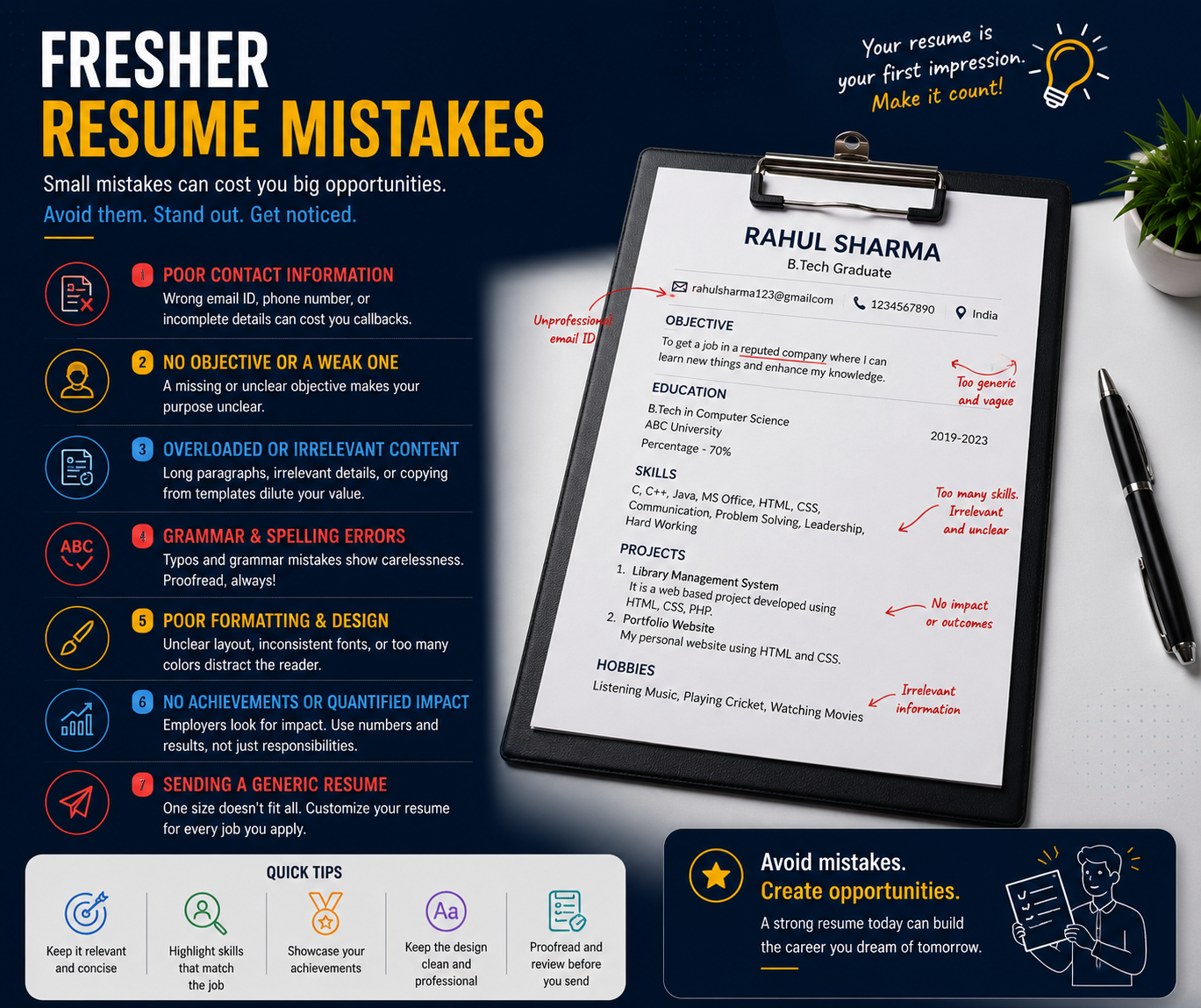
A resume is often the first impression a recruiter has of a candidate. For freshers entering the job market, a resume serves as a gateway to internships, entry-level positions, and career opportunities. However, many students and recent graduates unknowingly make mistakes that reduce their chances of getting shortlisted.
Even candidates with strong academic records and valuable skills can miss opportunities if their resumes contain avoidable errors. Understanding these common mistakes can help freshers create a professional, recruiter-friendly resume that highlights their strengths effectively.
At CvDragon, we help students and job seekers build resumes that stand out for the right reasons. Let’s explore the most common fresher resume mistakes and how to avoid them.
Why Resume Mistakes Matter
Recruiters often spend only a few seconds reviewing each resume during the initial screening process.
A poorly written resume can:
- Create a negative first impression
- Reduce ATS compatibility
- Hide important qualifications
- Lead to immediate rejection
Small mistakes can have a significant impact on job search success.
Mistake #1: Using a Generic Resume for Every Job
One of the biggest mistakes freshers make is sending the same resume to every employer.
Different roles require different skills and qualifications.
Example
A marketing internship may prioritize:
- Content creation
- Social media skills
- Communication
A data analytics role may focus on:
- Excel
- Data visualization
- Statistical analysis
Customizing your resume for each application improves relevance and increases your chances of getting noticed.
Mistake #2: Writing a Weak Career Objective
Many freshers use vague objectives that provide little value.
Poor Example
“Seeking a challenging position in a reputed organization where I can utilize my skills and grow professionally.”
This statement is generic and could apply to almost any job.
Better Example
“Motivated business graduate with strong analytical and communication skills seeking an entry-level marketing role to contribute to digital campaign development and market research initiatives.”
Specific objectives are more impactful.
Mistake #3: Including Irrelevant Information
Some freshers add information that has no connection to the job.
Examples include:
- Unrelated hobbies
- Outdated achievements
- Personal details not required by employers
Focus on content that supports your professional profile and career goals.
Mistake #4: Poor Formatting
A cluttered resume is difficult to read.
Common formatting issues include:
- Inconsistent fonts
- Uneven spacing
- Large blocks of text
- Excessive colors
- Overly complex layouts
A clean and organized format improves readability and professionalism.
Mistake #5: Ignoring ATS Requirements
Many organizations use Applicant Tracking Systems (ATS) such as Workday and Greenhouse.
Resumes with poor ATS compatibility may never reach recruiters.
To improve ATS performance:
✔ Use standard section headings
✔ Include relevant keywords
✔ Use simple formatting
✔ Avoid graphics and text boxes
ATS-friendly resumes have a better chance of passing automated screening.
Mistake #6: Listing Skills Without Evidence
Many students include long lists of skills without demonstrating them.
Example
Instead of simply writing:
- Leadership
- Communication
- Teamwork
Support these skills with examples.
Better Approach
Event Coordinator – Business Club
- Led a team of 15 students to organize an annual seminar attended by 250 participants
Evidence makes skills more credible.
Mistake #7: Overloading the Resume
Adding too much information can dilute important content.
Recruiters prefer concise resumes.
For most freshers:
- One page is ideal
- Focus on quality over quantity
Remove unnecessary details and prioritize relevance.
Mistake #8: Neglecting Academic Projects
Many students underestimate the value of projects.
Academic projects demonstrate:
- Practical application
- Research abilities
- Problem-solving skills
- Technical knowledge
Projects can be especially valuable when professional experience is limited.
Example
Consumer Behavior Analysis Project
- Conducted surveys and analyzed purchasing patterns
- Presented recommendations based on research findings
Projects help showcase real-world capabilities.
Mistake #9: Exaggerating Skills or Experience
Some candidates inflate their qualifications to appear more competitive.
Examples:
- Claiming advanced skills with little knowledge
- Exaggerating responsibilities
- Misrepresenting certifications
Recruiters often verify information during interviews.
Honesty is always the best approach.
Mistake #10: Ignoring Grammar and Spelling Errors
Simple language mistakes can damage credibility.
Common issues include:
- Typographical errors
- Incorrect grammar
- Inconsistent capitalization
- Punctuation mistakes
Proofreading is essential before submitting any application.
Mistake #11: Using an Unprofessional Email Address
Your email address contributes to your professional image.
Avoid
coolboy123@email.com
superstargirl@email.com
Use
Professional contact information creates a better impression.
Mistake #12: Failing to Highlight Achievements
Many freshers focus only on responsibilities.
Achievements provide stronger evidence of performance.
Example
Instead of:
“Participated in a college event.”
Write:
“Managed registrations for a college event attended by over 400 participants.”
Achievements demonstrate impact.
Mistake #13: Not Including Certifications
Relevant certifications can strengthen a fresher resume significantly.
Examples:
- Digital Marketing
- Data Analytics
- Advanced Excel
- Programming Courses
- Financial Modeling
Certifications show initiative and commitment to learning.
Mistake #14: Ignoring Extracurricular Activities
Employers often value experiences beyond academics.
Activities such as:
- Student leadership
- Debate competitions
- Sports participation
- Volunteer work
can demonstrate important workplace skills.
Do not overlook these experiences.
Mistake #15: Using Long Paragraphs Instead of Bullet Points
Recruiters scan resumes quickly.
Large paragraphs make information harder to read.
Use bullet points to:
- Improve readability
- Highlight achievements
- Organize information effectively
Bullet points create a cleaner presentation.
Mistake #16: Not Quantifying Accomplishments
Numbers add credibility and context.
Weak Statement
“Helped organize a workshop.”
Strong Statement
“Coordinated a workshop attended by 150 students and managed participant registrations.”
Quantifiable achievements are more impactful.
Mistake #17: Forgetting to Update the Resume
Many students create a resume once and never update it.
Regularly add:
- New certifications
- Projects
- Internships
- Skills
- Achievements
A resume should evolve with your career growth.
Building a Strong Fresher Resume
A strong fresher resume should include:
- Professional contact information
- Customized career objective
- Education
- Relevant skills
- Projects
- Internships
- Certifications
- Achievements
- Extracurricular activities
Each section should contribute to your overall professional story.
Final Thoughts
Resume mistakes can prevent qualified candidates from getting noticed. Fortunately, most fresher resume errors are easy to avoid with proper planning, attention to detail, and a focus on relevance.
At CvDragon, we encourage students and recent graduates to view their resumes as powerful marketing tools. A clear, professional, and well-structured resume can significantly improve your chances of securing interviews and launching a successful career.
Remember, recruiters are not looking for perfection—they are looking for potential. Avoid common mistakes, highlight your strengths, and present your qualifications confidently. Your resume may be the first step toward your next opportunity.
Leave a Reply