Introduction
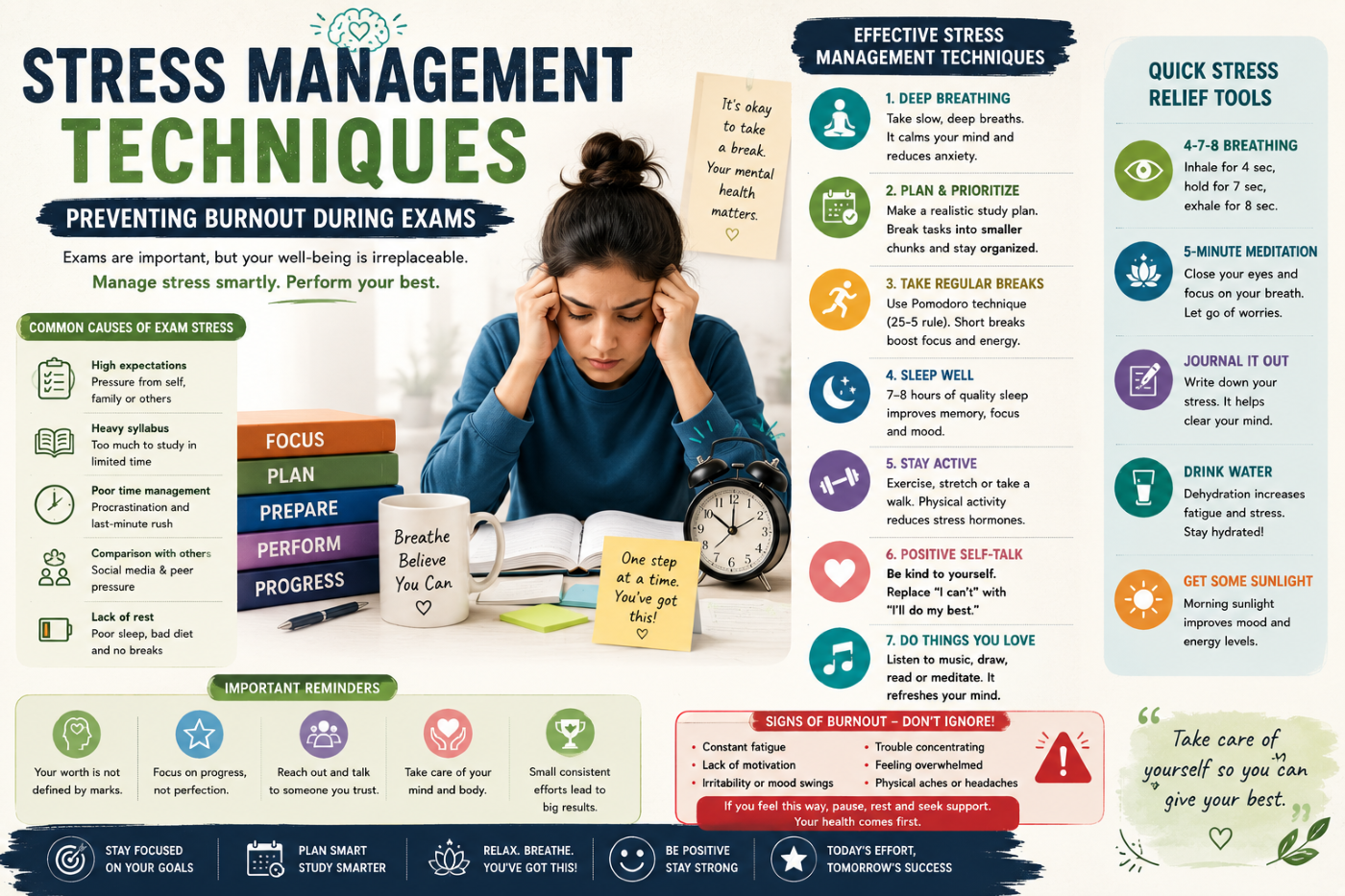
Examinations are a crucial part of academic life, but they often bring intense pressure, anxiety, and mental fatigue. While a certain level of stress can motivate students to perform better, excessive stress can lead to burnout, reduced concentration, and poor performance.
Burnout during exams is more common than many realize. It occurs when prolonged stress overwhelms the mind and body, leaving individuals feeling exhausted, unmotivated, and unable to focus effectively.
At CVDragon, we believe that academic success should not come at the cost of mental and physical well-being. This article explores practical stress management techniques that help students stay balanced, focused, and productive during exam periods.
Understanding Exam Stress and Burnout
Exam stress is the emotional and physical strain experienced before or during assessments.
Burnout is a more serious condition characterized by:
- Extreme fatigue
- Loss of motivation
- Difficulty concentrating
- Increased anxiety or irritability
Recognizing these signs early is essential for effective stress management.
Why Students Experience High Stress During Exams
Several factors contribute to exam-related stress:
- Fear of failure
- High expectations from self or others
- Poor time management
- Lack of preparation
- Sleep deprivation
- Information overload
Understanding these causes helps in addressing them effectively.
The Importance of Stress Management
Managing stress is not just about feeling better—it directly impacts academic performance.
Effective stress management:
- Improves concentration
- Enhances memory retention
- Boosts confidence
- Promotes emotional stability
A calm mind performs better than an overwhelmed one.
Practical Stress Management Techniques
1. Create a Realistic Study Plan
A structured plan reduces uncertainty and panic.
Break your syllabus into manageable sections and assign time slots for each topic.
Avoid overloading your schedule.
Consistency is more effective than last-minute cramming.
2. Practice Time Management
Effective time management helps balance study and rest.
Use techniques such as:
- Study intervals with short breaks
- Prioritizing important topics
- Setting achievable daily goals
This approach prevents exhaustion.
3. Take Regular Breaks
Continuous studying without breaks reduces productivity.
Short breaks:
- Refresh the mind
- Improve focus
- Reduce fatigue
Even 10–15 minutes of rest can make a significant difference.
4. Maintain Healthy Sleep Patterns
Sleep is essential for memory and concentration.
Lack of sleep can:
- Reduce cognitive performance
- Increase stress levels
- Affect mood
Aim for consistent and adequate sleep during exam preparation.
5. Stay Physically Active
Physical activity helps reduce stress hormones and improve mood.
Simple activities include:
- Walking
- Stretching
- Light exercise
Regular movement keeps both body and mind energized.
6. Practice Relaxation Techniques
Relaxation methods help calm the mind.
These include:
- Deep breathing exercises
- Meditation
- Mindfulness practices
Even a few minutes of relaxation can reduce anxiety.
7. Eat Balanced and Nutritious Meals
Nutrition plays a key role in mental performance.
A healthy diet supports:
- Brain function
- Energy levels
- Concentration
Avoid excessive caffeine or junk food during exams.
8. Avoid Comparing Yourself to Others
Comparison increases stress and reduces confidence.
Focus on your own progress and preparation.
Everyone learns at a different pace.
9. Stay Positive and Manage Thoughts
Negative thinking can amplify stress.
Replace thoughts like:
“I will fail”
With:
“I am prepared and will do my best”
Positive thinking improves confidence and performance.
10. Seek Support When Needed
Talking to someone can relieve stress.
Reach out to:
- Friends
- Family members
- Teachers or mentors
Support systems provide encouragement and perspective.
Managing Exam Day Stress
Even well-prepared students may feel nervous on exam day.
To stay calm:
- Arrive early to avoid rushing
- Read instructions carefully
- Manage time during the exam
- Focus on one question at a time
Staying composed improves performance.
Recognizing When to Take a Break
Sometimes, pushing harder is not the solution.
Take a break if you experience:
- Constant fatigue
- Lack of focus
- Increased frustration
Rest helps restore productivity.
Building Long-Term Stress Resilience
Stress management is a lifelong skill.
Develop habits such as:
- Regular exercise
- Balanced routines
- Mindfulness practices
- Effective planning
These habits help handle future challenges more effectively.
Common Mistakes to Avoid
Ignoring Stress Signs
Early signs should not be overlooked.
Overstudying Without Rest
Excessive studying leads to burnout.
Poor Planning
Lack of structure increases anxiety.
Neglecting Health
Physical well-being directly affects mental performance.
The Role of Self-Discipline and Balance
Success during exams requires both discipline and balance.
Working hard is important, but so is:
- Rest
- Recreation
- Mental well-being
Balanced preparation leads to sustainable success.
Conclusion: Perform Better by Staying Balanced
Exams are important, but they are only one part of your academic journey. Managing stress effectively ensures that you perform at your best without compromising your health.
At CVDragon, we encourage students to adopt smart strategies that combine preparation with well-being. By maintaining balance, practicing relaxation techniques, and staying organized, you can prevent burnout and approach exams with confidence.
Remember, success is not just about how much you study—it is also about how well you manage your energy, focus, and mindset.
Stay calm, stay prepared, and trust your efforts.
Because a healthy mind is the foundation of strong performance.
Leave a Reply