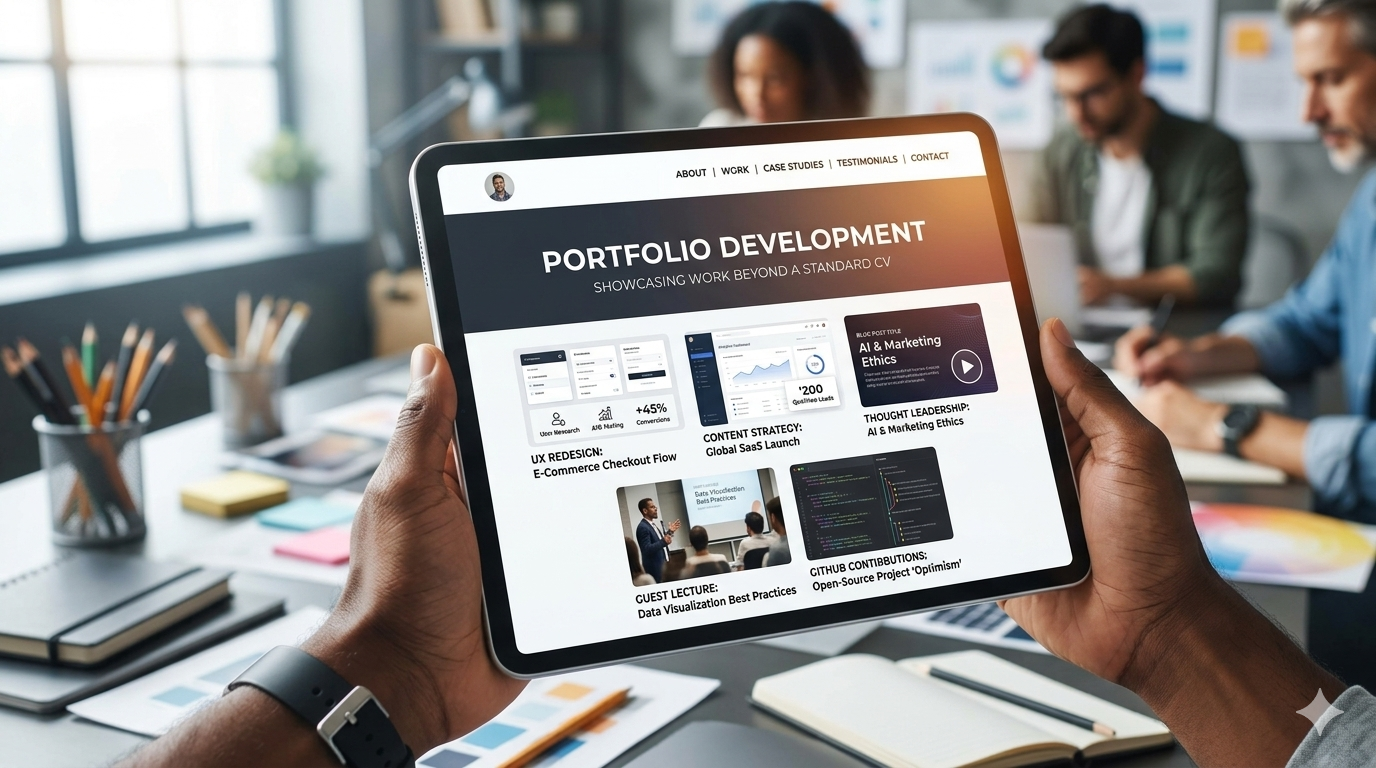
In today’s competitive job market, a traditional resume or CV is often not enough to fully represent an individual’s capabilities. While a CV summarizes education, experience, and skills, it rarely captures the depth of a person’s work, creativity, achievements, or problem-solving abilities. This is where portfolio development becomes an essential tool for career growth.
A professional portfolio allows individuals to demonstrate real work, showcase accomplishments, and present tangible evidence of their skills. Whether you are a student, freelancer, entrepreneur, or corporate professional, a well-structured portfolio can significantly strengthen your professional identity.
At CVDragon, we believe portfolios empower individuals to move beyond simple job descriptions and highlight the real impact of their work. This article explores the importance of portfolio development, key components of an effective portfolio, and practical strategies to build one that stands out.
What Is a Professional Portfolio?
A professional portfolio is a curated collection of work samples, projects, achievements, and experiences that demonstrate an individual’s skills and expertise.
Unlike a CV, which lists qualifications and responsibilities, a portfolio provides visual and practical proof of what you can actually do.
A portfolio may include:
-
Project samples
-
Case studies
-
Presentations or reports
-
Research papers
-
Creative works
-
Certifications and achievements
-
Testimonials or references
By presenting real work, portfolios help employers or clients evaluate competence more effectively.
Why Portfolios Are Becoming Essential
The hiring landscape is evolving rapidly. Employers increasingly look for evidence of skills rather than just qualifications.
A strong portfolio offers several advantages:
Demonstrates Real Skills
It shows how knowledge is applied in practical situations.
Differentiates You from Other Candidates
Most applicants submit only resumes. A portfolio instantly makes your profile more memorable.
Supports Interviews
During interviews, portfolios provide concrete examples to discuss rather than abstract descriptions.
Builds Professional Credibility
Sharing actual work builds trust and confidence in your abilities.
Highlights Personal Growth
Portfolios can illustrate how your skills and thinking have evolved over time.
Who Should Build a Portfolio?
Although portfolios are often associated with creative professions, they are valuable across many fields.
Professionals who benefit from portfolios include:
-
Students and recent graduates
-
Designers and creative professionals
-
Writers and content creators
-
Marketing professionals
-
Business analysts
-
Software developers
-
Researchers and academics
-
Consultants and freelancers
In reality, anyone who produces work or contributes to projects can benefit from showcasing those achievements.
Key Elements of an Effective Portfolio
A strong portfolio is carefully structured to communicate expertise clearly and professionally.
1. Professional Introduction
Start with a brief introduction about yourself, including:
-
Professional background
-
Areas of expertise
-
Career goals
-
Key strengths
This section helps readers understand who you are before exploring your work.
2. Selected Work Samples
The most important part of a portfolio is the presentation of work samples.
Choose projects that demonstrate:
-
Problem-solving ability
-
Creativity and innovation
-
Technical expertise
-
Leadership or collaboration
-
Measurable outcomes
Quality matters more than quantity. Select your best and most relevant work.
3. Case Studies
Instead of simply showing work, explain the story behind it.
A good case study includes:
-
Project objective
-
Challenges encountered
-
Strategies used
-
Results achieved
This approach demonstrates both thinking process and impact.
4. Skills and Competencies
Clearly list key professional skills such as:
-
Technical abilities
-
Analytical skills
-
Communication strengths
-
Leadership capabilities
Supporting these claims with project examples strengthens credibility.
5. Achievements and Certifications
Include:
-
Awards
-
Certifications
-
Training programs
-
Publications or presentations
These accomplishments highlight commitment to professional development.
6. Testimonials or Recommendations
Positive feedback from supervisors, clients, or colleagues enhances trust and professionalism.
Testimonials show that others value your work and contributions.
Digital vs. Physical Portfolios
Modern professionals often prefer digital portfolios, but both formats have advantages.
Digital Portfolios
Advantages include:
-
Easy sharing with employers
-
Integration of multimedia content
-
Global accessibility
-
Continuous updates
They can be presented through personal websites, online platforms, or PDF portfolios.
Physical Portfolios
These are useful for:
-
Creative interviews
-
Academic presentations
-
Design or art professions
Many professionals maintain both formats for flexibility.
Tips for Building a Strong Portfolio
Focus on Impact
Highlight results and outcomes rather than just tasks performed.
Keep It Organized
Structure your portfolio with clear sections and logical flow.
Use Visual Elements
Charts, images, and diagrams make information easier to understand.
Update Regularly
Add new projects and remove outdated work.
Tailor for Different Opportunities
Customize your portfolio depending on the job role or industry.
Portfolio Development for Students and Fresh Graduates
Students often believe they lack enough experience to build portfolios. However, many academic activities can be included.
Examples include:
-
Research assignments
-
Internship projects
-
Group presentations
-
Volunteer initiatives
-
Personal projects or blogs
These experiences demonstrate initiative and practical application of knowledge.
The Role of Portfolios in Personal Branding
A portfolio is more than a collection of projects; it represents your professional brand.
It communicates:
-
Your expertise
-
Your creativity
-
Your professional values
-
Your unique approach to problem-solving
When thoughtfully designed, a portfolio becomes a powerful storytelling tool that defines how others perceive your capabilities.
Common Portfolio Mistakes to Avoid
Including Too Much Content
An overloaded portfolio can overwhelm readers.
Lack of Context
Work samples without explanations fail to demonstrate impact.
Poor Organization
Confusing structure makes it difficult for viewers to navigate.
Outdated Projects
Old work may not reflect current skills.
Ignoring Presentation Quality
Professional design and formatting enhance credibility.
Portfolios and Career Advancement
Even experienced professionals benefit from maintaining portfolios.
They help individuals:
-
Apply for leadership roles
-
Demonstrate achievements during promotions
-
Build consulting or freelance opportunities
-
Present strategic contributions to organizations
A portfolio evolves throughout a career and becomes a record of professional growth.
The Future of Career Showcasing
The traditional CV is gradually evolving into evidence-based career profiles. Employers increasingly rely on project outcomes, portfolios, and real demonstrations of skill when evaluating candidates.
Professionals who adapt to this trend gain a significant advantage in competitive job markets.
Conclusion: Going Beyond the Resume
A CV may open the door to an opportunity, but a portfolio helps you walk through it confidently. By showcasing real work, thoughtful processes, and measurable results, portfolios provide a deeper and more authentic representation of professional ability.
At CVDragon, we encourage individuals to move beyond listing experiences and begin demonstrating them. Portfolio development empowers professionals to tell their story, highlight their strengths, and present their work with clarity and confidence.
In a world where skills matter more than titles, a well-crafted portfolio becomes one of the most powerful tools for career advancement.
Start building yours today — because your work deserves to be seen, understood, and appreciated.
Leave a Reply