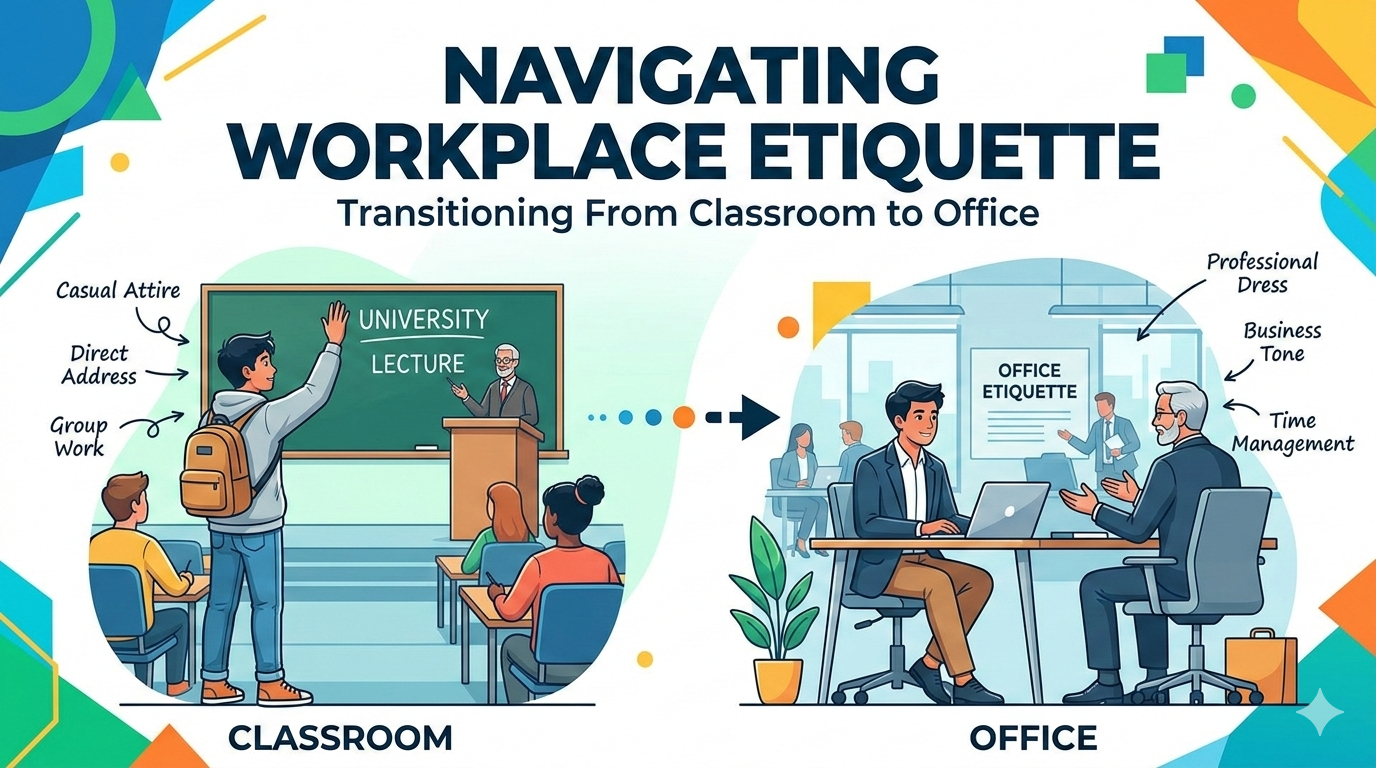
Moving from the classroom to the professional workplace is one of the most significant transitions in a person’s life. While academic institutions prepare students with theoretical knowledge and technical skills, many graduates discover that success in the workplace depends equally on understanding professional behavior, communication norms, and workplace etiquette.
The modern office environment operates on expectations that are often unspoken yet critically important. Knowing how to communicate respectfully, collaborate effectively, manage responsibilities, and conduct oneself professionally can determine how quickly a newcomer adapts and grows within an organization.
At CVDragon, we aim to bridge the gap between education and employment by equipping individuals with practical workplace readiness skills. This article explores essential workplace etiquette practices that help students and fresh professionals confidently transition from classroom culture to corporate environments.
Understanding the Shift: Classroom vs. Workplace
The transition from student life to professional life involves more than changing locations — it requires a mindset shift.
In classrooms:
- Deadlines may be flexible.
- Guidance is structured.
- Evaluation is periodic.
- Authority figures act as instructors.
In workplaces:
- Deadlines affect teams and clients.
- Independence is expected.
- Performance is continuous.
- Managers expect accountability.
Success depends on recognizing that professional environments value responsibility, reliability, and collaboration as much as technical competence.
First Impressions Matter
Workplace perceptions form quickly. Your behavior during the first few weeks often shapes long-term professional reputation.
Key practices include:
- Arriving on time or early
- Dressing appropriately for organizational culture
- Maintaining positive body language
- Showing willingness to learn
Professional etiquette begins with demonstrating respect for workplace norms and organizational values.
Professional Communication Skills
Communication style in offices differs greatly from academic interactions.
Email Etiquette
Professional emails should be:
- Clear and concise
- Respectful in tone
- Grammatically correct
- Purpose-driven
Avoid informal language, excessive abbreviations, or emotional responses. Always review emails before sending.
Verbal Communication
In meetings or discussions:
- Listen actively before responding
- Avoid interrupting others
- Speak confidently but respectfully
- Ask thoughtful questions
Effective communication signals maturity and professionalism.
Respecting Workplace Hierarchies
Unlike classrooms where interaction is informal, workplaces often follow structured hierarchies.
Understanding reporting relationships helps employees:
- Communicate through proper channels
- Seek approvals appropriately
- Avoid bypassing supervisors unintentionally
Respect for hierarchy does not limit creativity; instead, it promotes organizational efficiency and accountability.
Time Management and Accountability
In academic settings, missed deadlines primarily affect individual grades. In workplaces, delays can impact entire teams, clients, and business outcomes.
Professional etiquette includes:
- Meeting deadlines consistently
- Informing supervisors early about challenges
- Prioritizing tasks effectively
- Avoiding last-minute submissions
Reliability builds trust — one of the most valuable professional assets.
Meeting Etiquette: A Crucial Workplace Skill
Meetings are central to professional collaboration.
Good meeting etiquette involves:
- Preparing in advance
- Joining on time
- Keeping devices silent
- Contributing constructively
- Taking notes when necessary
Virtual meetings require additional awareness such as muting microphones when not speaking and maintaining professional backgrounds.
Workplace Dress and Appearance
Dress codes vary across industries, but professionalism remains universal.
Guidelines include:
- Observing organizational norms
- Maintaining neat and clean attire
- Avoiding overly casual clothing unless permitted
Appropriate appearance reflects respect for colleagues and workplace culture.
Building Professional Relationships
Workplaces thrive on collaboration rather than competition alone.
Healthy professional relationships are built through:
- Mutual respect
- Team cooperation
- Appreciation of diverse perspectives
- Positive attitude toward shared goals
Networking within the organization enhances learning opportunities and career growth.
Digital Etiquette in Modern Workplaces
Technology plays a central role in professional communication.
Key digital etiquette practices:
- Respond to messages within reasonable timeframes
- Use professional language on workplace platforms
- Avoid excessive personal phone usage
- Maintain confidentiality of organizational information
Your digital behavior contributes significantly to professional reputation.
Receiving Feedback Professionally
Unlike academic grading, workplace feedback is continuous and often direct.
Proper response includes:
- Listening without defensiveness
- Asking clarifying questions
- Viewing feedback as improvement guidance
- Applying suggested changes
Professionals who handle feedback positively demonstrate growth potential.
Managing Workplace Boundaries
Transitioning professionals must learn to balance friendliness with professionalism.
Important boundaries include:
- Respecting personal space
- Avoiding gossip or office politics
- Maintaining confidentiality
- Keeping personal opinions appropriate for workplace discussions
Professional relationships should remain respectful and goal-oriented.
Taking Initiative Without Overstepping
Employers value proactive employees, but initiative should be balanced with awareness.
Effective ways to show initiative:
- Volunteering for tasks
- Suggesting improvements respectfully
- Seeking learning opportunities
- Asking permission before major decisions
Initiative combined with humility creates strong professional impressions.
Handling Workplace Challenges
New professionals may encounter misunderstandings, pressure, or conflicts.
Professional etiquette during challenges includes:
- Addressing issues calmly
- Communicating directly and respectfully
- Seeking solutions rather than blame
- Consulting supervisors when necessary
Emotional control and professionalism strengthen workplace credibility.
Workplace Ethics and Integrity
Integrity forms the foundation of professional etiquette.
Ethical workplace behavior includes:
- Honesty in reporting work
- Respecting intellectual property
- Avoiding plagiarism or misrepresentation
- Maintaining transparency in communication
Ethical conduct earns long-term respect and trust.
Adapting to Organizational Culture
Every organization has a unique culture shaped by values, leadership style, and industry norms.
Successful transition involves:
- Observing workplace dynamics
- Learning informal expectations
- Adapting communication style
- Remaining flexible and open-minded
Cultural awareness accelerates professional integration.
Continuous Learning in the Workplace
Unlike structured academic learning, professional development is self-driven.
Employees should:
- Seek mentorship
- Request feedback regularly
- Upgrade skills continuously
- Reflect on performance
Learning agility is a defining trait of successful professionals.
Common Mistakes Fresh Professionals Should Avoid
- Treating supervisors like classroom teachers
- Waiting for constant instructions
- Overusing casual communication
- Ignoring workplace policies
- Resisting feedback
Awareness of these pitfalls helps smooth the transition into professional life.
The Long-Term Impact of Workplace Etiquette
Strong workplace etiquette leads to:
- Improved professional reputation
- Better teamwork and collaboration
- Increased leadership opportunities
- Faster career advancement
Technical expertise may secure a job, but professional conduct sustains career success.
Conclusion: From Student to Professional
Transitioning from classroom to office life marks the beginning of professional identity formation. Workplace etiquette acts as the bridge connecting academic knowledge with real-world success.
At CVDragon, we emphasize that career readiness extends beyond qualifications. Understanding how to communicate, collaborate, and behave professionally allows individuals to thrive in modern organizational environments.
Adapting to workplace etiquette is not about losing individuality; it is about aligning personal strengths with professional expectations. With awareness, respect, and continuous learning, new professionals can confidently navigate workplace culture and build meaningful, successful careers.
The journey from student to professional begins not only with skills — but with professionalism in action.
Leave a Reply