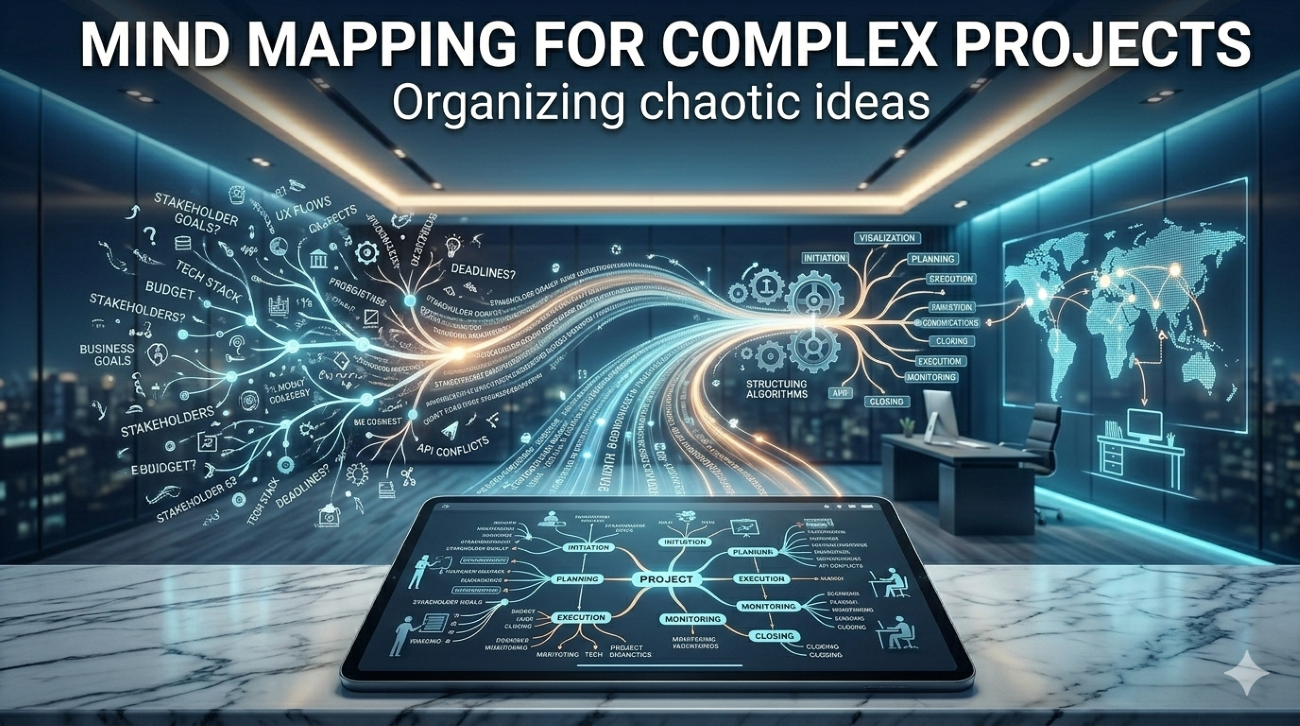
In today’s fast-paced academic and professional environments, individuals often find themselves overwhelmed by complex projects filled with scattered ideas, deadlines, data, and responsibilities. Whether planning a research paper, launching a startup initiative, managing organizational programs, or coordinating team-based assignments, one challenge remains constant — how to organize chaos into clarity.
This is where mind mapping becomes a powerful solution.
Mind mapping is more than a productivity technique; it is a visual thinking strategy that transforms disorganized thoughts into structured, actionable plans. At CVDragon, we believe mastering mind mapping empowers individuals and teams to think creatively, manage complexity, and execute projects with confidence.
This article explores how mind mapping works, why it is essential for complex projects, and how you can effectively apply it in real-world situations.
What Is Mind Mapping?
Mind mapping is a visual method of organizing information around a central idea. Instead of listing information linearly, it mirrors how the human brain naturally connects concepts through associations.
A typical mind map begins with:
- A central topic placed in the middle
- Branches representing major themes or categories
- Sub-branches containing details, tasks, or ideas
- Keywords, colors, or symbols for clarity
This structure allows individuals to see relationships between ideas instantly, making complex information easier to understand and manage.
Why Complex Projects Often Feel Chaotic
Large projects become overwhelming because they involve multiple moving parts such as:
- Numerous tasks and deadlines
- Interdependent team roles
- Continuous idea generation
- Changing priorities
- Information overload
Traditional note-taking methods often fail because they separate information instead of connecting it. As a result, teams lose visibility, creativity declines, and execution becomes inefficient.
Mind mapping solves this problem by providing a big-picture overview while preserving detailed insights.
The Science Behind Mind Mapping
Human thinking is associative rather than linear. The brain processes ideas through networks of connections, not bullet-point lists.
Mind mapping aligns with cognitive principles such as:
- Visual learning
- Pattern recognition
- Memory association
- Creative thinking
By combining text, structure, and visual hierarchy, mind maps improve comprehension, recall, and problem-solving efficiency.
Key Benefits of Mind Mapping for Complex Projects
1. Clarity from Chaos
Mind maps transform scattered thoughts into organized frameworks, helping project leaders identify priorities quickly.
2. Enhanced Creativity
Unlike rigid planning tools, mind mapping encourages brainstorming without immediate judgment, allowing innovative solutions to emerge.
3. Improved Project Planning
Teams can visualize timelines, dependencies, risks, and deliverables in one unified space.
4. Better Decision-Making
Seeing all project elements simultaneously enables informed strategic decisions.
5. Increased Collaboration
Mind maps provide a shared visual reference, ensuring team members understand goals and responsibilities.
When Should You Use Mind Mapping?
Mind mapping is particularly useful during:
- Project planning and strategy development
- Academic research organization
- Business proposal creation
- Content and marketing campaigns
- Event management planning
- Problem-solving sessions
- Team brainstorming meetings
Any situation involving complexity or uncertainty benefits from this approach.
Step-by-Step Guide to Creating an Effective Mind Map
Step 1: Define the Central Goal
Start with the primary project objective at the center.
Examples:
- “Website Launch”
- “Research Thesis”
- “Community Development Program”
Clarity at the center ensures alignment throughout the project.
Step 2: Create Major Branches
Identify key categories related to the project, such as:
- Objectives
- Resources
- Timeline
- Budget
- Team Roles
- Risks
- Deliverables
These branches represent the main pillars of execution.
Step 3: Add Sub-Tasks and Details
Break each branch into smaller actionable components.
For example:
Timeline →
- Phase 1 Planning
- Development
- Testing
- Final Launch
This decomposition reduces overwhelm and improves manageability.
Step 4: Use Keywords Instead of Sentences
Short keywords maintain clarity and prevent clutter. Mind maps should trigger thinking, not replace documentation.
Step 5: Apply Visual Elements
Use:
- Colors for categories
- Icons for priorities
- Arrows for relationships
- Highlights for deadlines
Visual cues improve understanding and memory retention.
Step 6: Review and Refine
Complex projects evolve. Update your mind map regularly to reflect progress and new insights.
Mind Mapping for Team-Based Projects
In collaborative environments, mind mapping becomes a shared intelligence tool.
Teams can use it to:
- Assign responsibilities clearly
- Identify workflow dependencies
- Track progress visually
- Reduce communication gaps
Digital mind mapping platforms allow real-time collaboration, making remote teamwork more efficient.
Digital vs. Handwritten Mind Maps
Both approaches offer advantages.
Handwritten Mind Maps
Best for:
- Personal brainstorming
- Creativity sessions
- Quick idea exploration
They enhance cognitive engagement and free thinking.
Digital Mind Maps
Ideal for:
- Large projects
- Team collaboration
- Editing and updates
- Integration with task management tools
Professionals often combine both methods — starting on paper and refining digitally.
Common Mistakes to Avoid
Overloading Information
A mind map should simplify complexity, not replicate detailed reports.
Lack of Hierarchy
Unclear branching defeats the purpose of organization.
Ignoring Updates
Outdated mind maps reduce effectiveness.
Focusing Only on Tasks
Include goals, risks, and strategies—not just action items.
Mind Mapping and Problem Solving
Complex challenges often involve hidden connections between issues. Mind mapping helps identify:
- Root causes
- Alternative solutions
- Potential risks
- Strategic opportunities
By visualizing relationships, individuals move beyond surface-level thinking toward deeper analysis.
Using Mind Mapping for Academic Success
Students benefit immensely from mind mapping when:
- Preparing for exams
- Structuring essays
- Conducting literature reviews
- Organizing research findings
Instead of memorizing isolated facts, learners understand conceptual relationships, improving long-term retention.
Mind Mapping in Leadership and Innovation
Effective leaders manage complexity daily. Mind mapping supports leadership by enabling:
- Strategic planning
- Vision development
- Stakeholder analysis
- Innovation brainstorming
Organizations that encourage visual thinking often experience faster innovation and clearer communication.
Integrating Mind Mapping into Daily Workflow
To make mind mapping a habit:
- Begin projects with brainstorming maps
- Use weekly planning maps
- Conduct reflection maps after project completion
- Create decision-making maps for major choices
Consistency transforms mind mapping into a powerful cognitive skill rather than a one-time tool.
The Future of Project Organization
As industries grow more interdisciplinary and data-driven, professionals must manage increasing complexity. Linear planning methods alone are no longer sufficient.
Mind mapping represents a shift toward adaptive thinking, where creativity and structure coexist. It empowers individuals to see systems holistically while maintaining actionable clarity.
Conclusion: Turning Ideas into Action
Complex projects rarely fail due to lack of ideas — they fail because ideas remain unorganized. Mind mapping bridges the gap between imagination and execution by transforming chaotic thoughts into structured strategies.
At CVDragon, we emphasize practical skills that enhance productivity, creativity, and professional effectiveness. Mind mapping is one of the most accessible yet transformative techniques for managing modern challenges.
By adopting mind mapping, you gain the ability to:
- Think clearly under complexity
- Plan strategically
- Collaborate effectively
- Execute projects with confidence
The next time your ideas feel overwhelming, don’t force them into rigid lists. Map them visually, connect them meaningfully, and watch clarity emerge from chaos.
Because organized thinking is the foundation of successful action.
Leave a Reply