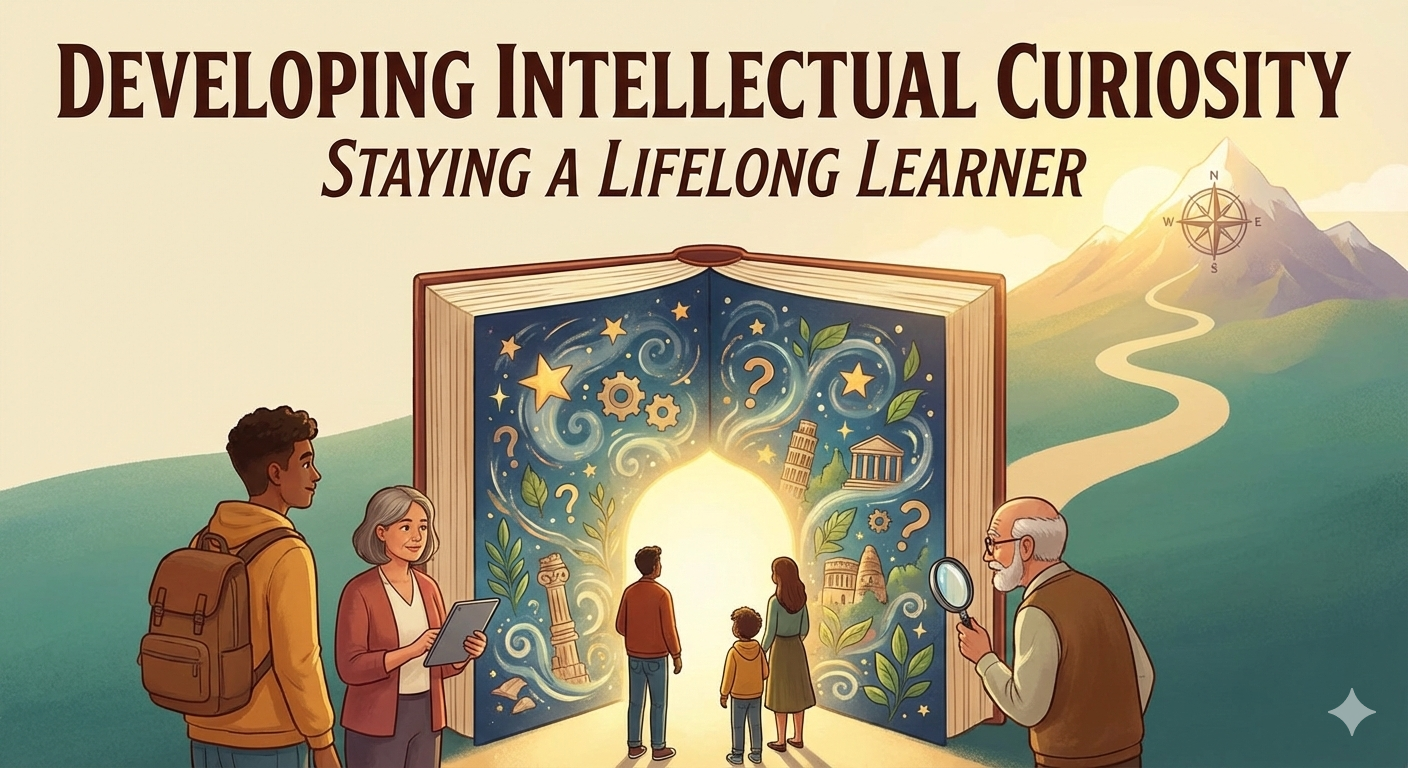
In a rapidly changing world, knowledge becomes outdated faster than ever. Degrees alone are no longer enough. The individuals who thrive are those who continue learning—long after formal education ends. At the heart of this continuous growth lies one powerful trait: intellectual curiosity.
Intellectual curiosity is more than just asking questions in class. It is a mindset—a genuine desire to understand how things work, why they happen, and what can be improved. At cvDragon, we believe that cultivating intellectual curiosity is one of the most important habits for long-term academic success, career advancement, and personal fulfillment.
This article explores what intellectual curiosity truly means, why it matters, and how you can develop the habits of a lifelong learner.
What Is Intellectual Curiosity?
Intellectual curiosity is the internal drive to explore, learn, and understand new ideas. It goes beyond memorizing information. Curious individuals:
-
Ask thoughtful questions
-
Seek deeper explanations
-
Explore topics outside their comfort zones
-
Stay open to new perspectives
-
Enjoy learning for its own sake
Curiosity fuels innovation, creativity, and problem-solving.
Why Intellectual Curiosity Matters Today
We live in an era of constant change:
-
New technologies emerge regularly
-
Industries evolve rapidly
-
Skills quickly become outdated
In this environment, static knowledge is not enough. What matters most is the ability to continuously adapt and learn.
At cvDragon, we emphasize that employers increasingly value adaptability and growth mindset over fixed expertise. Intellectual curiosity signals that you are capable of evolving with change.
The Difference Between Learning and Lifelong Learning
Learning often happens in structured environments—schools, universities, training programs.
Lifelong learning, however:
-
Is self-driven
-
Continues beyond formal education
-
Is fueled by intrinsic motivation
A curious mind doesn’t stop at passing exams. It seeks understanding beyond requirements.
Benefits of Intellectual Curiosity
1. Enhances Critical Thinking
Curiosity encourages deeper analysis rather than surface-level acceptance. Curious individuals question assumptions and evaluate evidence carefully.
2. Improves Problem-Solving Skills
When faced with challenges, curious thinkers explore multiple solutions rather than settling for the first answer.
3. Encourages Innovation
Many breakthroughs begin with simple questions:
-
“Why does this happen?”
-
“Is there a better way?”
Curiosity drives creative exploration.
4. Strengthens Career Growth
Professionals who stay curious:
-
Learn new skills proactively
-
Adapt to industry trends
-
Stay competitive in job markets
Curiosity keeps careers dynamic.
5. Increases Personal Fulfillment
Learning new ideas, cultures, and perspectives enriches life experiences and builds confidence.
Barriers to Intellectual Curiosity
Despite its benefits, curiosity can fade due to:
-
Fear of failure
-
Overemphasis on grades or performance
-
Rigid thinking patterns
-
Comfort with routine
-
Information overload
Recognizing these barriers is the first step toward overcoming them.
How to Develop Intellectual Curiosity
1. Ask Better Questions
Instead of asking:
-
“What do I need to know for the test?”
Ask:
-
“Why does this concept matter?”
-
“How does this apply in real life?”
Quality questions lead to deeper insights.
2. Read Widely and Diversely
Explore topics beyond your primary field of study. Read:
-
Books
-
Research articles
-
Biographies
-
Industry reports
Cross-disciplinary knowledge sparks innovative thinking.
3. Embrace Discomfort
Growth often happens outside comfort zones. Try:
-
Learning a new skill
-
Engaging in debates
-
Exploring unfamiliar subjects
Curiosity thrives in exploration.
4. Practice Reflective Thinking
After learning something new, ask:
-
“What did I learn?”
-
“How does this connect to what I already know?”
Reflection strengthens understanding.
5. Limit Passive Consumption
Scrolling endlessly through content can reduce deep thinking. Instead:
-
Engage actively with information
-
Take notes
-
Summarize insights
Intentional engagement builds curiosity.
6. Seek Mentorship and Conversations
Discuss ideas with peers, professors, or professionals. Conversations often open doors to new perspectives.
Intellectual Curiosity in the Digital Age
The internet offers unlimited access to information. However, curiosity requires:
-
Critical evaluation of sources
-
Avoiding misinformation
-
Exploring multiple viewpoints
Digital literacy combined with curiosity leads to informed learning.
Curiosity and Growth Mindset
A growth mindset—the belief that abilities can improve through effort—is closely tied to curiosity.
Curious individuals:
-
View mistakes as learning opportunities
-
Seek feedback
-
Persist despite challenges
At cvDragon, we encourage learners to embrace growth over perfection.
Intellectual Curiosity in Academic Life
Students can nurture curiosity by:
-
Participating actively in discussions
-
Taking elective courses outside their major
-
Engaging in research projects
-
Exploring internships in diverse fields
Curiosity transforms academic life from obligation into exploration.
Intellectual Curiosity in Professional Settings
In workplaces, curious professionals:
-
Ask insightful questions during meetings
-
Stay updated on industry trends
-
Propose innovative ideas
-
Seek continuous improvement
Such individuals are often seen as proactive and forward-thinking.
The Role of Curiosity in Leadership
Leaders who remain curious:
-
Listen openly to diverse opinions
-
Encourage innovation
-
Make informed decisions
-
Adapt to change effectively
Curiosity enhances emotional intelligence and strategic thinking.
Balancing Curiosity with Focus
While curiosity is valuable, it should be guided by purpose.
To stay focused:
-
Set learning goals
-
Prioritize relevant topics
-
Allocate structured learning time
Balanced curiosity leads to productive growth.
How cvDragon Encourages Lifelong Learning
At cvDragon, we believe intellectual curiosity is foundational to career readiness. We support students and professionals by:
-
Promoting skill development beyond degrees
-
Encouraging reflective learning
-
Highlighting the importance of adaptability
-
Supporting continuous personal and professional growth
Curiosity is not just an academic trait—it is a career advantage.
Practical Daily Habits to Stay Curious
-
Read for 20 minutes daily
-
Ask at least one meaningful question in discussions
-
Explore one new topic weekly
-
Reflect on lessons learned
-
Engage with diverse perspectives
Small habits create long-term intellectual growth.
Conclusion
Intellectual curiosity is the engine of lifelong learning. In a world that evolves constantly, those who remain curious remain relevant. Curiosity encourages exploration, resilience, creativity, and growth.
At cvDragon, we believe that staying intellectually curious is one of the most powerful investments you can make in your future. Degrees may open doors—but curiosity keeps them open.
To stay ahead, stay curious. To grow continuously, stay learning.
Leave a Reply