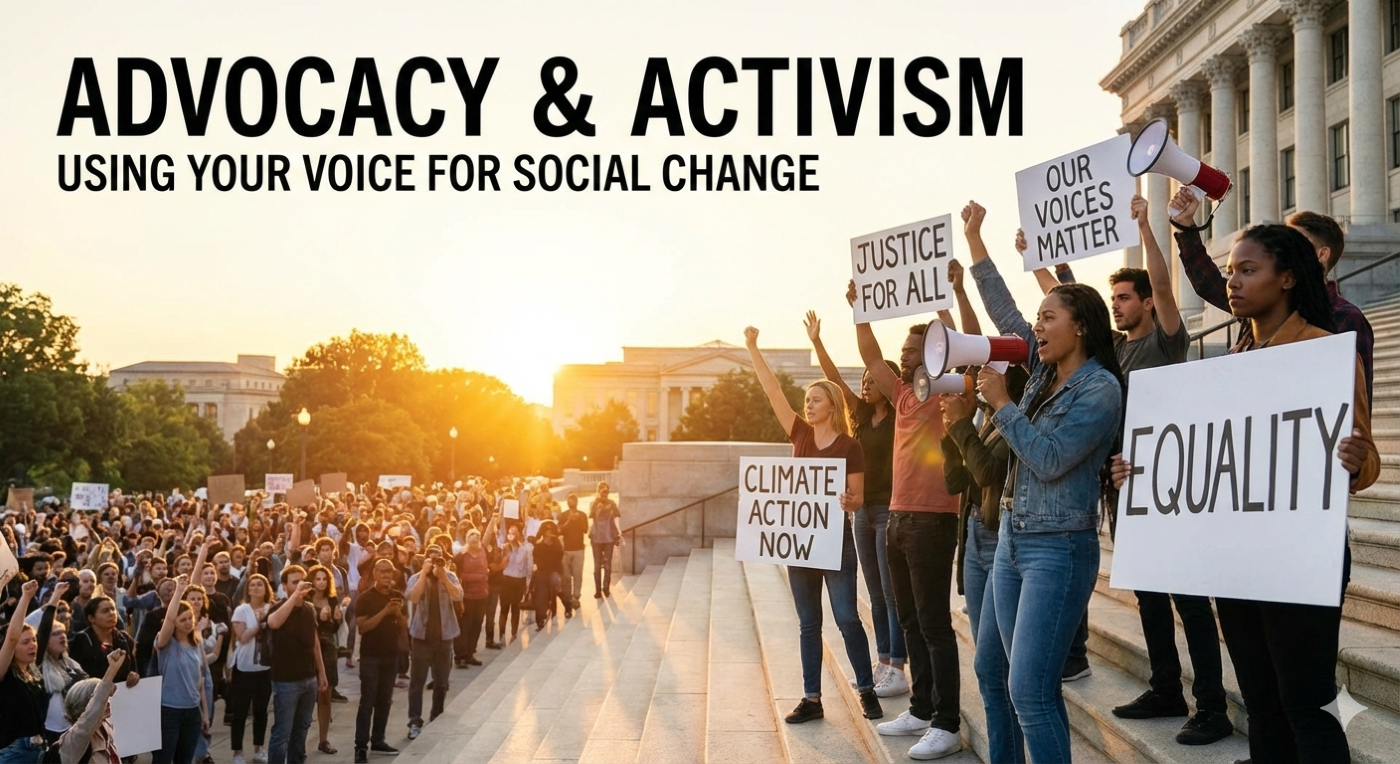
Throughout history, meaningful change has never happened by accident. It has always begun with individuals who chose to speak up, stand firm, and use their voices to challenge injustice. From civil rights movements to environmental reforms and digital-age campaigns, advocacy and activism have shaped societies and transformed lives.
At cvDragon, we believe that career readiness is not just about professional success—it is also about social responsibility. Today’s students and professionals are not only future employees and leaders; they are citizens with voices, values, and the power to influence change. Understanding advocacy and activism equips individuals to contribute positively to society while developing critical skills such as communication, leadership, empathy, and ethical reasoning.
This article explores what advocacy and activism mean, why they matter, and how individuals can use their voices responsibly and effectively to create social change.
What Are Advocacy and Activism?
Although often used together, advocacy and activism have distinct but connected meanings.
Advocacy
Advocacy focuses on supporting or promoting a cause through awareness, dialogue, policy influence, or education. Advocates work within systems to encourage change.
Examples include:
-
Raising awareness about mental health
-
Supporting educational reform
-
Promoting workplace inclusion
-
Encouraging policy improvements
Advocacy often emphasizes collaboration and long-term impact.
Activism
Activism involves direct action aimed at creating immediate or visible change. It may include protests, campaigns, petitions, or public demonstrations.
Examples include:
-
Climate change movements
-
Gender equality campaigns
-
Social justice protests
-
Digital activism on social media
Activism challenges the status quo and draws attention to urgent issues.
Why Advocacy and Activism Matter Today
In a rapidly changing world, silence can unintentionally support injustice. Advocacy and activism matter because they:
-
Give voice to marginalized communities
-
Challenge unfair systems
-
Promote equality and justice
-
Encourage civic engagement
-
Strengthen democratic values
With access to digital platforms, individuals today have more opportunities than ever to participate in social change.
The Power of Using Your Voice
Your voice—spoken, written, or digital—has influence. Advocacy and activism begin with the belief that your perspective matters.
Using your voice can:
-
Inspire others
-
Shift public opinion
-
Influence decision-makers
-
Create awareness and empathy
At cvDragon, we encourage individuals to recognize that leadership is not limited to titles—it begins with courage and conviction.
Forms of Advocacy and Activism
1. Community Advocacy
Working at the local level to address issues such as education, healthcare, or environmental protection.
2. Digital Advocacy
Using social media, blogs, and online platforms to spread awareness and mobilize support.
3. Policy Advocacy
Engaging with lawmakers, institutions, or organizations to influence policies and legislation.
4. Student Activism
Students advocating for educational reform, equity, campus safety, or mental health support.
5. Workplace Advocacy
Promoting ethical practices, diversity, inclusion, and employee well-being within organizations.
Each form plays a role in shaping a more just society.
Advocacy Skills That Drive Social Change
1. Communication Skills
Clear, respectful communication helps convey ideas effectively and build understanding.
2. Critical Thinking
Understanding complex social issues requires analysis, research, and open-mindedness.
3. Empathy and Emotional Intelligence
True advocacy begins with listening and understanding diverse perspectives.
4. Leadership and Initiative
Advocates often lead by example, motivating others to act.
5. Collaboration
Change is rarely achieved alone. Teamwork amplifies impact.
These skills are not only valuable for activism—but also for academic and professional success.
Responsible Advocacy: Speaking with Integrity
Using your voice responsibly is just as important as speaking up.
Responsible advocacy involves:
-
Researching facts before sharing information
-
Respecting differing viewpoints
-
Avoiding misinformation
-
Engaging in constructive dialogue
-
Acting ethically and peacefully
True advocacy seeks solutions, not division.
The Role of Students in Advocacy and Activism
Students have historically been powerful agents of change.
Why Student Voices Matter
-
Students bring fresh perspectives
-
They question outdated systems
-
They represent future generations
Participating in advocacy helps students:
-
Build confidence
-
Develop leadership skills
-
Understand civic responsibility
-
Create meaningful impact
At cvDragon, we encourage students to view advocacy as a form of experiential learning.
Advocacy and Career Development
Many people believe advocacy has no place in professional life—but this is changing.
How Advocacy Enhances Careers
-
Builds strong communication skills
-
Demonstrates leadership and initiative
-
Shows ethical awareness
-
Enhances personal branding
Organizations increasingly value employees who are socially aware and purpose-driven.
Digital Activism: Opportunities and Responsibilities
Social media has transformed activism.
Benefits of Digital Activism
-
Global reach
-
Fast awareness
-
Easy mobilization
-
Inclusive participation
Challenges
-
Misinformation
-
Performative activism
-
Online harassment
Digital activism should focus on meaningful engagement, not just visibility.
Overcoming Fear of Speaking Up
Many people hesitate to advocate due to fear of judgment or backlash.
To overcome fear:
-
Start with small actions
-
Educate yourself thoroughly
-
Find supportive communities
-
Focus on purpose, not approval
Courage grows through action.
Balancing Advocacy and Well-Being
Advocacy work can be emotionally demanding.
Healthy advocacy includes:
-
Setting boundaries
-
Practicing self-care
-
Taking breaks when needed
-
Celebrating small wins
Sustainable change requires sustainable advocates.
How cvDragon Encourages Purpose-Driven Growth
At cvDragon, we believe that education and career growth should align with values. We support students and professionals by:
-
Encouraging ethical leadership
-
Highlighting advocacy experiences on resumes
-
Building communication and leadership skills
-
Preparing individuals for socially responsible careers
Advocacy experiences can be powerful indicators of character and commitment.
Conclusion
Advocacy and activism remind us that progress begins with people who care enough to speak up. Whether through education, digital platforms, community work, or professional spaces, every individual has the power to contribute to social change.
At cvDragon, we believe that using your voice responsibly is not just a civic duty—it is a leadership skill. When individuals combine empathy, knowledge, and courage, they don’t just influence society—they help shape a better future for everyone.
Your voice matters. Use it wisely. Use it boldly. Use it for change.
Leave a Reply