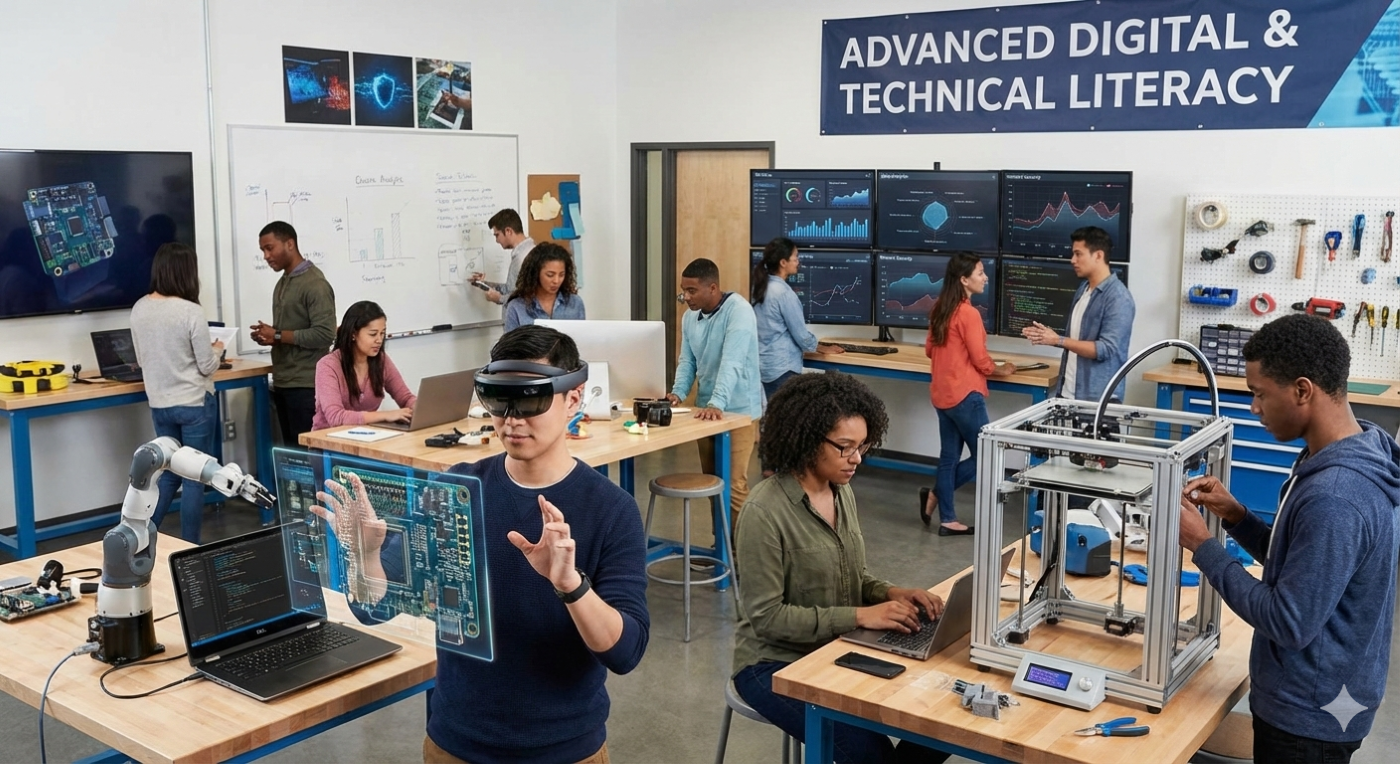
In today’s technology-driven world, basic digital skills are no longer enough. Simply knowing how to use a computer, browse the internet, or create documents does not prepare students or professionals for the demands of modern workplaces. What truly sets individuals apart today is Advanced Digital & Technical Literacy—the ability to understand, evaluate, and effectively use digital tools, technologies, and data to solve real-world problems.
At cvDragon, where we help students and job seekers become career-ready, we have observed a clear shift in employer expectations. Companies are no longer just hiring based on degrees; they are hiring based on digital competence, adaptability, and technical confidence. Advanced digital literacy has become a core employability skill across industries.
This article explores what advanced digital and technical literacy means, why it is essential, and how students and professionals can develop it to stay competitive in the future of work.
What Is Advanced Digital & Technical Literacy?
Advanced digital and technical literacy goes beyond basic computer usage. It refers to the ability to:
-
Use digital tools strategically
-
Understand how technology works
-
Analyze and interpret data
-
Adapt to new digital platforms
-
Apply technology to solve problems
-
Work safely and ethically in digital environments
It combines technical knowledge, critical thinking, and digital awareness, making individuals more effective and independent in tech-driven settings.
Why Advanced Digital Literacy Is Important Today
Technology impacts nearly every profession—from education and healthcare to finance, marketing, law, and manufacturing. Even non-technical roles now require a strong digital foundation.
Advanced digital literacy is important because it:
-
Improves productivity and efficiency
-
Enhances problem-solving abilities
-
Supports data-driven decision-making
-
Increases employability and career growth
-
Builds confidence in using emerging technologies
At cvDragon, we often see that candidates with strong digital literacy stand out in resumes, interviews, and workplace performance.
Key Components of Advanced Digital & Technical Literacy
1. Digital Tool Proficiency
This includes the ability to use and adapt to various digital tools such as:
-
Productivity software
-
Collaboration platforms
-
Project management tools
-
Cloud-based systems
Understanding how and when to use tools effectively is more important than simply knowing they exist.
2. Data and Information Literacy
Advanced digital literacy involves the ability to:
-
Find reliable digital information
-
Analyze data logically
-
Interpret trends and insights
-
Avoid misinformation
In a data-driven world, the ability to make sense of information is a powerful skill.
3. Technical Awareness
You don’t need to be a programmer to be digitally literate, but understanding basic technical concepts such as:
-
How software systems work
-
What APIs, databases, or automation mean
-
The role of AI and machine learning
helps professionals communicate better with technical teams and adapt faster.
4. Cybersecurity and Digital Safety
Digital literacy also includes awareness of:
-
Online security risks
-
Data privacy
-
Ethical technology use
-
Responsible digital behavior
This is critical in both academic and professional environments.
5. Digital Communication Skills
Advanced digital communication goes beyond emails. It includes:
-
Virtual collaboration
-
Professional online presence
-
Video conferencing etiquette
-
Clear digital documentation
Strong digital communication enhances teamwork and leadership.
6. Adaptability to Emerging Technologies
Technology evolves rapidly. Digitally literate individuals are:
-
Curious about new tools
-
Willing to learn continuously
-
Comfortable with change
This adaptability is crucial for long-term career success.
Advanced Digital Literacy for Students
For students, advanced digital and technical literacy plays a major role in academic success and career readiness.
Benefits for Students
-
Improved research and learning efficiency
-
Better project and presentation quality
-
Stronger collaboration in group work
-
Higher confidence in internships and placements
Students who build these skills early transition more smoothly into professional environments.
Advanced Digital Literacy in the Workplace
In professional settings, digital literacy impacts:
-
Task automation
-
Workflow optimization
-
Remote work effectiveness
-
Decision-making speed
Employees with advanced digital skills are often seen as problem-solvers and future leaders.
How Advanced Digital Literacy Improves Career Readiness
Employers today seek candidates who can:
-
Learn new tools quickly
-
Use technology to improve outcomes
-
Work independently and collaboratively
-
Think critically in digital environments
At cvDragon, we help candidates highlight these competencies on resumes and professional profiles, making their digital skills visible and relevant to recruiters.
Practical Ways to Develop Advanced Digital & Technical Literacy
1. Learn Beyond the Classroom
Online courses, certifications, and tutorials help students stay updated with industry-relevant tools.
2. Practice Real-World Applications
Hands-on projects, internships, and simulations help convert theory into practical skills.
3. Build Digital Projects
Creating portfolios, dashboards, presentations, or automation workflows strengthens confidence and credibility.
4. Stay Updated with Technology Trends
Following industry blogs, webinars, and tech communities helps maintain relevance.
5. Reflect Digital Skills in Resumes
Many students possess digital skills but fail to communicate them effectively. cvDragon helps translate digital competencies into strong, ATS-friendly resumes.
Common Challenges in Building Digital Literacy
1. Fear of Technology
Solution: Start small and practice consistently.
2. Information Overload
Solution: Focus on tools relevant to your goals.
3. Lack of Guidance
Solution: Seek mentors, structured platforms, and career guidance.
Role of Educational Institutions
Institutions can support advanced digital literacy by:
-
Integrating digital tools into curricula
-
Encouraging experiential learning
-
Promoting ethical technology use
-
Collaborating with industry platforms
Digital literacy should be treated as a core life skill, not an optional add-on.
How cvDragon Supports Digital & Technical Literacy
At cvDragon, we empower individuals to:
-
Understand industry expectations
-
Present digital skills professionally
-
Align technical competencies with career goals
-
Build confidence in modern workplaces
We believe digital literacy is not just about tools—it’s about thinking digitally.
Conclusion
Advanced digital and technical literacy is no longer optional—it is a fundamental requirement for success in education, careers, and everyday life. In a world shaped by technology, those who understand and leverage digital tools effectively will always have an advantage.
At cvDragon, we believe that when digital skills are combined with clarity, adaptability, and strong presentation, they open doors to endless opportunities. By investing in advanced digital literacy today, students and professionals prepare themselves not just for their next role—but for the future of work itself.
Leave a Reply