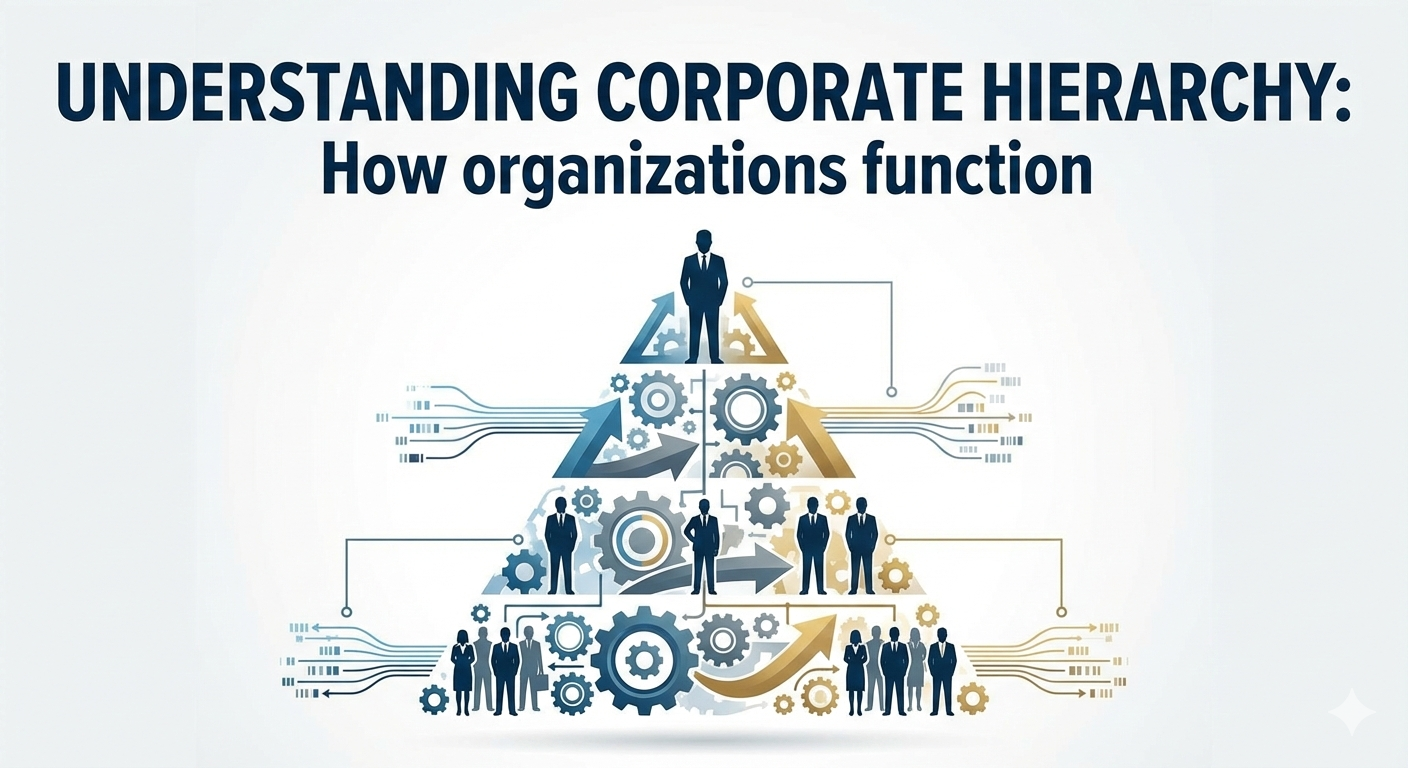
For many students and first-time professionals, stepping into the corporate world can feel overwhelming. Job titles, reporting structures, departments, and decision-making processes often seem complex and confusing. Yet, understanding corporate hierarchy is one of the most important foundations for workplace success.
At cvDragon, we regularly interact with students and job seekers who are technically capable but unsure about how organizations function internally. Knowing how corporate hierarchy works helps individuals communicate effectively, manage expectations, grow professionally, and navigate their careers with confidence.
This article breaks down corporate hierarchy in a simple, humanized way—explaining its structure, roles, benefits, challenges, and relevance in today’s evolving workplace.
What Is Corporate Hierarchy?
Corporate hierarchy refers to the organizational structure that defines roles, responsibilities, authority, and reporting relationships within a company. It determines:
-
Who reports to whom
-
How decisions are made
-
How information flows
-
How accountability is maintained
Hierarchy helps organizations function smoothly by establishing order and clarity.
Why Corporate Hierarchy Exists
Every organization—small or large—needs structure. Corporate hierarchy exists to:
-
Assign responsibility clearly
-
Maintain accountability
-
Improve coordination
-
Support efficient decision-making
-
Ensure organizational stability
Without a defined hierarchy, confusion, inefficiency, and conflict can arise.
Typical Levels of Corporate Hierarchy
While structures vary by organization, most companies follow a general hierarchical model.
1. Board of Directors
The Board of Directors sits at the top of the hierarchy and represents shareholders’ interests.
Key responsibilities include:
-
Setting long-term vision
-
Approving major decisions
-
Appointing senior leadership
-
Ensuring governance and compliance
They do not manage daily operations but guide strategic direction.
2. Executive Leadership (C-Suite)
The executive team is responsible for overall organizational performance.
Common C-suite roles include:
-
CEO (Chief Executive Officer) – Overall leadership and vision
-
CFO (Chief Financial Officer) – Financial planning and control
-
COO (Chief Operating Officer) – Day-to-day operations
-
CTO/CIO – Technology and information systems
Executives translate strategy into organizational goals.
3. Senior Management
Senior managers oversee major departments and business units.
Their responsibilities include:
-
Implementing executive strategies
-
Managing departmental goals
-
Leading mid-level managers
-
Monitoring performance
They act as a bridge between leadership and execution.
4. Middle Management
Middle managers play a crucial role in daily operations.
Roles may include:
-
Department managers
-
Team leaders
-
Project managers
They are responsible for:
-
Supervising teams
-
Allocating resources
-
Ensuring tasks align with company goals
Middle management ensures strategies are carried out effectively.
5. Entry-Level Employees and Individual Contributors
These are the employees who execute tasks and deliver core work.
Examples include:
-
Analysts
-
Associates
-
Executives
-
Trainees
They report to managers and focus on skill development, task execution, and learning organizational processes.
How Corporate Hierarchy Functions in Daily Operations
1. Decision-Making Process
Decisions typically flow top-down, while feedback flows bottom-up. Strategic decisions are made at higher levels, while operational decisions occur at lower levels.
2. Communication Flow
Hierarchy determines how information is shared:
-
Instructions move downward
-
Reports and feedback move upward
-
Cross-functional communication happens laterally
Clear channels reduce misunderstandings.
3. Accountability and Performance Management
Each level is accountable for specific outcomes. Performance reviews, KPIs, and reporting structures are tied to hierarchical roles.
4. Career Progression
Hierarchy defines growth paths. Employees move upward by:
-
Gaining experience
-
Building skills
-
Demonstrating leadership
-
Delivering consistent results
Understanding this helps professionals plan long-term careers.
Benefits of Corporate Hierarchy
1. Role Clarity: Employees understand their responsibilities and expectations.
2. Structured Growth: Defined levels help employees visualize career progression.
3. Efficient Management: Clear authority improves coordination and control.
4. Stability and Order: Hierarchy provides organizational discipline and consistency.
5. Accountability: Responsibilities are clearly assigned, reducing confusion.
Challenges of Traditional Corporate Hierarchy
Despite its benefits, rigid hierarchies can have limitations.
1. Slow Decision-Making: Too many approval layers can delay action.
2. Communication Barriers: Information may get distorted as it moves through levels.
3. Limited Innovation: Lower-level employees may feel unheard.
4. Power Distance: Strict hierarchy can discourage open dialogue.
Modern Organizational Structures and Evolving Hierarchy
Many organizations are adapting hierarchy to remain agile.
1. Flat Organizations: Fewer management layers, encouraging autonomy and collaboration.
2. Matrix Structures: Employees report to multiple managers for different functions or projects.
3. Agile and Team-Based Models: Focus on cross-functional teams and shared leadership.
Despite these changes, some form of hierarchy still exists to maintain clarity and accountability.
Why Understanding Corporate Hierarchy Is Important for Students
Students entering internships or jobs often struggle because they:
-
Don’t know who to approach
-
Misunderstand authority lines
-
Communicate inappropriately
Understanding hierarchy helps students:
-
Show professionalism
-
Respect roles
-
Build workplace confidence
-
Avoid common mistakes
At cvDragon, we encourage students to reflect hierarchical awareness in resumes and interviews by demonstrating teamwork, reporting experience, and organizational understanding.
How Corporate Hierarchy Impacts Workplace Behavior
Understanding hierarchy helps employees:
-
Communicate appropriately
-
Manage expectations
-
Handle feedback professionally
-
Navigate office politics ethically
This awareness improves workplace relationships and career growth.
Tips for Navigating Corporate Hierarchy Successfully
1. Understand Your Role: Know your responsibilities and reporting structure.
2. Communicate Professionally: Respect authority while expressing ideas clearly.
3. Observe Organizational Culture: Hierarchy varies across companies—adapt accordingly.
4. Build Relationships Across Levels: Networking helps career growth.
5. Take Initiative Responsibly: Show leadership without overstepping boundaries.
Corporate Hierarchy and Career Development
Hierarchy influences:
-
Promotions
-
Leadership opportunities
-
Skill development
-
Compensation growth
Professionals who understand organizational structure are better positioned to plan their careers strategically.
How cvDragon Helps You Prepare for Corporate Life
At cvDragon, we help students and professionals:
-
Understand workplace expectations
-
Present hierarchical experience on resumes
-
Align skills with corporate roles
-
Prepare for professional environments
Career success is not just about skills—it’s about understanding how organizations function.
Conclusion
Corporate hierarchy may seem complex at first, but it is simply a system designed to bring order, clarity, and accountability to organizations. By understanding how roles, responsibilities, and authority are structured, students and professionals can navigate the workplace more confidently and effectively.
At cvDragon, we believe that career readiness goes beyond technical skills. Knowing how organizations function—and where you fit within them—is essential for long-term professional success. When you understand corporate hierarchy, you don’t just work in an organization—you grow within it.
Leave a Reply