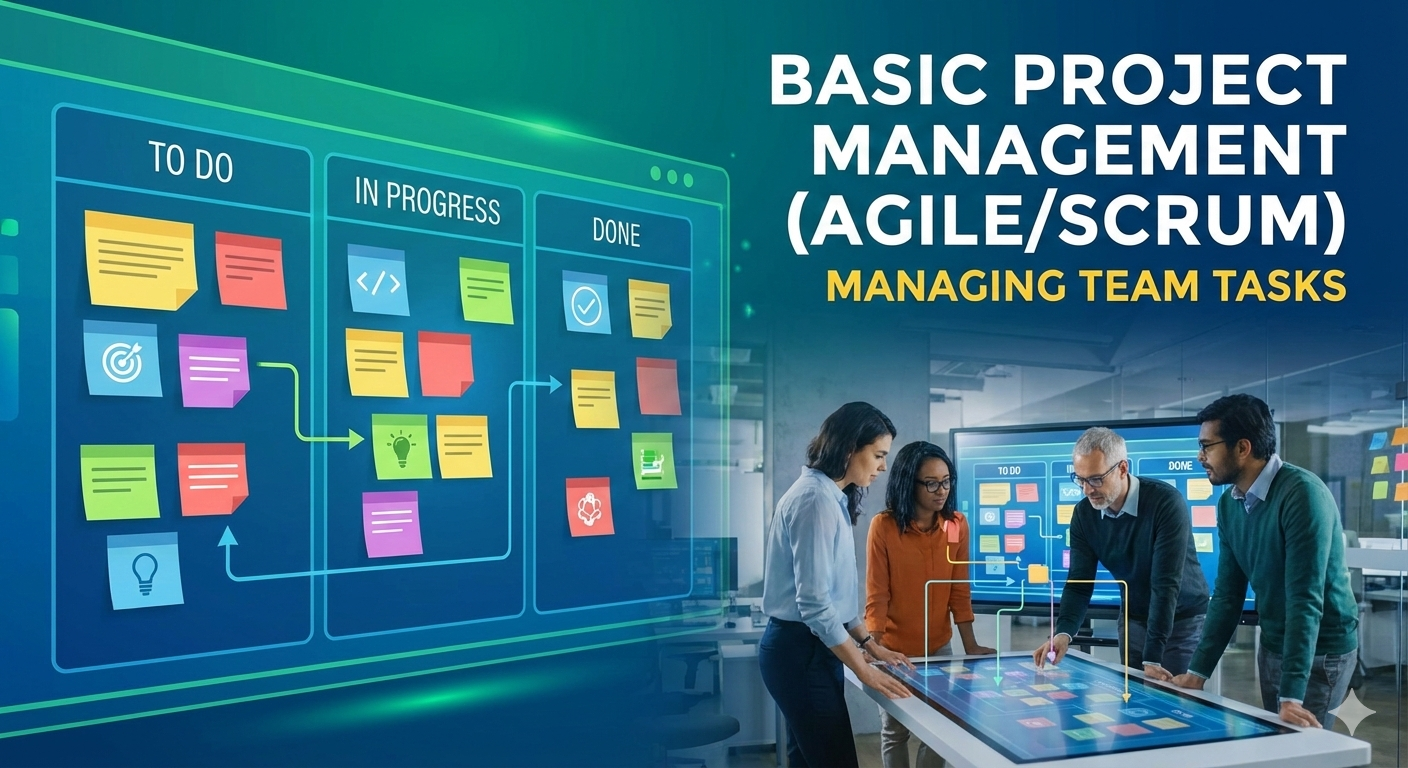
In today’s fast-paced academic and professional environments, the ability to manage team tasks efficiently is no longer optional—it’s a critical skill. Whether working on a college project, organizing a student event, or collaborating in a workplace, structured project management helps teams stay organized, productive, and focused on results.
At cvDragon, where we guide students and professionals toward career readiness, we frequently see how project management skills elevate candidates in interviews and real-world roles. Understanding Agile and Scrum frameworks gives individuals a strong foundation to collaborate effectively, meet deadlines, and deliver quality outcomes.
This article explains the basics of Agile and Scrum, how they work, and practical ways to manage team tasks efficiently using these modern project management approaches.
What Is Project Management?
Project management is the process of planning, organizing, executing, and monitoring tasks to achieve specific goals within a defined timeline. It ensures that teams work systematically instead of relying on guesswork or last-minute efforts.
Effective project management helps teams:
-
Clarify responsibilities
-
Track progress
-
Reduce confusion
-
Improve communication
-
Deliver results on time
Traditional project management often follows a rigid structure, but modern teams prefer flexible frameworks like Agile and Scrum.
Understanding Agile Project Management
Agile is a flexible, iterative approach to project management focused on continuous improvement and collaboration. Instead of planning everything at once, Agile teams work in smaller cycles, adapting based on feedback and progress.
Core Principles of Agile
-
Customer-focused outcomes
-
Frequent feedback
-
Adaptability to change
-
Collaboration over hierarchy
-
Incremental delivery
Agile works especially well for dynamic projects where requirements may evolve over time.
What Is Scrum?
Scrum is a popular Agile framework designed to help teams organize tasks efficiently and deliver work in short, structured cycles called sprints.
Scrum emphasizes:
-
Clear roles
-
Regular check-ins
-
Task prioritization
-
Transparency
It is widely used in software development but is equally effective for academic and business projects.
Key Roles in Scrum-Based Team Management
1. Product Owner
The person responsible for defining goals and priorities. They decide what tasks matter most.
2. Scrum Master
The facilitator who ensures the team follows Scrum practices and removes obstacles.
3. Team Members
Individuals responsible for completing tasks collaboratively.
Even student teams can adopt these roles informally to improve coordination.
Core Components of Scrum for Managing Team Tasks
1. Product Backlog
A list of all tasks, ideas, and deliverables needed for the project.
2. Sprint
A short work cycle (usually 1–2 weeks) focused on completing specific tasks.
3. Sprint Planning
A meeting where the team selects tasks to complete during the sprint.
4. Daily Stand-Up
A quick daily check-in where team members share:
-
What they did yesterday
-
What they will do today
-
Any challenges
5. Sprint Review
A session to present completed work and gather feedback.
6. Sprint Retrospective
A reflection meeting to discuss what went well and what can improve.
Why Agile and Scrum Are Ideal for Managing Team Tasks
1. Clear Task Ownership
Each team member knows exactly what they are responsible for.
2. Improved Collaboration
Frequent communication reduces misunderstandings.
3. Faster Problem Detection
Daily updates help identify issues early.
4. Flexibility
Teams can adjust plans based on progress or feedback.
5. Higher Productivity
Breaking work into small tasks increases motivation and efficiency.
Step-by-Step Guide to Managing Team Tasks Using Agile/Scrum
Step 1: Define the Project Goal
Start with a clear objective such as:
-
Completing a research project
-
Developing a presentation
-
Organizing an event
Clarity ensures alignment among team members.
Step 2: Break Work into Smaller Tasks
Divide the project into manageable tasks. For example:
-
Research
-
Design
-
Writing
-
Review
-
Submission
Smaller tasks make progress measurable.
Step 3: Create a Task Backlog
List all tasks in one place using tools like:
-
Trello
-
Notion
-
Jira
-
Google Sheets
Prioritize tasks based on importance and urgency.
Step 4: Plan Your Sprint
Choose tasks that can realistically be completed within the sprint duration. Assign responsibilities clearly.
Step 5: Conduct Daily Stand-Ups
Short daily meetings keep everyone aligned and accountable. They promote transparency and teamwork.
Step 6: Track Progress Visually
Use boards or charts to monitor task status:
-
To Do
-
In Progress
-
Completed
Visual tracking motivates teams and highlights bottlenecks.
Step 7: Review and Improve
At the end of each sprint:
-
Celebrate achievements
-
Identify challenges
-
Adjust strategies
Continuous improvement is the heart of Agile.
Common Challenges in Team Task Management
1. Poor Communication
Solution: Regular check-ins and clear documentation.
2. Unequal Work Distribution
Solution: Assign tasks based on strengths and availability.
3. Scope Creep
Solution: Stick to sprint goals and prioritize tasks.
4. Missed Deadlines
Solution: Break tasks into smaller deliverables and track progress daily.
Benefits of Learning Agile/Scrum for Students and Professionals
For Students
-
Better academic project outcomes
-
Improved teamwork skills
-
Stronger leadership experience
-
Enhanced time management
For Professionals
-
Higher workplace productivity
-
Better collaboration
-
Faster delivery of results
-
Career growth opportunities
At cvDragon, we often recommend highlighting Agile-based teamwork experience on resumes because employers value structured collaboration skills.
How Agile/Scrum Skills Improve Career Readiness
Project management skills signal that candidates can:
-
Organize tasks
-
Lead teams
-
Handle responsibility
-
Deliver results
These qualities are highly valued in modern workplaces, especially in remote and cross-functional teams.
By learning Agile and Scrum early, students gain a competitive advantage in internships, placements, and leadership roles.
Real-Life Example: Agile in a Student Project
Imagine a team creating a business plan presentation.
Sprint 1
-
Research market trends
-
Identify problem statement
Sprint 2
-
Develop solution and strategy
-
Create financial projections
Sprint 3
-
Design slides
-
Practice presentation
Each sprint builds progress step by step, ensuring timely completion.
Conclusion
Agile and Scrum are not just corporate buzzwords—they are powerful frameworks for organizing teamwork, improving productivity, and delivering results efficiently. By breaking tasks into manageable steps, encouraging collaboration, and promoting continuous improvement, these methods transform how teams work together.
At cvDragon, we believe project management skills are essential for career success. Whether you’re a student managing group assignments or a professional leading workplace projects, mastering Agile and Scrum will help you stand out as a structured, reliable, and results-driven team player.
The future belongs to individuals who can manage tasks, guide teams, and deliver outcomes—and Agile project management is the perfect place to start.
Leave a Reply