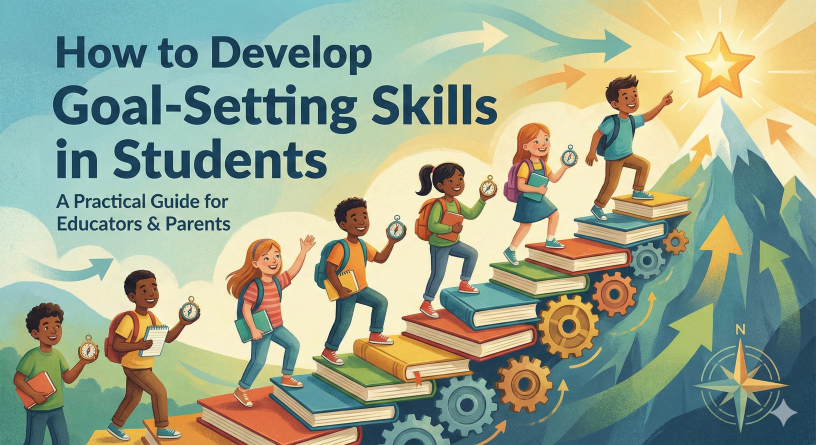
Goal-setting is one of the most powerful skills students can develop at an early age. It provides direction, builds motivation, and helps students transform dreams into achievable outcomes. In a world full of distractions and constant change, students who know how to set clear, realistic goals are better prepared to succeed academically, professionally, and personally.
Developing goal-setting skills is not about pressuring students to achieve more—it’s about teaching them how to plan, focus, and take responsibility for their growth. This article explores why goal-setting matters and practical ways educators, parents, and students themselves can build strong goal-setting habits.
What Is Goal-Setting?
Goal-setting is the process of identifying what one wants to achieve and creating a plan to reach it. Effective goals are:
-
Clear and specific
-
Measurable
-
Realistic
-
Time-bound
-
Aligned with personal values
For students, goals may relate to academics, personal development, extracurricular activities, or future careers.
Why Goal-Setting Skills Are Important for Students
1. Provides Direction and Purpose
Goals give students a clear sense of direction. When students know what they are working toward, their efforts become more focused and meaningful.
2. Improves Motivation and Confidence
Achieving small goals boosts confidence and encourages students to take on bigger challenges. Goal-setting creates a sense of progress and achievement.
3. Enhances Time Management and Discipline
Students with clear goals learn to prioritize tasks, manage time effectively, and avoid procrastination.
4. Builds Responsibility and Accountability
Goal-setting teaches students to take ownership of their actions and outcomes. They learn that effort and consistency lead to results.
5. Prepares Students for Future Careers
In professional life, individuals are expected to set targets, track progress, and meet deadlines. Learning goal-setting early prepares students for workplace expectations.
How to Develop Goal-Setting Skills in Students
1. Teach Students the Importance of Goals
Students should understand why goals matter. Educators and parents can use real-life examples to show how goals help people succeed in academics, careers, sports, and personal life.
2. Encourage Self-Reflection
Before setting goals, students should reflect on:
-
Their strengths and weaknesses
-
Interests and passions
-
Areas that need improvement
Self-awareness helps students set meaningful and achievable goals.
3. Introduce the SMART Goal Framework
One of the most effective methods for goal-setting is the SMART approach:
-
Specific – Clearly defined
-
Measurable – Progress can be tracked
-
Achievable – Realistic and attainable
-
Relevant – Aligned with personal needs
-
Time-bound – Has a deadline
For example, instead of “I want to do better in math,” a SMART goal would be, “I will score at least 80% in my next math test by studying for 30 minutes daily.”
4. Break Big Goals into Smaller Steps
Large goals can feel overwhelming. Breaking them into smaller tasks makes them manageable and less intimidating. Each small achievement keeps students motivated.
5. Encourage Written Goals
Writing goals down increases commitment and clarity. Students can maintain:
-
Goal journals
-
Study planners
-
Vision boards
-
Digital trackers
Written goals serve as daily reminders of what they aim to achieve.
6. Help Students Create Action Plans
A goal without a plan remains a wish. Students should learn to:
-
Identify steps required
-
Allocate time
-
Gather resources
-
Set milestones
Action plans make goals practical and achievable.
7. Monitor Progress Regularly
Regular check-ins help students evaluate progress and stay on track. Teachers and parents can encourage weekly or monthly reviews to identify challenges and improvements.
8. Teach Students to Handle Setbacks Positively
Not all goals are achieved on the first attempt. Students should learn that setbacks are learning opportunities, not failures. Reflection and adjustment are part of the growth process.
9. Celebrate Achievements
Acknowledging progress—no matter how small—builds confidence and motivation. Celebrations reinforce positive behavior and encourage consistency.
10. Encourage Long-Term and Short-Term Goals
Students should balance:
-
Short-term goals (daily or weekly tasks)
-
Long-term goals (academic success, career aspirations)
This teaches planning and patience.
11. Use Real-Life Examples and Role Models
Sharing success stories of athletes, leaders, scientists, and entrepreneurs helps students understand how goal-setting leads to achievement.
12. Promote a Growth Mindset
Students should be encouraged to believe that abilities can improve through effort and practice. A growth mindset supports resilience and persistence in goal achievement.
Role of Teachers and Parents in Developing Goal-Setting Skills
Teachers and parents play a crucial role by:
-
Providing guidance without pressure
-
Offering constructive feedback
-
Encouraging independence
-
Setting positive examples
-
Creating a supportive environment
When students feel supported, they are more likely to set ambitious yet realistic goals.
Conclusion
Goal-setting is a life skill that empowers students to take control of their future. By learning how to set realistic goals, create action plans, track progress, and reflect on outcomes, students develop discipline, confidence, and self-motivation.
With consistent practice and guidance, goal-setting becomes a habit that leads to academic success, personal growth, and long-term fulfillment. Teaching students how to set goals today is an investment in their success tomorrow.
Leave a Reply