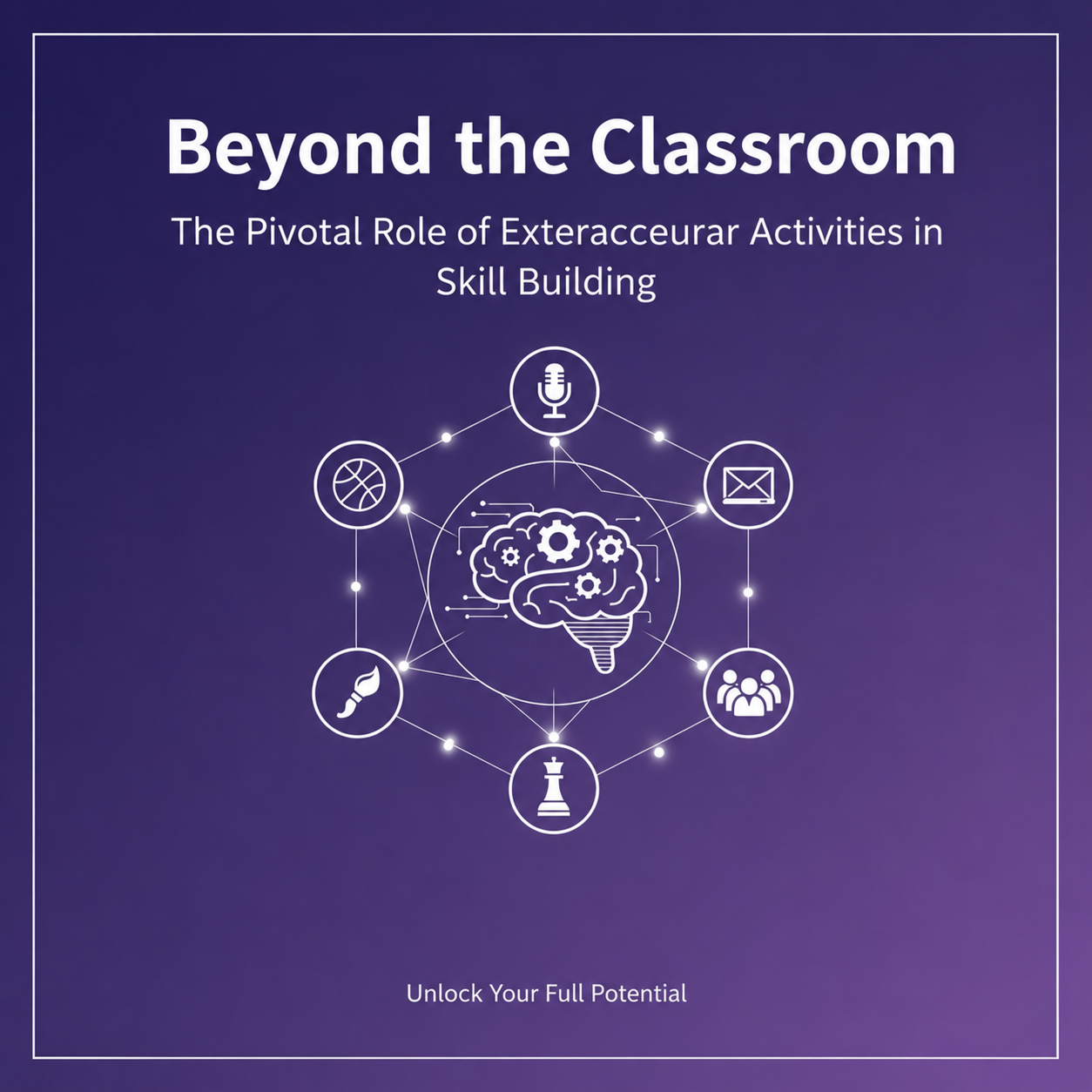
In the journey of education, academic transcripts tell only part of the story. While success in core subjects demonstrates knowledge and intellectual capability, the true measure of a well-rounded individual ready for the complexities of the modern world lies outside the traditional classroom setting. This is where Extracurricular Activities (ECAs) take center stage.
On behalf of Cvdragon, a platform dedicated to empowering individuals in their career development and professional presentation, we assert that ECAs are not merely “resume fillers” or after-school entertainment. They are powerful, practical training grounds that cultivate the essential soft skills and competencies most highly valued by employers and necessary for personal success. They bridge the gap between theoretical knowledge and real-world application, transforming students into dynamic, capable professionals.
🔑 The Shift in Talent Acquisition: Why Skills Outweigh Scores
The modern professional landscape is defined by collaboration, rapid change, and problem-solving. While foundational knowledge (hard skills) is important, recruiters increasingly prioritize transferable skills—those abilities gained in one context and applied in another. Extracurricular involvement is the primary engine for developing these skills naturally and effectively.
The Skill Gap Filled by ECAs:
-
Academic: Focuses on What (Knowledge) and How (Technical Skills).
-
Extracurricular: Focuses on Who (Character) and How Well (Application of Soft Skills).
By engaging in activities like debate club, sports, student government, volunteering, or theater, individuals are constantly challenged to navigate complex social situations, manage resources, and perform under pressure—all invaluable experiences that cannot be simulated through lectures or textbooks.
💡 The Skill-Building Matrix: How ECAs Forge Professional Competencies
Extracurricular activities are powerful crucibles for skill development, each contributing a unique set of abilities vital for the workplace.
1. Leadership and Delegation (The Captain and the President)
Whether leading a team to victory on the field or chairing a committee in student government, ECAs provide safe environments to practice leadership styles and delegation.
-
Real-World Application: A student council president learns to set an agenda, mediate conflicts between members, and assign tasks based on individual strengths—skills directly transferable to project management and team leadership roles.
-
Key Skills Developed: Strategic thinking, Vision setting, Team building, and Accountability.
2. Teamwork and Collaboration (The Ensemble and the Squad)
Success in most ECAs—from a robotics competition to a community service project—hinges on effective teamwork. Students learn to navigate group dynamics, manage dissenting opinions, and work toward a shared goal.
-
Real-World Application: Theater members must coordinate costume changes, lighting cues, and acting performances seamlessly. This teaches them interdependence, communication under pressure, and the value of individual roles contributing to a collective outcome.
-
Key Skills Developed: Collaboration, Conflict resolution, Active listening, and Empathy.
3. Time Management and Prioritization (The Juggler)
Balancing academic commitments, personal life, and demanding extracurricular schedules forces students to become masters of time management and prioritization.
-
Real-World Application: A student involved in Model UN and a part-time job must strategically allocate hours for research, meetings, homework, and rest. This practice instills discipline, organizational skills, and the ability to meet multiple deadlines—crucial for project managers and consultants.
-
Key Skills Developed: Organizational skills, Discipline, Deadline adherence, and Stress management.
4. Communication and Public Speaking (The Orator and the Presenter)
Many ECAs, particularly debate, speech and drama, or even running a student newsletter, are focused on refining verbal and written communication skills.
-
Real-World Application: Participating in a debate tournament teaches an individual to articulate complex arguments clearly, think critically in real-time, and persuade an audience—skills essential for sales, marketing, and legal professions.
-
Key Skills Developed: Verbal clarity, Persuasion, Impromptu speaking, and Concise writing.
5. Resilience and Adaptability (The Competitor)
The journey in any competitive or performance-based ECA is marked by setbacks: losing a game, failing to raise enough funds, or receiving a rejection. Navigating these failures builds resilience and the ability to adapt.
-
Real-World Application: A competitor in a science fair whose project fails must quickly troubleshoot, iterate, and adjust their methodology. This cultivates a growth mindset, teaching them to view failure as a data point for improvement, a core trait of successful entrepreneurs and innovators.
-
Key Skills Developed: Perseverance, Problem-solving, Coping with criticism, and Emotional intelligence.
🌐 SEO and Resume Optimization: Highlighting ECA Value
For candidates leveraging Cvdragon to craft their professional identity, translating ECA involvement into valuable skill sets is critical for SEO-optimized resumes and effective job applications.
| Extracurricular Activity | Generic Description (Weak) | Skill-Focused Description (Strong & SEO-Optimized) |
| Treasurer of the Film Club | Managed the club’s funds for one year. | Financial Management & Accountability: Oversaw a $5,000 annual budget, securing vendor discounts and implementing a cost-tracking system that reduced operational expenses by 15%. |
| Varsity Soccer Captain | Played soccer and was the captain for a season. | Dynamic Leadership & Team Building: Led a 20-person squad, coordinating offensive strategies and resolving in-game conflicts, resulting in a 25% improvement in season win rate. |
| Volunteer at Local Shelter | Helped out at a local animal shelter. | Stakeholder Communication & Initiative: Managed intake process for new volunteers (30+ people), improving the efficiency of training procedures through a new digital onboarding protocol. |
By using strong action verbs (oversaw, led, coordinated, implemented, resolved) and quantifying achievements wherever possible, applicants demonstrate the impact of their involvement, making their resume instantly more appealing to recruiters and Applicant Tracking Systems (ATS).
📈 The Long-Term Professional Impact
The investment of time and effort in ECAs pays dividends long after graduation. The skills fostered—adaptability, resilience, communication—are the bedrock of professional success and career progression.
ECAs contribute to a higher degree of Self-Efficacy (the belief in one’s ability to succeed in specific situations). This confidence is reflected in job interviews, workplace presentations, and the willingness to take on new challenges. Furthermore, ECAs often expose students to diverse ideas and people, fostering cultural competence and networking skills that prove invaluable in a globalized economy.
✅ Final Verdict: The Non-Negotiable Training Ground
Extracurricular activities are the gymnasium of professional life. They provide the practical experience needed to synthesize academic knowledge with actionable soft skills. They are, unequivocally, the most effective environment for developing the next generation of effective leaders, collaborative team members, and resilient problem-solvers.
At Cvdragon, we encourage every individual to fully embrace the opportunities outside the classroom. It is there that you build the character, skills, and unique narrative that will distinguish your career journey. Ready to showcase your non-academic achievements and unlock your professional potential? Let’s start building a CV that tells your whole story.
Leave a Reply